
Table of Contents
Overview
Skadarlija is the bohemian quarter of Belgrade, a short, winding, cobbled street and its surrounding lanes just below Republic Square. It is often compared to Montmartre in Paris because of the artists, writers and actors who once filled its taverns, and because it still keeps a lively, slightly old-fashioned atmosphere.
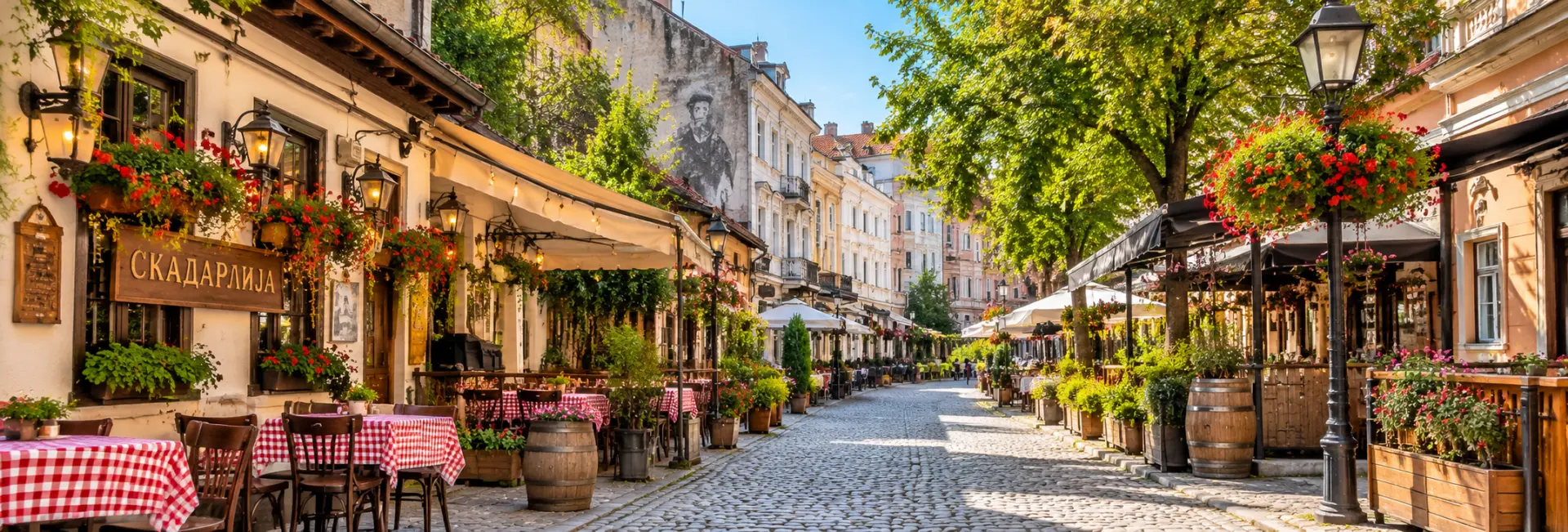
The heart of the quarter is Skadarska Street, which is only a few hundred metres long. Despite its small size, it holds a remarkable concentration of traditional restaurants, galleries, souvenir shops and small squares. Musicians stroll between tables, and evenings often have a festive, convivial feel.
Skadarlija is as much about atmosphere as sightseeing. There is no single monument to tick off. Instead, you come to wander slowly, enjoy a meal of Serbian specialities, listen to live music and imagine the generations of poets and journalists who made this street part of Belgrade's cultural mythology.
History
From Modest District to Named Street
The area began as a modest neighbourhood of tradespeople and Roma families on the edge of the old town. After the Ottoman army left Belgrade in 1867, the city began to reshape itself, and the street was paved with cobblestones and lined with new houses. In 1872 it was officially named Skadarska, after the town of Skadar, now Shkodër in Albania, which had been an important Serbian centre in the late Middle Ages.
A Street That Kept Its Name
Skadarska is one of the few streets in Belgrade that has kept the same name since the first official street naming in 1872. The only exception was a brief period during the First World War, when the Austro-Hungarian occupation authorities called it Ružina Street.
The Rise of Bohemian Belgrade
Skadarlija became a true bohemian centre in the early 20th century. In 1901 the famous Dardaneli inn on Theatre Square was demolished, and its regulars, who included poets, painters, actors and journalists, moved down the narrow streets to the taverns of Skadarlija. By around 1910 it had become the central meeting place of Belgrade's artistic life, and it counted some fifteen kafanas at its peak.
A Literary Legend
The quarter became part of the city's literary folklore. Writers and critics were frequent guests, and the street is often credited with shaping the culture of Serbian and wider Yugoslav literature. Even the founders of the Politika newspaper were regulars, and the launch of its first issue in 1904 was celebrated in one of the local taverns.
After the Second World War
The post-war years were hard on the quarter. Nationalisation, shortages and a general change in daily life closed many venues, and for a time only a handful of kafanas remained. The district revived later, and its traditional character is now one of Belgrade's most treasured tourist assets.
Recognition / Status
Since 1967, Skadarlija has been protected by law as a spatial cultural-historical unit. This status recognises not just individual buildings but the overall layout, atmosphere and character of the quarter, including its narrow street plan and traditional scale.
After Kalemegdan, it is frequently ranked among the most visited places in Belgrade, and it plays a significant role in the city's tourism. Locals treat it with affection too, bringing visiting friends and relatives here as a point of pride.
The name Skadarlija can refer to a wider quarter, which was once a municipality of its own and includes roughly twenty neighbouring streets, although most people use it to mean the main cobbled street.
Architecture & Streetscape
Cobblestones and Low Houses
The street is paved with rough, uneven cobblestones that give it its distinctive character. Buildings are low-rise and varied, with painted façades, wooden shutters and small courtyards. Many have been restored in recent decades, so the street combines historic ambience with a polished, welcoming appearance.
Traditional Urban Layout
The street curves gently and follows an older pattern of urban organisation that is rare in central Belgrade. In the past, a stream flowed down the middle during heavy rain or snowmelt, which helps to explain the street's slope and curve.
Atmosphere After Dark
Subdued lighting, outdoor tables under trees and the sound of tamburica music contribute to the evening feel. Even without grand architecture, the human scale of the street and its warm, informal setting are what make Skadarlija memorable.
Key Areas of the Quarter
The Upper Entrance
The street begins just below Republic Square and the National Theatre area. This gateway is the most convenient entry point for visitors coming from the main pedestrian streets, and it quickly shifts from the bustle of the square to the slower rhythm of the lane.
The Middle Stretch
The central part of the street holds most of the best-known kafanas. This is where you will find the densest concentration of terraces, live musicians and painted signs, and it is the busiest section in the evening.
The Lower End and the Atrium
The lower end, sometimes called the Skadarlija atrium, opens into a small plaza area. The Šebilj fountain stands near the bottom of the street in front of the large green market, and an impressive mural decorates the wall of the old brewery nearby.
Surrounding Lanes
Streets such as Zetska and Cetinjska branch off the main route. They are quieter and give a more residential view of the quarter, with older houses and small shops away from the main flow of visitors.
Notable Kafanas & Landmarks
Tri Šešira (Three Hats)
Founded in 1864, Tri šešira is the oldest kafana in Skadarlija that is still in operation. Its name refers to a hat workshop that once stood on the site, and a metal sign with three hats marked the building. It has long been associated with writers, journalists and public figures.
Dva Jelena (Two Deer)
Dva jelena is another of the quarter's historic taverns and remains one of its best-known venues. It is large, with plenty of outdoor seating, and is a good choice for groups.
Other Traditional Venues
- Šešir Moj, a lively spot known for live music and a traditional menu.
- Mali Vrabac, a long-standing restaurant in the middle of the street.
- Ima Dana and Velika Skadarlija, which continue the kafana tradition.
- Small galleries, antique shops and souvenir stalls tucked between the restaurants.
The Šebilj Fountain and Market
The decorative Šebilj fountain at the lower end of the street is a popular photo stop. Next to it, the large Skadarlija green market, also known as Bajloni, gives a contrast of everyday local life beside the more tourist-oriented restaurants.
Ways to Experience It
A Traditional Meal with Music
In Belgrade, calling a place bohemian often means traditional food served with live musicians playing near your table. Many Skadarlija restaurants offer exactly this, with tamburica players and singers performing folk and old city songs. It is the classic way to experience the street.
A Slow Evening Stroll
Even without a full meal, walking the length of the street is rewarding. Look at the menus, listen to the music drifting from different terraces, and stop at a bench under the trees.
Daytime Exploration
By day the street is calmer. This is a good time to look at small galleries, browse for souvenirs, photograph the cobblestones and mural, and visit the market at the bottom of the hill.
Join a Walking Tour
Guided city walks often include Skadarlija, and a guide can share stories about the poets, actors and journalists who made the street famous. Check what is on offer when you visit.
Best Time to Visit
Season
Late spring, summer and early autumn are best because outdoor terraces are open and the street is at its liveliest. Winter visits are quieter and cosier, with indoor seating and a more intimate mood.
Time of Day
Evening is the heart of the Skadarlija experience, when the lights come on and live music begins. If you prefer fewer crowds, visit in the late afternoon or at midday, when you can walk more freely and take photographs without crowds.
Weekdays and Weekends
Weekday evenings offer a good balance of atmosphere and space. Weekend nights are the busiest, so it is wise to reserve a table in advance if you want to dine at a popular venue.
Visitor Tips
- Wear comfortable shoes, because the cobblestones are rough and uneven.
- Book ahead for dinner on weekends and in high season, especially for larger groups.
- Check menus and prices before you sit down, as restaurants in a popular tourist street can vary widely.
- Ask whether live music is included, and be aware that musicians may approach tables and expect a tip.
- Opening hours differ between venues, and many stay open late into the night.
- Take care of your belongings in the busiest stretches, as you would in any popular tourist area.
- Try a traditional dish and a local drink, and ask staff for recommendations if you are unsure what to order.
Skadarlija is within easy walking distance of Republic Square and several tram and bus stops, so there is no need to drive. Taxis can drop you at either end of the street.
Nearby Attractions
Skadarlija sits in the middle of central Belgrade and combines well with a longer day of sightseeing.
- Republic Square: The city's main meeting point, a few minutes' walk from the top of the street.
- National Museum of Serbia: The country's oldest museum, located on Republic Square.
- National Theatre: The historic theatre building near the entrance to the quarter.
- Knez Mihailova Street: The main pedestrian shopping street, close to the square.
- Bajloni Market: The large green market at the lower end of Skadarska Street.
- Kalemegdan: The great fortress and park, within walking distance.
FAQs about visiting Skadarlija
What is Skadarlija? +
It is Belgrade's bohemian quarter, centred on the cobbled Skadarska Street. It is known for traditional kafanas, live music and its history as a meeting place for writers, actors and artists.
Why is it compared to Montmartre? +
Like Montmartre in Paris, Skadarlija is a small, atmospheric district associated with artists and bohemian life. Both areas are known for their cafes, music and creative history.
Where is Skadarlija located? +
It lies in Belgrade's old town, just below Republic Square. The main street runs downhill from near the National Theatre towards the Bajloni market.
How long is Skadarska Street? +
It is a short street, less than half a kilometre in length. You can walk it in a few minutes, though most visitors spend an hour or more stopping along the way.
What is the best time to visit? +
Evening is the most atmospheric time, when live music begins and the terraces fill up. Late afternoon or weekdays are better if you prefer a calmer visit.
What food should I try? +
Traditional Serbian cuisine is the main attraction, including grilled meats and hearty regional dishes. Ask staff for house specialities and local drinks.
Is Skadarlija expensive? +
Prices vary by venue, and the street can be pricier than ordinary neighbourhood restaurants because of its tourist appeal. Compare menus before you sit down.
Is it suitable for families? +
Yes, particularly in the afternoon and early evening. The street is pedestrian-friendly and there is plenty of outdoor seating, though later evenings can be lively and loud.
What else is nearby? +
Republic Square, the National Museum, the National Theatre and Knez Mihailova Street are all a short walk away. Kalemegdan is also within walking distance.
