
Table of Contents
Overview
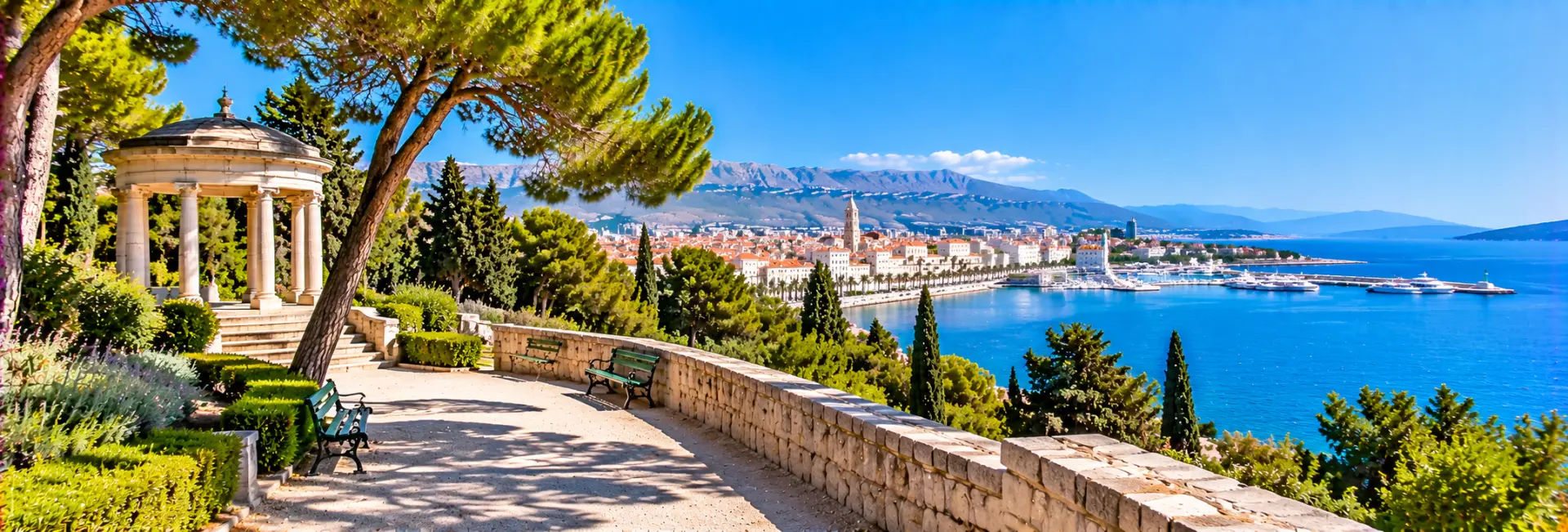
Sustipan is a green seaside headland and memorial park on the western side of Split, positioned between the city's waterfront and the slopes of the Marjan Peninsula. Elevated above the Adriatic, it combines mature trees, lawns, walking paths and open viewpoints with a history that reaches far beyond its present role as a public park. The setting offers broad views over the sea and Split's coastal surroundings while remaining close enough to the historic centre to visit on foot.
Unlike Split's monumental Roman attractions, Sustipan is best experienced slowly. Its appeal comes from the relationship between landscape, memory and location rather than from a single building or museum collection. Pine shade, stone features and glimpses of the water create a peaceful atmosphere, while surviving memorial elements recall the period when the headland served as one of Split's most important burial grounds.
For visitors exploring Split beyond Diocletian's Palace and the Riva, Sustipan provides a quieter perspective on the city. It can be visited independently for a short walk or incorporated into a longer route toward Marjan, the Meštrović Gallery and the western coastal neighbourhoods.
History of Sustipan
St. Stephen and the Origins of the Name
The name Sustipan is associated with St. Stephen, reflecting the long religious history of this small peninsula. During the medieval period, a Benedictine monastery dedicated to St. Stephen stood here. The site therefore held spiritual importance centuries before it became the landscaped park familiar to modern visitors.
The monastery and its surroundings formed part of the historical landscape outside the core of medieval Split. Although the original monastic complex no longer defines the site visually, its memory survives in the name and contributes to Sustipan's layered identity. The headland should therefore be understood not merely as recreational green space but as a place repeatedly adapted to different civic, religious and commemorative purposes.
A Place Connected with Split's Past
Sustipan's elevated coastal position helped give the site a distinct character. Over generations it became associated with remembrance and burial as well as religious history. These layers are particularly important because much of the historic cemetery that once occupied the peninsula was later removed, meaning the modern landscape does not immediately reveal the full significance of what once stood here.
From Historic Cemetery to Memorial Park
The Nineteenth-Century Cemetery
In the nineteenth century, Sustipan became Split's principal cemetery. The burial ground developed into a significant part of the city's social and architectural history, containing family tombs and monuments associated with generations of Split residents. Its seaside position, vegetation and funerary architecture gave the cemetery a distinctive appearance and made it an important landscape of civic memory.
Over time, the cemetery recorded the changing population of the city through its graves and memorials. Prominent families and individuals were represented alongside the wider community, making Sustipan an unusually concentrated record of Split's nineteenth- and early twentieth-century society.
Destruction and Transformation
The historic cemetery was largely demolished in the twentieth century, fundamentally changing the appearance of Sustipan. Many graves and monuments disappeared, and the area was subsequently transformed into the landscaped public space seen today. This loss remains an essential part of the site's story and explains why Sustipan is commonly described as a memorial park rather than simply a coastal garden.
Visitors today encounter a tranquil green landscape where only selected physical reminders communicate the former cemetery's scale. Understanding this history changes the experience of walking through the park: lawns and paths occupy ground that once contained a dense collection of graves and funerary monuments.
Landscape, Pine Trees and Coastal Setting
A Green Headland Above the Sea
Sustipan occupies a compact but dramatic position overlooking the Split Channel. Its edges rise above the water, allowing the park to feel visually open even though much of the interior is shaded by mature trees. The contrast between dark pine canopies, bright lawns, stone elements and blue Adriatic water gives the park much of its scenic character.
The headland forms a natural transition between the developed western waterfront and the greener Marjan area. This location makes Sustipan useful as both a destination and a stopping point on a longer walk. Visitors approaching from central Split gradually leave the busier promenade environment behind as they move toward the quieter western coast.
Paths, Lawns and Shade
Walking paths lead through grassy areas and beneath established trees, with benches and places to pause along the way. The park is not large enough to require a planned route, so wandering between viewpoints is usually the most enjoyable approach. Pine shade is particularly welcome during warmer months, although exposed viewpoints near the coastal edge can still feel hot in strong summer sun.
The restrained landscaping suits the site's memorial character. Rather than competing with the sea views or surviving historical features, the vegetation creates a calm setting for walking, sitting and observing the coastline.
Historic Features and Memorial Character
The Classical Gloriette
Among Sustipan's most recognizable surviving features is a classical-style gloriette associated with the former cemetery landscape. Its open columns and circular form create a striking architectural focal point among the trees. The structure is also an important visual reminder that today's park developed from a place once carefully arranged around monuments, graves and commemorative architecture.
The gloriette is frequently photographed because its light architectural form contrasts with the surrounding greenery and coastal setting. Visitors interested in the history of Sustipan should view it not merely as a decorative pavilion but as part of the surviving memory of the cemetery.
A Landscape of Remembrance
The memorial quality of Sustipan is quieter than that of an intact historic cemetery. Much of what once stood here is absent, so the significance of the site depends partly on knowing its history. Remaining stonework, memorial features and religious associations give the park a deeper meaning than its appearance as a pleasant seaside garden might initially suggest.
This combination of absence and survival makes Sustipan unusual among Split's attractions. Rather than presenting history through extensive ruins or exhibitions, it encourages visitors to interpret a transformed landscape and consider how the city has preserved, altered and remembered places across different periods.
Adriatic Views and Photography
Coastal Panoramas
The park's elevated position creates views across the Adriatic and toward Split's maritime surroundings. Openings between the trees reveal changing perspectives as visitors move around the headland. Depending on the viewpoint, the scene may include nearby coastline, harbour activity, open water and distant island silhouettes.
These views are one of the main reasons to include Sustipan in a walking itinerary. Unlike the Riva, where the waterfront experience is closely connected with cafés, boats and urban activity, Sustipan provides a more secluded place from which to look back toward the sea and city.
Photography
Photographers can combine several visual elements within a small area: mature Mediterranean vegetation, stone memorial features, the classical gloriette and expansive sea backgrounds. Morning and late-afternoon light generally produce softer conditions than the strong midday sun, while changing weather can dramatically alter the appearance of the water.
Visitors should take care near elevated coastal edges and remain on safe accessible areas rather than moving toward exposed positions solely for photographs. The park offers enough established viewpoints to enjoy the scenery without approaching hazardous cliff sections.
Ways to Experience Sustipan
A Quiet Walk
The simplest way to experience Sustipan is to walk through it without a strict itinerary. Follow the paths beneath the trees, pause at the gloriette and spend time at the open viewpoints. Because the park is relatively compact, even a short visit can capture its essential atmosphere.
Combine It with the Western Waterfront
Sustipan fits naturally into a walk beginning in central Split and continuing west along the waterfront. This route gradually shifts from the lively Riva and harbour surroundings toward quieter coastal scenery. The journey itself becomes part of the attraction, showing how Split changes from historic urban core to residential and recreational landscapes.
Continue Toward Marjan
Travellers who want a longer outing can use Sustipan as an introduction to the western side of Split before continuing toward Marjan and nearby cultural attractions. The combination works especially well for visitors interested in scenery, walking and history rather than spending the entire day inside museums or archaeological monuments.
Pause Rather Than Rush
Sustipan rewards stillness more than sightseeing speed. Sitting beneath the trees, watching boats in the distance or observing changing light across the water is part of the experience. For that reason, the park can also serve as a restorative break between more structured attractions.
Best Time to Visit
Spring and early autumn are especially pleasant for visiting Sustipan because temperatures are generally comfortable for walking and the park can be enjoyed without the strongest summer heat. The combination of greenery and coastal views works well throughout much of the year, however, and Split's mild maritime setting means the park can also be appealing on clear winter days.
During summer, morning and late afternoon are usually preferable to the hottest part of the day. Mature trees provide useful shade, but some scenic areas remain exposed to direct sunlight. Carrying water is sensible when combining Sustipan with a longer walk around Marjan or the western coast.
Late afternoon is particularly attractive for visitors interested in atmosphere and photography. Softer light can enhance the stone features and vegetation while creating changing tones across the Adriatic. Conditions vary by season and weather, so there is no single viewpoint that guarantees a particular sunset scene.
Visitor Tips and Nearby Attractions
Practical Tips
- Allow around 30 to 60 minutes for a relaxed walk, or longer if you plan to sit and enjoy the coastal views.
- Wear comfortable shoes, especially if Sustipan is part of a longer walk toward Marjan.
- Bring water during warm weather even though mature trees provide considerable shade.
- Respect the site's memorial history and surviving commemorative features.
- Use established paths and viewpoints and take care around elevated coastal edges.
- Check locally for temporary access restrictions when concerts, cultural programmes or other events are held at Sustipan.
Getting There
Sustipan is located on Sustipanski put, west of central Split. It can be reached on foot from the Riva by following the western waterfront toward the Meje area. The walk makes Sustipan easy to add to a day in central Split without requiring a dedicated excursion.
Nearby Attractions
Marjan is the natural continuation for visitors seeking more greenery, walking routes and elevated views. The Meštrović Gallery is another strong pairing for travellers interested in Croatian art and culture, while the western waterfront provides a scenic connection back toward the historic centre. Diocletian's Palace, the Riva and Split Old Town can all be combined with Sustipan on a broader walking itinerary.
FAQs about visiting Sustipan Park
What is Sustipan Park known for? +
Sustipan is known for its peaceful seaside setting, Adriatic views, pine-shaded landscape and history as the site of Split's former historic cemetery.
Where is Sustipan Park located? +
It is on Sustipanski put in Split, on a coastal headland west of the city centre and close to the entrance to the wider Marjan area.
Is Sustipan Park free to visit? +
Sustipan functions as a public park and there is normally no admission ticket for an ordinary visit. Temporary events held at the site may have separate access arrangements.
How long should I spend at Sustipan? +
Around 30 to 60 minutes is enough for a relaxed walk and viewpoints, although visitors may stay longer to rest or combine the park with the western waterfront.
Was Sustipan once a cemetery? +
Yes. Sustipan became an important cemetery for Split in the nineteenth century. Most of the historic cemetery was later demolished and the area was transformed into a memorial park.
What is the pavilion at Sustipan? +
The distinctive columned structure is a classical-style gloriette associated with the former cemetery landscape and is one of the site's most recognizable surviving features.
Can I walk to Sustipan from Split Old Town? +
Yes. Sustipan is within walking distance of the historic centre, and the route along Split's western waterfront provides a pleasant approach.
What attractions can I combine with Sustipan? +
Marjan, the Meštrović Gallery and the western waterfront are natural nearby choices. Sustipan can also be combined with Diocletian's Palace and the Riva as part of a longer day on foot.
