
Table of Contents
Overview
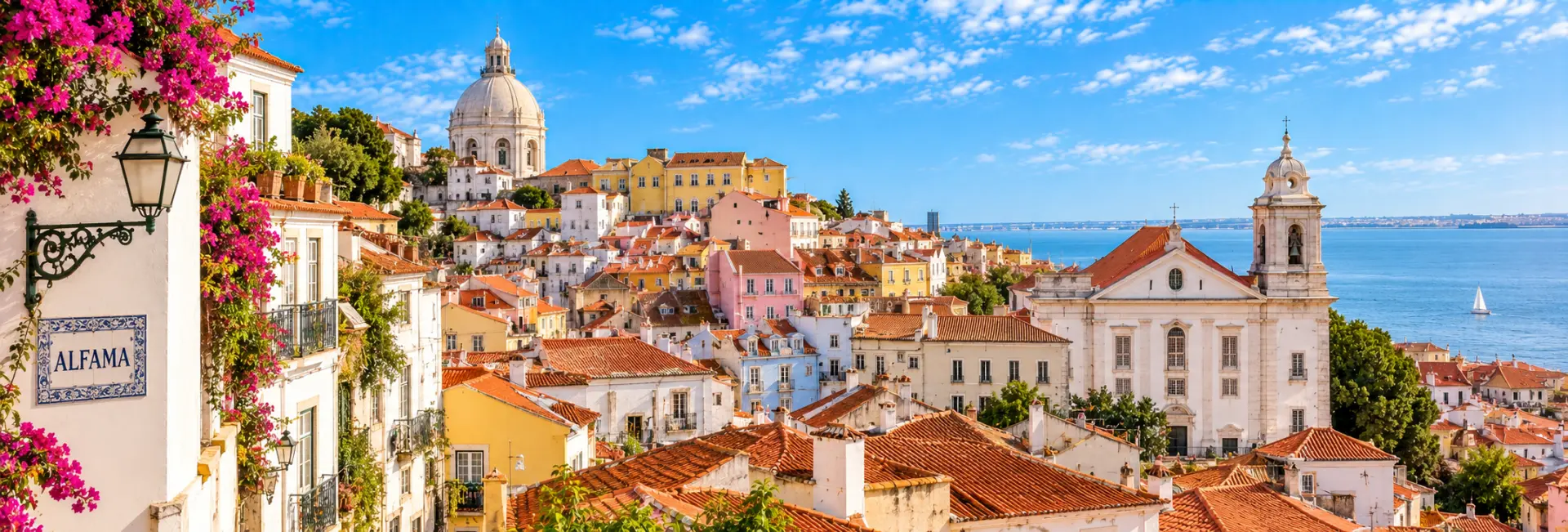
Alfama is the oldest surviving quarter of Lisbon, draped across the slope between São Jorge Castle at the top and the Tagus river at the bottom. It is the part of the city that most resembles its pre-modern self: a dense tangle of lanes, stairways and blind alleys that never got the grid treatment applied to the centre after the 1755 earthquake.
Walking it is less about ticking off monuments than about accepting that you will get lost. Streets narrow to the width of a doorway, turn a corner and open onto a terrace with a view across the whole river. Laundry hangs overhead, cats occupy the warm steps, and the smell of grilled sardines drifts out of small restaurants in summer.
It is also the spiritual home of fado, Portugal's melancholy urban song, and still the best place in Lisbon to hear it performed in a small room rather than a theatre. Alfama has become heavily visited in recent years, and parts of it now feel tourist-facing, but the residential core remains stubbornly itself.
History
Moorish origins
The name comes from Arabic, generally traced to a word meaning hot springs or baths, a reference to the thermal water once found on the slope. Although the site was inhabited well before, the district's layout dates largely from the period of Moorish rule, when this was the heart of the walled city below the citadel. The irregular street pattern, with its dead ends and abrupt level changes, is essentially medieval Islamic urban planning that was never erased.
After the Christian reconquest
Following the capture of Lisbon in 1147, Alfama remained the main inhabited quarter, though the wealthy gradually moved to flatter ground and it became a district of sailors, fishermen and dock workers. That working maritime identity shaped its character for centuries and fed directly into the music that later emerged from it.
Surviving the earthquake
The defining event in Alfama's story is one it largely escaped. When the 1755 earthquake, fire and tsunami destroyed most of central Lisbon, Alfama came through comparatively intact, generally attributed to the dense bedrock it sits on. While the Baixa below was levelled and rebuilt on a rational grid, Alfama kept its old shape, which is precisely why it feels so different from the streets at the bottom of the hill.
Architecture & Streetscape
There is no single monumental style here. Alfama's architecture is domestic, accumulated over centuries and patched rather than planned, and its appeal lies in the texture of the whole rather than individual buildings.
Recurring features worth watching for:
- Azulejos, the glazed ceramic tiles that cover entire facades in patterns ranging from simple blue geometrics to elaborate pictorial panels
- Wrought-iron balconies barely deep enough to stand on, usually crowded with plants and drying clothes
- Calçada portuguesa, the hand-laid limestone and basalt paving that is beautiful, slippery when wet, and unkind to thin soles
- Escadinhas, the stepped alleys that function as streets and do most of the work of getting up and down the hill
- Small tiled saint niches set into walls at corners, often with fresh flowers
Buildings are generally narrow-fronted and three or four storeys high, painted in faded ochre, pink, cream and pale blue. Because the slope is steep, rooflines constantly break the view, and the visual reward comes in sudden glimpses: a flash of the river between two walls, or a gap that reveals the terracotta rooftops falling away below.
Fado: The Sound of Alfama
Where the music comes from
Fado emerged in Lisbon's working-class districts in the early nineteenth century, with Alfama among its central homes. Sung to the accompaniment of the Portuguese guitar and a classical guitar, it deals in longing, loss, the sea and fate, carried by the untranslatable idea of saudade. UNESCO added fado to its list of intangible cultural heritage in 2011.
Hearing it today
Alfama has more fado venues than any other part of the city, ranging from restaurants with nightly performances to tiny back rooms where locals still sing. The traditional format, fado vadio, is amateur and spontaneous: anyone present may take a turn, and the room falls silent when they do.
The Fado Museum
At the bottom of the district, on Largo do Chafariz de Dentro, the Museu do Fado occupies a converted nineteenth-century water building and traces the genre from its origins through its great performers, most famously Amália Rodrigues. It is a genuinely useful first stop, because it gives context that makes an evening performance land far harder than it otherwise would.
Key Streets, Squares and Viewpoints
Alfama has no main street in any ordinary sense, but a handful of points anchor the district and are useful for orienting yourself when the lanes stop making sense.
Viewpoints
- Miradouro das Portas do Sol: the classic postcard view over Alfama's rooftops towards São Vicente de Fora and the river, with a terrace café
- Miradouro de Santa Luzia: a few steps away, smaller and prettier, with a tiled pergola and bougainvillea
- Miradouro da Graça: uphill on the district's northern edge, wider and best at sunset with the castle in the frame
Squares and streets
- Largo do Chafariz de Dentro: the traditional entry point at the lower edge, near the Fado Museum
- Rua de São Pedro and Beco do Carneiro: among the most atmospheric of the narrow lanes, the latter barely shoulder-width
- Campo de Santa Clara: a broad open space at the top of the district, transformed twice a week by the Feira da Ladra flea market
- Rua dos Remédios: a working local street with bakeries, small bars and fado houses
Notable Landmarks
Several major monuments sit within or on the edge of the district, and most people encounter them by walking uphill through it.
- São Jorge Castle: the Moorish fortress crowning the hill, with ramparts, archaeological remains and the broadest view in the old city
- Lisbon Cathedral: the Sé, a fortress-like Romanesque church begun in the twelfth century at Alfama's lower edge, blunt and heavy where later churches are ornate
- National Pantheon: the vast white dome of the former Santa Engrácia church, which took so long to finish that its name became local slang for an endless project, now holding the tombs of Portuguese national figures
- Monastery of São Vicente de Fora: a monumental sixteenth-century complex famous for its tiled cloisters illustrating La Fontaine's fables
- Church of Santo António: built on the site where Lisbon's patron saint is said to have been born, small but central to the district's identity
- Casa dos Bicos: a striking sixteenth-century house studded with diamond-shaped stones, near the riverfront edge
The castle and the Pantheon both charge admission; the churches are generally free or inexpensive, though hours vary and services take precedence.
Festivals and Local Traditions
Alfama comes closest to its old self in June, during the Festas de Lisboa, when the whole city celebrates the popular saints and this district is the epicentre.
On the nights of 12 and 13 June, for Santo António, Alfama's lanes fill with bunting, paper lanterns, improvised bars set up in doorways and charcoal grills working continuously through the night. Sardines are eaten standing up, cheap wine and beer are sold from windows, and music runs until dawn. Residents decorate their own streets, and neighbourhood associations compete in the marchas populares, a parade of costumed groups that is taken far more seriously than its carnival appearance suggests.
Smaller traditions run year-round:
- The Feira da Ladra flea market on Campo de Santa Clara, held on Tuesdays and Saturdays, mixing genuine antiques with pure junk
- Manjerico basil pots given as tokens of affection during the June festivities, each with a paper verse stuck in it
- Small neighbourhood shrines to Santo António maintained by residents throughout the year
Ways to Experience It
Alfama rewards unstructured time more than any other part of Lisbon, but there are several approaches that work well.
- Walking on your own: the default and the best, ideally without a fixed route. Head downhill when lost and you will reach the river eventually.
- Guided walking tours: useful for the history and for finding corners you would otherwise miss, with fado-focused and food-focused variants widely available.
- Tram 28: the famous yellow tram rattles through the district past the cathedral and Portas do Sol. Ride it early in the morning or accept a long queue and a packed carriage.
- Tuk-tuks: numerous and convenient on the steep sections, though they contribute to the congestion residents complain about.
- A fado evening: booking ahead is wise at the better-regarded houses, most of which serve dinner alongside the performance.
- Food tours and tascas: small family-run restaurants serve grilled fish, bacalhau and petiscos at prices that fall sharply a few streets away from the main viewpoints.
Combining a downhill walk from the castle with an evening fado booking at the bottom makes for a natural full day.
Best Time to Visit
Time of day
Early morning is the most rewarding, when deliveries are arriving, residents are out and the lanes belong to the neighbourhood rather than to tour groups. Late evening has a different appeal, with lit windows, music leaking from doorways and far fewer people on the stairs. Midday in high season is the worst of it, especially around the viewpoints.
Season
Spring and autumn offer the best balance of comfortable walking weather and manageable crowds. June is the most atmospheric month by a distance but also the busiest, since the festivals draw the whole city. Summer is hot work on steep cobbles with little shade, and winter brings rain that makes the paving genuinely slippery, though the district is quiet and the light is excellent.
If the June festivities are the draw, book accommodation well in advance and plan on late nights, as the district barely sleeps for a week around the 13th.
Visitor Tips
- Wear shoes with real grip. Calçada paving is polished smooth in places and becomes treacherous in rain or when going downhill.
- Walk downhill wherever possible. Start at the castle or Graça and let gravity do the work rather than climbing from the river.
- Pickpocketing is a known issue on tram 28 and around the busiest viewpoints, so keep bags closed and in front of you in crowds.
- People live here. Keep voices down in the lanes at night, do not photograph through open doorways, and step aside for residents on the stairs.
- Getting in is easiest by tram 28 or 12, by bus to Largo do Chafariz de Dentro, or on foot from Santa Apolónia or Terreiro do Paço metro stations. Driving is impractical and parking close to impossible.
- The district is difficult for wheelchair users and anyone with limited mobility, given the gradients and stairs; the Portas do Sol area is reachable by tram and bus for a viewpoint visit without the descent.
- Prices at the viewpoint cafés are noticeably higher than two streets inland, where the food is often better.
- Carry water in summer and expect to refill, as the climb is more demanding than the short distances suggest.
FAQs about visiting Alfama
What is Alfama and why is it worth visiting? +
It is Lisbon's oldest neighbourhood, a steep maze of medieval lanes between São Jorge Castle and the river. It survived the 1755 earthquake largely intact, so it preserves a street layout and atmosphere that the rest of central Lisbon lost.
How much time should I allow? +
Half a day covers a relaxed wander and one or two monuments. Add an evening if you want to hear fado, which is best experienced after dinner rather than squeezed into an afternoon.
Is Alfama free to visit? +
Yes, the district itself costs nothing to explore. Individual sites inside it, such as São Jorge Castle, the National Pantheon and the Fado Museum, charge separate admission.
Where is the best viewpoint in Alfama? +
Portas do Sol gives the classic rooftop panorama, Santa Luzia just below it is smaller and more decorative, and Graça on the upper edge is the favourite for sunset. All three get busy in the late afternoon.
Is it safe? +
It is generally safe, including at night, though petty theft happens in crowded spots like tram 28 and the viewpoints. Normal city precautions are enough.
How do I get there? +
Tram 28 and tram 12 both run through the district, several bus routes serve its lower edge, and Santa Apolónia and Terreiro do Paço metro stations are within walking distance. Driving in is not realistic.
Is Alfama suitable for older visitors or people with mobility issues? +
The gradients and stairways make it hard going. A tram or bus to the Portas do Sol area gives access to the views and the main landmarks without attempting the full climb.
Where should I hear fado? +
Alfama has the densest concentration of fado venues in Lisbon, from dinner-and-show restaurants to small rooms hosting amateur singers. Booking ahead is sensible at the better-known houses, and the Fado Museum is a good place to get your bearings first.
When is the neighbourhood at its liveliest? +
Around 12 and 13 June, during the Santo António celebrations, when the streets are decorated and filled with grills, music and crowds until dawn. It is unforgettable, and also the most crowded the district ever gets.
Is getting lost a problem? +
Not really, and it is part of the appeal. The lanes are short and the slope is a reliable compass: walk downhill and you reach the river, uphill and you reach the castle.
