
Table of Contents
Overview
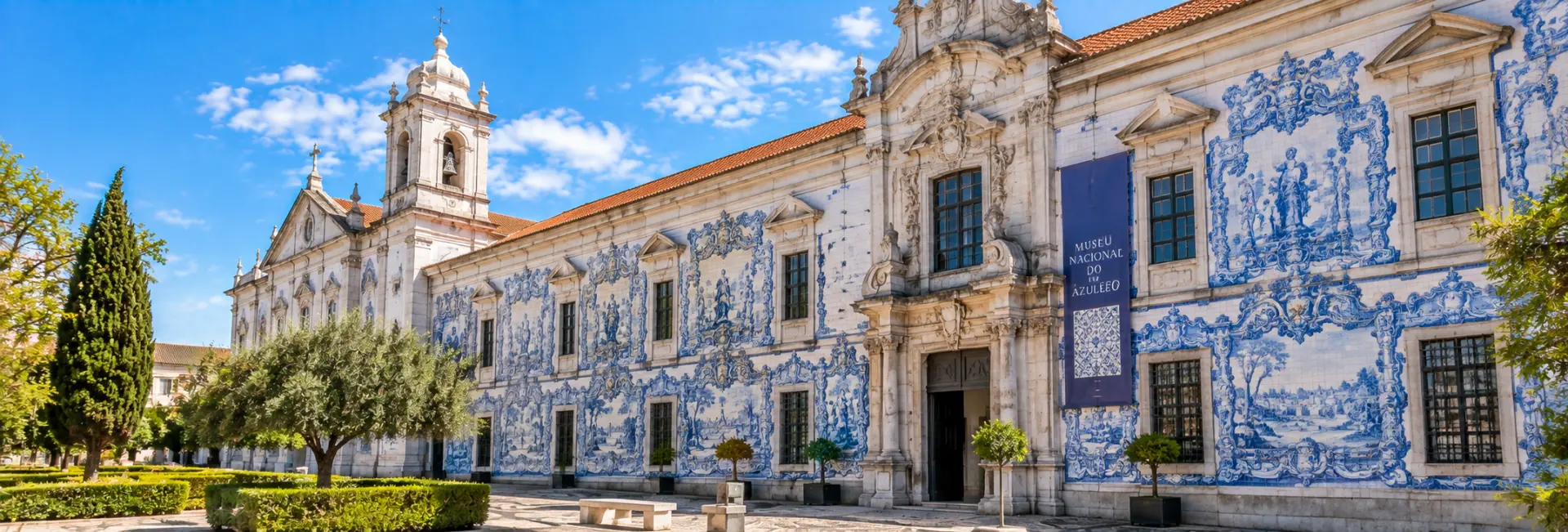
The National Tile Museum traces the story of the azulejo, Portugal's distinctive glazed ceramic tile, from its Moorish-influenced beginnings through to contemporary art. It occupies a former convent in the Xabregas district east of central Lisbon, a building whose own decorated walls and gilded church make it as much a part of the experience as the collection inside.
Few countries have used tilework as extensively or as expressively as Portugal, covering churches, palaces, train stations, and ordinary houses alike, and this is the only museum in the country dedicated entirely to that tradition.
History of the Museum
From Royal Convent to National Museum
The building that now houses the museum began as the Convent of Madre de Deus, founded in 1509 by order of Queen Leonor, the widow of King João II. Over the following centuries, successive campaigns expanded and redecorated the convent, adding a Mannerist cloister, an ornate sacristy, and eventually the lavishly decorated Baroque church that remains one of the site's central attractions. The 1755 Lisbon earthquake damaged the complex, and restoration work carried out under King José I helped revive it in the years that followed.
Establishing the Tile Museum
The idea of using the convent to house a national collection of tiles took shape in the 1950s, with initial preparation work carried out in 1957 and 1958 to mark the 500th anniversary of Queen Leonor's birth. The National Tile Museum was formally established in 1965, with Santos Simões as its first director, and it was elevated to full national museum status in 1980. Since then, the collection has continued to grow, adding both historical tile panels and works by contemporary Portuguese artists.
Architecture & Building
The former Convent of Madre de Deus is a layered building in its own right, combining a Manueline church portal with later Mannerist and Baroque additions added over some two centuries of expansion. Visitors can walk through the cloisters, choir, sacristy, and church as part of the museum route, making the setting inseparable from the collection it holds.
The Church of Madre de Deus is widely considered the highlight of the building, its walls lined with blue-and-white tile panels beneath a barrel-vaulted ceiling covered in gilded woodwork and large painted canvases, several by the Portuguese painter André Gonçalves. The contrast between the cool tilework below and the dense gold ornament above is often described as one of the most striking interiors in Lisbon.
Collections & Highlights
The museum's permanent collection is arranged chronologically, tracing Portuguese tilework from its earliest Moorish-influenced geometric patterns through centuries of shifting styles and techniques.
- Great Panel of Lisbon - an extensive tile panorama depicting the city as it looked before the 1755 earthquake, one of the museum's best-known pieces
- Hunting scene panels - 17th-century tile murals depicting hunting and courtly life
- The Chapel of Saint Anthony - an 18th-century Baroque space decorated with canvases by André Gonçalves
- Contemporary tile art - works by modern Portuguese artists who continue to reinterpret the azulejo tradition
- The Church of Madre de Deus - a decorated Baroque church included as part of the museum route
Ways to Experience It
A visit typically combines the museum's chronological tile galleries with a walk through the historic convent buildings.
- Self-guided visit - explore the galleries, cloisters, and church at your own pace with information panels along the route
- Guided tours - available at set times for visitors who want more context on the collection and building
- Temporary exhibitions - the museum regularly hosts shows focused on specific artists or periods in tile history
- Museum café - a tiled café on site, a popular stop in its own right among visitors
Best Time to Visit
Set outside the main tourist center, the museum tends to be less crowded than Lisbon's most famous sights, though timing still affects the experience.
- Weekday mornings are generally the quietest time to visit
- The museum is typically closed on Mondays, so plan a visit for another day of the week
- Natural light through the church's windows is especially striking around midday
- Visiting outside peak summer tourist season generally means smaller crowds in the galleries
Visitor Tips
Because the museum sits a little outside central Lisbon, some advance planning helps.
- Allow time for the journey, since the museum is located in Xabregas, a bus ride or tram connection from central Lisbon
- Set aside at least an hour and a half to see the galleries, cloisters, and church without rushing
- Look for the Great Panel of Lisbon, one of the collection's signature pieces, as an easy reference point while exploring
- Check current opening hours before visiting, since the museum is closed on Mondays and public holidays
- Combine the visit with the on-site café for a break amid its own tiled decor
Nearby Attractions
The museum sits in Xabregas, a quieter district east of Lisbon's historic center, though several other sights are within reach.
- Alfama district - Lisbon's oldest neighborhood, a bus or tram ride toward central Lisbon
- São Jorge Castle - a hilltop fortress overlooking the city, reachable from central Lisbon
- National Pantheon - a domed monument along the riverfront, between the museum and central Lisbon
- Santa Apolónia - Lisbon's main train station, a short ride away and a useful transit connection
FAQs about visiting the National Tile Museum
What is the National Tile Museum and why is it famous? +
It's a museum dedicated entirely to the azulejo, Portugal's traditional glazed ceramic tile, housed in a former 16th-century convent. It's known for its extensive chronological collection and for the Baroque church included in the museum route.
How much time do I need to visit? +
Most visitors spend around an hour and a half exploring the galleries, cloisters, and church at a relaxed pace.
Is the museum located in central Lisbon? +
No - it's in Xabregas, a district east of the historic center, reachable by bus or a short ride from central Lisbon rather than on foot from Baixa or Alfama.
What is the Great Panel of Lisbon? +
It's a large tile panorama in the museum's collection depicting the city of Lisbon as it appeared before the 1755 earthquake, one of the most significant pieces on display.
Is the museum suitable for visitors with limited time in Lisbon? +
It's a worthwhile stop for anyone specifically interested in tile art or decorative history, though its distance from the main tourist areas makes it a lower priority for a very short visit.
What's nearby that's worth combining with a visit? +
The National Pantheon and Santa Apolónia train station are along the route back toward central Lisbon, making it easy to combine the museum with a wider day of sightseeing.
Is the museum open every day? +
No - it's typically closed on Mondays and public holidays, so it's worth checking the current schedule before visiting.
