
Table of Contents
Overview
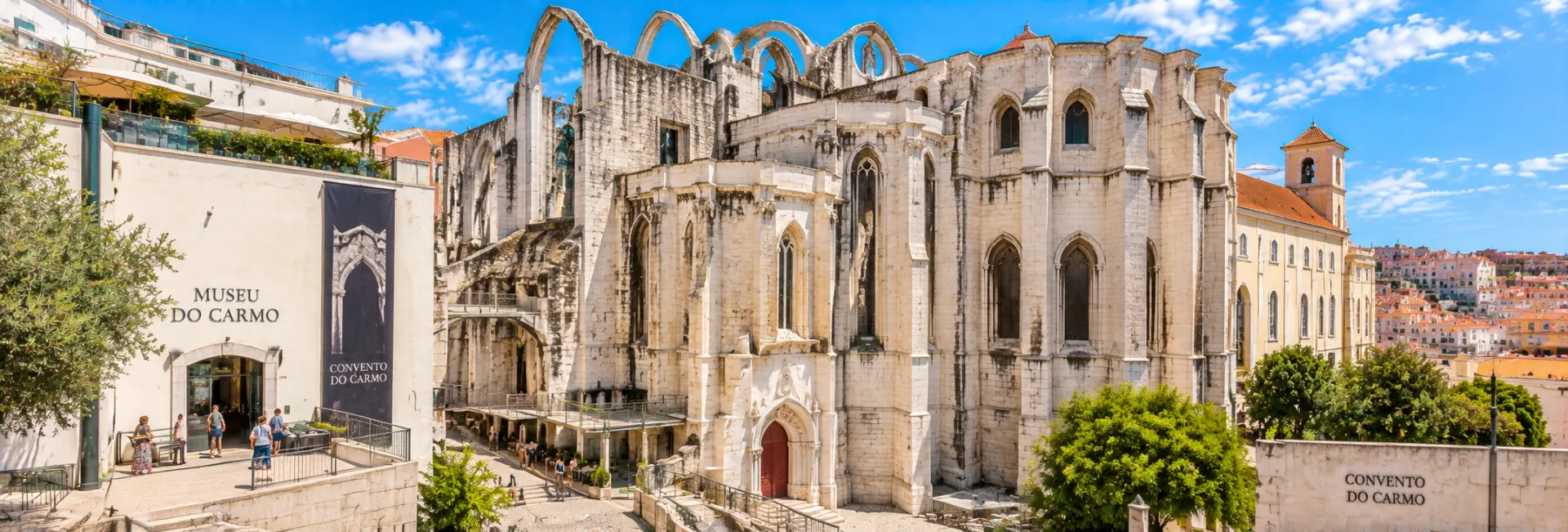
Carmo Convent stands open to the sky above Lisbon's Chiado district, its bare Gothic arches one of the city's most striking reminders of the 1755 earthquake. Once one of the largest churches in Lisbon, it lost its roof when the earthquake struck during Mass on All Saints' Day, and rather than being rebuilt, the ruin was left standing much as the disaster left it.
Today the nave and apse house a small archaeological museum, its collection of tombs, carved stonework, and assorted relics set beneath open arches instead of a ceiling, making a visit here as much about atmosphere as about the objects on display.
History
Founding and Medieval Grandeur
The convent was founded in 1389 by Nuno Álvares Pereira, a celebrated Portuguese military commander, to serve as the headquarters of the Carmelite Order in Lisbon. Over the following centuries it grew into one of the largest and most important religious buildings in the city, a Gothic church with a long nave and soaring arches that reflected the convent's wealth and standing.
The 1755 Earthquake
On the morning of 1 November 1755, the Great Lisbon Earthquake struck while the congregation was gathered for All Saints' Day Mass. The church's roof collapsed, and the convent's library and much of its interior were destroyed. Unlike many of Lisbon's damaged churches, Carmo was never rebuilt with a new roof, and the ruin was left largely as the earthquake had shaped it, a decision that turned the building itself into a lasting monument to the disaster.
From Ruin to Museum and Landmark
In 1864, an archaeological museum was established within the roofless nave, making it one of Portugal's earliest archaeological collections. The convent's surviving habitable rooms also took on a military role over the following century, and in 1974 the building briefly became a focal point of national history when the country's last Estado Novo prime minister took refuge inside during the Carnation Revolution, a standoff that ended with the government's surrender on the site.
Architecture & Design
What remains of Carmo Convent is essentially the shell of a large Gothic church: rows of pointed arches rising without a roof, framing open sky where a vaulted ceiling once stood. Later additions, including Manueline-style windows, were added to parts of the structure in the 16th century, layering a second architectural period onto the medieval bones of the building.
The sacristy, one of the few sections that survived the earthquake largely intact, retains its original ceiling and now displays some of the museum's smaller and more fragile pieces. Outside, the convent faces a quiet square, Largo do Carmo, shaded by jacaranda trees and centered on an 18th-century fountain fed by Lisbon's historic aqueduct.
Notable Features
A visit takes in both the open-air ruin and the museum objects arranged within it.
- The roofless nave - rows of Gothic arches open to the sky, the convent's defining image
- The archaeological museum - tombs, carved stonework, and artifacts from across Portuguese history displayed within the ruined nave
- The sacristy - one of the few intact interior spaces, housing smaller and more delicate pieces
- Largo do Carmo - the square in front of the convent, with an 18th-century fountain and views toward São Jorge Castle
- A Roman sarcophagus and Egyptian mummies - among the more unexpected pieces in the museum's eclectic collection
Recognition & Status
Carmo Convent is classified as a Portuguese national monument, recognized both for its Gothic architecture and for its role as a physical record of the 1755 earthquake's impact on Lisbon. The ruin remains one of the city's most photographed sights precisely because it was left unrepaired rather than restored.
- Portuguese National Monument
- Home to the Museu Arqueológico do Carmo, one of Portugal's earliest archaeological museums, established in 1864
- A rare example of an earthquake-damaged building deliberately left in its ruined state
Ways to Experience It
Most visitors combine a walk through the open nave with a look at the museum's collection housed within it.
- Self-guided visit - walk through the roofless nave and sacristy at your own pace with a paid entry ticket
- Museum galleries - the archaeological collection is displayed directly within the ruined church and adjoining rooms
- Exterior view - the arches are visible from Largo do Carmo without a ticket, for a quick look at the site
- Evening events - the ruins occasionally host open-air concerts and other events during the summer months
Visitor Tips
A few practical details help make the most of a visit.
- Combine the stop with the nearby Santa Justa Lift, since the convent sits just steps from its upper platform
- Bring a light layer or umbrella awareness, since the nave has no roof and is exposed to the weather
- Set aside 30 to 45 minutes for the museum galleries and ruins together
- Visit the square outside for a quieter moment away from Lisbon's busier tourist streets
- Check current opening hours and ticket prices before visiting, since these can change seasonally
Nearby Attractions
Carmo Convent sits at the boundary between Chiado and Baixa, within easy walking distance of several other central Lisbon sights.
- Santa Justa Lift - the ornate iron elevator connecting Baixa to Chiado, right next to the convent
- Rossio Square - a short walk downhill in Baixa
- Chiado district - a shopping and café district just beside the convent
- São Jorge Castle - visible from the square in front of the convent, a longer walk across the valley
FAQs about visiting Carmo Convent
What is Carmo Convent and why is it famous? +
It's the roofless ruin of a large Gothic church in central Lisbon, left standing since the 1755 earthquake destroyed its roof. It's known for its open-air arches and for housing one of Portugal's oldest archaeological museums.
Why was the convent never rebuilt with a new roof? +
Rather than restoring the damaged church, the ruin was left largely as the earthquake left it, turning the building itself into a lasting monument to the disaster.
How much time do I need to visit? +
Most visitors spend 30 to 45 minutes exploring the nave, sacristy, and museum displays.
Is there an entry fee? +
Yes, entry to the museum and ruins requires a ticket, though the exterior arches can be seen from the square outside at no cost.
What happened at Carmo Convent in 1974? +
During the Carnation Revolution, Portugal's last Estado Novo prime minister took refuge in the convent's habitable rooms, and the standoff there ended with the government's surrender, making the site a landmark in the country's transition to democracy.
What's nearby that's worth combining with a visit? +
The Santa Justa Lift sits right next to the convent, and Rossio Square and the Chiado district are both within easy walking distance.
Is Carmo Convent open every day? +
It's generally open most days but closed on some holidays, and hours can shift seasonally, so it's worth checking the current schedule before visiting.
