
Table of Contents
Overview
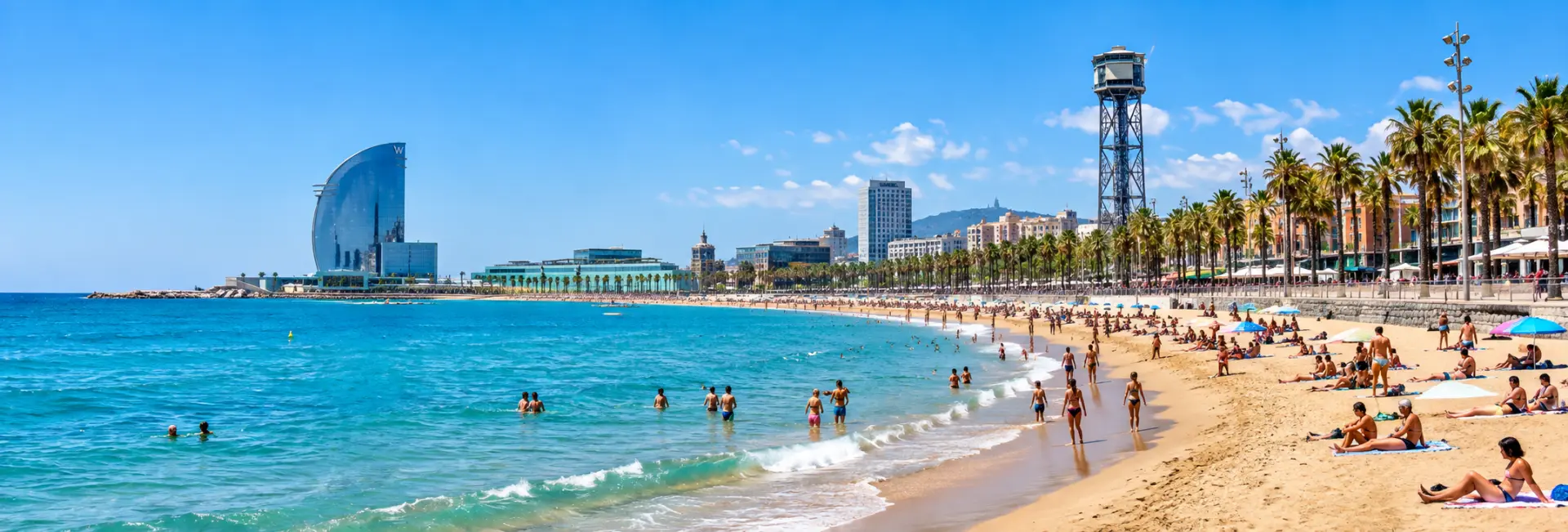
Barceloneta Beach is Barcelona's most famous stretch of sand, a roughly 422-metre strip of shoreline running along the edge of the old fishing quarter that gives it its name. It sits right at the point where the dense streets of Ciutat Vella meet the open Mediterranean, making it one of the easiest beaches in Europe to reach on foot from a major city center.
The beach's current look, with its wide promenade, showers, sports courts, and public art, dates back to a major transformation carried out ahead of the 1992 Barcelona Olympics. Before that, this shoreline was a working, and often neglected, edge of the city rather than a place to sunbathe. That contrast between a rough industrial past and its current status as a postcard image of Barcelona is a big part of what makes the beach interesting beyond its sand and water.
History
A Working Shoreline, Not a Resort
For most of its history, this stretch of coast had little to do with leisure. The Barceloneta neighborhood behind it was laid out in the mid-eighteenth century to house residents displaced by the construction of the Ciutadella fortress, and it grew into a dense quarter of fishermen, dockworkers, and small industry. The beach itself was lined for decades with informal shacks, seafood shacks known as xiringuitos, and modest waterfront housing rather than any organized public bathing area. Even earlier, in the early seventeenth century, this coastline appears in literature: Miguel de Cervantes set the climactic duel between Don Quixote and the Knight of the White Moon on this shore in the second part of his novel.
Remade for the 1992 Olympics
The beach's modern identity was created almost entirely in the run-up to the 1992 Olympic Games, when Barcelona used the event as the catalyst for a sweeping redevelopment of its long-neglected waterfront. The old shacks and informal structures were cleared, fresh sand was brought in, and the current Passeig Marítim promenade was built along the shore, opening the coastline to the public in a way it never had been before. The transformation did more than create a beach; it reoriented the entire city toward the sea and turned a once-overlooked industrial edge into one of Barcelona's signature public spaces.
The Barceloneta Neighborhood
The beach cannot really be separated from the triangular neighborhood behind it, also called Barceloneta, which is wedged between the harbor, the sea, and the Born district. Its narrow grid of streets, laid out in the 1750s, still holds much of its original working-class character, with tightly packed low-rise buildings, small squares, and a strong tradition of seafood cooking that spills out onto the beachfront restaurants today.
- Narrow eighteenth-century street grid, distinct from the wider boulevards of the rest of the city
- Long-standing fishing and dockworker heritage, still reflected in the local cuisine
- Casa de la Barceloneta 1761, a historic house-turned-exhibition space on the neighborhood's origins
- Its own neighborhood flag and identity, with a metro stop on Line 4
Beach Layout & Facilities
Barceloneta Beach runs for about 422 metres with an average width of roughly 79 metres, between Carrer de l'Almirall Cervera and the Gas breakwater, continuing on toward Sant Sebastià beach on one side and Port Olímpic on the other. A row of covered porticoes runs along the top of the beach, housing the Espai de Mar center, which supports inclusive access to swimming and water-based activities.
- Lifeguard towers and marked swimming areas in season
- Showers, public toilets, and adapted facilities for visitors with disabilities
- Beach volleyball courts and a children's play area
- Sun lounger, parasol, and bicycle-parking options along the promenade
- L'Estel Ferit ("The Wounded Star"), Rebecca Horn's rusted steel sculpture from 1992, standing on the sand as an informal meeting point known locally as "els cubs"
Ways to Experience It
Most visits are informal: people come to swim, sunbathe, walk the promenade, or eat at one of the seafood restaurants and beach bars lining the shore. The beach's flat, open water also makes it a starting point for several active options.
- Swimming and sunbathing on the sand, with lifeguard coverage during the bathing season
- Paddleboarding, kayaking, and other water-sports rentals offered along the promenade
- Walking or cycling the Passeig Marítim toward Port Olímpic or Barceloneta's older streets
- Beach volleyball and outdoor gym areas set up along the sand
- Evening strolls to see L'Estel Ferit and the skyline lit up along the waterfront
Best Time to Visit
Early morning is the quietest time to visit, especially in summer, before the beach fills up with sunbathers and the promenade gets busy with vendors and crowds. Late afternoon and sunset are popular for a walk along the shore once the day's heat has eased.
The beach draws by far its largest crowds from June through August, when Mediterranean water temperatures peak and the surrounding bars and restaurants are at their liveliest. Spring and early autumn bring milder weather and noticeably thinner crowds, while winter turns the same stretch into a calmer place for a walk, even though swimming is mostly limited to the warmer months.
Visitor Tips
A few practical points can make a visit smoother, especially in peak season.
- Arrive early in summer to find open space on the sand, which fills up quickly by mid-morning
- Keep a close eye on belongings, as beach theft is a known issue on Barcelona's busiest beaches
- Use the marked, flagged swimming areas, since currents and boat traffic can affect other parts of the shore
- The Barceloneta metro station on Line 4 puts you within a short walk of the sand
- Restaurants directly on the beachfront tend to be priced for tourists; the streets just inland often offer better value
- The promenade and beach access points are flat and stroller- and wheelchair-friendly
Nearby Attractions
Barceloneta's location makes it easy to combine with several other well-known Barcelona sights in the same outing.
- Port Vell and the Maremagnum shopping and leisure complex, a short walk toward the old harbor
- L'Aquàrium de Barcelona, one of Europe's largest aquariums, at Port Vell
- Port Olímpic, with its marina, nightlife, and Frank Gehry's golden fish sculpture
- The Gothic Quarter and La Rambla, roughly a 20-minute walk inland
- Parc de la Ciutadella, a short walk northwest of the beach
FAQs about visiting Barceloneta Beach
What is Barceloneta Beach known for? +
It's Barcelona's most iconic city beach, known for its Mediterranean setting, lively promenade, seafood restaurants, and its transformation from a rundown fishing shoreline into a major public space ahead of the 1992 Olympics.
Is Barceloneta Beach free to visit? +
Yes, the beach and promenade are open to the public at no cost; only extras like sun lounger or parasol rental and water-sports equipment come with a fee.
Is Barceloneta Beach good for families? +
Yes, it has lifeguard coverage in season, flat and accessible walkways, a children's play area, and calm, shallow water near the shore, though it can get crowded in peak summer.
How do you get to Barceloneta Beach? +
The Barceloneta metro station on Line 4 is a short walk from the sand, and it's also reachable on foot from the Gothic Quarter or Port Vell in around 15 to 20 minutes.
Is it safe to swim at Barceloneta Beach? +
Swimming is generally safe within the lifeguard-patrolled, marked areas during the bathing season; visitors should stay within flagged zones and be mindful of belongings on the busy sand.
What is the best time of day to visit Barceloneta Beach? +
Early morning offers the quietest sand and mildest sun, while sunset is popular for a walk along the promenade once the day's crowds have thinned out.
What is the rusty sculpture on Barceloneta Beach? +
It's L'Estel Ferit, or "The Wounded Star," a 1992 steel and glass sculpture by German artist Rebecca Horn that pays tribute to the old beach shacks once found along this shore; locals often call it "els cubs," or "the cubes."
What's nearby Barceloneta Beach worth visiting? +
Port Vell, L'Aquàrium de Barcelona, Port Olímpic, and Parc de la Ciutadella are all within easy walking distance, and the Gothic Quarter is about a 20-minute walk inland.
