
Table of Contents
Overview
Camp Nou is FC Barcelona's home stadium and, alongside its adjoining museum, one of the most visited sporting attractions in Spain. Opened in 1957 in the Les Corts district, it has long ranked among the largest football stadiums in Europe and has hosted two European Cup finals, a World Cup, and an Olympic football final. As of 2026, the stadium and museum are partway through a major renovation known as Espai Barça, so visitors should expect an active construction site alongside match-day activity and a temporary museum setup rather than the fully finished venue shown in older photos.
History
Replacing Les Corts
FC Barcelona built Camp Nou to replace its previous ground, Camp de les Corts, which had grown too small for the club's rapidly expanding fan base following the arrival of star player Ladislao Kubala in the early 1950s. Construction ran from 1954 to 1957, and the stadium opened on 24 September 1957 with a match against a selection of players from Warsaw, initially under the plain name Estadi del FC Barcelona.
Growth and Landmark Matches
Members voted to formally adopt the stadium's popular nickname, Camp Nou, meaning "new field," in 2000, cementing a name fans had already used for decades. Over the years the stadium has hosted five matches at the 1982 FIFA World Cup, the men's football final at the 1992 Barcelona Olympics, and two UEFA Champions League finals, in 1989 and 1999, along with numerous domestic cup finals and European fixtures.
Toward a New Camp Nou
By the 2010s, the stadium's ageing infrastructure and lack of full roof coverage had left it behind newer European venues, prompting the club to approve the large-scale Espai Barça redevelopment plan. FC Barcelona moved its home matches to Montjuïc's Estadi Olímpic Lluís Companys during the main construction period before beginning a phased return to Camp Nou starting in November 2025, even as work on the stadium continues around them.
Architecture & Capacity
Camp Nou was designed by architects Francesc Mitjans and Josep Soteras and originally held around 93,000 spectators, a figure that has shifted over the decades through various expansions and safety-driven reductions to a pre-renovation capacity of 99,354. The Espai Barça project aims to raise capacity to roughly 105,000 seats once complete, which would make it the largest football stadium in Europe and one of the largest in the world, alongside a full roof covering the stands for the first time in the stadium's history.
The Espai Barça Renovation
Espai Barça is a large redevelopment programme covering not only the stadium but the surrounding Les Corts complex, including a new indoor arena, upgraded training facilities, and new retail and hospitality space around the ground. FC Barcelona returned to play matches at a partially reopened Camp Nou in November 2025, with capacity limited at first to around 45,000 and expanding in stages as new stands, including the Gol Nord end, have come into use. As of 2026, work continues on the upper tiers, VIP and hospitality areas, interior finishes, and the stadium's full roof, and the timeline for reaching the final planned capacity depends on the pace of ongoing construction and municipal approvals. Because the project is still active, visitors should expect some areas of the complex to remain closed or under scaffolding, and should confirm current stadium and museum access on FC Barcelona's official website before planning a visit.
The FC Barcelona Museum
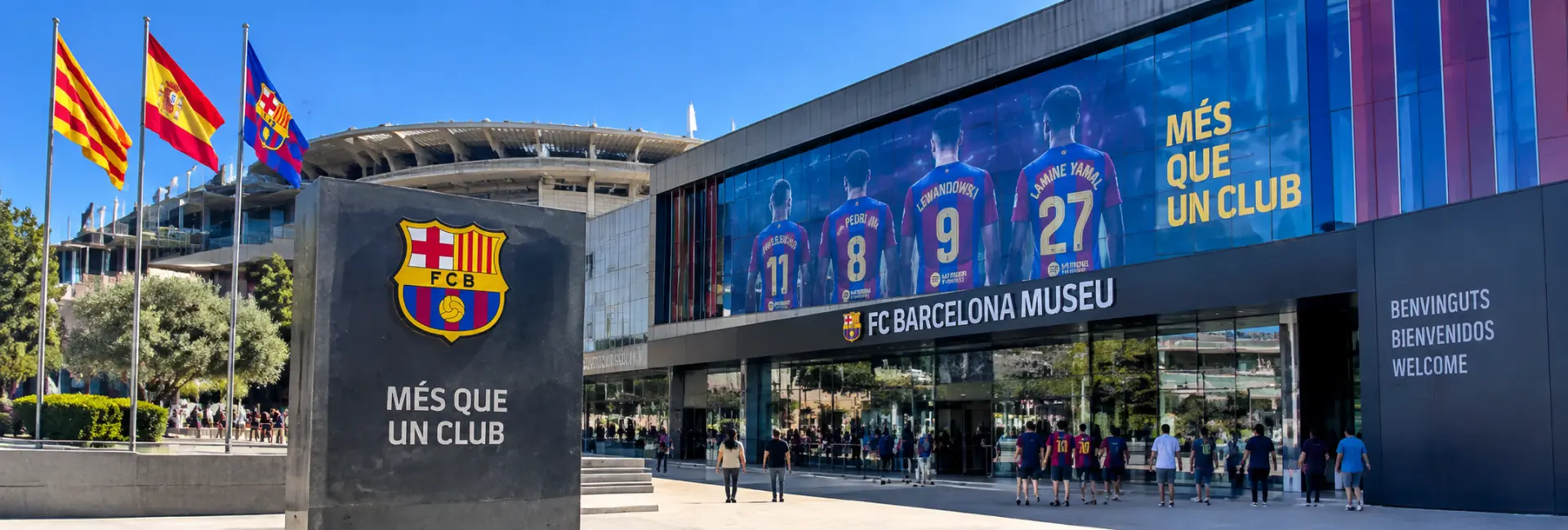
The FC Barcelona Museum, traditionally one of the most visited museums in Catalonia, has operated from a temporary exhibition space in the club's former ice rink since 2023 while its permanent home within the renovated stadium is completed. This interim setup, known as the Barça Immersive Tour, combines historical items, such as trophies and memorabilia from the club's history, with more experience-driven, multimedia elements. The fully renovated permanent museum is planned to reopen as part of the completed Espai Barça project, with the club targeting sometime in 2026, though as with the wider construction work this date may shift.
Ways to Experience It
- Match tickets: watching FC Barcelona play in the partially reopened stadium, subject to current capacity and ongoing works
- Barça Immersive Tour: the club's temporary museum experience, covering history, trophies, and interactive exhibits
- Stadium and museum combined tours: guided or self-guided routes that pair the temporary museum with available stadium areas, where offered during the renovation period
- Ciutat Esportiva Joan Gamper tours: visits to the club's training complex, offered as an additional experience alongside the main stadium and museum
Visiting Tips
Because Camp Nou remains an active construction site as well as a working stadium, visiting conditions can change with little notice.
- Check FC Barcelona's official website shortly before your visit to confirm which tours, museum spaces, and entrances are currently open
- Book match tickets or tours online in advance, since availability and access points can shift as construction phases progress
- Allow extra time for security checks and temporary walking routes around the construction perimeter
- Wear comfortable shoes, as pedestrian access points may require a longer walk than in the stadium's pre-renovation layout
- On match days, arrive earlier than usual, since temporary entrances and altered public transport patterns can add to journey times
Best Time to Visit
Weekday mornings tend to be the quietest time for the museum and any available tour routes, away from the crowds that build up around match days. If attending a match, arriving well before kickoff is especially important during the renovation period, given temporary entrances and ongoing construction around the site. Because access and hours are subject to change while Espai Barça continues, timing a visit around confirmed, currently available experiences matters more than any particular season.
Nearby Attractions
Camp Nou sits in the Les Corts district, a short distance from other sights along Avinguda Diagonal.
- Palau Reial de Pedralbes - a former royal residence with gardens, a short walk from the stadium
- Avinguda Diagonal - one of Barcelona's major avenues, connecting Les Corts to the Eixample district
- Monestir de Pedralbes - a well-preserved Gothic monastery a short trip further north
- Passeig de Gràcia and the Eixample's Modernisme landmarks - reachable by metro for a change of pace after visiting the stadium
FAQs about visiting Camp Nou and the FC Barcelona Museum
Is Camp Nou fully open to visitors right now? +
Not entirely; the stadium is partway through the Espai Barça renovation, so parts of the complex remain under construction, and current access to tours, matches, and the museum should be checked on FC Barcelona's official site before visiting.
Where is the FC Barcelona Museum currently located? +
Since 2023, the museum has operated as the Barça Immersive Tour from a temporary space in the club's former ice rink, while its permanent home in the renovated stadium is completed.
When will the museum reopen in its permanent location? +
FC Barcelona has targeted sometime in 2026 for the fully renovated museum to reopen as part of the completed Espai Barça project, though the exact date depends on the pace of ongoing construction.
Can I still watch a match at Camp Nou? +
Yes, FC Barcelona began playing matches again at a partially reopened Camp Nou in November 2025, with capacity expanding in stages as construction progresses.
How big will Camp Nou be once finished? +
The completed stadium is planned to hold around 105,000 seats under a full roof, which would make it the largest football stadium in Europe.
How do I get to Camp Nou? +
Metro lines L3 and L5 both serve the area, with the closest stations being Palau Reial and Les Corts on L3 and Collblanc and Badal on L5, alongside several tram and bus routes.
Should I book tickets in advance? +
Yes, booking match tickets or any available tours online ahead of time is recommended, since availability and access points can change as construction phases progress.
What should I combine my visit with? +
Nearby options include the Palau Reial de Pedralbes and its gardens, or a metro ride to Passeig de Gràcia to see Barcelona's Modernisme landmarks after visiting the stadium.
