
Table of Contents
Overview
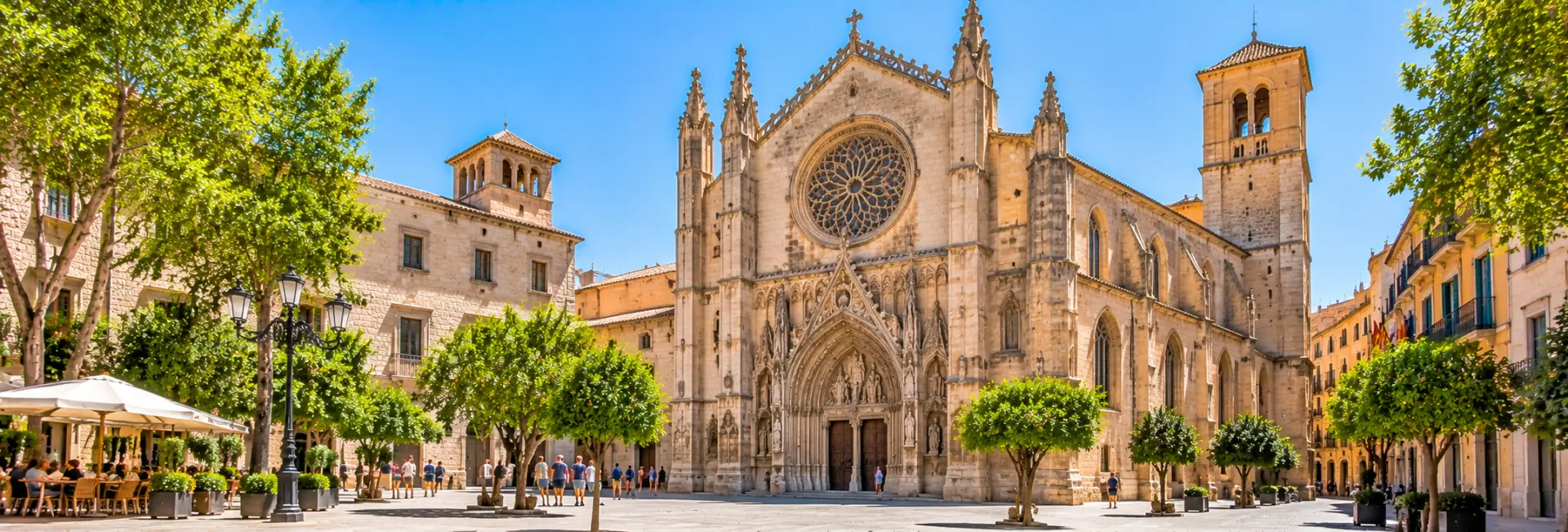
The Basilica of Sant Francesc is one of the oldest and most atmospheric churches in Palma, a Franciscan foundation that combines a soaring Gothic nave, a theatrical Baroque façade and one of the finest medieval cloisters on the island. It stands on a quiet square in the heart of the old town, a short walk from the cathedral and the town hall.
Many visitors come for two reasons. The first is the tomb of Ramon Llull, the Mallorcan philosopher, mystic and writer whose work helped shape literature in Catalan. The second is the cloister, a peaceful, shaded courtyard where orange and lemon trees grow around an old well and the stone columns seem to change style from one gallery to the next.
The basilica is less crowded than the cathedral, which is part of its appeal. It offers a slower, more contemplative visit that rewards time spent looking at carved capitals, vaulted ceilings and side chapels, and it gives a vivid picture of how monastic life shaped the city across seven centuries.
History
The Franciscans Arrive
The Franciscans came to Mallorca in 1232, soon after the Christian conquest of the island, and set about establishing a convent in the city. Work on the present church began in 1281 in the Gothic style and continued through the late thirteenth and fourteenth centuries. A rib vault completed in 1384 replaced the original wooden roof, giving the nave the lofty profile it has today.
A Façade Destroyed and Rebuilt
The original façade was struck by lightning and destroyed in 1580. The replacement was built in the Baroque style during the second half of the seventeenth century by the architects Pere Horrach and Francesc Herrera, and sources generally place its completion around 1700. The result is a striking contrast: a sober Gothic interior behind a richly carved Baroque entrance.
Chapels, Additions and Change
Over the centuries the church acquired new chapels and alterations. The ambulatory chapels around the apse were added between 1445 and 1670, which means the east end of the building reflects more than two centuries of building. The monastery itself was affected by the ecclesiastical confiscations of 1835, a reminder of how upheavals in Spanish history reshaped many religious houses.
The Church and Its Interior
The Façade
The front of the basilica is a broad wall of golden sandstone, typical of Mallorcan church architecture and surprisingly austere at first glance. At its centre a delicately carved Baroque portal and a large rose window draw the eye, and their detailed ornament contrasts with the plain stone around them.
The Nave and Chapels
Inside, the church follows a basilica plan with a single wide nave flanked by side chapels, eight in total. The high Gothic vault gives the space a feeling of height and calm, while the side chapels hold altars, paintings and tombs of monks that reward a slow walk around the interior.
The Baroque Altarpiece
The monumental high altarpiece is Baroque and glitters with gilded detail, a theatrical counterpoint to the austere Gothic architecture around it. It is one of the key sights of the interior and shows how successive generations adapted the building to the tastes of their time.
The Chapel of the Gorkum Martyrs
On the right side of the apse is a chapel dedicated to the nineteen Catholics, eleven of them Franciscans, who were martyred in the Netherlands in 1572. A faded painting in the chapel depicts their story and adds a sombre note to the visit.
The Cloister
The cloister is often described as the highlight of the visit, and it is easy to see why. It is laid out on a trapezoidal plan beside the church and was built over several centuries, with galleries on two levels.
A Building in Phases
The north gallery is the oldest, dating from the fourteenth century, and the western gallery adjoins the church. The southern side was built in the fifteenth century, and some elements were completed later still. This long construction explains why the slender columns and arches are not uniform, and walking around the cloister feels like reading a short history of Gothic taste.
Capitals and Carvings
Look closely at the tops of the columns and you will find carved capitals decorated with natural motifs such as oak leaves, grapes and curling fronds. Their variety rewards a slow circuit, and they make excellent subjects for photography in the soft light of the courtyard.
The Garden
At the centre of the courtyard are orange and lemon trees and an old well, creating a sheltered garden that feels far removed from the streets outside. It is one of the quietest places in the old town and a good spot to sit for a few minutes.
Ramon Llull and Junípero Serra
The Tomb of Ramon Llull
Ramon Llull, who died in 1316, is one of the most important figures in Mallorcan history. A philosopher, theologian, mystic, missionary and writer, he wrote in Catalan and Latin and is often regarded as a founder of literary Catalan. His alabaster tomb is set high on the wall of a chapel off the apse, and visitors often stop here for longer than at any other point in the church. The Catholic Church has beatified him, and he remains a cherished symbol of Mallorcan culture.
Junípero Serra
The basilica also has a connection to another famous Mallorcan, the Franciscan friar Junípero Serra, who lived and studied at the friary here before leaving for New Spain in 1749. He later founded missions in California, and a statue of him stands outside the church on the square. His story gives the building an unexpected link to the history of the Americas.
Recognition and Status
The church holds the title of minor basilica, which was granted by a decree dated 14 May 1943. This is an honour conferred by the Catholic Church on churches of particular historical, spiritual or architectural significance.
The Gothic cloister is also protected as a national monument, and together the church and cloister are regarded as one of the best preserved and most beautiful architectural ensembles in Palma. Their survival through fires, rebuilding and confiscations is part of what makes the site so valuable for understanding the city's medieval past.
Visiting Etiquette and Tips
The basilica is a place of worship as well as a historic monument, so a respectful approach is expected. These practical points will help you plan your visit.
- Dress modestly, covering shoulders and knees, and keep your voice low inside the church.
- There is an entrance fee that covers the church and cloister, and visitors have described it as modest. Check the current price when you arrive.
- Opening hours differ between summer and winter, and access to the church can be restricted during services, so confirm the times for the day of your visit.
- Look for the information card or guide offered at the ticket desk, which explains the main points of the building. Guided tours in several languages are also available.
- Some visitors report that a button near the entrance lights up the altarpiece, which makes it much easier to appreciate the gilding.
- There are steps and uneven surfaces, and wheelchair access is limited, so check ahead if you have mobility needs.
- Check what rules apply to photography before using a camera inside the church.
- A small gift shop operates on site.
Best Time to Visit
Time of Day
Early morning and late afternoon tend to be the quietest times, and the softer light brings out the sandstone of the façade and the carvings in the cloister. Midday can feel busier when tour groups pass through, although the interior remains calm compared with Palma's larger monuments.
Time of Year
The basilica can be visited in any season. In summer the thick stone walls offer relief from the midday heat, while in spring and autumn the cloister garden is especially pleasant for a longer stay. Winter opening hours have been shorter than summer ones, so plan a little earlier in the day.
Nearby Attractions
Plaça de Sant Francesc
The square in front of the basilica has a few cafés and makes a pleasant place to pause before or after your visit, with the statue of Junípero Serra close at hand. The lanes behind the church were once home to jewellers and Jewish traders.
Plaça de Cort
The town hall and its ancient olive tree are only a couple of hundred metres away, making this an easy addition to your walk.
Església de Santa Eulàlia
The Gothic church of Santa Eulàlia is only a short distance away, and together with Sant Francesc it forms one of the most rewarding pairs of medieval religious buildings in the old town.
Palma Cathedral and Plaça Major
The cathedral and Plaça Major are both about four hundred metres from the basilica, and the Passeig del Born is also a short walk, so the church fits naturally into a day exploring the centre.
FAQs about visiting the Basilica of Sant Francesc
What is the Basilica of Sant Francesc known for? +
It is known for its Gothic cloister, its Baroque façade and the tomb of the philosopher and writer Ramon Llull.
When was it built? +
Construction began in 1281, and the church was completed in the Gothic style over the following century. The façade was rebuilt in the Baroque style after lightning destroyed the original in 1580.
Who is buried in the basilica? +
Ramon Llull, the Mallorcan philosopher, theologian and writer who died in 1316, has his alabaster tomb inside the church.
Is there an entrance fee? +
Yes, there is a modest entrance fee for the church and cloister. Prices and opening hours change, so confirm them before you go.
How long should I spend there? +
Allow roughly 30 to 60 minutes to see the church and walk around the cloister, and a little longer if you want to take photographs or sit in the garden.
Is it accessible for wheelchair users? +
Access is limited because of steps and uneven surfaces, so check ahead if you have mobility needs.
Is the basilica still used for worship? +
Yes. It is an active place of worship, so dress modestly, keep voices low and expect some areas to be restricted during services.
What can I combine with a visit? +
Plaça de Cort, the church of Santa Eulàlia, Plaça Major, Palma Cathedral and the Passeig del Born are all within a short walk.
