
Table of Contents
Overview
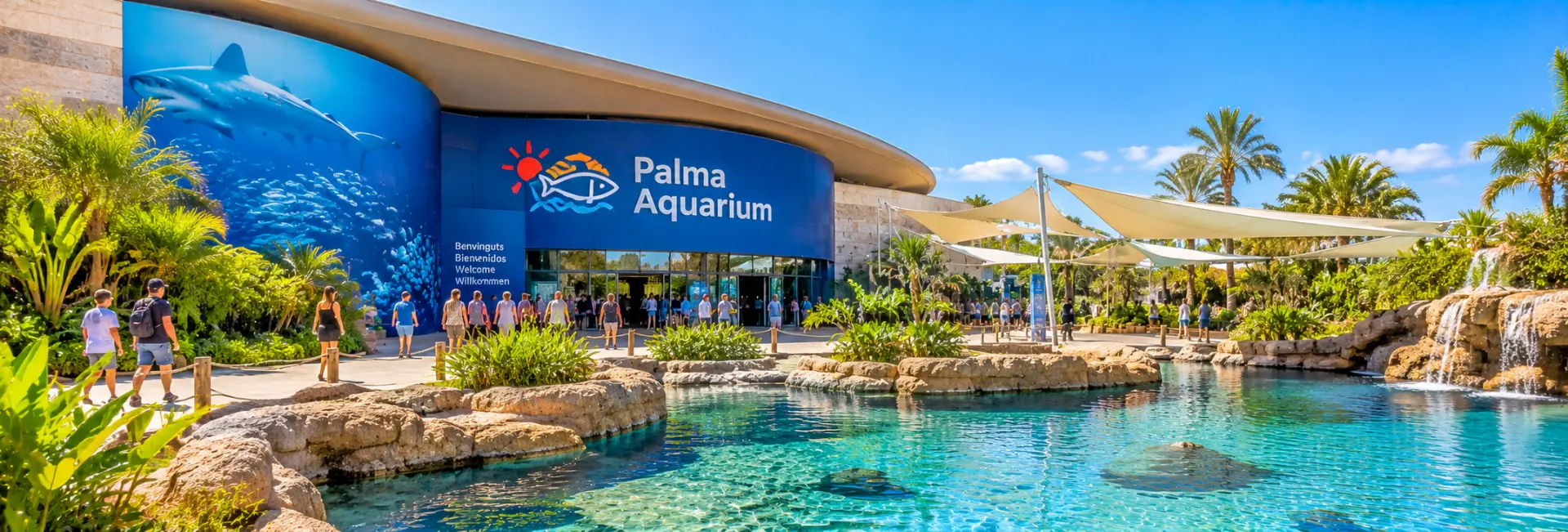
Palma Aquarium is one of the best-known family attractions on Mallorca, a marine park on the coast of Can Pastilla, a short drive east of Palma's old town. Around 55 tanks hold more than 8,000 animals from roughly 700 species, drawn from the Mediterranean and from the Indian, Atlantic and Pacific oceans.
The visit is organised as a route through themed habitats rather than a single hall of tanks. You pass from the Mediterranean coast to tropical coral reefs, step out into landscaped gardens, climb to a rooftop jungle with a waterfall, and finish at the Big Blue, a deep shark tank that is among the largest of its kind in Europe.
The aquarium is also a working conservation centre. Its foundation rescues and rehabilitates sea turtles and other marine animals in the Balearic Islands, which gives a visit a purpose beyond sightseeing. Its guiding idea, repeated across its materials, is that understanding the sea leads people to value it and then to protect it.
History and Background
Opening and Ownership
Palma Aquarium opened in 2007 and is part of Coral World International, a group that builds and operates marine attractions in several countries. The company's approach is to base each venue on the local marine environment, so Palma's displays place a strong emphasis on the Mediterranean while also representing tropical seas.
A Site Beside the Sea
The park covers around 24,000 square metres and sits about 500 metres from the beach at Playa de Palma. Its location on the Bay of Palma means salt air and sea views are part of the setting, particularly in the outdoor gardens.
Early Recognition
In its opening year the aquarium received two awards: the Best Business Initiative in the Balearics, presented by the business magazine Actualidad Económica, and an accessibility prize from the Consell de Mallorca. Accessibility has remained part of its identity, and the site is listed as wheelchair accessible.
Zones and Highlights
The aquarium follows a route through several habitats. The order of areas and the animals on show can change over time, but the main zones below form the backbone of the visit.
The Mediterranean
The first tanks focus on the Mediterranean Sea, a largely enclosed body of water with limited renewal that has pushed its species to adapt to demanding conditions. The displays introduce the fish, invertebrates and habitats found around the Balearic coast, which makes this section a good grounding for the rest of the visit.
Tropical Seas and Coral
This section reproduces tropical ecosystems from the Indian, Atlantic and Pacific oceans. Its living coral collection is among the largest in Europe, and the aquarium reports that the route includes around 275 species of coral. Brightly coloured reef fish move among the corals, creating one of the most photogenic parts of the visit.
Mediterranean Gardens
Halfway through the route you move outdoors into gardens that echo the landscapes of Mallorca. Mediterranean plants surround open tanks housing sea turtles, sharks, rays and other freshwater and saltwater fish, so visitors can see animals at close range in natural light. Residents have included hawksbill turtles and koi carp, and the mix of planting and water makes this a restful stretch between the more intense indoor sections.
The Jungle
Climbing to the roof brings you into a tropical rainforest setting, reported to be one of the largest rooftop gardens in Europe. Dense planting, a waterfall around seven metres high and a humid atmosphere make it a striking contrast to the aquarium rooms below.
The Big Blue
The Big Blue is the centrepiece: one of the deepest and largest shark tanks in Europe. Sharks such as sand tiger sharks and nurse sharks glide past alongside rays and large open-ocean fish, and a viewing area in front of the glass invites visitors to linger.
Whales and Jellyfish
Further areas are devoted to whales and to jellyfish, with an interactive exhibition for younger visitors. Together they widen the visit beyond reefs and sharks to some of the ocean's strangest and largest animals, and they give children a chance to learn through an interactive exhibition rather than glass alone.
Marine Conservation and the Palma Aquarium Foundation
The Palma Aquarium Foundation is the park's conservation arm and acts as a recovery and rescue centre for sharks, cetaceans and sea turtles in the Balearic Islands. When a turtle in difficulty is reported anywhere in the archipelago, the foundation's team may be called to collect it, treat it and, where possible, release it back to the sea.
Rescue and Rehabilitation
Sea turtle recovery is the most visible strand of this work. Injured and sick animals are cared for at the centre, and some of the rehabilitating turtles can be seen in the outdoor tanks as part of the visit.
Breeding and Research
The foundation also takes part in European breeding programmes for threatened species, work that depends on healthy, genetically diverse stock. Combined with its rescue operations, this ties the aquarium into wider efforts to protect marine life around the Balearic Islands rather than only displaying it.
Education and Community Projects
The foundation runs environmental education programmes for schools and families, volunteer clean-ups of natural areas, and campaigns about threats such as plastic pollution. It also draws attention to the importance of Posidonia, the seagrass meadows that underpin Mediterranean marine life.
Visitors can learn more about these projects through the aquarium's talks and workshops, which cover topics such as sustainability and the impact of microplastics on the oceans.
Ways to Experience It
Most people follow the standard route at their own pace, but there are several ways to extend or vary the visit. Availability, age limits and prices change, so check current options with the aquarium.
- Follow the main route from the Mediterranean through the tropical seas, gardens and jungle to the Big Blue, allowing a few hours.
- Join a behind-the-scenes tour, which has been offered as a way to see how the park works beyond the public tanks.
- Look for glass-bottomed boat or close-encounter experiences over the shark tank, which have been offered at times.
- Watch the 3D cinema show, available as an optional extra with some tickets.
- Let younger children burn off energy in the interactive Explore area and indoor play spaces.
- Ask about special programmes for children, such as birthday parties and overnight stays beside the Big Blue, which have been offered for certain age groups.
- Stop for lunch at the on-site restaurant, or choose the pizzeria and ice cream parlour set in the gardens.
Best Time to Visit
Time of Day
Arriving soon after opening is the easiest way to enjoy the busiest tanks before crowds build, particularly at the Big Blue and in the corridors leading to it. Some visitors report that the park can get crowded as the day goes on, so an early start leaves time for a relaxed lunch and a second look at your favourite exhibits.
Time of Year
Much of the route is indoors, so the aquarium works well on a wet or very hot day. The outdoor gardens and rooftop jungle are most comfortable in spring and autumn, while summer visitors should expect strong sun on the exposed areas and plan to carry water and a hat. School holidays are likely to be the busiest periods, so a weekday outside them is the safer choice for a calmer visit.
Visitor Tips
- Most visitors spend between two and four hours at the aquarium. Families with young children often stay longer, especially if they use the play areas and have lunch on site.
- Buying tickets in advance online can save time at the entrance, and prices and opening hours vary by season, so confirm them on the official site before you go.
- The aquarium is about 15 minutes by road from the centre of Palma and close to the airport. Several local and regional bus routes serve the area, so check current numbers and timetables before you travel.
- Wear comfortable shoes, since the route includes stairs and outdoor stretches, and bring sun protection for the gardens and jungle.
- The site is listed as wheelchair accessible, but check ahead if you plan to join specific tours or experiences.
- Photography is easiest at the coral displays and Big Blue, where ambient light is dim, so switching off your flash helps both your photos and the animals.
- If you plan to see several attractions across Mallorca, ask about combined passes or online discounts that may cover entry.
Nearby Attractions
Playa de Palma
The long sandy beach is only around 500 metres from the aquarium, which makes it easy to combine the visit with a swim or a walk along the seafront promenade.
Can Pastilla and S'Arenal
The neighbourhood of Can Pastilla offers cafés, restaurants and beachfront walks, and S'Arenal lies a short distance further along the bay.
Palma Old Town
The historic centre, with the cathedral, the Almudaina Palace and the Passeig del Born, is roughly a 15-minute drive away, so it is easy to pair a morning at the aquarium with an afternoon of sightseeing in the city.
FAQs about visiting Palma Aquarium
What is Palma Aquarium known for? +
It is known for its Big Blue shark tank, one of the deepest and largest in Europe, as well as its living coral displays, rooftop jungle and sea turtle rescue work.
How many animals and species does it have? +
The aquarium has around 55 tanks holding more than 8,000 animals from about 700 species, representing the Mediterranean and the Indian, Atlantic and Pacific oceans.
How long does a visit take? +
Most visitors spend two to four hours following the main route, and families with children often stay longer.
Is it a good option on a rainy day? +
Yes, much of the route is indoors, although the gardens and rooftop jungle are best enjoyed in fine weather.
How do I get there from Palma old town? +
The aquarium is in Can Pastilla, roughly 15 minutes by road from the centre, and several bus routes, taxis and car travel all reach it.
Is it suitable for young children and wheelchair users? +
Yes, the aquarium is aimed at families, includes interactive and play areas for children, and is listed as wheelchair accessible. Check ahead if you plan to join specific experiences.
Does Palma Aquarium do conservation work? +
Yes. The Palma Aquarium Foundation runs rescue and rehabilitation work for sea turtles and other marine animals in the Balearic Islands, and the park presents conservation as a core part of its mission.
What else can I do nearby? +
Playa de Palma beach is only a few hundred metres away, and Can Pastilla and S'Arenal offer cafés and seafront walks nearby.
