
Table of Contents
Overview
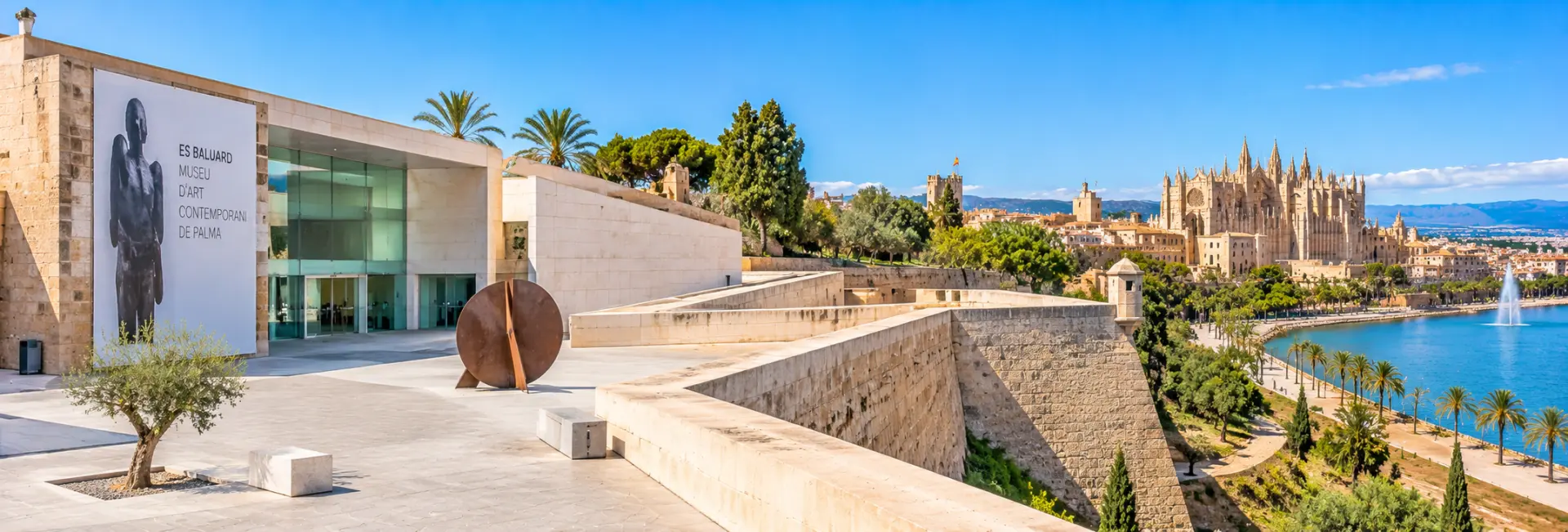
Es Baluard is Palma's museum of modern and contemporary art, and few galleries anywhere have a stranger or more impressive home. It sits inside the Baluard de Sant Pere, a mighty Renaissance bastion on the western edge of the old city walls, so a visit means walking from sixteenth-century fortifications into bright, modern exhibition rooms and back out onto the ramparts.
The museum opened in 2004 and focuses on art from the Balearic Islands and the wider Mediterranean, set in dialogue with national and international movements. Its collection runs from the late nineteenth century to the present, and its changing exhibitions keep the programme fresh for repeat visitors.
Beyond the art, Es Baluard offers some of the best open-air views in the city. Terraces on the old walls look across the cathedral, the seafront promenade and the bay, which makes the museum as much a viewpoint as a gallery.
It also sits in a part of town that has become closely associated with galleries and creative life, so a visit fits naturally into a wider day of wandering. Whether you come for a particular artist, for the architecture or simply for the sea air on the ramparts, the museum rewards both a short stop and a longer, slower visit.
History of the Museum
A Bastion on the City Walls
The Baluard de Sant Pere was built in the late sixteenth century as part of the Renaissance walls that enclosed Palma until the early twentieth century. Its large size and strategic position on the western side of the fortified city made it important enough to host one of Europe's most respected artillery schools. The neighbourhood around it, Sant Pere, has even older roots that go back to Palma's Islamic period.
From Military Site to Abandoned Ground
The bastion's military use ended in 1952, after more than three hundred years, and it later passed into private ownership. In the late 1980s the land was classified for public use and expropriation began, but the site then stood neglected for years.
Birth of the Museum
In 1997 Palma City Council made the land available for a museum of modern and contemporary art. The institution opened its doors on 30 January 2004 as the Es Baluard Museu d'Art Modern i Contemporani de Palma. It is a public institution managed by a foundation, supported by the city council, the Mallorca island council and the Balearic government. The core of its collection came from donations and deposits by the Fundació d'Art Serra and from public bodies, and it has grown through further acquisitions and gifts.
Architecture & Building
New Architecture Inside Old Walls
The museum was designed by the architects Lluís and Jaume García-Ruiz, Vicente Tomás and Ángel Sánchez Cantalejo. Rather than treat the bastion as an empty shell, they set modern concrete structures into the historic fabric, so that old stone and new volumes face each other throughout the visit. The building is designated as a Bien de Interés Cultural, reflecting the importance of its fortifications.
Ramps, Skylights and Balconies
Inside, three levels are linked by ramps, large indoor balconies and skylights that bring daylight into spaces that might otherwise feel enclosed. Routes lead from gallery to gallery and out onto the walls, so the experience keeps shifting between interior rooms and open air.
Hidden Heritage
- A seventeenth-century water reservoir, rediscovered during construction, was restored and incorporated into the museum. It once supplied the Sant Pere neighbourhood and ships in the harbour.
- Remains of a Muslim tower dating to the eleventh century have been partly restored and stand within the building's footprint.
- Open terraces and viewing platforms on the bastion offer views of the cathedral, the Passeig Marítim and the bay.
- An educational space within the complex hosts workshops and activities for visitors of different ages.
Collections & Exhibits
A Mediterranean Focus
The permanent collection contains more than seven hundred works dating from the late nineteenth century to today. It brings together painting, sculpture, ceramics, drawing, photography, video and installation, and it concentrates on artists linked to the Balearic Islands and the Mediterranean while placing them within international art history.
From Modernism to the Avant-Garde
Early rooms trace the island's modernist painters, including Joaquín Sorolla, Hermen Anglada-Camarasa, Joaquim Mir and Santiago Rusiñol, many of whom were drawn by Mallorca's light and landscapes. The collection then moves through twentieth-century avant-garde figures such as Pablo Picasso, Joan Miró and Fernand Léger before reaching more recent trends and the work of living artists.
Temporary Exhibitions and Programmes
Alongside the permanent displays, Es Baluard presents a rotating schedule of temporary exhibitions. The museum also organises performances, music events, seminars, educational workshops and outreach programmes, so there is often something new to see even if you have visited before.
Must-See Highlights
- The Mallorcan landscape paintings: a section devoted to views of the island by local and visiting artists, including the modernists Rusiñol and Sorolla and the Mallorcan-born Miquel Barceló.
- The Joan Miró works: a dedicated presentation of this artist's connection to the island, where he lived and worked.
- Picasso's ceramics: unusual pieces displayed on an upper level that show a playful side of the artist.
- The rooftop and rampart terraces: wide views over the cathedral, the harbour and the bay, particularly rewarding in good light.
- The medieval and Renaissance details: the bastion walls, the reservoir and the tower remains woven into the building.
- The temporary exhibitions: check the current programme before you go, as these often provide the most distinctive experiences.
Es Baluard is not a collection built around a handful of famous masterpieces. Its strength lies in how art, architecture and setting combine, so allow time to enjoy all three.
Ways to Experience It
The museum is easy to explore independently, with routes moving through the galleries and outdoors. Many visitors begin at the entrance gallery, follow the permanent collection through the levels, then finish on the terraces for the view.
- Combine the collection with the building. Notice where concrete and ancient stone meet, and look up at the skylights.
- Step outside between galleries. The ramparts provide a welcome change of pace and a fresh perspective on the city.
- Take a break at the museum cafe, which is part of the complex, or browse the bookshop for art books and gifts.
- Attend an event or workshop if the schedule matches your visit.
- Pair the visit with a walk along the nearby seafront promenade or a stroll through the Santa Catalina district.
Allow about one to two hours for the galleries, plus extra time if you want to linger on the terraces or attend a programme.
Best Time to Visit
Time of Day
Weekday mornings are generally quieter, which makes it easier to appreciate the rooms and the terraces in peace. Late afternoon is a lovely time to be on the bastion, when the light softens over the cathedral and the bay. Many visitors also enjoy finishing the day with a drink or meal in the lively streets nearby.
Time of Year
The museum works in every season. In summer, its interior galleries offer a cool break from the midday heat, while the terraces are best enjoyed in the evening. Spring and autumn give the most comfortable weather for combining the museum with walking in the old town, and winter is calm and often clear, perfect for views.
If you want to see the museum at its liveliest, look for evenings or days with a special programme, such as an opening, a performance or an arts night. These occasions bring a different crowd and a social atmosphere to the galleries and terraces, though they can also be busier, so plan ahead if you prefer a quiet visit.
Visiting Etiquette & Tips
Es Baluard is a public museum with set opening days and ticketing rules. Hours, closing days, admission prices and temporary exhibition dates change over time, so confirm them on the official museum website shortly before your visit. The museum has typically been closed on Mondays and open later on weekdays than on Sundays.
- Check what is on. Temporary exhibitions change several times a year and can shape how you spend your time.
- Wear comfortable shoes. The building includes ramps and terraces, and the walk from the old town can involve uneven pavements.
- Look into accessibility. The museum is designed with ramps and lifts, but ask staff about the best route if you need step-free access.
- Follow the gallery rules on photography and bags, and keep a respectful distance from artworks.
- Bring sun protection if you plan to stay on the terraces, which can be exposed in summer.
- Ask about guided visits, workshops and special programmes, which can add context to the collection and the building.
Nearby Attractions
The museum stands on the edge of the old town, so it connects easily with several other places to visit.
- Palma Cathedral (La Seu): visible from the terraces and just a short walk away along the old walls.
- Royal Palace of La Almudaina: the royal residence beside the cathedral, a natural companion visit.
- Palma Old Town: the web of historic lanes, squares and patios that begin a few minutes' walk from the museum.
- Santa Catalina: a former fishermen's quarter, now known for its market, wine bars and restaurants.
- Passeig Marítim: the long seafront promenade with views across the harbour.
- Parc de Sa Feixina: a small, popular park close to the waterfront.
FAQs about visiting Es Baluard Museum
What is Es Baluard? +
It is Palma's museum of modern and contemporary art, housed in a restored Renaissance bastion on the old city walls. It opened in 2004 and concentrates on Balearic, Mediterranean and international art from the late nineteenth century onward.
Which artists can I see? +
The collection includes works by Joaquín Sorolla, Santiago Rusiñol, Hermen Anglada-Camarasa, Joaquim Mir, Pablo Picasso, Joan Miró, Fernand Léger and Miquel Barceló, along with many contemporary artists.
How long does a visit take? +
Most visitors spend one to two hours in the galleries. Add more time if you want to enjoy the terraces, a coffee or an event.
Is the building worth seeing even if I am not an art fan? +
Yes. The mix of Renaissance fortifications and modern architecture, plus the sea and cathedral views from the terraces, makes the building itself a highlight.
Does it have a cafe and shop? +
Yes. The museum has a cafeteria-restaurant and a shop and bookshop, both useful for a break before or after the galleries.
Is the museum open every day? +
Not necessarily. It has typically been closed on Mondays and open for shorter hours on Sundays, but schedules change, so check the official website before travelling.
Is it suitable for children? +
Many families enjoy the open spaces and ramparts, and the museum runs educational activities. Younger children may need guidance in the galleries, so check the current programme for family-friendly events.
Where is the museum, and how do I get there on foot? +
It is on Plaça de la Porta de Santa Catalina on the western side of the old town. The walk from the cathedral takes roughly ten to fifteen minutes through the historic centre.
