Table of Contents
Overview
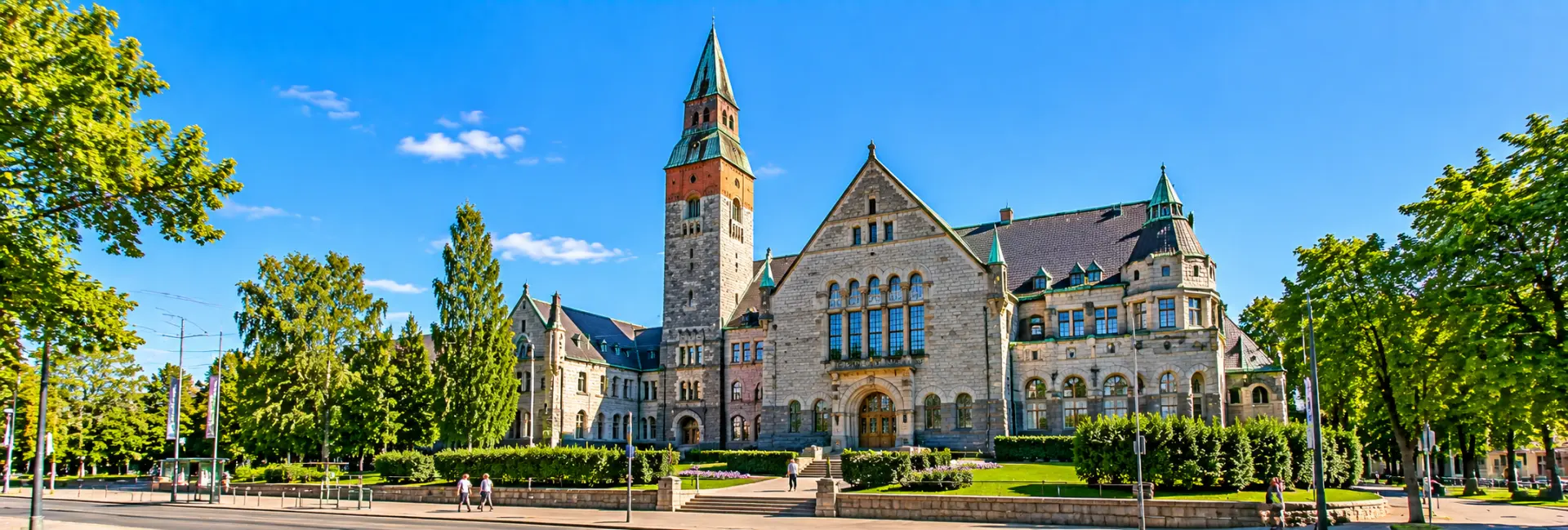
Standing on Mannerheimintie across from Finlandia Hall, the National Museum of Finland occupies a granite, castle-like building that has told the story of Finnish history and culture since 1916. Its collections span more than 10,000 years, from Stone Age tools to twentieth-century social history, housed inside one of the country's most significant works of National Romantic architecture.
As of this writing, the museum is closed to the public for a major renovation and expansion project, with reopening planned for spring 2027; the notes below describe both what the museum has long offered and what the current project is expected to add.
History
From State Historical Museum to National Institution
The museum's origins go back to 1893, when it was founded as the State Historical Museum by combining several older Finnish collections under state care. An architectural competition for a purpose-built home followed in 1902, won by the young Helsinki firm of Herman Gesellius, Armas Lindgren and Eliel Saarinen, whose partnership had already made a name for itself with the Finnish Pavilion at the 1900 Paris World's Fair.
Construction ran from 1905 to 1910, though the building did not open to the public until 1916. After Finland declared independence in 1917, the institution took on its present name, the National Museum of Finland, cementing its role as a symbol of the new state's cultural heritage as much as a repository for it. Today the museum operates under Finland's Heritage Agency, formerly known as the National Board of Antiquities, reflecting its role as the country's central custodian of cultural-historical collections rather than a single stand-alone institution.
Renovation and Reopening
The building underwent a thorough renovation between 1997 and 2000, reopening that July, and its tower and prehistory exhibition were both further updated in 2017. In October 2023 the museum closed its doors again for a far larger project: a full renovation of the historic building combined with a substantial new underground extension, the largest construction undertaking in the museum's history.
Architecture
Gesellius, Lindgren and Saarinen designed the museum to evoke Finland's medieval churches and castles, giving it a granite façade, steatite (soapstone) decoration, and a 58-metre tower that has long been a fixture of the Helsinki skyline along Mannerheimintie. The National Romantic exterior gives way to an Art Nouveau interior, with a vaulted central hall connecting the museum's various historical departments.
A bronze bear by the sculptor Emil Wikström, dating to 1910, stands guard near the entrance, one of several sculptural details, including turrets carved with animal reliefs, that mark the building as a showpiece of Finnish architecture from the turn of the twentieth century.
The Kalevala Frescoes
The museum's most celebrated interior feature is a set of ceiling frescoes in the vaulted entrance hall, painted in 1928 by the Finnish artist Akseli Gallen-Kallela and based on murals he had created almost three decades earlier for the Finnish Pavilion at the 1900 Paris World's Fair. The four scenes, depicting episodes from Finland's national epic, the Kalevala, are titled The Forging of the Sampo, The Defence of the Sampo, Ilmarinen Ploughs a Field of Vipers, and The Great Pike, and have traditionally been viewable from the first-floor balcony without an entrance fee.
Collections
The museum's holdings run to roughly half a million objects tracing Finnish history from prehistoric times through independence and into the twentieth century. Its long-running permanent exhibition, Story of Finland, has covered everything from Stone Age tools and Bronze and Iron Age weapons to the medieval period, the country's centuries under Swedish and then Russian rule, and its path to independence, alongside collections of coins, medals, silver, jewellery and historic weapons.
Among its more unusual holdings are Indigenous Southwestern American artefacts from the Mesa Verde cliff dwellings in Colorado, donated by the Finnish explorer Gustaf Nordenskiöld, and the ceremonial throne used by Tsar Alexander I of Russia in 1809, when Finland became a grand duchy of the Russian Empire.
Alongside its historical galleries, the museum has offered a dedicated hands-on space for children, Workshop Vintti, and has run guided English-language tours during the summer months in past years, reflecting an effort to make the collections accessible to a broad range of visitors rather than specialists alone.
The Current Renovation and Expansion
The renovation and expansion under way since October 2023 is being carried out by JKMM Architects, the Helsinki firm also responsible for the Amos Rex art museum, whose winning "Atlas" proposal was chosen from 185 competing designs in December 2019. The roughly 55-million-euro project restores the historic Gesellius-Lindgren-Saarinen building while adding a new extension of several thousand square metres, around ninety percent of it underground.
The new construction includes what is expected to be the largest single exhibition hall in the Nordic region, along with additional event and educational spaces, all reached through a new glazed entrance pavilion set within the museum's formerly enclosed courtyard garden, which is being reopened as a public park with its own restaurant. The combined historic and new complex is scheduled to reopen to the public in spring 2027.
Visiting During the Closure
With the museum itself closed, visitors curious about the project can currently explore a temporary public space, the Future National Museum, which showcases JKMM's plans alongside objects from the museum's collections and an interactive installation exploring public hopes for the redeveloped institution; this space is free to enter. The building's exterior, including its landmark tower and granite façade, also remains visible from Mannerheimintie throughout the closure.
Visitor Tips
- Confirm the museum's reopening status before planning a visit, since spring 2027 is a target rather than a guaranteed date
- Look for the Future National Museum exhibition space if visiting Helsinki before the full reopening, for a preview of the redevelopment
- Once reopened, budget time for the Kalevala frescoes in the entrance hall, traditionally viewable without a ticket
- Combine a visit with nearby Finlandia Hall and the Sibelius Monument, both within easy walking distance
Nearby Attractions
- Finlandia Hall, Alvar Aalto's concert and congress venue, directly across Mannerheimintie
- Sibelius Park and the Sibelius Monument, a short walk north
- Oodi Central Library and Kansalaistori Square, a short walk south
- Temppeliaukio Church, the rock-cut Lutheran church nearby in Töölö
FAQs about visiting the National Museum of Finland
Is the National Museum of Finland currently open? +
No, it has been closed since October 2023 for a major renovation and expansion project, with reopening planned for spring 2027.
What is the museum known for? +
It is Finland's principal history museum, known for its castle-like National Romantic building, its Kalevala-themed ceiling frescoes by Akseli Gallen-Kallela, and collections spanning over 10,000 years of Finnish history.
Can I visit anything related to the museum while it is closed? +
Yes, a temporary space called the Future National Museum is open free of charge, showcasing the renovation plans and select objects from the collections.
Who designed the museum building? +
It was designed by the Finnish architectural firm of Herman Gesellius, Armas Lindgren and Eliel Saarinen, following a competition win in 1902, with construction running from 1905 to 1910.
What is being added in the current renovation? +
A large new extension, mostly underground, designed by JKMM Architects, including what is expected to be the Nordic region's largest single exhibition hall, a new glazed entrance pavilion, and a reopened courtyard garden with a restaurant.
Will the Kalevala frescoes still be viewable after reopening? +
The frescoes are a fixed feature of the historic building's entrance hall and are expected to remain on view once the museum reopens.
Where is the museum located? +
It stands on Mannerheimintie in the Töölö area of central Helsinki, directly across from Finlandia Hall and within walking distance of the Sibelius Monument.