
Table of Contents
- Overview
- The Site and Its Long Construction History
- Exterior Architecture and the Cathedral Setting
- The Interior: Scale, Light and Spatial Rhythm
- Choir, Sacred Art and Musical Heritage
- Worship, Etiquette and Different Ways to Visit
- Timing, Tickets and Access Considerations
- Nearby Streets and a Cathedral-Centred Walk
Overview
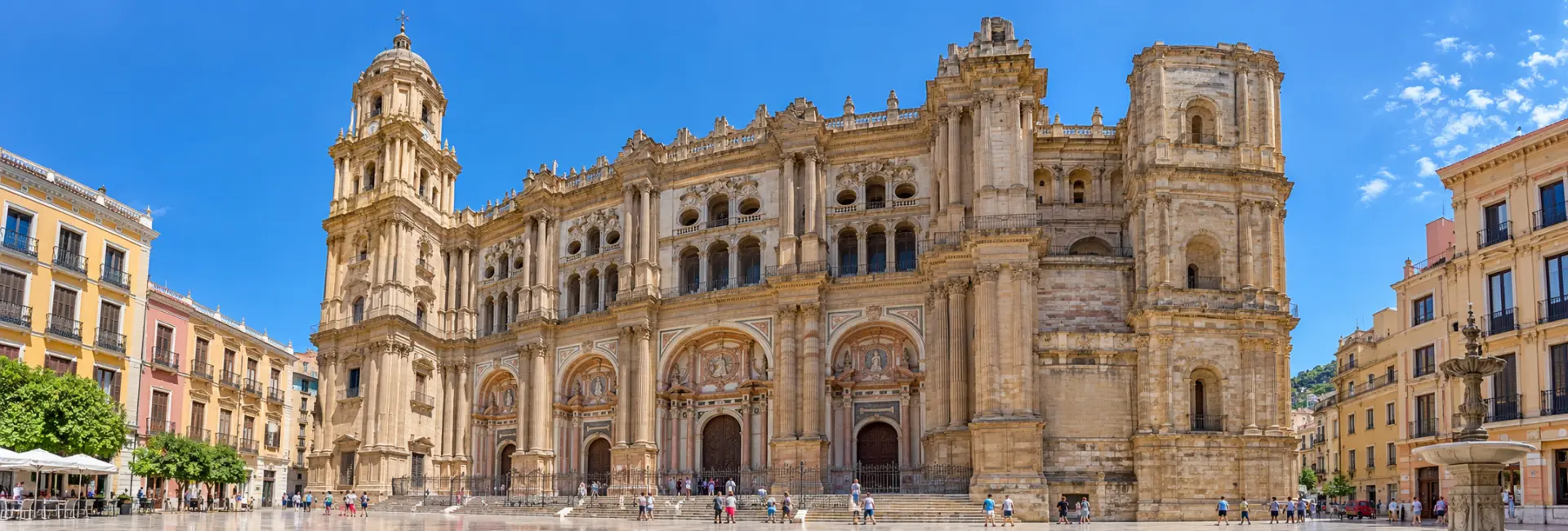
Málaga Cathedral is a major landmark in the historic centre and an active place of worship. Its full dedication is to the Incarnation, but many visitors know it through the nickname La Manquita, associated with its unfinished south tower. The uneven skyline is immediately recognisable, while the interior rewards a slower and more attentive visit.
The building brings together architecture, sculpture, painting and religious practice. Approaching it as only a large church misses the way these elements support one another: the scale of the interior establishes a setting for worship, while the choir and chapels organise more focused encounters with sacred art.
Set aside about an hour for a general cultural visit, extending that estimate if you use an audio guide or spend time studying individual works. Any separately offered upper-level experience needs its own time allowance and should be checked directly before booking.
Its central position makes the cathedral easy to combine with other attractions, but it deserves a deliberate pause rather than a hurried photograph between museums.
The Site and Its Long Construction History
The cathedral’s story is linked to the religious transformation of Málaga after the Christian conquest in 1487. The city’s principal mosque was initially adapted for Christian use, and the later cathedral developed on the same historic site. This background connects the building to a major change in the city’s political and religious life.
Construction and completion took place in stages over several centuries. Renaissance design is central to the present building, but the long process also introduced other stylistic elements. The resulting structure is best understood as a cumulative project rather than a single architect’s finished work.
The eighteenth century was especially important in shaping the cathedral seen today. Financial and historical circumstances prevented the entire intended scheme from being completed, leaving the south tower as the most familiar visible reminder. Popular explanations for the missing tower are sometimes told with more confidence than the evidence justifies.
A good visit separates the documented fact of incompletion from colourful stories about why it happened. The architectural contrast is interesting in its own right, without needing a dramatic legend to make it memorable.
Exterior Architecture and the Cathedral Setting
Begin by looking at the building from more than one surrounding street. Close views emphasise entrances, masonry and vertical detail, while a more open position allows the relationship between the towers and the main body to become clearer. A single photograph rarely conveys both scales well.
Plaza del Obispo provides an especially useful setting for appreciating the cathedral in relation to the historic city. The square and nearby Episcopal Palace create an architectural conversation across the public space. This is a good place to pause before entering, particularly if you want to understand how a monumental church fits into a compact street network.
Do not assume that the entrance visible in a photograph is the entrance used for the cultural visit. Follow the current signs and ticketing directions, since access may be organised differently for worship, visitors or special works. Allow extra time when arriving during a religious celebration.
Look upwards, but also notice the ground-level experience. The contrast between narrow surrounding streets and the building’s large volume is part of what gives the cathedral such a strong presence in central Málaga.
The Interior: Scale, Light and Spatial Rhythm
Inside, take a moment to adjust before moving towards individual artworks. The large supports and high vaulting establish a repeated rhythm, and the impression of height becomes clearer when viewed along the length of the building. A slow first circuit gives the decorative details a framework.
A useful method is to alternate broad and close views. First examine the relationship between columns, arches and the upper structure; then choose a chapel or sculptural element to study. Returning to the central space afterwards helps connect smaller works with the overall architectural setting.
Light changes the experience of an interior like this, but visitors should not expect every detail to be evenly illuminated. Let your eyes adjust and use the interpretation available rather than relying on a phone screen to reveal everything. Photography rules, particularly around flash, must be followed.
The building can accommodate visitors with very different interests. Architecture enthusiasts may focus on structure, while others find a more meaningful visit through the religious imagery or the quiet atmosphere. There is no requirement to identify every artistic style to appreciate the space.
The cathedral has three naves of equal height, with narrower lateral aisles, and an ambulatory around the eastern end. This arrangement is worth identifying on a plan because it explains why the interior feels broad and elevated rather than like one tall central corridor with much lower spaces beside it.
Look at the supports in stages: the lower columns and pillars, the elements above them, and finally the vaults. The upward sequence helps explain the building’s impressive height without requiring detailed knowledge of architectural terminology. Its stained glass also deserves attention, but the present windows should not all be assumed to date from the earliest construction. Much of the glazing belongs to later work, another reminder that the cathedral continued to acquire its present appearance long after the initial design was conceived.
Choir, Sacred Art and Musical Heritage
The carved choir is one of the cathedral’s principal artistic highlights. Its seventeenth-century sculpture is associated with several makers, including Pedro de Mena, and it deserves closer attention than a quick look from the main route. Faces, garments and gestures give the carved figures a presence that can be easy to miss from a distance.
The choir was created for a practical religious purpose as well as artistic display. It provided a place for the cathedral chapter’s liturgical prayer and singing, so its arrangement reflects communal worship. Thinking about that function helps make sense of a feature that can otherwise seem like a separate sculpture collection.
The historic organs add another dimension to the interior. Even when no music is being performed, their placement reminds visitors that sound is part of the building’s heritage. Do not assume that a general admission ticket includes a concert or access to a rehearsal.
Choose a few details to observe carefully: the expression of one carved face, the treatment of drapery, and the relationship between the choir and the surrounding space. This is often more rewarding than trying to catalogue every object.
Worship, Etiquette and Different Ways to Visit
A cultural visit and attendance at a service are different activities. Visitors interested in sightseeing should use the published tourist arrangements, while those attending worship should follow the directions for the service. Free access for prayer should not be treated as an alternative route for conducting a full tour.
Dress with the setting in mind and keep conversation quiet, especially near people praying. If a chapel or section is in use, give it space rather than trying to obtain an uninterrupted photograph. Staff instructions take precedence over a planned route or a guidebook description.
- Silence phone alerts before entering.
- Follow the current photography and recording rules.
- Keep aisles and entrances clear for worshippers and other visitors.
- Ask before assuming a particular chapel is open to sightseeing.
- Use headphones when listening to an audio guide.
Families can make the visit manageable by choosing a few visual details in advance. Looking for a carved figure, a repeated architectural shape or the contrast between light and shade is more engaging for many children than listening to a long sequence of dates.
Timing, Tickets and Access Considerations
Check the cathedral’s own visitor information before travelling. Religious events, restoration and special dates can affect both the available route and the admission schedule. Published prices and optional experiences should be reconfirmed rather than assumed from an older travel article.
A visit early in the sightseeing day can fit well with a later walk through the old town. In hotter weather, the cathedral also provides an indoor cultural stop, although comfort should never be confused with a guarantee of climate control. Allow time to queue and to locate the correct entrance.
If you are interested in a rooftop or elevated visit, establish whether it is currently operating, how many stairs are involved and whether separate booking is required. Do not assume the main church ticket covers every advertised experience, or that upper areas are suitable for every visitor.
For mobility needs, contact the cathedral about the current step-free approach and any restricted areas. A large historic interior can still involve thresholds or route limitations, and temporary works may affect access in ways that older descriptions do not reflect.
Nearby Streets and a Cathedral-Centred Walk
The cathedral is well placed for a walk that reveals different aspects of Málaga without a long transfer. Begin around Plaza del Obispo, continue through the surrounding lanes, and choose either the Picasso Museum or Calle Alcazabilla as the next principal stop. This gives the day a clear shape without making every building a compulsory visit.
Towards Calle Alcazabilla, the Roman Theatre and Alcazaba provide a striking chronological contrast with the cathedral. The juxtaposition is useful for understanding how successive societies built and rebuilt the historic centre. A short outdoor look may be enough if you already have a substantial museum visit planned.
Calle Marqués de Larios offers a different atmosphere, with a broad pedestrian shopping street and a more uniform nineteenth-century streetscape. Málaga Park and the harbour provide an alternative continuation if you would prefer greenery and open space after the interior.
Leave room for an unscheduled pause. The cathedral’s surroundings are part of the experience, and sitting briefly in a public square can make the transition between major monuments more enjoyable than following a tightly packed checklist.
FAQs about visiting Málaga Cathedral
Why is Málaga Cathedral called La Manquita? +
The nickname refers to its unfinished south tower, which gives the cathedral an asymmetrical silhouette.
Is it still used for worship? +
Yes. Cultural visits must respect services, prayer and any temporary restrictions.
How much time should I allow? +
About an hour is a sensible estimate for the main interior, with longer for detailed interpretation or optional experiences.
Are rooftop visits always available? +
No availability should be assumed. Check directly for current operation, booking conditions and physical requirements.
Can I enter during Mass to sightsee? +
Attend a service for worship; use the designated cultural visiting arrangements for sightseeing.
What should I see nearby? +
Plaza del Obispo, the Picasso Museum and the Roman Theatre are convenient additions to an old-town walk.
