
Table of Contents
Overview
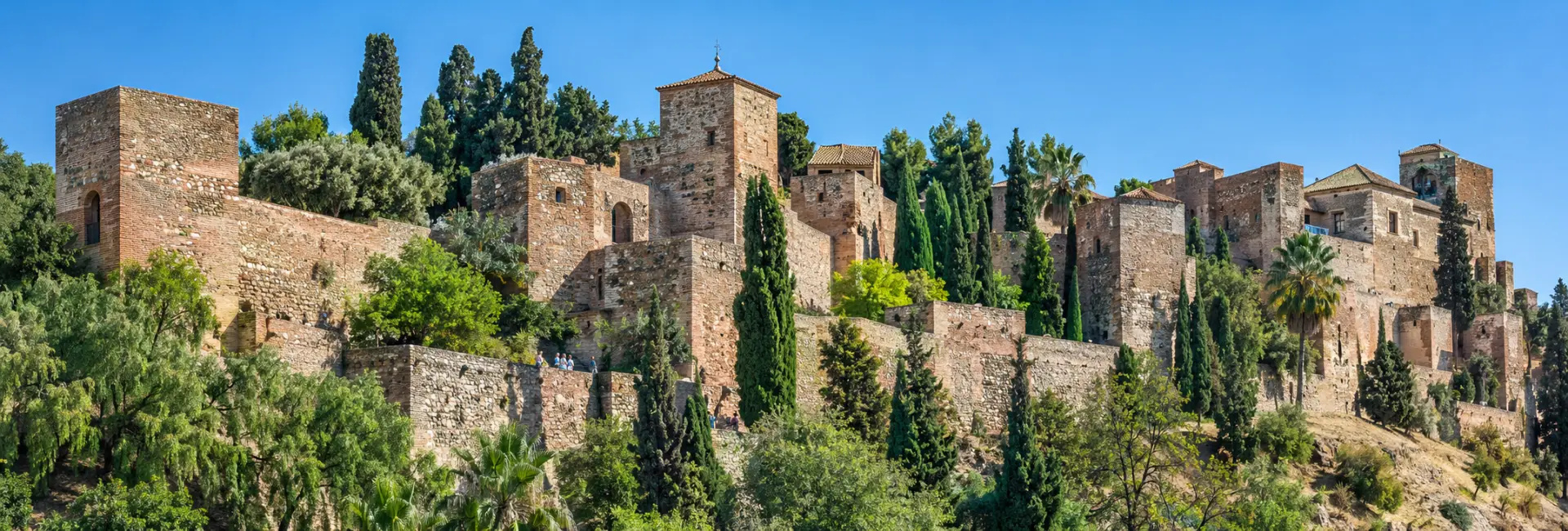
The Alcazaba occupies the hillside above Málaga’s Roman Theatre, placing one of the city’s most rewarding historic visits within easy reach of the old town. Its character comes from the combination of protection and pleasure: heavy walls and controlled entrances surround smaller spaces designed for residence, administration and courtly life. Walking through it reveals a different atmosphere at each turn.
It is worth visiting for more than the skyline photograph. The route lets you compare the outward strength of a fortress with the intimate scale of palace courts, planted corners and sheltered passages. For a first visit to Málaga, that contrast offers a useful introduction to the city’s Islamic heritage without requiring a long journey beyond the centre.
Allow roughly one and a half to two hours as a planning estimate, with longer if you enjoy architectural detail. The attraction involves slopes and changes of level, so the experience is closer to exploring a small hillside complex than entering one large historic building.
From Islamic Stronghold to Restored Monument
The surviving complex developed over several periods rather than through one building campaign. Much of its defining structure belongs to the eleventh century, while later rulers adapted its defences and residential spaces. Its position above the city made it both a military strongpoint and a visible seat of authority.
During the Nasrid period, the relationship between the Alcazaba and the higher Gibralfaro hill became especially important. Protecting the palace required controlling the ground above it, and the castle and fortified connection strengthened the wider defensive system. The two monuments therefore tell related stories, even though visitors enter them separately today.
Following the Christian conquest of Málaga in 1487, the fortress continued to change in use and condition. Over time, parts became occupied as housing, and substantial restoration began in the twentieth century. What visitors see now should consequently be understood as surviving historic fabric presented through later conservation work.
Look for those layers rather than expecting an untouched medieval palace. The value of the site lies partly in its long, complicated survival within a growing city.
Gateways, Walls and Defensive Thinking
The most useful way to read the approach is to ask how an unfamiliar visitor would have been controlled. Entrances do not simply provide a straight route into the heart of the complex. Turns, narrow passages and successive boundaries divide the ascent into stages, making movement visible and slowing an advance.
Notice how the hillside shapes the plan. Walls follow changing ground rather than enclosing a perfectly regular rectangle, and the visitor’s view of the city opens and closes as the route climbs. The position itself contributes to the defensive effect: architecture and topography work together.
There is no need to memorise every tower name to appreciate this arrangement. Choose one gateway and study its approach, the available space beyond it and the next change in direction. That small exercise makes the overall organisation easier to understand than treating every stone passage as another photographic backdrop.
Keep to the public route and use designated viewpoints. A defensive wall can be visually compelling while still containing uneven steps, narrow sections or conservation restrictions. The safest viewpoint is the one provided for visitors, not an improvised position on historic masonry.
Palace Spaces, Water and Gardens
Inside the fortified setting, the scale becomes more domestic. Courtyards and arcaded spaces encourage you to look across short distances, towards an opening, a planting bed or a detail of stonework. These interiors help explain why the Alcazaba is described as a palace-fortress rather than only a military ruin.
Water and vegetation soften the experience of the climb. Pay attention to how a shaded corner changes the temperature and how a small enclosed space separates you from the surrounding city. These observations are a useful way to engage with the design without assuming that every plant or surface survives from the medieval period.
A patient visit works especially well here. Stand back to understand the proportions of a court before moving close to examine an arch or column. Photographs taken only at close range can miss the relationship between the architecture and the space it frames.
The gardens are part of the monument’s presentation, so avoid treating them as a picnic lawn or stepping into planted areas for photographs. Their appeal depends on the balance between public enjoyment and protection of a compact historic environment.
The Patio de los Surtidores is a useful named reference point for understanding the palace remains. The surviving southern pavilion includes a triple horseshoe arcade, while the nearby pavilion of lobed arches introduces another decorative treatment. Comparing these forms gives visitors something specific to look for beyond the general impression of an Islamic courtyard.
Notice the difference between an arch that carries structural weight and an architectural feature whose principal effect is ornamental. The municipal interpretation discusses the representational role of the palace decoration: authority was expressed through refined visual language as well as through defensive strength. A visitor can see that contrast by remembering the controlled gateways passed earlier, then looking at the more delicate forms around the palace. Both belong to the same complex, but they communicate power in different ways.
Views and the Relationship with Gibralfaro
The views help connect the monument with the city it once overlooked. Use them to identify the contrast between the dense old town, the waterfront and the higher ground behind the Alcazaba. Looking outward between interior sections also gives the visit a natural rhythm and prevents architectural details from becoming repetitive.
Gibralfaro rises above the palace-fortress and offers a more elevated perspective. Visiting both can be rewarding, but they should be planned as two separate visits with an outdoor transfer. A combined admission option, when offered, does not imply a public indoor passage between the sites.
If you have limited time, choose according to your interests. The Alcazaba is especially suited to courtyards, Islamic architectural character and a layered walking route; Gibralfaro places greater emphasis on ramparts, military history and broad views. Neither needs to be treated merely as a preliminary stop for the other.
For photography, include foreground stonework or a gateway when practical. This keeps the image connected to the attraction itself, rather than producing a distant city view that could have been taken from several other places.
Planning the Route and Best Time to Visit
Start from the Calle Alcazabilla area if you want the approach to become part of the experience. Seeing the Roman Theatre at the foot of the hill before entering the Alcazaba makes the succession of historical periods immediately visible. Afterwards, the same street provides a straightforward return to the old town.
In warm weather, aim for an earlier visit and carry drinking water. Some sections are shaded, but the climbing and exposed stretches can still be tiring. In cooler months, pay particular attention to the closing time and the weather rather than assuming a late-afternoon arrival will leave enough time.
A useful self-guided approach is to divide the visit into three parts: the defensive ascent, the palace and garden spaces, and the outward views. This keeps the route purposeful while leaving room to pause where something catches your attention. A guided visit is an alternative for travellers who want more help interpreting architectural layers.
Treat suggested durations as flexible. Crowds in narrow passages, photography stops and the pace of less mobile companions can change the time required substantially.
Tickets, Accessibility and Visitor Etiquette
Check the municipal monument website before travelling for the current admission arrangement, last entry and any combined ticket with Gibralfaro. Free-entry periods and reduced categories can change, and they may attract a different level of demand from ordinary visiting hours. Keep proof of eligibility available if using a concession.
Accessibility needs deserve specific discussion with the operator. Alternative access arrangements do not make every courtyard, stair or wall section step-free. Ask which areas can be reached on the day, whether assistance is required and where the appropriate entrance is located.
- Wear footwear with grip for sloping paving and stairs.
- Carry only what you are comfortable taking through narrow passages.
- Leave room for other visitors at gateways and viewing points.
- Keep children close near steps and changes of level.
- Follow signs where restoration or maintenance alters the public route.
For visitors with limited stamina, it can be better to enjoy a shorter, clearly planned route than to rush through every accessible section. The quality of the visit comes from understanding the spaces, not completing a fixed number of photographs.
Nearby Attractions and a Balanced Half-Day
The Roman Theatre is the most natural companion because it sits directly below the fortress. It provides a contrasting type of public space and makes the layered history of Calle Alcazabilla easier to read. Even a short exterior look adds context, although access to the archaeological enclosure follows its own arrangements.
The Picasso Museum and Málaga Cathedral are practical next stops within the historic centre. Choose one if you want to maintain time for lunch and an unhurried walk; combining every major museum with both hilltop monuments can make a single day unnecessarily demanding.
A gentler continuation leads towards Málaga Park and the harbour. Moving from enclosed passages to planted public space and open water creates a varied day without another substantial climb. It also lets you look back towards the hill and recognise the position of the Alcazaba in the wider city.
If Gibralfaro remains your priority, allow time for the transfer and a rest before entering. Plan the higher, more exposed section around temperature and daylight, and avoid leaving the return journey as an afterthought.
FAQs about visiting the Alcazaba of Málaga
Is the Alcazaba the same as Gibralfaro Castle? +
No. They are historically connected monuments on different levels of the hill, with separate visitor entrances.
How long should I allow? +
Around one and a half to two hours is a useful starting estimate, depending on your pace and interest in the architecture.
Do I need an admission ticket? +
Normally yes. Check the municipal website for current prices, concessions, free-entry periods and combined options.
Is the entire site wheelchair accessible? +
No. Ask the operator about alternative access and which sections can currently be reached without steps.
Where should I start the visit? +
Calle Alcazabilla is the standard approach and allows you to see the Roman Theatre before entering.
Can I visit both fortifications in one day? +
Yes, but allow for two visits and an outdoor transfer, with extra time for heat, slopes and rest stops.
