
Table of Contents
Overview
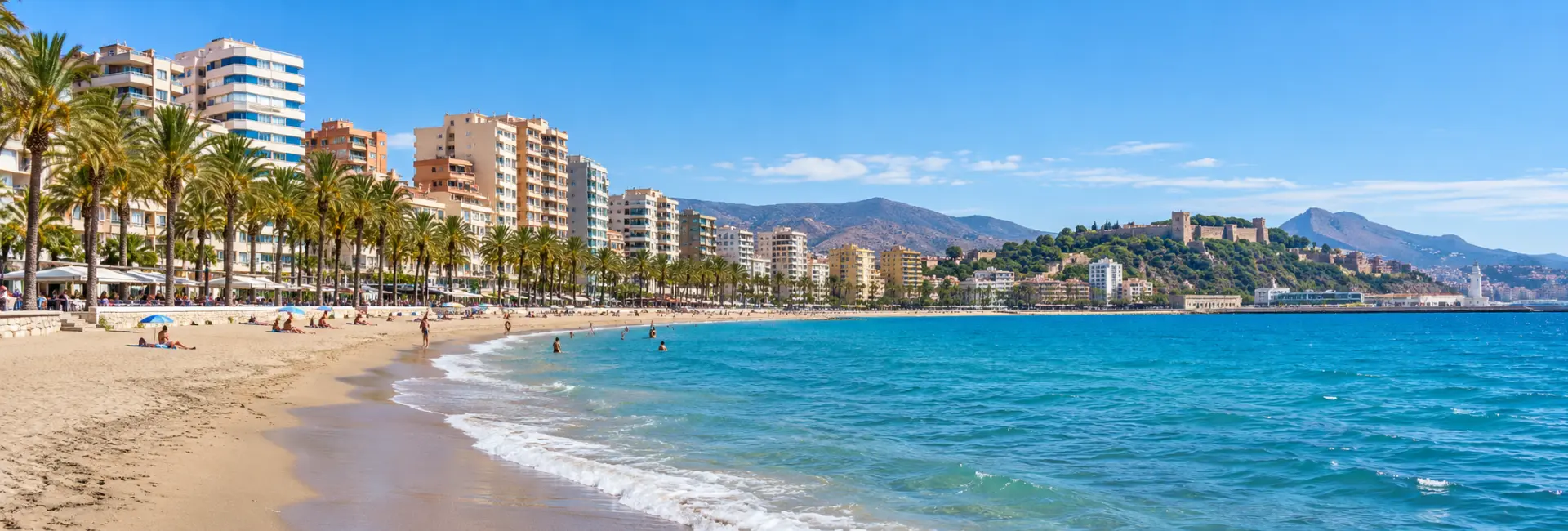
Playa de la Malagueta is one of the easiest places to add time by the sea to a visit to central Málaga. It lies beyond the port, with urban streets and a promenade behind the sand, making it a practical choice for a beach break without a separate coastal excursion.
Its character is distinctly urban. People come to swim, sit on the sand, walk the waterfront or eat nearby, and the surrounding neighbourhood remains part of the experience. Visitors seeking an isolated cove should recognise that La Malagueta offers convenience and city life instead.
The beach extends for about 1.2 kilometres according to municipal information. That length allows room for different types of visit, from a brief look at the sea to a longer stay with swimming and lunch. Conditions and the level of activity vary along the shore and throughout the day.
A good plan begins with a simple choice: are you coming for the promenade, time on the sand or a swim? Each calls for slightly different preparation and expectations.
The Beach and Its Urban Setting
La Malagueta occupies the coast between the port area and La Caleta. The relationship with the harbour explains why it fits naturally into a central walking itinerary, but the open beach has a different atmosphere from the enclosed port basin.
The sand is darker than the pale tropical beaches often used in generic holiday imagery. That is part of its identity and should not be confused with a lack of appeal. Look at the shoreline, the curve of the bay and the city behind it to appreciate the actual setting.
Because buildings and services are close, it is possible to combine a short beach visit with a substantial day in the old town. That convenience also means the beach can be busy, particularly when weather and holiday periods encourage more people onto the coast.
Choose a place according to what matters most to you: proximity to a promenade access, space for a group, a nearby refreshment stop or a quieter stretch. Do not assume that the first patch of sand reached from the port is the only useful place to settle.
The boundary between promenade and sand is an important part of choosing your visit. Someone who wants fresh air and a view can remain on the paved waterfront, while a swimmer needs a suitable access point and somewhere to manage towels and belongings. Agreeing on that distinction is particularly useful when travelling with a mixed-age group.
It is also worth separating the beach name from other nearby uses of La Malagueta, including the neighbourhood and bullring. A map search that returns the right word may still point to a different destination. Set your route to the beach or the intended promenade access, then check the actual approach. This avoids an unnecessary detour and helps visitors with limited walking tolerance arrive at the part of the coast they meant to use.
Walking the Promenade Without a Beach Day
The promenade is worthwhile even if you have no intention of swimming. It offers a straightforward way to experience Málaga’s coastal setting while remaining on a paved route. This makes it a useful alternative when the sand is uncomfortable, the sea is unsuitable or your schedule is short.
A relaxed walk can be built around changing views rather than a distant endpoint. Stop occasionally to look back towards the port, then continue until the shoreline opens differently. You can turn around whenever the outing has reached a comfortable length.
For visitors who have spent the morning in museums or narrow streets, the wider horizon provides a welcome change. The experience asks for less concentrated attention, which can make it a good later-day choice. It also suits companions who want to talk while walking rather than follow another guided tour.
Stay aware of how the promenade is shared. Use designated pedestrian space, keep groups from blocking the route and take care at access points. A leisurely pace is compatible with being considerate of residents using the waterfront for everyday exercise or travel.
Swimming and Reading Conditions on the Day
Swimming conditions cannot be guaranteed by a destination description. Wind, waves and local warnings can change, so assess the beach when you arrive and follow the displayed flags and lifeguard instructions. A generally sheltered impression is not a substitute for the day’s safety information.
Choose an entry point that suits your ability and stay within permitted bathing areas. If conditions make you uncertain, enjoy the shore instead of feeling obliged to swim because it was part of the plan. Visitors who are confident in a pool should still treat the sea as a different environment.
Children need close supervision near the water, including when they are only playing at the edge. Keep flotation toys from becoming a reason to move farther offshore, and do not assume that a visible rescue facility means active supervision is available at every hour.
Seasonal services and accessibility assistance should be confirmed directly. The beach can remain physically accessible when particular facilities are not operating, and a pleasant day outside the main season does not guarantee the same support as a busy summer period.
Facilities, Comfort and Accessible Access
Municipal and national tourism information describe facilities such as access walkways, toilets, showers, rental options and recreational areas. Availability can depend on season, maintenance and local conditions, so treat the published list as a planning guide rather than a promise that every service will be functioning during every visit.
Visitors with mobility needs should identify the accessible beach point and ask about any assistance or equipment required. Reaching the promenade is different from crossing the sand or entering the water. A suitable route needs to be planned through all those stages.
For a short stay, bring what allows you to remain comfortable without relying on rentals: water, sun protection and something appropriate to sit on. For a longer visit, check the practicalities of food, changing and keeping belongings secure before settling far from an access point.
- Confirm seasonal services before relying on them.
- Keep the walkways clear for people who need them.
- Avoid leaving valuables unattended during a swim.
- Use bins and take small waste items away with you.
- Choose shade or a break indoors when the sun becomes uncomfortable.
Food and the Neighbourhood Behind the Sand
The waterfront and surrounding streets offer places to eat, making it easy to turn a beach visit into a relaxed meal stop. Choose according to your appetite, budget and comfort rather than assuming that the table closest to the water is automatically the best fit.
Before ordering, check the menu and ask about anything unfamiliar, including how fish dishes are priced. This is especially useful when a price may relate to weight or portion rather than a single standard serving. A clear understanding at the start makes the meal more enjoyable.
If you plan to return to the sand afterwards, consider how long the meal will take and where your belongings will remain. Carry valuables with you rather than leaving a towel as a substitute for supervision. Beach time and restaurant time should be planned as separate parts of the outing.
Walking a little into the neighbourhood also helps place the beach within everyday Málaga. The area is not only a tourist frontage, and treating residential streets respectfully is part of being a good visitor. Keep noise low when moving away from the busiest public spaces.
Best Time and Different Seasonal Experiences
Warm weather draws many visitors to the water, but the beach is useful outside the main swimming season too. Cooler days may favour a promenade walk, photography or a meal with a sea view. The best time depends on whether your priority is bathing, exercise or simply spending time outdoors.
Earlier in the day can suit a quieter walk and gentler temperatures. Later visits may offer a different quality of light, but evening comfort still depends on wind and season. Do not build a plan around a promised sunset effect or assume the shoreline will be empty.
In hot conditions, reduce the time spent on exposed sand and plan reliable shade breaks. A sea breeze can make the temperature feel more comfortable without removing the need for sun protection. Keep water available, particularly when combining the beach with a long walk from the centre.
Check the forecast alongside the beach’s actual signs. Forecasts help decide what to bring, while local warnings determine what is appropriate once you arrive. The two sources answer different questions and should be used together.
Combining La Malagueta with Central Málaga
Muelle Uno is a natural partner for a beach visit, providing a harbour walk and dining options on the route from the historic centre. The Centre Pompidou can add an indoor cultural element, although museum rules and beach clothing may make it sensible to visit the galleries before swimming.
The Palmeral de las Sorpresas and Málaga Park offer contrasting public spaces nearby. One opens along the harbour, while the other is more densely planted. Together they can create a varied walking day without requiring a demanding hill climb.
A simple itinerary is to explore the old town in the morning, take a waterfront walk and then choose either the beach or a museum for the afternoon. Trying to include every option can reduce a relaxing coastal stop to another rushed appointment.
Allow time to return, change or collect belongings if you have an evening reservation. The beach’s proximity to the centre is convenient, but it does not eliminate the practical time needed after a swim. A comfortable plan leaves room for those ordinary transitions.
FAQs about visiting Playa de la Malagueta
Is La Malagueta close to central Málaga? +
Yes. It is an urban beach beyond the port and can be combined with a central waterfront walk.
Is the beach sandy? +
Yes, it has dark sand rather than a pale tropical appearance.
Is swimming always safe? +
No. Follow the flags, local warnings and lifeguard advice on the day.
Can I enjoy it without swimming? +
Yes. The promenade is suitable for a coastal walk, and nearby venues make a meal stop possible.
Are beach services available all year? +
Do not assume so. Confirm seasonal operation, especially for assisted access and rescue services.
What should I combine it with? +
Muelle Uno, the Centre Pompidou, the Palmeral de las Sorpresas and Málaga Park are practical nearby options.
