
Table of Contents
- Overview
- How the Waterfront Became a Visitor Destination
- Walking the Quay and Reading the Views
- Contemporary Art, the Cube and Port Landmarks
- Dining, Shopping and Choosing How to Spend Time
- Events, Families and Different Visiting Styles
- Weather, Accessibility and Practical Advice
- Nearby Attractions and a Harbour Walk
Overview
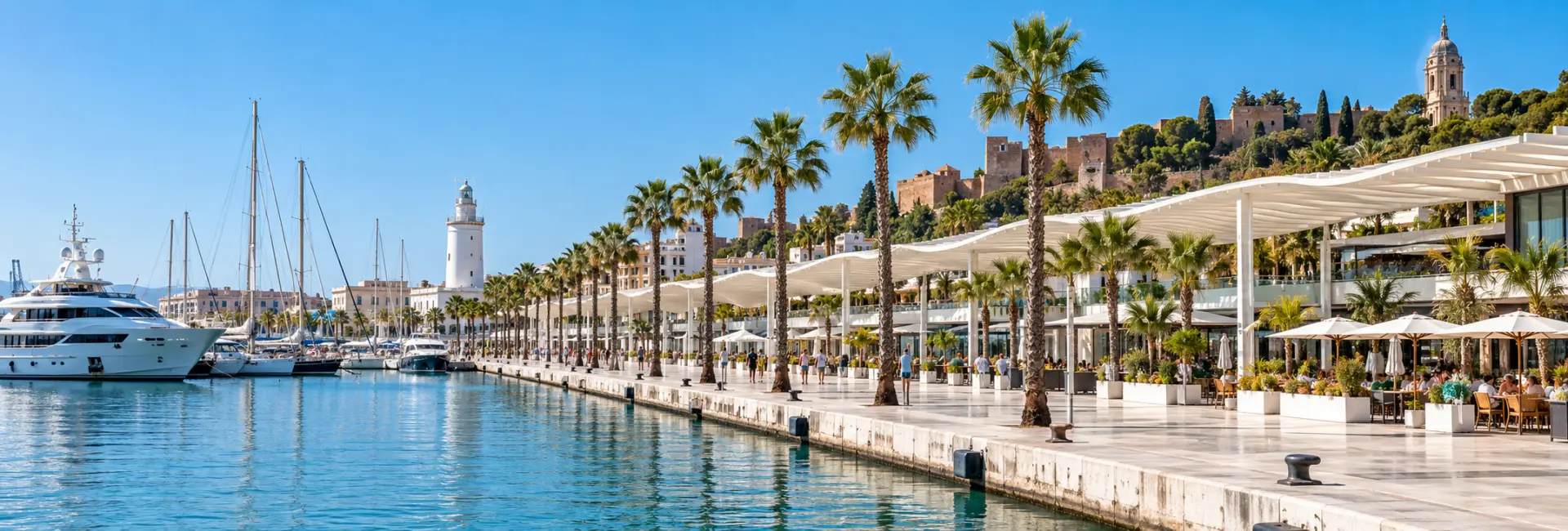
Muelle Uno is a waterfront shopping, dining and leisure area within the Port of Málaga. It gives visitors a straightforward way to enjoy the harbour without leaving the central city, combining a public-facing promenade with commercial premises and nearby cultural attractions.
The experience is flexible. You can walk through without buying anything, stop for a meal, browse shops or use it as the connection between the Palmeral de las Sorpresas and the lighthouse area. That adaptability makes it useful on a day when you want time outdoors without committing to another substantial monument visit.
Think of Muelle Uno as an urban waterfront rather than a beach or a traditional enclosed shopping mall. The water beside the promenade belongs to an operating harbour, and the appeal comes from the relationship between the city, vessels, open space and places to linger.
A short exploratory walk may take less than an hour, while lunch and a museum visit can comfortably turn the area into a half-day outing. The right duration depends on what you choose to add.
How the Waterfront Became a Visitor Destination
The present Muelle Uno complex opened in 2011, forming part of a wider change in the relationship between Málaga and its port. Space associated with maritime activity became more directly accessible for everyday leisure, shopping and cultural visits.
That transformation is easiest to understand by comparing the waterfront with the older centre. Streets and squares inland often feel enclosed, while the quay opens out towards the harbour basin and sky. Moving between them creates a clear change in the way the city is experienced.
The port itself has a much longer history, and the modern development should not be mistaken for the beginning of maritime Málaga. Features such as the nearby lighthouse and port chapel connect the contemporary promenade with earlier periods of harbour life.
A useful way to explore is to look for those continuities rather than treating the area only as a recent retail project. The commercial setting is prominent, but it sits within a place shaped by ships, trade and repeated changes to the coastline and quays.
Walking the Quay and Reading the Views
Begin at the end nearest the Palmeral de las Sorpresas if arriving from the historic centre. This creates a natural transition from the city’s planted waterfront into the more commercial character of Muelle Uno. Continue at an easy pace rather than trying to identify every business immediately.
The harbour-facing side offers repeated opportunities to look back towards Málaga. Changes in position alter the relationship between the skyline, water and moored vessels, so a photograph taken halfway along the walk may be more satisfying than the first view at the entrance.
Keep the working-port setting in mind. Vessel movements and restricted areas follow operational needs, and the waterfront is not a place to enter the water. Respect barriers and avoid stepping into service spaces for a closer view of a boat.
The walk works well for visitors with different interests because it can be shortened or extended easily. One person may enjoy looking across the basin while another browses a shop, provided you agree on a clear meeting point and do not assume every business follows the same opening schedule.
Contemporary Art, the Cube and Port Landmarks
The Centre Pompidou Málaga is the area’s major cultural anchor. Its colourful cube is highly recognisable from the waterfront, but the museum experience requires a separate decision about admission and time. Seeing the exterior is not the same as visiting the galleries.
For an art-focused day, use the museum as the main appointment and treat Muelle Uno as the setting before or afterwards. For a casual walk, the cube can simply serve as a landmark that helps orient you between the two quay areas. Either approach is valid.
Farther along the port environment, La Farola connects the modern promenade with Málaga’s maritime identity. The lighthouse was completed in 1817, and its external presence makes a useful destination for extending a stroll. Do not assume that reaching it means visitors can enter or climb it.
The historic port chapel provides another reminder that the waterfront contains more than contemporary architecture. Look for the difference in scale between such older elements and the surrounding development, while remembering that access to individual structures may be restricted or separately managed.
The port chapel has been moved during the waterfront’s changing history, so its presence also raises a useful question about preservation. An old structure can remain part of a place’s identity even when its relationship with surrounding buildings and routes has altered. The operator dates the chapel’s inauguration to 1725, placing it well before the present leisure development.
Compare the chapel, lighthouse and museum cube as three different kinds of landmark. One relates to religious life around the port, another to navigation, and the third to a contemporary cultural role. Seeing them as a sequence gives the promenade more depth than a list of shops and restaurants. It also creates a simple theme for a self-guided walk: how the same waterfront has served people’s practical, social and cultural needs across different periods.
Dining, Shopping and Choosing How to Spend Time
Muelle Uno offers a range of restaurants and shops, but the best plan is to decide what role they should play in your day. A quick drink, a full meal and a shopping session require very different amounts of time and budget. The setting can be enjoyed without committing to all three.
Before choosing a table, look at the menu, the available shade and the exposure to wind. A waterfront seat may be attractive in a photograph but less comfortable at a particular time of day. Check the total cost of what you intend to order rather than assuming all nearby venues have similar prices.
Retail tenants and restaurant menus change, so use the centre’s current directory for specific business names. Avoid building a whole itinerary around a shop mentioned in an old travel article. The durable attraction is the waterfront arrangement, not a fixed list of brands.
For a more balanced visit, alternate commercial stops with time at the water’s edge. That keeps the outing connected to Málaga’s harbour and prevents the area from feeling like a shopping centre that happens to be outdoors.
Events, Families and Different Visiting Styles
The operator promotes a changing programme that can include markets, performances and family activities. These can add interest, but they should be treated as scheduled events rather than permanent attractions. Confirm the date, location and any booking requirement before promising a particular activity to children.
Families can also enjoy a simpler visit built around the promenade, boats and a break for food. Keep children close to the water’s edge and explain the difference between a harbour and a swimming beach. Open space does not remove the need to watch for service access or other people using the route.
Travellers who prefer quieter sightseeing may enjoy walking before the dining areas become busiest. Others may value the social atmosphere later in the day. The most suitable time depends on whether the priority is photography, a meal, shopping or a cultural visit.
Use the waterfront’s flexibility to your advantage. It can provide an easy finish after a demanding morning at the Alcazaba or Gibralfaro, without requiring the same concentration as another museum or the same effort as another climb.
Weather, Accessibility and Practical Advice
Much of the experience is outdoors, so sun and wind matter. Carry water in warm weather and choose shaded breaks when available. Cooler or windy conditions may make an exposed terrace less appealing even when the old town feels comfortable.
The centre has municipal recognition for accessibility, but the exact route and facilities needed should still be checked with the operator. A broadly accessible promenade does not automatically describe every restaurant entrance, temporary event layout or onward route. Ask about the specific service relevant to your visit.
- Check individual business hours separately from access to the promenade.
- Confirm museum tickets independently of shopping-centre information.
- Keep valuables attended while taking photographs or eating.
- Use marked pedestrian routes around service areas.
- Allow extra time if your visit coincides with a busy event.
An evening visit can be attractive, but returning in darkness changes the character of the walk and the available transport. Decide how you will leave before settling into a long meal, particularly if staying outside the central area.
Nearby Attractions and a Harbour Walk
The Palmeral de las Sorpresas is the natural continuation along the adjoining quay. Its emphasis on palms, public space and the long pergola provides a contrast with the commercial frontage of Muelle Uno. The two areas work well together but should not be described as the same attraction.
Málaga Park lies inland and offers a more enclosed, leafy setting. It is a useful option for visitors who want a break from the exposed harbour edge. The change from dense planting to open water can be one of the pleasures of a central walking route.
La Malagueta beach adds a third environment: the open coast beyond the port. Allow time for the actual walk and any beach preparation rather than assuming a restaurant stop and a swim are interchangeable activities. Follow the beach’s own conditions and safety signs if entering the sea.
For a simple itinerary, combine one cultural visit, one waterfront walk and one meal. This gives Muelle Uno a clear purpose in the day while leaving space for unplanned pauses and changing weather.
FAQs about visiting Muelle Uno
Do I need a ticket to walk around Muelle Uno? +
The waterfront commercial area is generally free to walk through; museums, purchases and activities have separate charges.
Is Muelle Uno a beach? +
No. It is a harbour promenade and commercial area. La Malagueta is the nearby beach option.
Can I visit the Centre Pompidou here? +
Yes, the museum is beside the waterfront development, with its own tickets and opening arrangements.
How much time should I allow? +
Allow under an hour for a simple walk, or several hours if adding a meal, shopping and a museum.
Are events held every day? +
Do not assume so. Check the operator’s current programme for your travel dates.
Is it suitable for visitors with mobility needs? +
The centre has accessibility recognition, but check the exact facilities and onward routes you require.
