
Table of Contents
- Overview
- The Málaga and Paris Connection
- El Cubo and the Architecture of Arrival
- Collections, Changing Displays and Artistic Media
- A Useful Way to Visit Modern and Contemporary Art
- Families, Education and Temporary Programmes
- Planning, Tickets and the Best Time to Visit
- Nearby Attractions and an Art-and-Harbour Itinerary
Overview
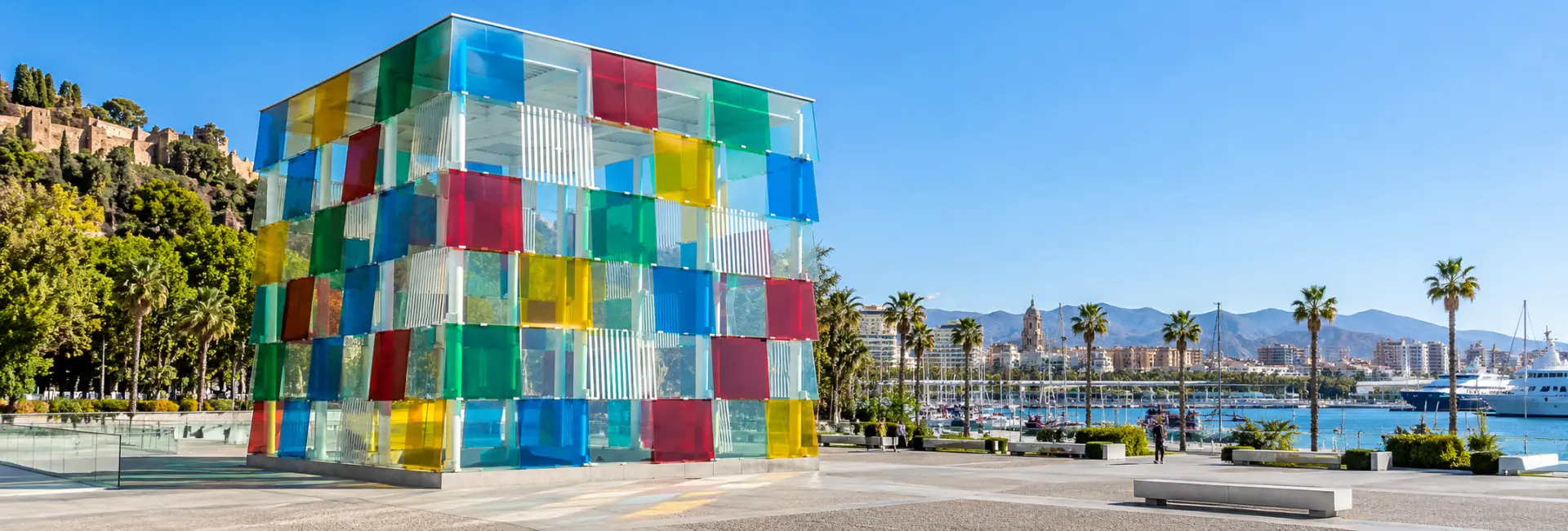
Centre Pompidou Málaga brings modern and contemporary art to the city’s waterfront. Its colourful glass cube is a familiar harbour landmark, but the main museum experience takes place beneath that visible structure. The contrast between the open promenade and the galleries is part of its appeal.
The museum is a good choice for visitors who enjoy a changing, thematic approach to art. Displays draw on the Centre Pompidou collection and can bring different media into conversation rather than presenting one artist’s life from beginning to end. The current programme matters more than an old list of works once shown here.
Allow around one and a half to two hours for a considered visit, adjusting for the exhibition programme and your interest in individual works. The location makes it easy to add a waterfront walk without another significant transfer.
Do not judge the museum’s size or content only from the cube above ground. Treat the exterior as the introduction to a separate gallery visit with its own admission and opening arrangements.
The Málaga and Paris Connection
The Málaga venue opened in 2015 as the first Centre Pompidou established outside France. That relationship is fundamental to its identity: the museum offers access to works and curatorial ideas associated with a major international collection while operating within Málaga’s cultural landscape.
Its role is different from that of a museum devoted solely to local history. The connection with the city comes through the waterfront location, educational work and the opportunity to encounter international art in a place already strongly associated with Picasso.
The partnership has continued beyond the original opening period, and the Paris institution records a further ten-year extension agreed in 2025. For evergreen travel planning, the more useful point is the venue’s continuing programme of renewed displays rather than the administrative detail of each agreement.
Visitors should distinguish this institution from the Paris building. Familiarity with the name does not mean the same works, scale or architectural experience will be reproduced in Málaga. The value of the visit lies in what is selected and presented here.
El Cubo and the Architecture of Arrival
The glass cube is associated with an intervention by Daniel Buren, whose use of colour gives the exterior a strong visual identity. Its presence helps mark the transition between the adjoining harbour spaces and makes the museum easy to recognise from the promenade.
Look at it from several public positions before entering. Colour, transparency and reflections interact differently as your viewpoint changes, so the structure can reward more attention than a quick photograph at its best-known angle. Keep pedestrian movement clear while stopping.
The descent into the museum changes the scale of the experience. Outside, the eye moves across water and sky; inside, exhibition design directs attention towards selected objects, images and ideas. That shift is a useful part of the visit rather than merely a practical route underground.
An exterior photograph does not convey the museum’s galleries, and visitors should not assume they have seen the attraction in full by looking at the cube. Equally, enjoying the public exterior can be worthwhile even when there is no time for admission on that day.
Collections, Changing Displays and Artistic Media
The museum presents selections of twentieth- and twenty-first-century art through displays that are renewed over time. This makes a current programme check essential if you have a particular artist or subject in mind. Works associated with an earlier installation may no longer be present.
Thematic groupings encourage visitors to compare different ways of approaching an idea. A painting, sculpture or moving-image work may address a related question through very different means. The room introduction can help explain why these objects share a space.
Instead of asking only whether a work is realistic or recognisable, consider what it asks you to do. Does it invite close looking, physical movement, reflection on an everyday object or attention to time and sound? Different forms of art require different viewing habits.
Do not feel obliged to respond equally to every object. A museum of this kind can be most rewarding when one or two works challenge an expectation. Give those pieces time, then compare them with something you find immediately appealing. The contrast can clarify your own response.
A moving-image work may require a different allocation of time from a painting. Before entering a screening space, check whether a duration is shown and decide whether you can watch a substantial part. Arriving halfway through does not necessarily prevent enjoyment, but it can change what you understand of the work’s sequence.
Similarly, an installation may depend on your position within the room. Follow the permitted route and observe how the work changes as you move, without assuming that every object is interactive. Museum mediation is useful precisely because contemporary works do not all establish the same relationship with their audience. Asking a staff member how a piece is intended to be encountered can be more helpful than searching for a single definitive explanation of what it means.
A Useful Way to Visit Modern and Contemporary Art
Begin with the exhibition’s central question, if one is provided, and keep it in mind as you move through the rooms. This creates a thread without forcing every work into a single interpretation. Labels are helpful, but your own observation should come first.
For a difficult work, describe what is actually present before deciding what it means. Materials, scale, repeated forms and the use of space are concrete starting points. Once those are clear, the curatorial explanation is easier to assess and less likely to feel like an answer that must simply be accepted.
- Spend extra time with one unfamiliar medium.
- Compare two works that approach a similar subject differently.
- Notice whether sound or movement changes the room.
- Read the date and context before assuming a work is recent.
- Revisit one piece after completing the section.
This approach is useful for mixed-interest groups. Companions can choose different works and explain their choices afterwards, creating a conversation rather than a test of who knows the most about art history.
Families, Education and Temporary Programmes
Educational activities form part of the Centre Pompidou approach, including programmes aimed at younger audiences. The exact format and age suitability depend on the current calendar, so check whether a workshop, family resource or guided activity is available during your visit.
A family visit does not need to cover every gallery. Choose a few works with clear contrasts in colour, material or scale, and give children permission to describe what they see in their own words. A shorter positive experience can be more valuable than completing a full route after attention has faded.
Temporary exhibitions and special events may have separate booking or admission conditions. Read the coverage carefully rather than assuming that a general ticket includes every activity advertised by the museum. Some programmes may also operate in a particular language.
For visitors with sensory requirements, contact the venue about the current display. Moving images, sound or changes in lighting can affect comfort, and general accessibility information may not describe the character of a temporary installation. Specific questions produce more useful answers than a broad request about whether the museum is accessible.
Planning, Tickets and the Best Time to Visit
Use the museum’s official information to confirm opening days, last admission and the current ticket options. Avoid relying on an older city listing that describes the inaugural collection as though it were permanent. The institution’s changing programme is one of its strengths, but it requires current planning.
A visit can work well during the warmer part of a waterfront day, with the outdoor walk placed earlier or later according to conditions. Allow enough time to settle into the galleries rather than using them only as a brief pause from the sun.
Check bag, photography and recording rules before beginning. A work involving sound or projection may need different visitor behaviour from a painting gallery, and restrictions can vary by exhibition. Keep phone use discreet and respect the experience of others.
The waterfront entrance area is on Pasaje Doctor Carrillo Casaux, by Muelle Uno. Use the recognisable cube to orient yourself, then follow the museum entrance signs rather than assuming the most obvious glass surface is the way in. Allow a few minutes to make the transition from the busy promenade to the gallery reception area.
Nearby Attractions and an Art-and-Harbour Itinerary
Muelle Uno offers an immediate continuation for a meal, shopping or a relaxed walk. The Palmeral de las Sorpresas adds a more landscape-focused stretch of the harbour, with palms and the long pergola providing a different visual rhythm from the museum’s cube.
Málaga Park lies inland and can provide a leafy transition back towards the old town. This is a useful option when you want outdoor time without remaining on the exposed quay. Choose the route according to weather and the energy left after the gallery visit.
For an art-focused day, compare the Pompidou with the Picasso Museum or Carmen Thyssen Museum, but leave a substantial break between them. Their collections and curatorial approaches differ, and that contrast is easier to appreciate when you are not rushing through successive galleries.
La Malagueta beach is another nearby option, although swimming and museum visits involve different practical preparations. A comfortable plan might place the museum first, followed by a waterfront meal and then a beach walk. This keeps the day varied without making the museum feel like an obligation squeezed between other activities.
FAQs about visiting Centre Pompidou Málaga
Is the museum only the colourful cube? +
No. The cube marks the venue above ground, while the main gallery experience is below it.
Are the same works always on display? +
No. Displays are renewed, so check the current programme if a particular artist matters to you.
Is this connected with the Centre Pompidou in Paris? +
Yes. The Málaga venue presents works and programmes through that institutional partnership.
How long should I allow? +
Around one and a half to two hours is a useful starting estimate, depending on the exhibitions.
Are family activities included automatically? +
Not necessarily. Confirm age ranges, booking requirements, languages and ticket coverage for the chosen activity.
Where is the entrance area? +
At the waterfront by Muelle Uno, on Pasaje Doctor Carrillo Casaux, beside the recognisable glass cube.
