
Table of Contents
- Overview
- Why the Museum Was Created in Málaga
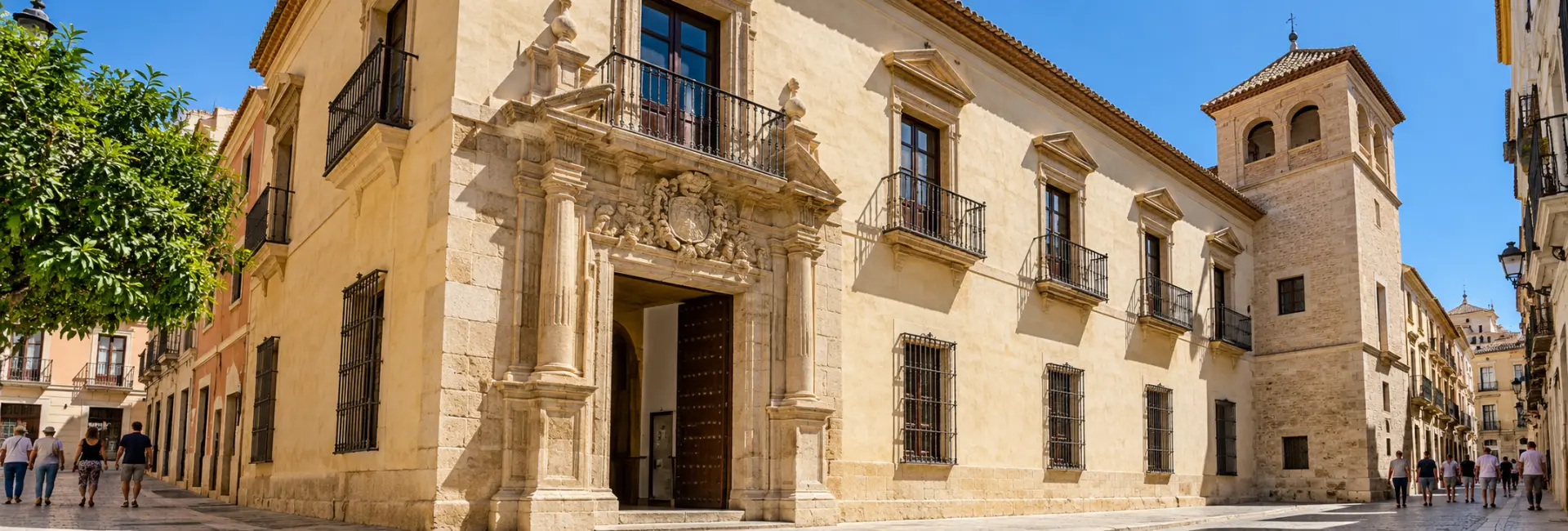
- Buenavista Palace and the Museum Buildings
- Understanding the Collection Without a Fixed Checklist
- Looking Closely: A Practical Gallery Approach
- Archaeology, Garden and a Slower Visit
- Booking, Timing and Accessibility
- Connecting the Museum with Picasso’s Málaga
Overview
Museo Picasso Málaga brings the work of Pablo Picasso into the historic centre of the city where he was born. The visit has several layers: the art itself, the palace that houses the museum, and archaeological remains beneath the building. Together, they make it more than a single-artist gallery detached from its surroundings.
The museum is particularly rewarding for visitors who want to look beyond a few universally reproduced images. Its collection includes different materials and approaches, allowing you to consider Picasso as an artist who repeatedly changed the way he worked. The exact selection on view can change, so it is better to arrive with curiosity than a rigid checklist of specific paintings.
Allow around one and a half to two hours for an unhurried first visit, adding time for a temporary exhibition or a detailed audio-guided route. This is a suggested planning allowance rather than a prescribed visit length.
It is a separate institution from the Picasso Birthplace Museum on Plaza de la Merced. Understanding that distinction avoids one of the easiest itinerary mistakes in Málaga.
Why the Museum Was Created in Málaga
The museum opened in 2003 after a project supported by the Andalusian government and members of Picasso’s family. Christine and Bernard Ruiz-Picasso played a central role through their donations and commitment to establishing a lasting presence for the artist’s work in his native city.
That connection matters because the museum is not simply a display assembled in a convenient tourist destination. It links an internationally influential career with the place where Picasso’s life began. The result allows visitors to move between a major artistic legacy and the streets associated with his early biography.
The story also demonstrates how a museum can change the way a city presents itself. A historic palace becomes a place for studying modern art, and nearby streets become part of a broader cultural itinerary. It is useful to consider that relationship while walking to and from the entrance.
Avoid treating the collection as a complete summary of everything Picasso made. No single museum can serve that purpose. Its strength lies in the particular works, connections and questions it places before the visitor.
Understanding the Collection Without a Fixed Checklist
Picasso worked across painting, drawing, sculpture, ceramics and graphic art, and the museum’s holdings reflect that variety. This makes comparison one of the most useful ways to visit: look at how an idea changes when it moves from a flat surface into a three-dimensional object, or from a quick line into a more developed composition.
You do not need specialist vocabulary to begin. Ask what the artist has simplified, exaggerated, repeated or left unresolved. Consider whether the work encourages you to recognise a subject immediately or to reconstruct it gradually from separate visual clues.
The collection display may combine works in ways that differ from a straightforward timeline. Read the room introduction before deciding what a grouping is trying to demonstrate. Dates remain useful, but they are not the only route into understanding artistic development.
Avoid assuming that a famous work seen in a brochure or an older online article is currently present. Loans, conservation and curatorial changes can alter the display. If one particular object is essential to your visit, verify its status directly with the museum.
The distinction between a museum’s holdings and its current exhibition is particularly useful here. A collection can contain more works than are shown at any one time, and a display can also include loans. Reading the introduction carefully prevents a changing gallery arrangement from being mistaken for a complete inventory of everything the institution owns.
This matters when comparing media. If a particular room places a ceramic object near a painting, ask what that juxtaposition makes visible: a shared outline, a recurring face, or a different way of using the same limited space. You can then look at another pairing and test whether the same connection holds. Such small comparisons give the visit a personal structure and remain useful even when the individual works and room arrangements change.
Looking Closely: A Practical Gallery Approach
A satisfying museum visit often depends on choosing a few works to study carefully. Start with one that attracts you immediately and one that initially feels difficult. Comparing your reactions can make the visit more memorable than attempting to read every label at the same speed.
For a portrait, notice the relationship between the face, body and surrounding space. For a still life, consider how ordinary objects have been rearranged or made unfamiliar. With sculpture or ceramics, move around the work where the permitted route allows, since a changing viewpoint can reveal a different visual logic.
- Read the title after forming your own first impression.
- Use the date to place the work within a longer artistic career.
- Compare material and scale as well as subject matter.
- Return to one work after seeing the next room.
- Keep a brief note of what interested you instead of photographing every label.
This approach also works well with children. Asking what they notice or which shape repeats creates a conversation that can be more productive than testing whether they know the correct artistic term.
Archaeology, Garden and a Slower Visit
The remains beneath the palace introduce a much older history than the art above. Phoenician and Roman traces form part of the museum’s architectural story, reminding visitors that the historic centre contains multiple cities layered within the same ground. Confirm access to the archaeological area as part of the current route.
The contrast is especially rewarding if you have already seen the Roman Theatre nearby. Instead of treating archaeology as a separate subject, you can recognise how ancient remains survive under and beside later buildings. The museum becomes an example of urban continuity as well as a place to see modern art.
The garden offers a different sort of pause, and the museum lists a café and specialist bookshop among its facilities. Use these according to your interests and the day’s arrangements, without assuming that they share every gallery’s exact opening conditions.
A break is not wasted time in an art museum. Looking requires attention, and a short pause can make the final rooms more enjoyable. If visiting with others, it also gives everyone a chance to compare the works that stayed with them.
Booking, Timing and Accessibility
Use the official museum website to check current exhibitions, admission categories and entry arrangements. A collection ticket and a temporary-exhibition ticket may not always offer the same coverage, so read the description before purchasing. Choose the visit you want rather than relying only on the lowest displayed price.
An earlier arrival can make it easier to preserve time for the palace, archaeology and a break as well as the galleries. On a short city visit, avoid placing the museum between two appointments that leave no flexibility for queues or a particularly engaging exhibition.
Contact the museum in advance for access requirements, assistance arrangements or questions about sensory needs. An adapted museum route and the surrounding old-town streets are separate considerations, especially for travellers arriving with wheelchairs or limited walking stamina.
Photography, bags and other practical rules should be checked on the day. Follow gallery signs, keep conversations low and give other visitors room in front of popular works. If an audio guide is available, confirm the language and how it is accessed before beginning the route.
Connecting the Museum with Picasso’s Málaga
The Picasso Birthplace Museum on Plaza de la Merced is the most direct companion for visitors interested in biography. Visiting both can be worthwhile, but they offer different emphases: one centres on a substantial art collection, while the other develops the relationship between the artist, his family background and birthplace.
The Church of Santiago and the surrounding streets also belong to the city’s Picasso-related geography. Rather than rushing between institutions, use the walk to appreciate the scale of the historic centre. These are real urban spaces as well as locations in a famous life story.
For a more varied day, combine the museum with the cathedral or the Roman Theatre instead of adding another gallery immediately afterwards. The change of subject can keep the itinerary engaging, particularly for companions whose interest in modern art differs.
End with time in a square or a walk towards the waterfront. Reflecting on a few works after leaving can be as useful as spending another hurried half-hour indoors, and Málaga’s compact centre makes that slower rhythm easy to build into the day.
FAQs about visiting Picasso Museum Málaga
Is this Picasso’s birthplace? +
No. The art museum is in Buenavista Palace on Calle San Agustín; the Birthplace Museum is on Plaza de la Merced.
How long should I spend inside? +
Allow around one and a half to two hours, with extra time for temporary exhibitions and detailed interpretation.
Will every famous Picasso painting be here? +
No. Check the current display if a particular work is important to you.
Is there more to see than paintings? +
Yes. The visit can include other artistic media, the palace architecture and archaeological remains, subject to the current route.
Should I book through the museum? +
Use the official website to confirm ticket coverage, entry arrangements and current exhibitions.
Is it suitable for children? +
It can be, especially with a short, selective visit based on shapes, materials and a few chosen works.
