Table of Contents
Overview
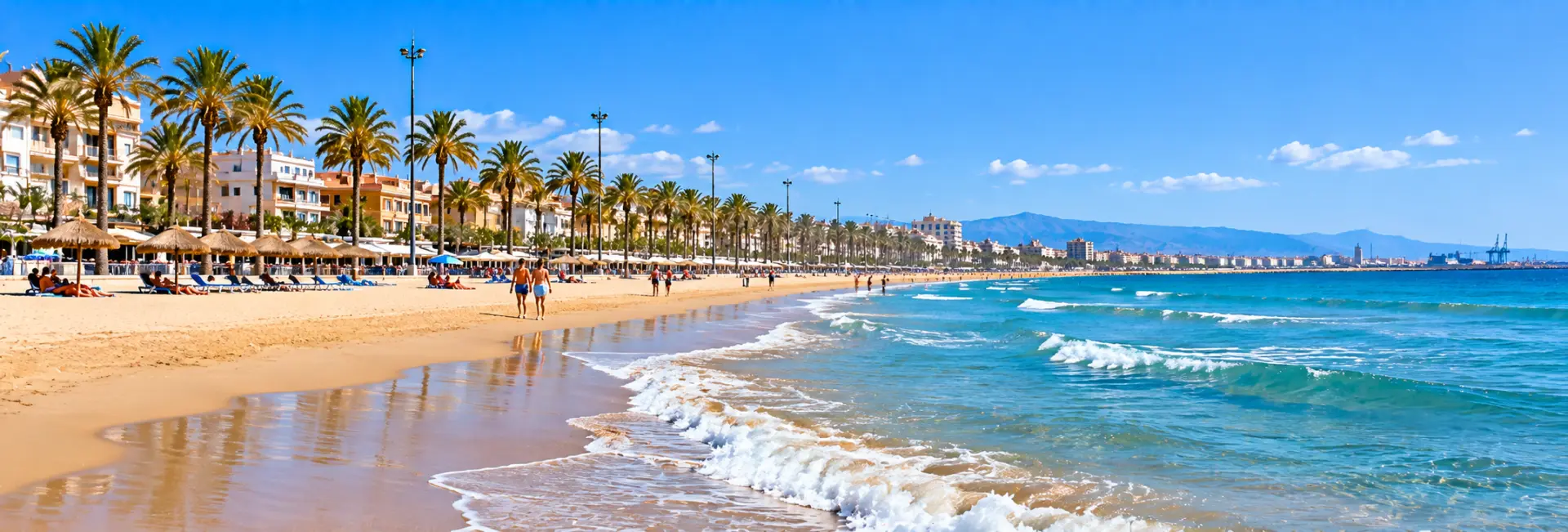
Malvarrosa Beach is Valencia's best-known stretch of sand, a wide, golden urban beach running along the city's Mediterranean seafront just a short tram or bus ride from the historic centre. It's the beach most closely associated with Valencia itself, backed by a broad promenade lined with palm trees, seafood restaurants and low-rise apartment blocks rather than high-rise hotels.
Malvarrosa blends easily into the neighbouring Cabanyal beach to its south, forming one long, continuous shoreline, and it has long served as the city's main outlet to the sea, a place where Valencians go to swim, walk, eat paella by the water and unwind after work rather than a beach built primarily for tourists.
History
From Marshland to Seaside Neighbourhood
The area now covered by Malvarrosa was originally low-lying, marshy ground on the edge of a small fishing settlement. Its name comes from the mallow flowers, "malva rosa," that were cultivated along this stretch of coast in the 19th century, and the flower gave its name first to the surrounding neighbourhood and then to the beach itself.
A Seaside Retreat for the City
Through the 19th and 20th centuries, Malvarrosa developed into a favourite escape for Valencians, with seaside villas built along the shore for wealthier residents and, over time, a public promenade, restaurants and leisure facilities added for everyday visitors. One of those villas belonged to the Valencian novelist Vicente Blasco Ibáñez, and it still stands beside the beach today.
Recognition & Status
Malvarrosa holds a Blue Flag certification, the internationally recognised standard for water quality, safety and environmental management at beaches and marinas. It's one of several urban beaches along Valencia's coastline to carry the distinction, reflecting the investment the city has made in cleaning up and maintaining this stretch of shoreline in recent decades.
- Blue Flag certified for water quality and beach management
- One of Valencia's longest and most visited urban beaches
- Home to Spain's first artificial underwater reef, built just offshore
Setting & Natural Features
The beach is made up of fine, golden sand and runs for well over a kilometre along Valencia's coast, backed by a wide paved promenade rather than dunes or cliffs. The water is generally calm and shallow close to shore, which has made the beach popular with families and casual swimmers rather than surfers.
Just offshore lies Spain's first artificial reef, built to encourage marine life and give divers and snorkellers something to explore close to the beach, a rare feature for a beach so close to a major city centre.
Key Areas Along the Beach
The Las Arenas End
Malvarrosa begins near the Hotel Las Arenas at its southern end, where the beach meets the neighbouring Cabanyal shoreline in a single continuous stretch of sand, making it hard to say exactly where one beach ends and the other begins.
The Promenade
Running the length of the beach, the seafront promenade is lined with restaurants, ice cream shops, bars and small shops, and it doubles as a route for walking, jogging and cycling well beyond the beach season.
The Northern Stretch Towards Patacona
Heading north, Malvarrosa gradually gives way to Patacona beach, a slightly quieter continuation of the same coastline that's popular with local residents looking for a bit more space.
Cultural Significance
Malvarrosa has long been woven into Valencia's cultural life. The novelist Vicente Blasco Ibáñez set several of his best-known works among the fishing communities of this coast, and his former villa beside the beach is now a house-museum dedicated to his life and writing. The neighbouring Cabanyal district, with its own distinct fishing-village character, grew up alongside the same stretch of shore and remains closely tied to it.
The beachfront is also closely associated with Valencia's paella tradition: the string of seafront restaurants along the promenade has long been one of the classic places in the city to eat paella looking out over the sand, a ritual as much a part of the Malvarrosa experience as swimming itself.
Ways to Experience It
Most visitors come to Malvarrosa simply to swim, sunbathe and spend a few hours by the water, but the beach also supports a wide range of more active options for those who want to do more than relax on the sand.
- Swimming and sunbathing on wide, gently sloping sand
- Water sports such as paddleboarding, windsurfing and kayaking in a marked activity channel
- Diving or snorkelling around the nearby artificial reef
- Walking or cycling the full length of the promenade
- Eating paella or fresh seafood at one of the beachfront restaurants
Best Time to Visit
Malvarrosa is at its busiest on summer weekends and throughout July and August, when both locals and visitors fill the sand and the promenade restaurants. Visiting on a weekday morning, even in high summer, generally means more space to spread out and shorter waits at the more popular restaurants.
Spring and early autumn offer a quieter alternative, with warm enough weather for a walk along the promenade and, on milder days, for swimming, while avoiding the peak midsummer crowds.
Visitor Tips
- Sun loungers and umbrellas can be rented directly on the beach if you'd rather not bring your own
- Public showers, toilets and drinking fountains are spaced along the promenade
- The beach and promenade are flat and accessible, with ramps in several places for wheelchair users
- Trams and buses connect Malvarrosa to Valencia's city centre in around twenty to thirty minutes, making a car unnecessary
- Beachfront restaurants can fill up quickly at lunchtime in summer, so arriving early or booking ahead is worth considering
Nearby Attractions
Malvarrosa sits within easy reach of several other sights along Valencia's coast and seafront district, making it simple to combine a beach day with other activities.
- Casa-Museo Blasco Ibáñez – the writer's former villa, now a museum, right beside the beach
- Cabanyal – Valencia's historic fishing quarter, known for its colourful tiled houses
- City of Arts and Sciences and the Oceanogràfic aquarium, a short trip away
FAQs about visiting Malvarrosa Beach
Is Malvarrosa a good beach for swimming? +
Yes, the water is generally calm and shallow near the shore, and the beach holds Blue Flag certification for water quality and safety.
How do I get to Malvarrosa Beach from central Valencia? +
Tram and bus routes connect the city centre to Malvarrosa in around twenty to thirty minutes, so most visitors don't need a car.
Is Malvarrosa Beach free to visit? +
Yes, the beach itself is free and open to the public; only extras like sun loungers, umbrellas and some water sports rentals come at a cost.
What is Malvarrosa Beach known for besides swimming? +
It's known for its long seafront promenade, its paella restaurants, and its connection to the writer Vicente Blasco Ibáñez, whose former villa now sits beside the beach as a museum.
Is Malvarrosa Beach suitable for families? +
Yes, the gentle slope and generally calm water make it a popular choice for families, and the promenade has restaurants and facilities close at hand.
When is the best time to visit to avoid crowds? +
Weekday mornings, and the shoulder seasons of spring and early autumn, tend to be quieter than summer weekends and the peak of July and August.
Is the beach accessible for visitors with limited mobility? +
Yes, the beach and promenade are flat, with ramps at several access points, making it one of Valencia's more accessible beaches.