Table of Contents
Overview
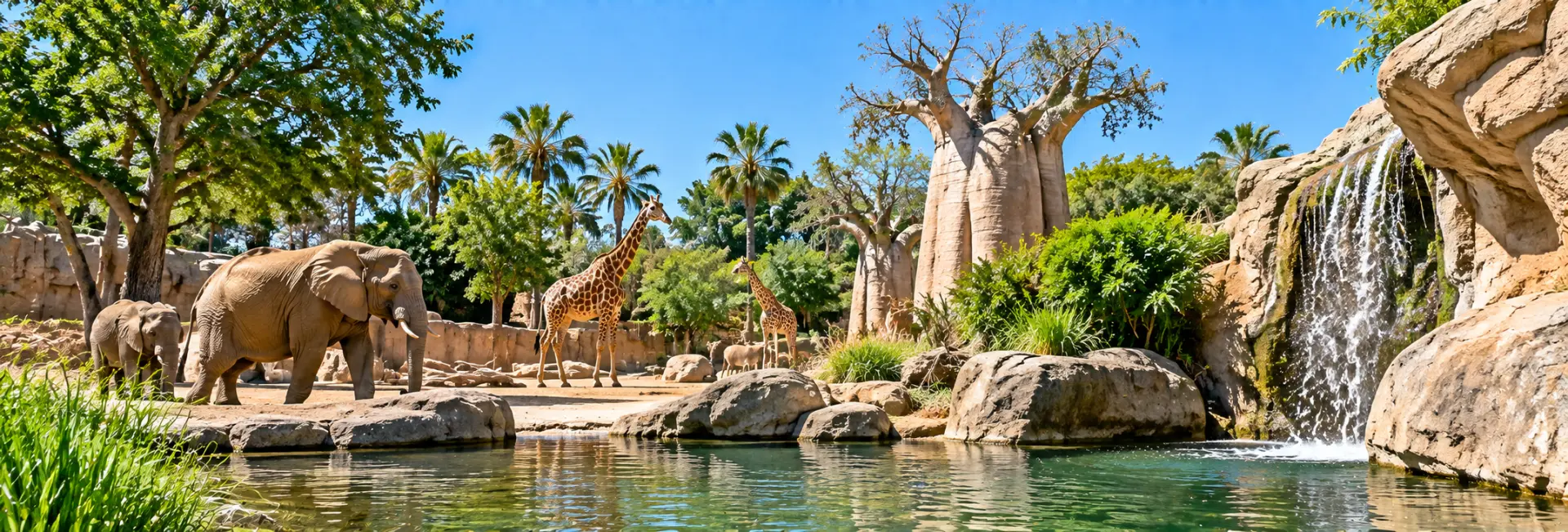
Bioparc Valencia is a modern zoo built on the "zoo-immersion" idea: rather than lining up cages and enclosures, it recreates entire African landscapes and lets visitors walk through them with as few visible barriers as possible. Set inside the green expanse of the Parque de Cabecera, in the old bed of the Turia river, it feels closer to a walk through a nature reserve than a traditional day at the zoo.
Since opening in 2008, Bioparc has become one of Valencia's most popular family attractions, drawing visitors who want to see African wildlife, from lions and giraffes to lemurs and gorillas, up close in landscapes designed to resemble their natural habitats as closely as possible.
History
Replacing the Old City Zoo
Bioparc grew out of the closure of Valencia's older municipal zoo in the Jardines de Viveros, which shut in 2007 after decades of use because its cages and enclosures no longer met modern standards for animal welfare. The city commissioned a specialist company to design a replacement built around a very different philosophy.
Opening as a Zoo-Immersion Park
Bioparc Valencia opened on the northwestern edge of the Parque de Cabecera in February 2008, rehousing many of the animals from the old zoo in far larger, more naturalistic spaces. The new park was conceived from the outset as an African-themed landscape rather than a general collection of species from around the world, a distinctive approach that set it apart from most Spanish zoos at the time.
Recognition & Status
Bioparc Valencia has been widely recognised within the zoo and animal-park industry for its zoo-immersion design, and it's regularly ranked among the better zoos in Europe for animal welfare and naturalistic enclosure design. It also participates in international conservation and breeding programmes for a number of threatened African species.
- Built around the zoo-immersion concept, with minimal visible barriers between visitors and animals
- Participates in international breeding and conservation programmes for endangered species
- Regularly cited as one of the leading zoos in Spain and southern Europe
Concept & Design
The park's defining idea is to place visitors visually inside the animals' world rather than looking in from outside it. Moats, natural vegetation, rock formations and carefully placed water features do the work that fences and bars would normally do, keeping animals and visitors safely apart while preserving open, uninterrupted views across each habitat.
This approach also allows several species that would naturally share the same landscape, such as zebras, giraffes and antelope on the savannah, to be housed together in the same large enclosure, recreating the mix of species visitors would encounter on a real African plain rather than presenting each animal in isolation.
Habitats & Key Areas
African Savannah
The park's largest habitat recreates an open grassland landscape shared by giraffes, zebras, white rhinoceroses, antelope and ostriches, with lions viewed from a raised rocky vantage point overlooking the plain.
Equatorial Africa
A denser, more forested habitat represents the continent's equatorial rainforest, home to gorillas, chimpanzees and other species adapted to thick vegetation and shade rather than open grassland.
Madagascar
A dedicated area recreates the island's distinct ecosystem, most notably as home to the park's lemurs, among the most popular animals with visitors thanks to their close, low-barrier enclosures.
Wetlands and Waterways
Ponds, rivers and wetland areas threaded through the park support hippopotamuses, crocodiles and a range of waterbirds and fish, adding another layer of habitat to the overall African landscape.
Wildlife & Conservation
Bioparc is home to a wide range of African species, from large mammals such as elephants, lions, hippopotamuses and gorillas to smaller and more specialised animals like meerkats, hyenas and various primates. The park presents its collection as part of a broader message about habitat loss and species conservation across Africa, rather than purely as a display of exotic animals.
As with other members of international zoo and aquarium associations, Bioparc takes part in coordinated breeding programmes intended to maintain healthy, genetically diverse populations of threatened species, with some of those programmes tied directly to conservation work in the animals' native ranges.
Ways to Experience It
Most visitors explore Bioparc on foot at their own pace, following a route that winds through each habitat in turn. A visit generally takes at least two hours, and many visitors spend considerably longer, especially with children who want to linger at favourite enclosures.
- Self-guided walking route through the savannah, equatorial Africa, Madagascar and wetland habitats
- Scheduled keeper talks and feeding sessions at various points in the day
- Dedicated play areas for children within the park
Best Time to Visit
Mornings tend to be the best time to see the animals at their most active, particularly in warmer months when many species rest during the hottest part of the afternoon. Weekdays outside school holidays are generally quieter than weekends, when the park draws larger numbers of local families.
Because most of the park is outdoors with limited shade in places, visiting earlier in the day during summer also makes for a more comfortable experience for visitors as well as a better chance of seeing wildlife on the move.
Visitor Tips
- Booking tickets online in advance is generally cheaper and helps avoid queues at busy times
- Wear comfortable shoes, since the park covers a large area with a fair amount of walking between habitats
- Bring water and sun protection, as much of the park is open-air with limited cover
- Re-entry is generally not permitted once you leave, so plan to see everything in one visit
- The park is designed to be accessible, with paths suitable for pushchairs and wheelchairs throughout
Nearby Attractions
Bioparc sits inside the wider Parque de Cabecera, one of the largest green spaces along Valencia's former riverbed park system, making it easy to combine with other nearby activities.
- Parque de Cabecera: the park and lake surrounding Bioparc, popular for walking and boating
- Jardín del Turia: the long riverbed garden that runs from Cabecera Park across much of the city
- City of Arts and Sciences: at the opposite end of the Turia gardens, a longer trip across town
FAQs about visiting Bioparc Valencia
What makes Bioparc Valencia different from a regular zoo? +
It's built around the zoo-immersion concept, using natural barriers like moats and vegetation instead of cages, so visitors feel like they're walking through the animals' actual habitat.
How long should I plan for a visit? +
Most visitors need at least two hours to see the main habitats, and many spend three hours or more exploring at a relaxed pace.
What animals can I see at Bioparc Valencia? +
The park focuses on African wildlife, including lions, giraffes, elephants, gorillas, hippopotamuses and lemurs, spread across savannah, rainforest, Madagascar and wetland habitats.
Is Bioparc Valencia good for young children? +
Yes, the park has dedicated play areas and low, easy-to-view enclosures, making it a popular choice for families with young children.
Is Bioparc Valencia accessible for visitors with mobility needs? +
Yes, the paths throughout the park are designed to accommodate pushchairs and wheelchairs.
When is the best time to visit to see the animals active? +
Mornings, especially in warmer months, tend to be the best time to catch animals moving around before the heat of the afternoon sets in.
How do I get to Bioparc Valencia from the city centre? +
The park sits in the Parque de Cabecera on the western edge of the city and is reachable by public transport or a short taxi ride from central Valencia.