
Table of Contents
Overview
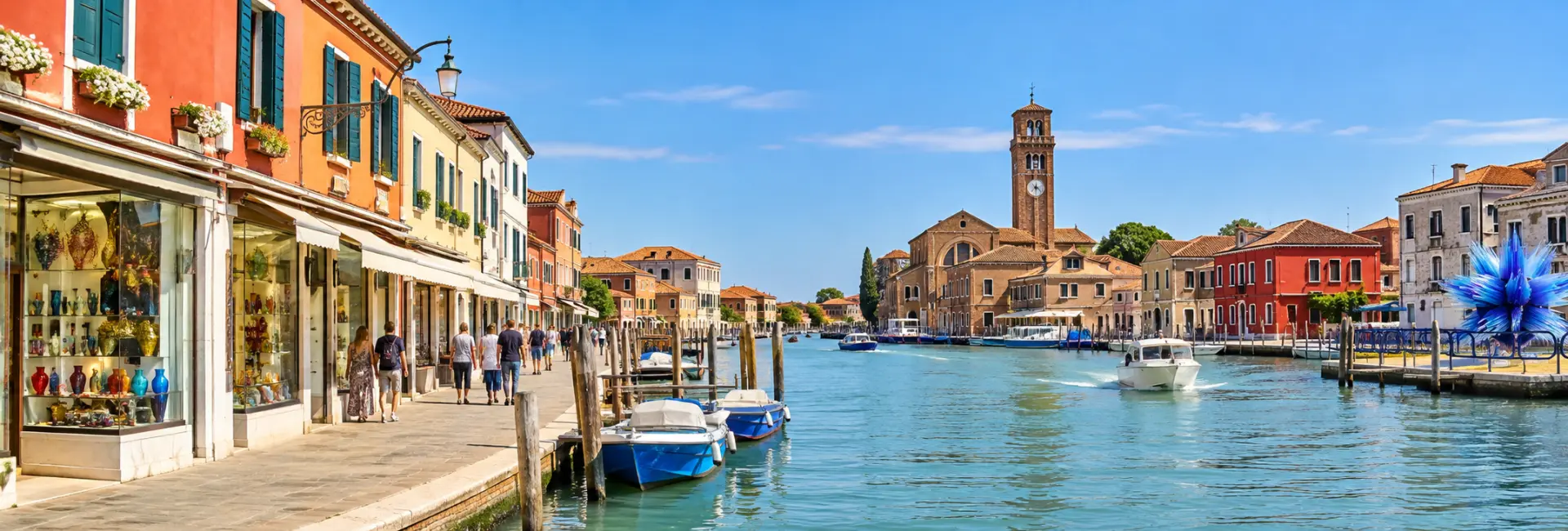
Murano is a cluster of small islands in the Venetian Lagoon, linked by bridges and canals and sitting about a mile and a half north of central Venice. For more than seven centuries it has been synonymous with one craft above all others: glassmaking. The island's furnaces, workshops, and showrooms still line the water today, and the sound of glass being worked drifts out of open doorways along its main canal.
Unlike Venice's crowded core, Murano moves at a slower pace. Its streets are quieter, its churches less thronged, and its canals lined with fewer tourists and more working studios. Visitors come here to watch molten glass being shaped into vases, chandeliers, and jewelry, to browse centuries-old workshops, and to see how a single decree from a medieval doge turned an entire island into a global center of craftsmanship.
History
Glassmaking Before Murano
Glass had been worked in Venice long before Murano became its home. Written records point to glassmakers active in the city by the late 10th century, and archaeologists have traced furnace remains on the lagoon islands back even further, to as early as the 8th century. Venice's position as a trading hub between Byzantium and the wider Mediterranean gave its craftsmen early access to techniques and raw materials from the East, and by the late 13th century, glass had become one of the city's most valuable industries.
The 1291 Decree
Venice in the Middle Ages was built almost entirely of wood, and the open flames needed to melt glass posed a constant fire risk to a city packed with timber houses. In 1291, the Venetian authorities ordered every glass furnace to relocate to Murano, where a fire could be contained without threatening the main city. The move is usually explained as a safety measure, though many historians also point to a second motive: concentrating the glassmakers on an island made their trade secrets easier to guard.
A Guarded Golden Age
Once isolated on Murano, glassmakers were treated as a class apart. They were barred from leaving Venetian territory, yet in exchange they received privileges rarely granted to craftsmen elsewhere, including the right to carry swords and, in some cases, to see their daughters marry into noble families. Murano's furnaces pushed the craft forward through the 15th century, most notably under Angelo Barovier, who is credited with developing cristallo, a nearly colorless, transparent glass that set a new standard across Europe.
Decline and Revival
Murano's monopoly could not last forever. Glassmakers eventually slipped away and carried their techniques abroad, and by the 16th century rival workshops had sprung up elsewhere in Europe. The island's fortunes fell further after Napoleon's conquest of Venice in 1797, when the old craft guilds were dissolved, and again under Austrian rule, when import and export costs made the trade harder to sustain. A revival took hold in the 19th century as Murano families rebuilt the industry, and many of the workshops founded during that period, along with newer ones, still operate on the island today.
Recognition and Status
Murano falls within the Venice and its Lagoon UNESCO World Heritage Site, inscribed in 1987 in recognition of the wider lagoon's exceptional architecture and centuries of maritime and artisan history. The island's glassmaking tradition is widely regarded as a piece of intangible cultural heritage in its own right, and Murano glass is a protected designation, with an official trademark used to distinguish authentic island-made pieces from imitations produced elsewhere.
The Art of Murano Glass
Murano glass is not a single technique but a family of them, refined and passed down through generations of furnace families. Molten glass, heated to well over a thousand degrees, is gathered on the end of a blowpipe and shaped by breath, gravity, and hand tools before it cools. What separates Murano's output from ordinary glasswork is the range of specialized methods layered on top of basic blowing.
- Filigrana: fine threads of colored or white glass are twisted into rods and fused into the piece to create delicate spiral or net-like patterns
- Millefiori: cross-sections of patterned glass rods are arranged and fused to form tiny flower-like designs, visible when the rod is sliced
- Sommerso: layers of different colored glass are submerged one inside another, producing a piece that shifts in hue as light passes through it
- Lampworking: rather than being blown, glass rods are melted over a small flame and shaped by hand, a technique often used for beads, figurines, and jewelry
Many of these methods are still guarded closely by individual workshops, with specific color formulas and finishing steps kept within a single family or furnace. Watching a demonstration is one of the few ways to see the process up close, since large-scale furnace work happens behind doors that casual visitors rarely enter.
Key Areas and Landmarks
Fondamenta dei Vetrai and the Rio dei Vetrai
The Fondamenta dei Vetrai, or "Glassmakers' Embankment," runs along Murano's main canal, the Rio dei Vetrai, and functions as the island's principal street. Glass showrooms, small furnaces, and cafes line both banks, and several footbridges cross the canal at intervals, each offering a different view of the workshops and their smoking chimneys.
Basilica dei Santi Maria e Donato
Set back from the main canal in Campo San Donato, this Romanesque-Byzantine church dates to the 12th century and is one of the oldest surviving structures on the island. Its apse, built in the Veneto-Byzantine style, overlooks the water, and its interior floor is laid with an intricate mosaic of animals and geometric patterns. Local legend holds that bones hanging behind the altar belonged to a dragon slain by Saint Donatus, though most historians identify them as the remains of prehistoric animals.
Murano Glass Museum
Housed in the Gothic Palazzo Giustinian, the Murano Glass Museum traces the island's glassmaking history from Roman-era fragments through Renaissance masterpieces to contemporary art glass. Its collection includes pieces dating back to the 15th century alongside 20th-century works, and it remains the most complete overview of the craft's evolution on display anywhere on the island.
Faro di Murano
Murano's lighthouse marks the edge of the island facing the open lagoon and has guided boat traffic since the 19th century. The surrounding stretch is quieter than the workshop-lined canals near the center, and it offers an open view across the water back toward Venice.
Ways to Experience It
Most visitors reach Murano by vaporetto, the lagoon's public waterbus, with a short crossing from Venice's Fondamenta Nove stop or a longer route from Piazzale Roma or the train station. Several vaporetto stops serve different parts of the island, so where you get off shapes what you see first.
- Glassblowing demonstrations: many workshops along the main canal offer short, live demonstrations where a maestro shapes a piece in front of visitors, often followed by a chance to browse the showroom
- Murano Glass Museum: a self-paced visit through the island's collection, useful as a first stop for understanding the techniques seen later in workshop windows
- Guided walking tours: small-group tours combine the basilica, the museum, and a furnace visit into a single half-day itinerary
- Hands-on workshops: a small number of studios offer short lampworking or bead-making sessions for visitors who want to try the craft themselves
- Independent shopping: boutiques along the Fondamenta dei Vetrai and side streets sell everything from affordable trinkets to museum-quality pieces, with prices and authenticity varying widely between shops
Best Time to Visit
Murano can be visited comfortably for most of the year, though conditions shift noticeably by season. Spring and early autumn bring mild temperatures and thinner crowds than peak summer, making them the most comfortable stretches for walking the canals and browsing workshops without feeling rushed.
Summer is the busiest period, particularly midday, when day-trippers from Venice arrive in large numbers on the vaporetto. Visiting early in the morning or later in the afternoon tends to mean shorter waits at popular workshops and museums. Winter is the quietest season by far; many shops stay open, but some smaller studios reduce their hours, so travelers planning a winter visit around a specific glassblowing demonstration should check ahead.
Visitor Tips
- Buy Murano glass directly from workshops with visible furnaces rather than unmarked souvenir stalls, since not everything sold on the island is actually made there
- Look for the "Vetro Artistico Murano" trademark sticker or certificate, which distinguishes authentic island-made glass from imported imitations
- Avoid unsolicited offers of a "free" boat trip to Murano from touts near Venice's main sights, since these often lead to high-pressure sales visits at inflated prices
- Combine a Murano trip with nearby Burano in a single day, since both islands sit on similar vaporetto routes from Fondamenta Nove
- Wear comfortable shoes, since the island is easiest to explore on foot across its bridges and along its narrow canal-side paths
- Check opening hours for the Glass Museum and smaller churches before visiting, since hours can shift outside peak season
Nearby Attractions
Murano sits within easy reach of the other main islands of the northern lagoon, making it simple to combine with a broader day out on the water.
- Burano: a short vaporetto ride away, known for brightly painted houses and traditional lace-making
- Torcello: a quiet, sparsely populated island with one of the lagoon's oldest cathedrals, dating to the 7th century
- Venice's Cannaregio district: the closest mainland neighborhood, reachable directly from the Fondamenta Nove vaporetto stop used to reach Murano
- San Michele: the lagoon's cemetery island, passed en route between Venice and Murano on several vaporetto lines
FAQs about visiting Murano Island
What is Murano Island famous for? +
Murano is famous for handblown glass, a craft that has been based on the island since 1291, when Venice ordered its glass furnaces moved there to reduce fire risk in the main city.
How do you get to Murano from Venice? +
The easiest way is the public vaporetto waterbus, with the shortest crossing running from the Fondamenta Nove stop in Venice and taking around ten minutes; longer routes also run from Piazzale Roma and the train station.
How long do you need to visit Murano? +
Most visitors see the highlights, a glassblowing demonstration, the main canal, and one of the churches, in two to three hours, though a full half-day allows time for the Glass Museum and unhurried shopping.
Is Murano free to visit, or do you need tickets? +
Walking around Murano is free, and many glassblowing demonstrations are free or low-cost, though the Murano Glass Museum and any hands-on workshops charge separate admission.
Is Murano worth visiting if you've already seen Venice's glass shops? +
Yes, since most authentic Murano glass is actually made on the island, and watching a live demonstration or visiting a working furnace shows the process behind pieces sold throughout Venice.
Is Murano suitable for children and older visitors? +
Murano is generally easy going, with flat, walkable paths along the canals and several bridges with steps, and glassblowing demonstrations tend to appeal to visitors of most ages.
What should I combine a Murano visit with? +
Burano and Torcello are the most common pairings, since all three islands sit along similar vaporetto routes from Fondamenta Nove and can be combined into a single day trip from Venice.
Is all glass sold on Murano actually made there? +
No, some souvenir shops sell imported imitations, so it helps to buy from workshops with visible furnaces or pieces carrying the official Vetro Artistico Murano trademark.
