
Table of Contents
Overview
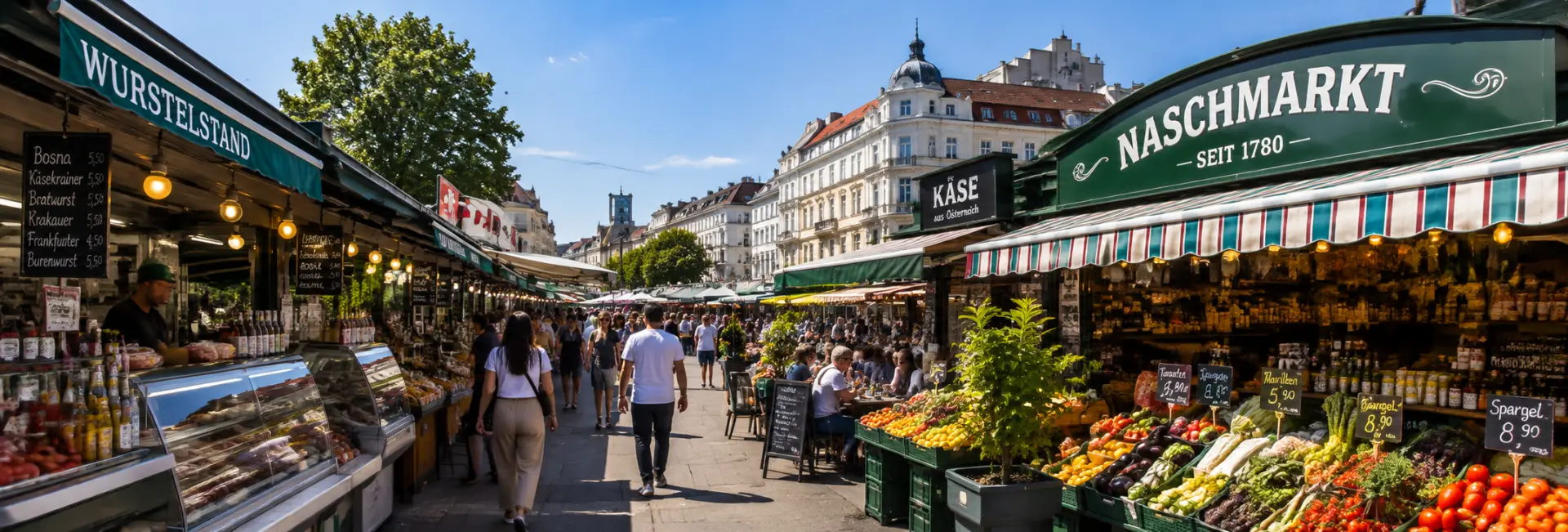
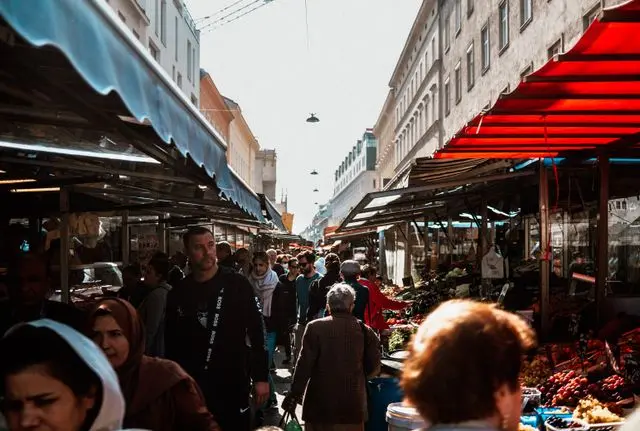
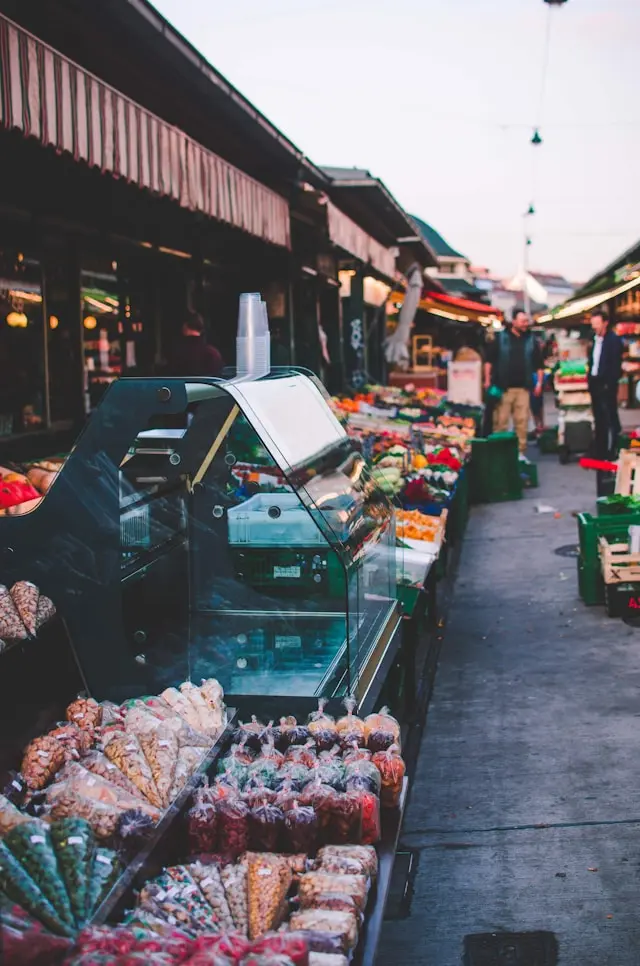
The Naschmarkt is Vienna's largest and best-known market, a ribbon of stalls and restaurants stretching roughly a mile and a half along the Wienzeile between Karlsplatz and the Kettenbrückengasse metro stop. More than a hundred vendors trade here on any given weekday, selling everything from Styrian pumpkin seed oil and Alpine cheeses to Turkish spices, Middle Eastern sweets, and fresh seafood, reflecting Vienna's long history as the hub of a sprawling, multicultural empire.
The market sits on top of the old Wien River, which was covered over more than a century ago, and it's flanked by some of the city's finest Art Nouveau architecture. On Saturdays it grows even livelier, when a large flea market takes over the western stretch toward Kettenbrückengasse, drawing crowds hunting for antiques, vintage clothing, and odds and ends from across Central Europe.
History
From Dairy Carts to Ash Market
Trade on this site goes back to at least the 16th century, when farmers from villages around Vienna brought milk and dairy products into the city, originally under the name Kärntnertormarkt, after a nearby city gate. By the early 19th century the site had become known as the Aschenmarkt, or Ash Market, a name historians link either to the ash-wood buckets used to carry milk or to the area's earlier use for dumping ash.
From Ash Market to Naschmarkt
Fruit and vegetables arriving by cart joined the dairy trade from 1793 onward, and by the early 1800s the market's offerings had expanded well beyond milk. The name Naschmarkt, roughly "snacking market," first appears in records from around 1820 and gradually replaced the older name over the following century.
Covering the River and Building the Halls
The Wien River, which had run openly through the site, was arched over at the end of the 19th century as part of a larger redevelopment led by architect Otto Wagner, freeing up space for the market to grow substantially. Architect Friedrich Jäckel was commissioned to design dozens of wooden sales halls with iron framing, and when the rebuilt market opened in 1916 it hosted several hundred traders, cementing the layout that still largely defines the market today.
Architecture & Notable Buildings
The Naschmarkt's stalls run alongside some of Vienna's most celebrated Art Nouveau buildings, products of the same wave of urban redevelopment that reshaped the old Wien riverbed into the Wienzeile boulevard.
The Majolikahaus and Medallion House
At Linke Wienzeile 40, architect Otto Wagner's Majolikahaus is covered in a sweeping floral pattern rendered in glazed majolica tiles, while its neighbor at number 38, sometimes called the Medallion House, is decorated with gilded medallion ornaments designed by artist Koloman Moser. Both buildings, completed at the end of the 1890s, are considered high points of Viennese Jugendstil design.
The Secession Building
At the market's eastern end near Karlsplatz stands the Secession Building, an exhibition hall topped by a gilded dome of laurel leaves that has become one of the most photographed symbols of Vienna's Art Nouveau movement, giving visitors a striking architectural bookend to a walk through the market.
Key Areas
The Main Food Market
Running from Karlsplatz westward, this stretch is dense with produce stands, delicatessens, spice merchants, and restaurant terraces representing cuisines from across Europe, the Middle East, and Asia.
The Saturday Flea Market
Toward the western end of the market, near Kettenbrückengasse, an extension area hosts Vienna's largest flea market every Saturday, where sellers set up stalls of antiques, vintage clothing, old porcelain, and general curiosities.
The Restaurant Row
A near-continuous line of restaurant terraces flanks both sides of the market for much of its length, making it one of Vienna's most popular spots for a casual lunch or an evening out among locals.
Ways to Experience It
- Wander the stalls to graze on street food from multiple cuisines, a favorite approach for first-time visitors
- Sit down at one of the many restaurant terraces for a full meal, particularly popular in the evenings
- Browse the specialty food stalls for cheeses, oils, spices, and other goods to take home
- Visit on a Saturday to combine the regular market with the flea market extension toward Kettenbrückengasse
- Join a guided food tour, a common way for visitors to navigate the market's scale and sample a wider variety of vendors
Best Time to Visit
- Weekday mornings are the quietest time to browse the food stalls without heavy crowds
- Saturday mornings are the busiest and most atmospheric time to visit, thanks to the addition of the flea market
- The market and its restaurants are closed on Sundays, so plan a visit for Monday through Saturday
- Evenings draw a lively crowd to the restaurant terraces, especially in the warmer months
Visitor Tips
- The market runs roughly 6am to 9pm on weekdays and closes earlier, around 6pm, on Saturdays, with restaurants often staying open later
- Prices at the Naschmarkt tend to run higher than at a typical neighborhood grocer, so it's better approached as a place to graze and browse than for routine shopping
- Kettenbrückengasse station on the U4 line sits right at the market's western end, making it an easy way to start or finish a visit
- Bring cash for smaller stalls and flea market vendors, some of whom don't accept cards
- Arrive with an appetite and a willingness to sample from several stalls rather than committing to one big sit-down meal
Nearby Attractions
- The Secession Building, a short walk away at the market's Karlsplatz end
- Karlskirche, Vienna's landmark Baroque church, near Karlsplatz
- The Wien Museum and Vienna University of Technology, both close to Karlsplatz
- Otto Wagner's Majolikahaus and Medallion House, viewable from the market itself along Linke Wienzeile
FAQs about visiting the Naschmarkt
What is the Naschmarkt known for? +
It's known for being Vienna's largest and most diverse food market, with more than a hundred stalls and restaurants, striking Art Nouveau buildings along its edges, and a large Saturday flea market at its western end.
Is the Naschmarkt open every day? +
It runs Monday through Saturday but is closed on Sundays, with slightly shorter hours on Saturdays than during the week.
What's the difference between the regular market and the flea market? +
The regular market, spanning most of the strip, sells food and everyday goods every day it's open, while the flea market is a Saturday-only extension near Kettenbrückengasse focused on antiques, vintage items, and secondhand finds.
Is the Naschmarkt a good place for a cheap meal? +
Not particularly for grocery-style shopping, since prices tend to run higher than at neighborhood stores, but it's an excellent spot for grazing on street food or sitting down at one of its many restaurant terraces.
How do I get to the Naschmarkt by public transport? +
Karlsplatz station serves the eastern end and Kettenbrückengasse on the U4 line serves the western end, so either stop puts you within a short walk of the market.
How much time should I plan for a visit? +
An hour or two is enough for a walk-through and some grazing, though a full Saturday visit combining the market, the flea market, and a sit-down meal can easily fill half a day.
What else can I see nearby? +
The Secession Building and Karlskirche are both a short walk from the market's Karlsplatz end, and Otto Wagner's Majolikahaus and Medallion House can be admired right from the market itself.
