
Table of Contents
Overview
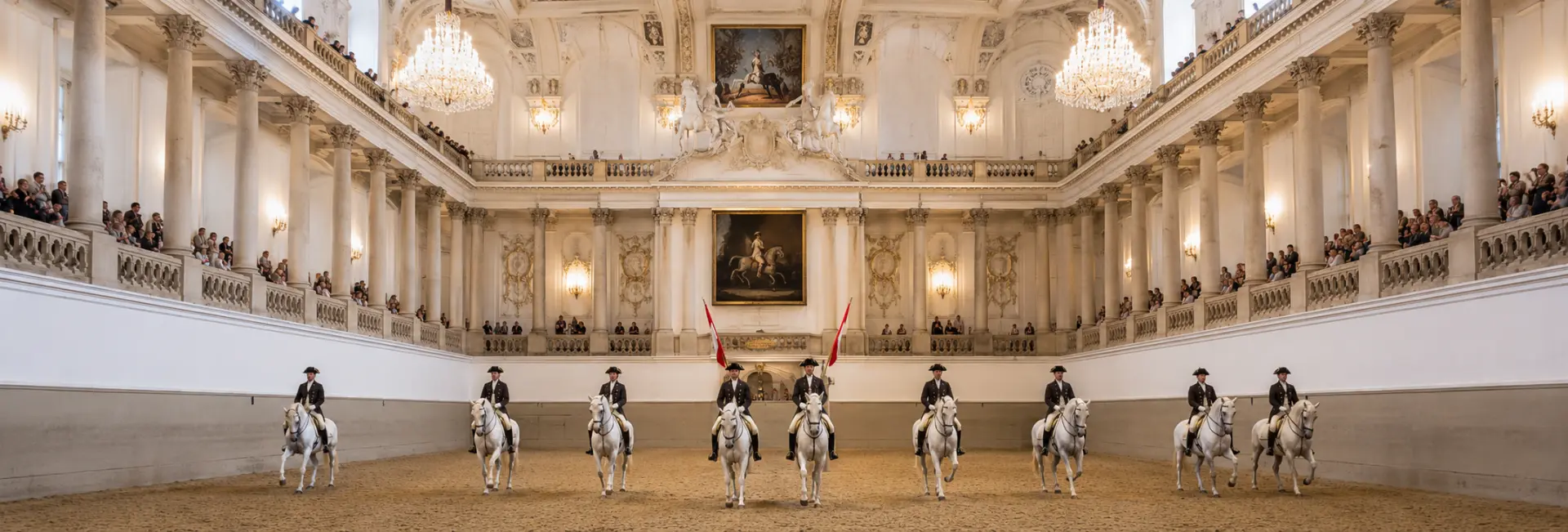
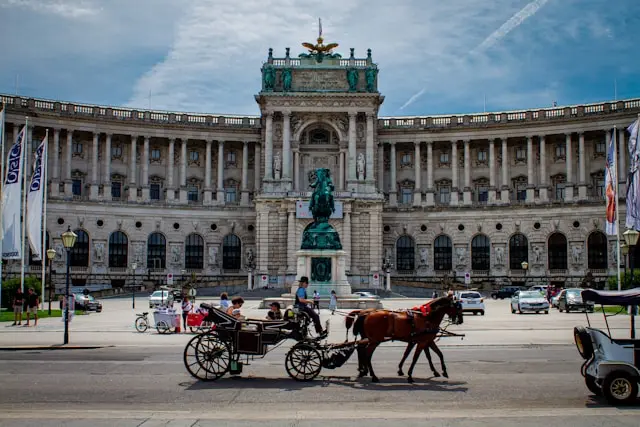
The Spanish Riding School, housed within Vienna's Hofburg palace complex, is the world's oldest institution still practicing classical dressage in its original form. Its white Lipizzaner stallions perform intricate, centuries-old movements in a Baroque hall built for Habsburg nobility, making it one of the rare places where visitors can watch a living tradition rather than a historical reenactment.
Equal parts working stable, training academy, and performance venue, the school offers a very different kind of Vienna sightseeing experience: one built around discipline, horsemanship, and music rather than paintings or architecture alone, even though its own building is a Baroque showpiece in its own right.
History
Origins in the 16th Century
The school's roots trace back to 1565, when a riding arena at what is now Josefsplatz was first documented under the Habsburgs. Its name comes from the horses at its center: Ferdinand I, who had grown up in Spain, introduced Spanish and Andalusian horses to the Viennese court, and these bloodlines eventually gave rise to the Lipizzaner breed used at the school today.
Surviving as Europe's Last Classical School
Following the French Revolution and the Napoleonic era, most of Europe's other classical riding schools closed their doors, leaving the Vienna school as the sole survivor of a once-widespread tradition. Riders continued training their horses through the First World War, and the school began holding public performances after the war, once Austria had become a republic rather than an empire.
War, Evacuation, and Return
Major Alois Podhajsky became the school's director in 1938, and his approach to training remains influential in the school's methods today. During the Second World War, the Lipizzaners were evacuated from Vienna to escape the advancing front, an operation that involved cooperation between Podhajsky and the United States Army, and which later inspired the 1963 Disney film "Miracle of the White Stallions." The school returned to its home at the Hofburg in 1955, giving its first postwar performance on 26 October of that year, the first officially celebrated Austrian National Day.
Architecture & Design
The school's main venue, the Winter Riding School, was designed by architect Josef Emanuel Fischer von Erlach and completed in 1735 under Emperor Charles VI. Conceived originally as a space for training young nobility in riding as well as hosting court ceremonies, its white Baroque interior, tiered galleries, and portrait of Charles VI on horseback above the royal box give performances a sense of imperial theater rather than a simple sporting venue.
Beyond the main hall, the complex includes a Summer Riding School and working stables, some of which are included on guided tours that take visitors behind the scenes of the horses' daily care and training.
The Lipizzaner Horses
Lipizzaner horses were developed from the late 16th century at the Imperial Stud at Lipica, in what is now Slovenia, through the careful crossing of Spanish, Italian, and local Karst bloodlines. The breed's most famous trait, its brilliant white coat, doesn't appear at birth: foals are typically born black or dark bay and lighten gradually over six to ten years, with a small number remaining dark-coated their entire lives.
Today's Lipizzaners used at the school are bred and raised at the Lipizzaner Stud Piber in Styria before being brought to Vienna for training, a process that takes years of patient, incremental work before a horse is ready to perform the school's most demanding movements.
Cultural Significance & UNESCO Recognition
In December 2015, UNESCO added the equestrian art practiced at the Spanish Riding School to its list of Intangible Cultural Heritage, recognizing classical dressage in the Renaissance haute école tradition as a living cultural practice rather than a museum piece. The listing reflects not just the performances themselves but the entire system of training, breeding, and knowledge transfer between generations of riders that keeps the tradition alive.
For Austria, the school carries a symbolic weight tied to continuity, having outlasted empires, wars, and the closure of nearly every comparable institution elsewhere in Europe while continuing to train horses and riders by essentially the same methods used centuries ago.
Ways to Experience It
Visitors have several ways to engage with the school beyond a single evening performance.
- Attend a full gala performance to see the complete "Ballet of the White Stallions," with all horses performing together to classical music.
- Watch the Morning Exercise, a more relaxed public viewing of the horses' daily training routine rather than a polished show.
- Join a guided behind-the-scenes tour covering the Winter Riding School, stables, and other areas not open during performances.
- Take a specialized tour of the building's roof structure for a different perspective on the Baroque hall's construction.
Visiting Etiquette & Tips
A few practical notes help visitors plan a smooth visit.
- Performance tickets, especially for gala evenings, tend to sell out well in advance, so booking early is worth the effort.
- Morning Exercise sessions are generally less expensive and more flexible than full performances, making them a good option for a shorter visit.
- Dress is more relaxed than at, say, the opera, though many visitors still dress smartly for evening performances.
- Photography rules vary between the Morning Exercise and full performances, so check current policy before bringing a camera.
- The horses are often on pasture outside Vienna during the summer recess, so visitors touring the school then may see fewer horses in residence than at other times of year.
Best Time to Visit
The main performance season runs through most of the year, with a summer recess period when many of the horses are sent to pasture outside the city and fewer are in residence for tours. Visiting outside this recess gives the best chance of seeing a full complement of horses during training or performances.
For those hoping to see the horses' daily training routine rather than a formal show, checking the Morning Exercise schedule in advance helps avoid days when sessions are unavailable due to performances or rest days.
Nearby Attractions
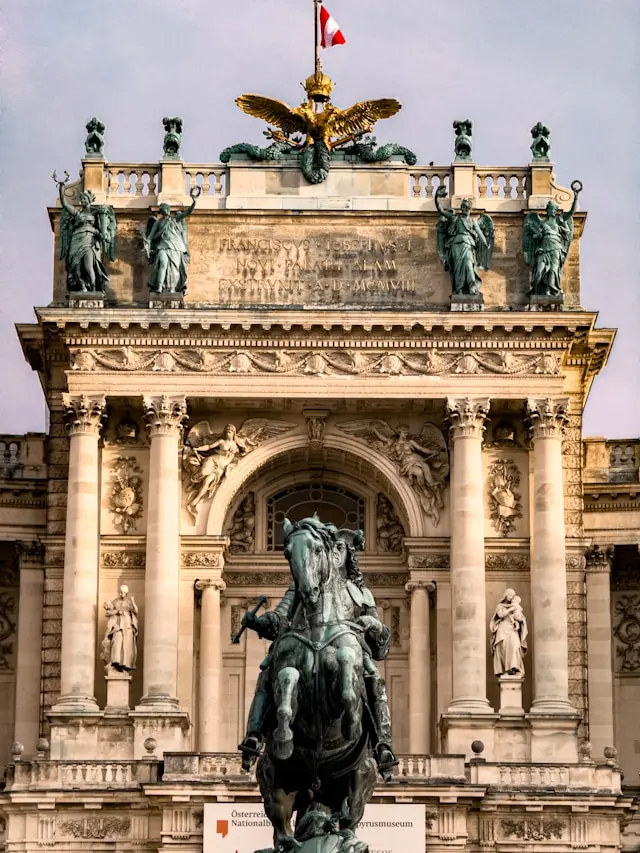
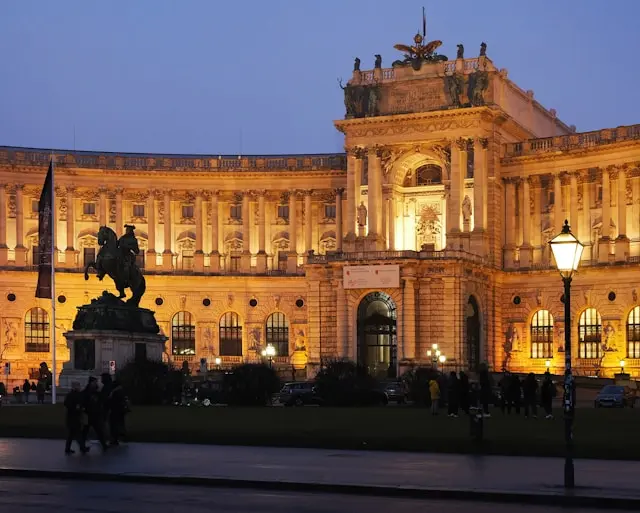
Set within the Hofburg complex, the school sits close to several other major Vienna sights.
- The Hofburg's Imperial Apartments and Sisi Museum are just steps away within the same palace complex.
- St. Stephen's Cathedral is a short walk across the inner city.
- The MuseumsQuartier and Kunsthistorisches Museum are both within easy walking distance.
- The Graben and Kohlmarkt shopping streets extend from nearby Michaelerplatz, making it easy to combine a visit with some sightseeing on foot.
FAQs about visiting the Spanish Riding School
What's the difference between a full performance and the Morning Exercise? +
A full performance is a polished show featuring choreographed movements set to music, while the Morning Exercise is a more relaxed, public viewing of the horses' regular daily training routine.
How long have Lipizzaner horses been white? +
Lipizzaners aren't born white; foals are typically black or dark bay and lighten gradually to their characteristic grey-white coat over six to ten years.
Is the Spanish Riding School still an active riding school, not just a tourist show? +
Yes, it remains a working training institution where riders and horses go through years of instruction, with public performances and tours offering a window into that ongoing training rather than a staged-only spectacle.
Do I need to book performance tickets in advance? +
Yes, particularly for gala performances, which regularly sell out ahead of time, so booking early is strongly recommended.
Where are the Lipizzaner horses bred? +
Today's horses are bred and raised at the Lipizzaner Stud Piber in Styria before being brought to Vienna for training at the Spanish Riding School.
Is the Spanish Riding School recognized by UNESCO? +
Yes, its classical equestrian art was added to UNESCO's Intangible Cultural Heritage list in December 2015.
How do I get to the Spanish Riding School? +
It sits within the Hofburg complex at Michaelerplatz, within walking distance of the Herrengasse U-Bahn station and several tram and bus stops serving the inner city.
