
Table of Contents
Overview
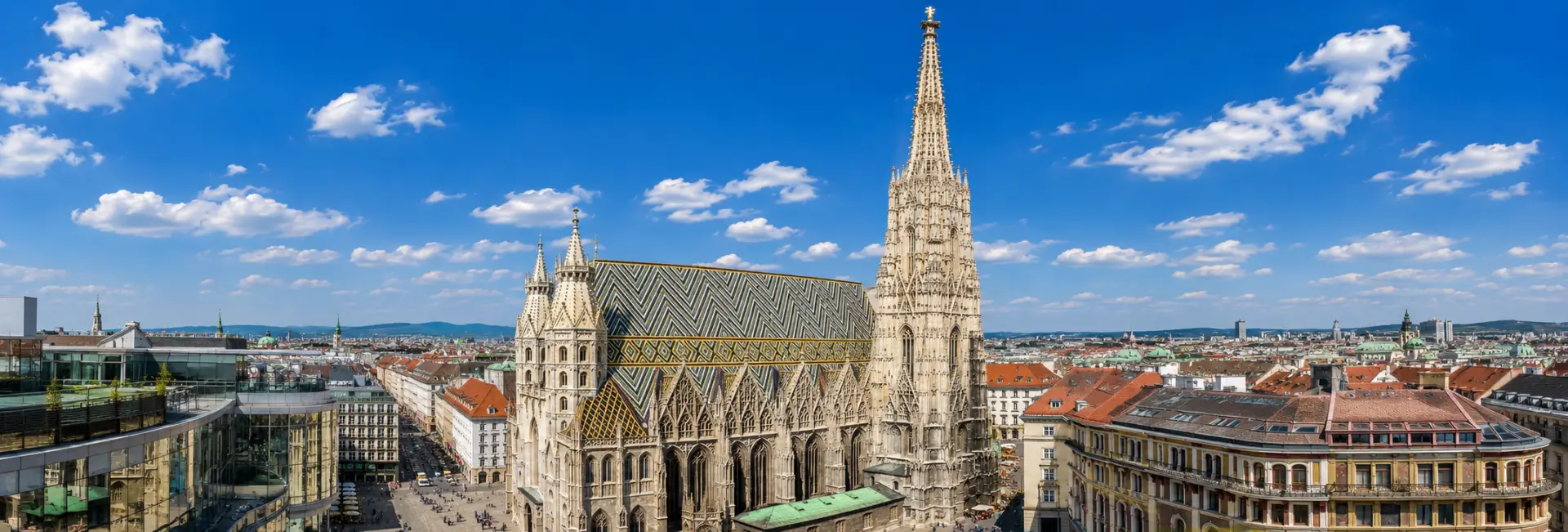
Rising above the pedestrian heart of Vienna, St. Stephen's Cathedral, known to locals as the Stephansdom, is the spiritual and geographic anchor of the Austrian capital. Its jagged silhouette, dark stone facade, and dazzling patterned roof make it instantly recognizable from almost anywhere in the city center, and its interior draws visitors into a soaring, atmospheric space shaped by more than eight centuries of building, rebuilding, and repair.
The cathedral is the seat of the Archbishop of Vienna and the mother church of the Archdiocese of Vienna, giving it a religious weight that goes well beyond its role as a tourist landmark. For many visitors, though, its main appeal is simpler: nowhere else in Vienna captures the layered mix of Romanesque foundations, Gothic ambition, and hard-won survival quite like it does.
History
Origins on Older Foundations
The site has held a church since the mid-12th century, when a Romanesque parish building was consecrated here in 1147, replacing an earlier structure. That first church sat just outside the city walls of the time, on what was then open ground, and little of it survives beneath the current building beyond fragments incorporated into later construction.
The Gothic Rebuilding
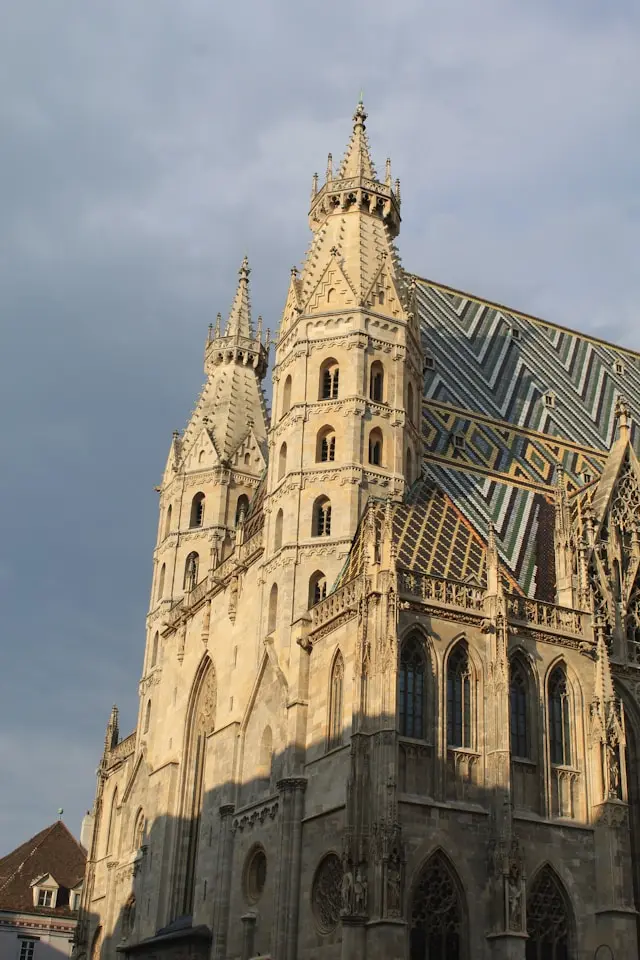
The cathedral's present character took shape from the 14th century onward, when Duke Rudolf IV of Austria championed an ambitious Gothic expansion intended to elevate the church's status and, by extension, his own dynasty's prestige. Construction stretched across generations, with the choir, nave, and towers added in stages over roughly two centuries, which is part of why the building reads as a patchwork of styles up close even as it reads as unified Gothic grandeur from a distance.
Siege, War, and Restoration
The cathedral has weathered violent moments in Austrian history, including damage during the Ottoman siege of Vienna in the 17th century. Its most severe test came in April 1945, when fires from street fighting in the closing days of the Second World War spread to the roof and caused it to collapse, destroying much of the original timber structure and damaging interior furnishings below. Viennese citizens funded the roof's reconstruction in the years that followed, and the cathedral reopened in 1948, with the rebuilt tiled roof completed shortly after.
Architecture & Design
The Tiled Roof
The cathedral's steeply pitched roof, covered in roughly 230,000 glazed tiles arranged into bold geometric and heraldic patterns, is its most photographed feature. The design incorporates the double-headed eagle associated with the Habsburg monarchy on one side, making the roof as much a symbol of Austrian history as a piece of construction.
The Towers
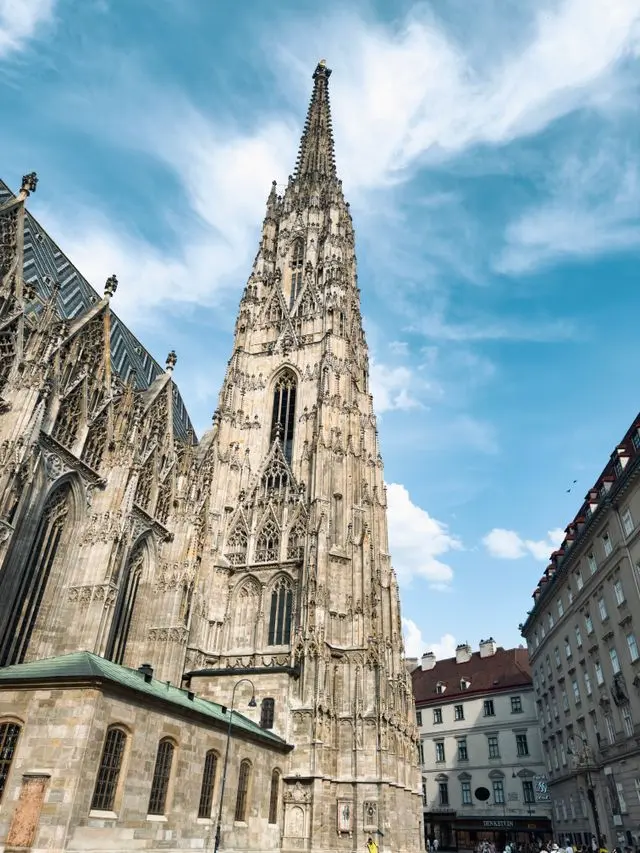
The south tower, nicknamed "Steffl," rises well over 130 meters and remains the taller of the cathedral's two towers, reachable by a long spiral staircase that rewards climbers with sweeping views over the rooftops of central Vienna. The north tower was never finished to match it and instead received a rounded Renaissance-era cap; it now houses the cathedral's largest bell and is accessible by elevator rather than stairs.
Interior
Inside, tall Gothic piers and ribbed vaulting draw the eye upward through a nave lined with chapels, altars, and funerary monuments accumulated over centuries. Stone and wood carving throughout the interior, some of it startlingly intricate for its age, reflects the work of master craftsmen whose names are still tied to specific pulpits, tombs, and decorative details inside the building today.
Cultural & Religious Significance
As the seat of the Archbishop of Vienna, the cathedral remains an active place of worship rather than a preserved relic, hosting regular Mass alongside major state and church ceremonies. It has also long served as a backdrop for pivotal personal and national moments, including the wedding of Wolfgang Amadeus Mozart in 1782 and his funeral service in 1791, both held within its walls.
The cathedral sits inside the Historic Centre of Vienna, an area recognized on UNESCO's World Heritage List, underscoring its place within a broader urban and cultural landscape shaped by imperial history, music, and architecture. For Viennese residents, the building carries a symbolic weight tied to civic identity and resilience, particularly given its rebuilding after wartime destruction with funds raised from ordinary citizens rather than the state alone.
Notable Features & Highlights
Beyond its roof and towers, the cathedral holds a number of details and spaces that reward closer attention:
- The Pummerin, Austria's largest bell, hangs in the north tower and is rung on major occasions such as New Year's Eve.
- Catacombs beneath the cathedral contain centuries of burials, including preserved remains connected to members of the Habsburg dynasty.
- The Giant's Doorway and Pagan Towers at the main western entrance are among the oldest surviving Romanesque elements of the building.
- A stone self-portrait attributed to master builder Anton Pilgram, tucked beneath the pulpit, is one of the earliest known architectural self-portraits in Europe.
- St. Valentine's Chapel houses a collection of relics associated with the cathedral's long religious history.
Ways to Experience It
Visitors can engage with the cathedral at several levels, from a quick look inside to a more involved exploration of its towers and lower levels.
- Climb the spiral staircase of the south tower for panoramic rooftop views over Vienna's old town.
- Take the elevator up the north tower to see the Pummerin bell up close.
- Join a guided tour of the catacombs to learn about the burial history beneath the cathedral floor.
- Attend a Mass or an organ recital to experience the building's acoustics and active religious life firsthand.
- Look up while circling the exterior at Stephansplatz to take in the roof pattern and towers from different angles.
Visiting Etiquette & Tips
As an active place of worship, the cathedral expects a level of respect and quiet conduct from all visitors, tourists included.
- Dress modestly, covering shoulders and knees, particularly if planning to attend a service.
- Keep voices low and avoid walking through active services or private prayer areas.
- Photography rules vary by area of the cathedral, so check posted signage before taking pictures, especially near altars and chapels.
- Expect separate, timed tickets for the towers, catacombs, and main cathedral interior rather than one combined entry.
- Wear comfortable shoes if climbing the south tower, since the staircase is narrow, steep, and has no elevator.
Best Time to Visit
Early morning, shortly after opening, tends to offer the quietest experience of the interior before tour groups arrive in force. Late afternoon light can also be flattering for photographing the exterior and roof from Stephansplatz.
Spring and early autumn bring milder weather for those planning to climb the towers, while the winter holiday season adds a festive atmosphere to the surrounding square, including nearby Christmas markets, though the cathedral itself and its towers can get crowded on weekends year-round.
Nearby Attractions
Stephansplatz sits at the convergence of several of Vienna's best-known streets and sights, making the cathedral a natural starting point for exploring the historic center on foot.
- Graben and Kärntner Strasse, two of Vienna's premier shopping streets, extend directly from the square.
- The Hofburg Palace, former seat of the Habsburg monarchy, is a short walk away.
- The Vienna State Opera lies just south along Kärntner Strasse.
- Judenplatz and the surrounding old town lanes offer a quieter, more residential contrast to the bustle around the cathedral itself.
FAQs about visiting St. Stephen's Cathedral
Is St. Stephen's Cathedral free to enter? +
Walking into the main body of the cathedral is generally free, though a modest fee applies for areas such as the towers, catacombs, and sometimes specific chapels or treasury displays.
How long should I plan to spend there? +
A quick look at the interior takes about 20 to 30 minutes, but budgeting an hour or more lets you add a tower climb or catacombs tour without feeling rushed.
Can I climb both towers? +
Yes, though they're reached separately: the south tower requires climbing a long spiral staircase, while the north tower is reached by elevator and houses the Pummerin bell.
Is the cathedral suitable for visitors with mobility limitations? +
The main ground-floor interior is reasonably accessible, but the south tower's staircase has no elevator, and the catacombs involve stairs as well, so those with mobility concerns may want to focus on the ground floor and north tower elevator.
What's the best way to get there? +
The cathedral sits directly above the Stephansplatz U-Bahn station on lines U1 and U3, making it one of the easiest landmarks in Vienna to reach by public transport.
Is photography allowed inside? +
Photography is generally permitted in most of the interior, but flash and photography are restricted or prohibited in certain chapels and during active services, so it's worth checking posted notices as you go.
What should I combine a visit with? +
Because it sits at the junction of Graben and Kärntner Strasse, the cathedral pairs naturally with a walk toward the Hofburg Palace or the Vienna State Opera, both within easy walking distance.
