
Table of Contents
Overview
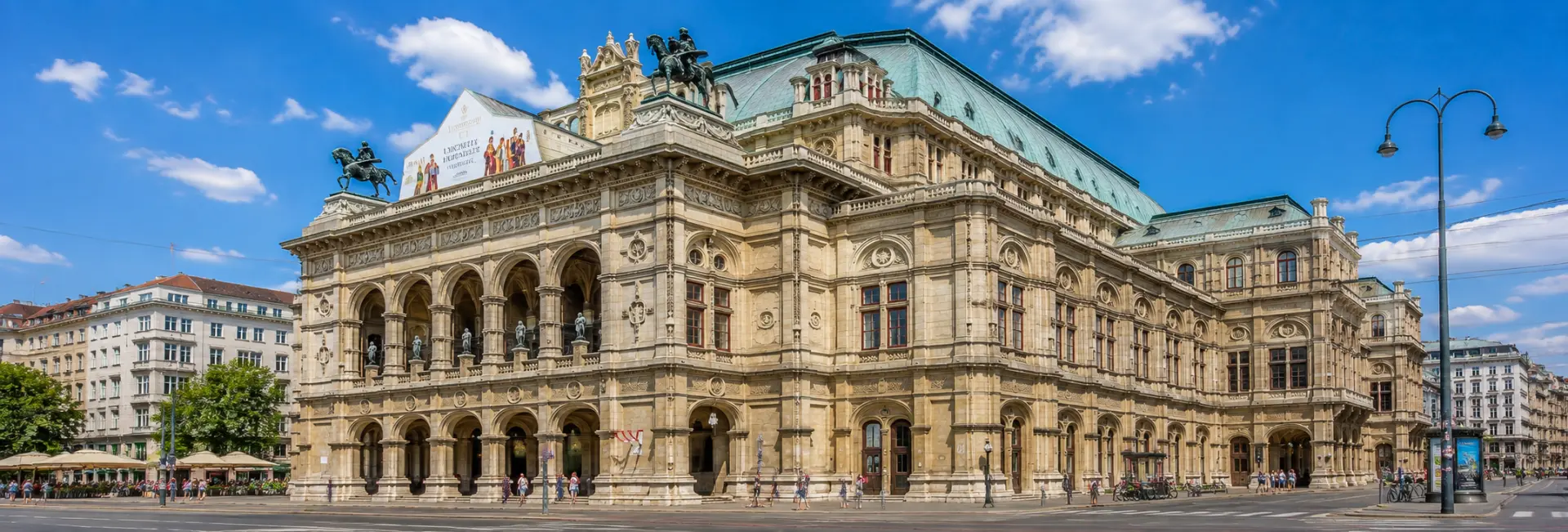
The Vienna State Opera, known in German as the Wiener Staatsoper, is one of the world's most prestigious opera houses and a defining landmark of Vienna's Ring Road. Since opening in 1869, it has served as a stage for the Vienna Philharmonic and a rotating cast of the opera world's biggest names, staging a different production on nearly every night of its ten-month season.
Beyond the performances themselves, the building is a destination in its own right: a grand Renaissance Revival structure whose survival through war, reconstruction, and decades of continuous use has made it as much a symbol of Austrian resilience as of Austrian music.
History
Building the Ring Road's First Landmark
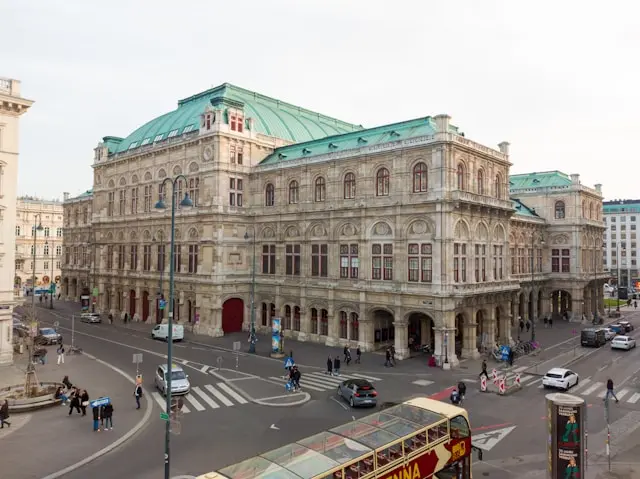
Construction ran from 1861 to 1869, making the opera house the first major building completed along Vienna's newly laid Ring Road. Architects August Sicard von Sicardsburg and Eduard van der Nüll designed it as the Vienna Court Opera, and it opened in 1869 in the presence of Emperor Franz Joseph I with a performance of Mozart's Don Giovanni. Public criticism of the building's appearance during construction was harsh enough that it weighed heavily on both architects, and neither lived to see the completed structure become the beloved landmark it is today.
From Court Opera to State Opera
The building carried the name Vienna Court Opera until 1920, when the fall of the Habsburg monarchy and the founding of the First Austrian Republic prompted the rename to Vienna State Opera, reflecting its new status as a national rather than imperial institution.
Destruction and Rebirth
The opera house suffered severe damage during Allied bombing in March 1945, with fire destroying the stage, auditorium, and thousands of costumes; only the main facade, the grand staircase, and the Schwind Foyer survived largely intact. The company kept performing throughout the rebuilding, using temporary venues, while reconstruction of the main building proceeded over a decade. The Vienna State Opera reopened on its original site in November 1955 with a performance of Beethoven's Fidelio, a moment broadcast nationally and widely seen as a symbol of Austria's postwar recovery.
Architecture & Design
Exterior
The building's Renaissance Revival exterior draws on Italian and French architectural traditions, with arched loggias, a grand staircase entrance, and decorative sculpture that reflected the ambitions of Vienna's Ringstrasse era, when the city ringed its old center with monumental civic buildings.
Interior
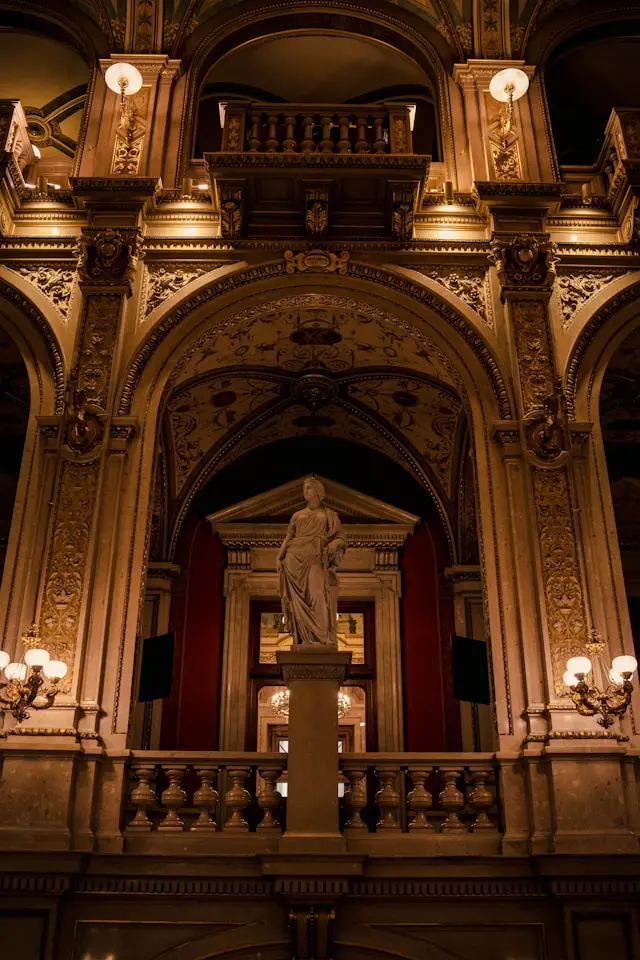
Inside, the auditorium seats over 1,700 people with additional standing room for several hundred more, arranged across tiers of boxes and balconies beneath ornate ceiling work. The Schwind Foyer, named for the frescoes it contains, and the grand staircase are among the few interior spaces that survived the 1945 bombing largely unchanged, giving visitors a direct link to the building's 19th-century origins.
Cultural Significance
The Vienna State Opera anchors one of the closest relationships between an opera house and a symphony orchestra anywhere in the world: the Vienna Philharmonic is drawn entirely from the opera's own orchestra members, meaning a performance in the pit here effectively features one of the most celebrated orchestras on the planet.
The building is also the setting for the Vienna Opera Ball, an annual society event held in the auditorium each February that transforms the theater into a ballroom and draws international attention to the city. Under its current director, Bogdan Roščić, the company continues to present one of the largest repertoires of any opera house globally, mixing new productions with long-running classics across a season that typically runs from September to June.
Notable Features & Highlights
Several details set the Vienna State Opera apart from other historic theaters:
- The Schwind Foyer, decorated with scenes from famous operas, is one of the few original interior spaces to survive the 1945 bombing.
- The grand staircase, another survivor of the wartime destruction, remains one of the building's most photographed interior features.
- Standing-room sections, a long-running Viennese tradition, let visitors watch world-class performances at a fraction of the cost of a seat.
- The opera house serves as the home stage of the Vienna Philharmonic whenever its members are not performing separately as a concert orchestra.
- Large screens are sometimes set up outside the building for free outdoor broadcasts of performances during the season.
Ways to Experience It
There's more than one way to take in the Vienna State Opera, whether or not you can get tickets to a performance.
- Attend an opera or ballet performance, booking well ahead for seats or arriving early for standing-room tickets.
- Join a guided daytime tour of the building, which covers areas normally closed to the public, including the Emperor's Tea Room.
- Watch a free outdoor broadcast of a live performance when one is scheduled on the square outside the building during the season.
- Visit the box office and foyer, which remain open to the public even without a ticket for that evening's performance.
Visiting Etiquette & Tips
A few practical points help make a visit to the opera house smoother, especially for first-time attendees.
- Smart or formal dress is customary for evening performances, particularly in the more expensive seating categories.
- Standing-room tickets go on sale at a dedicated box office roughly 80 minutes before curtain, and popular performances can mean a wait in line.
- The opera house is closed for performances during July and August, so plan a visit outside those months if seeing a live show is the goal.
- Latecomers are often not seated until a suitable pause in the performance, so arrive with time to spare.
- Guided tours run on a set daily schedule that changes around rehearsals and performances, so check the day's tour times in advance rather than assuming a fixed slot.
Best Time to Visit
The performance season runs from September through June, making this the only window for catching a live opera or ballet inside the house; the building itself, including guided tours, remains open in July and August even though performances pause.
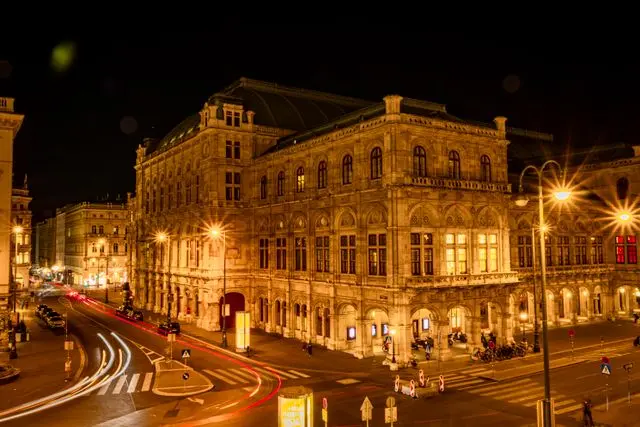
Visiting around the New Year brings the chance to see a Strauss-heavy program tied to Viennese holiday tradition, while February brings the glamour, and crowds, of the Opera Ball. For a calmer daytime visit focused on the architecture, weekday mornings tend to be quieter than weekend afternoons.
Nearby Attractions
Sitting on the Ring Road at one of Vienna's busiest intersections, the opera house is within easy walking distance of several other major sights.
- St. Stephen's Cathedral and the shopping streets of Kärntner Strasse and Graben lie a short walk north.
- The Hofburg Palace and its surrounding museums are a few minutes away on foot.
- The Albertina museum, known for its graphic arts collection, sits directly adjacent to the opera house.
- Karlsplatz, with its own architectural landmarks and U-Bahn connections, is just south of the building.
FAQs about visiting the Vienna State Opera
Can I visit the Vienna State Opera without attending a performance? +
Yes, the box office and foyer are open to the public daily, and guided tours let you see much of the interior, including areas normally closed off, without buying a performance ticket.
How much do standing-room tickets cost? +
Standing-room tickets are famously inexpensive compared to seated tickets, though exact pricing changes over time, so it's worth checking current prices directly with the box office before your visit.
When does the opera season run? +
The main season runs from September to June; the house is closed for performances during July and August, though the building and tours remain accessible.
Do I need to dress up to attend a performance? +
Smart or formal dress is customary, especially for pricier seating categories, though standards are somewhat more relaxed for standing-room areas.
How do I get standing-room tickets? +
Standing-room tickets go on sale at a dedicated box office around 80 minutes before the performance starts, and arriving early is essential for popular shows since space is limited.
Is the opera house connected to the Vienna Philharmonic? +
Yes, the Vienna Philharmonic's musicians are drawn from the orchestra of the Vienna State Opera, giving performances here access to one of the world's most renowned orchestras.
What's nearby if I want to combine a visit with other sights? +
St. Stephen's Cathedral, the Hofburg Palace, and the Albertina museum are all within a short walk, making the opera house a convenient stop on a walking tour of central Vienna.
