
Table of Contents
Overview
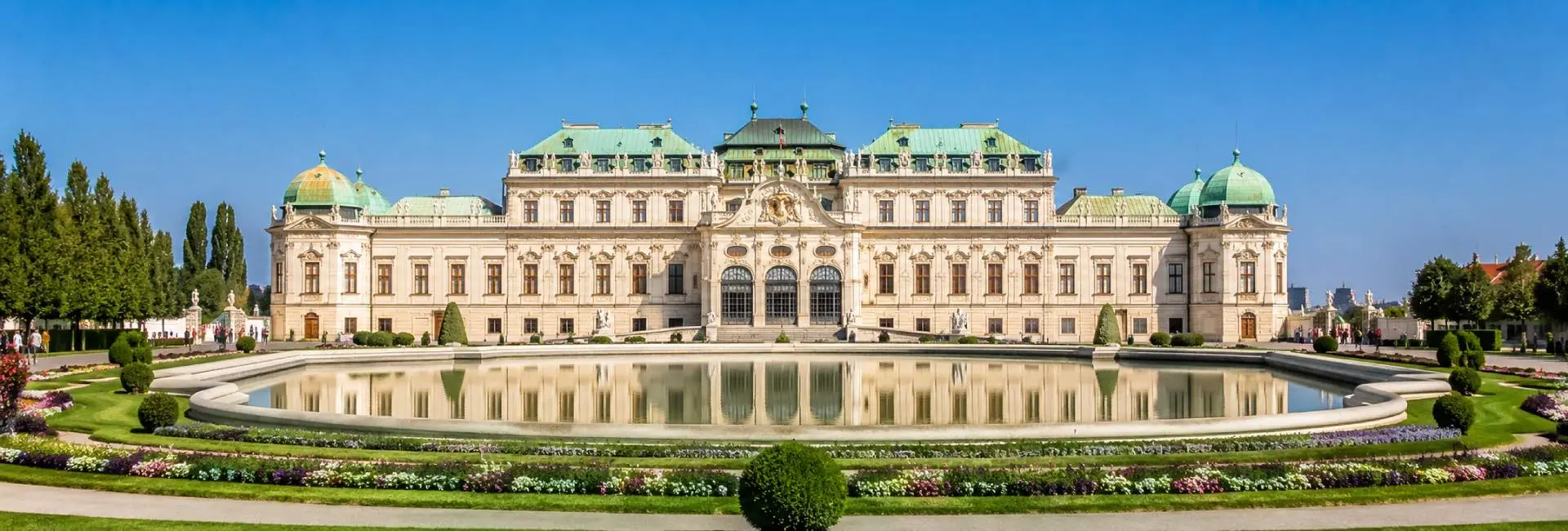
Belvedere Palace is a pair of Baroque palaces set within formal gardens on the south-eastern edge of Vienna's historic centre, in the city's third district. Commissioned as the summer residence of Prince Eugene of Savoy, it now houses one of Austria's most important art museums, drawing visitors as much for its collection as for its architecture.
The complex is made up of the Upper Belvedere and Lower Belvedere, linked by a sloping, symmetrically landscaped garden, along with the Orangery, the former Palace Stables, and the newer Belvedere 21 building nearby. Together they trace Austrian art from the Middle Ages through to the present, with the Upper Belvedere's Klimt collection, including The Kiss, as the single biggest draw.
History
A Prince's Summer Residence
The Belvedere was built in the early 18th century for Prince Eugene of Savoy, the celebrated military commander who served the Habsburg court and amassed enormous personal wealth and prestige. He commissioned the Baroque architect Johann Lucas von Hildebrandt to design the complex as a place for both private retreat and lavish entertaining, set apart from his separate winter residence within the city.
Construction of the Two Palaces
The Lower Belvedere was completed first, built between around 1712 and 1716 as the prince's residential quarters, followed by the more monumental Upper Belvedere, finished by 1723, which was designed primarily for ceremonial receptions and grand entertaining. The formal garden connecting the two palaces was laid out at the same time, following French-influenced Baroque landscaping principles popular across European courts.
From Private Palace to Public Museum
After Prince Eugene's death, the estate passed to the Habsburgs, and the Upper Belvedere later housed the imperial family's painting collection, effectively becoming one of the first public museums in continental Europe when it opened its galleries in the late 18th century. In the 20th century, the Marble Hall of the Upper Belvedere gained further historical significance as the site where the Austrian State Treaty was signed in 1955, restoring Austria's full sovereignty after the Second World War.
Recognition
The Belvedere is recognised as one of the finest surviving examples of Baroque palace architecture in Europe and forms part of the UNESCO World Heritage listing covering Vienna's historic centre.
Architecture & Grounds
Hildebrandt designed the two palaces to work together as a single composition, with the garden between them arranged so that visitors approaching from the Upper Belvedere's terrace get a sweeping view down the sloped grounds toward the Lower Belvedere and the city skyline beyond.
Upper Belvedere
The larger of the two palaces, the Upper Belvedere was built for grand receptions and state occasions, with an elaborate main staircase and the richly decorated Marble Hall as its centrepiece. Its garden-facing terrace offers one of Vienna's best-known panoramic views over the city, sometimes called the Canaletto view after the painter who once depicted it.
Lower Belvedere
More intimate in scale, the Lower Belvedere served as Prince Eugene's living quarters and includes ceremonial spaces such as the Marble Gallery and the Golden Room, both known for their ornate Baroque stucco and gilding. Today this palace hosts temporary and special exhibitions rather than the permanent collection.
Gardens and Orangery
The formal Baroque garden between the two palaces features terraced lawns, sculpted hedges, fountains, and statuary, and remains open to the public free of charge. The Orangery, originally built to shelter citrus trees over winter, now serves as an exhibition space, while the former Palace Stables house a collection of medieval sacred art.
Art Collection & Highlights
The Belvedere's collection spans more than 800 years of Austrian art, from medieval panel painting through Baroque, Biedermeier, and Vienna Secession works, up to contemporary pieces, complemented by a selection of international artists.
Gustav Klimt Collection
The Upper Belvedere holds the world's largest collection of paintings by Gustav Klimt, most famously The Kiss, alongside other major works such as Judith and portraits including Sonja Knips and Fritza Riedler. These galleries are consistently the most visited part of the museum.
Other Highlights
- Works by Egon Schiele and other Vienna Secession artists
- Baroque and medieval religious art, including pieces in the former Palace Stables
- 19th-century Austrian landscape and history painting
- Selected international modern and contemporary works shown alongside the Austrian collection
Belvedere 21
Located a short walk from the main palace complex in the Belvedere's southern garden, Belvedere 21 is a separate glass-and-steel pavilion dedicated to Austrian and international art from the 20th and 21st centuries. It hosts rotating contemporary exhibitions and is generally quieter than the main palace galleries, making it a good option for visitors who want to see more recent Austrian art without the crowds around the Klimt rooms.
Ways to Experience It
Because the Belvedere is really three separate sites sharing one garden, most visitors choose which parts to prioritise rather than trying to see every gallery in one trip.
- Upper Belvedere ticket for the permanent collection, including the Klimt galleries and Marble Hall
- Lower Belvedere ticket for the current temporary exhibition
- Combined ticket covering both Upper and Lower Belvedere, and sometimes Belvedere 21
- Free, self-guided walk through the formal gardens between the two palaces
- Guided tours focused on the Klimt collection or the palace's Baroque architecture
Best Time to Visit
The Upper Belvedere's Klimt galleries are consistently the busiest part of the museum, especially around The Kiss, so timing a visit around opening hours can make a real difference to the experience.
- Early morning, right at opening, tends to offer the quietest galleries and shortest lines
- Late morning through early afternoon on weekends is typically the busiest period
- The gardens are pleasant in spring and autumn, while the terrace view is especially striking on clear days
- Fridays with extended evening hours can offer a calmer alternative to daytime visits
Visitor Tips
- Book Upper Belvedere tickets online in advance, since the Klimt galleries can sell out or involve long queues on busy days
- The Upper Belvedere and Lower Belvedere are a walk apart through the garden, so plan enough time to move between them
- The gardens themselves are free to enter and open year-round, separate from museum ticketing
- There is no on-site visitor parking; public transport or nearby paid parking garages are the practical options
- Trams D and 71 stop close to the Upper and Lower Belvedere entrances respectively
Nearby Attractions
The Belvedere sits close to several other Viennese landmarks, making it easy to combine with a wider day of sightseeing in the third district and beyond.
- Schwarzenberg Palace and Palace gardens, a short walk toward the Ringstrasse
- Vienna's Ringstrasse and historic Innere Stadt, reachable on foot or by tram
- Vienna Hauptbahnhof, the city's main railway station, within walking distance
- Karlskirche, a Baroque church a short tram or walk away
FAQs about visiting Belvedere Palace
What is Belvedere Palace famous for? +
It's best known for housing Gustav Klimt's painting The Kiss and the world's largest Klimt collection, alongside its Baroque architecture and formal gardens overlooking Vienna's skyline.
How much time do I need to visit Belvedere Palace? +
Most visitors spend around 1.5 to 3 hours on the Upper Belvedere alone, and longer if also visiting the Lower Belvedere, Belvedere 21, or the gardens.
Is Belvedere Palace free to visit? +
The formal gardens between the two palaces are free and open year-round, but entry to the Upper Belvedere, Lower Belvedere, and Belvedere 21 galleries requires a paid ticket.
How do I get to Belvedere Palace? +
Tram D stops near the Upper Belvedere and tram 71 near the Lower Belvedere, both reachable from Vienna's Ringstrasse, while the S-Bahn and U1 line via Hauptbahnhof are also within walking distance.
Do I need to book tickets in advance? +
It's recommended, especially for the Upper Belvedere's Klimt galleries, since these can involve long queues or sell out during peak season and weekends.
Is Belvedere Palace suitable for kids and visitors with limited mobility? +
The gardens are easy to explore with families, and the main museum spaces are generally accessible, though visitors with specific mobility needs should check current access details before visiting given the palaces' historic staircases.
What's the difference between the Upper and Lower Belvedere? +
The Upper Belvedere holds the permanent collection, including the Klimt galleries and Marble Hall, while the Lower Belvedere, Prince Eugene's former residential quarters, mainly hosts rotating temporary exhibitions.
What should I combine my Belvedere visit with? +
Schwarzenberg Palace, Karlskirche, and Vienna's Ringstrasse and Innere Stadt are all within easy reach and make natural additions to a Belvedere visit.
