
Table of Contents
Overview
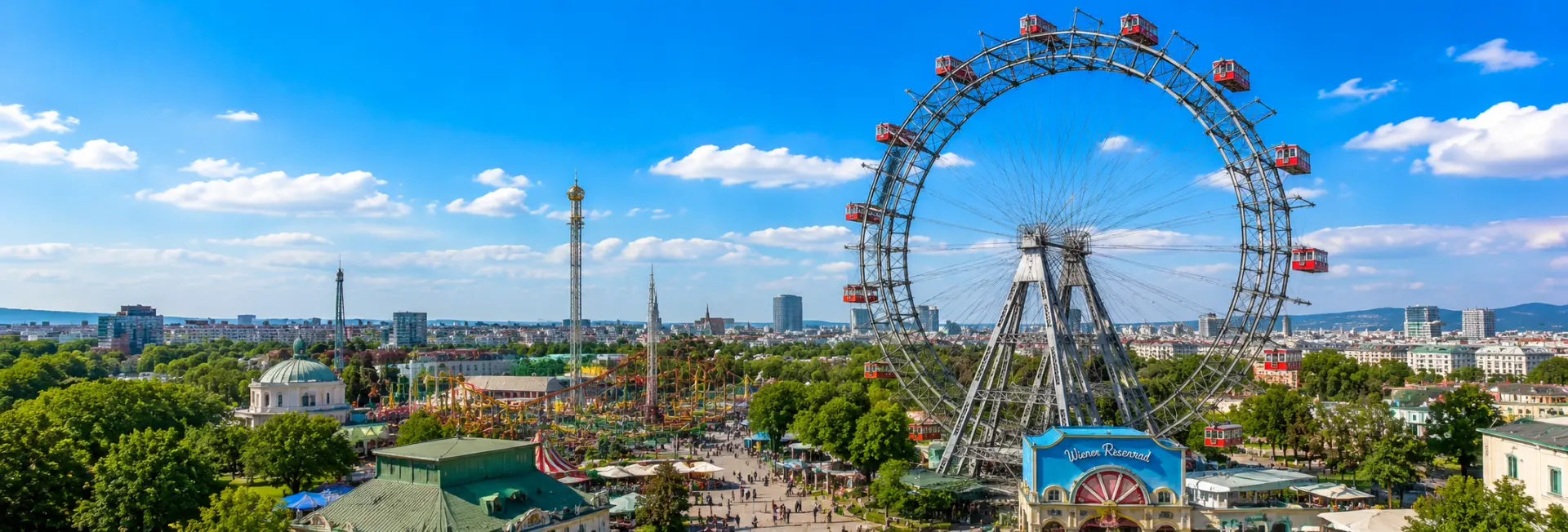
The Prater is Vienna's best-known green space and amusement destination, a sprawling park in the Leopoldstadt district that combines wide tree-lined avenues with the bustling funfair known as the Wurstelprater. At its entrance stands the Wiener Riesenrad, the giant ferris wheel that has become one of the most recognizable symbols of Vienna itself.
Together, the park and the wheel offer a different pace of sightseeing than the museums and palaces of the inner city: part old-fashioned funfair, part public park, and part cinematic landmark, thanks to the wheel's starring role in classic films.
History
From Imperial Hunting Ground to Public Park
The Prater began as a private hunting reserve for the Habsburg court before Emperor Joseph II opened it to the public in 1766, turning former royal grounds into one of the earliest public parks in Europe. Over the following century, the area developed into a popular gathering spot for Viennese of all social classes, mixing leisurely walks along its avenues with informal entertainment.
Birth of the Wurstelprater and the Wheel
The amusement park section known as the Wurstelprater took its current form in 1895, and just two years later the Riesenrad opened to mark the Golden Jubilee, the 50th anniversary of Emperor Franz Joseph I's reign. Designed by British engineers and built with financing from Englishman Walter Bassett, the wheel opened in 1897 with 30 gondolas and quickly became one of the park's central attractions.
Wartime Damage and Postwar Rebuilding
The wheel suffered serious damage during the Second World War, but it was rebuilt in the postwar years alongside other landmarks considered essential to the city's identity, such as St. Stephen's Cathedral and the Vienna State Opera. It reopened with 15 gondolas rather than the original 30, the configuration still in use today.
Key Areas & Attractions
The wider Prater covers a large area, but most visitors focus their time on a few distinct zones.
- The Wurstelprater is the compact funfair section near the park's entrance, packed with rides, games, and food stalls.
- The Hauptallee is a long, straight tree-lined avenue running through the park, popular for walking, jogging, and cycling away from the crowds of the funfair.
- The area around the Riesenrad forms a small plaza with the wheel's ticket office, a museum dedicated to its history, and nearby attractions such as a wax museum.
- Green meadows and wooded sections beyond the funfair offer a quieter contrast, used for picnics, sports fields, and seasonal events.
The Giant Ferris Wheel (Riesenrad)
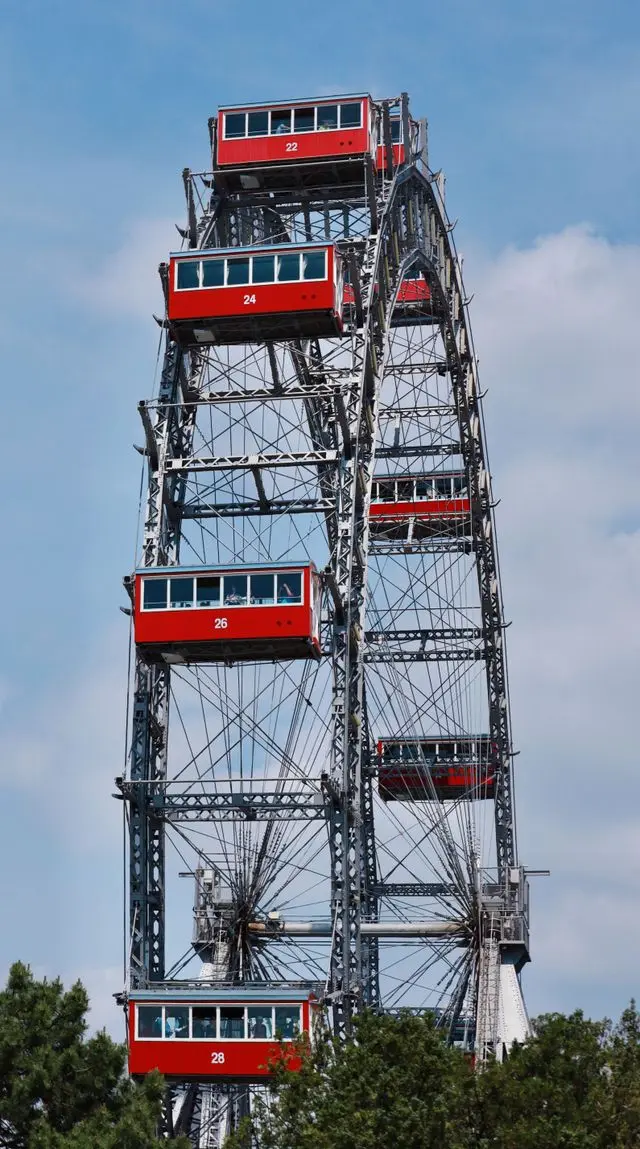
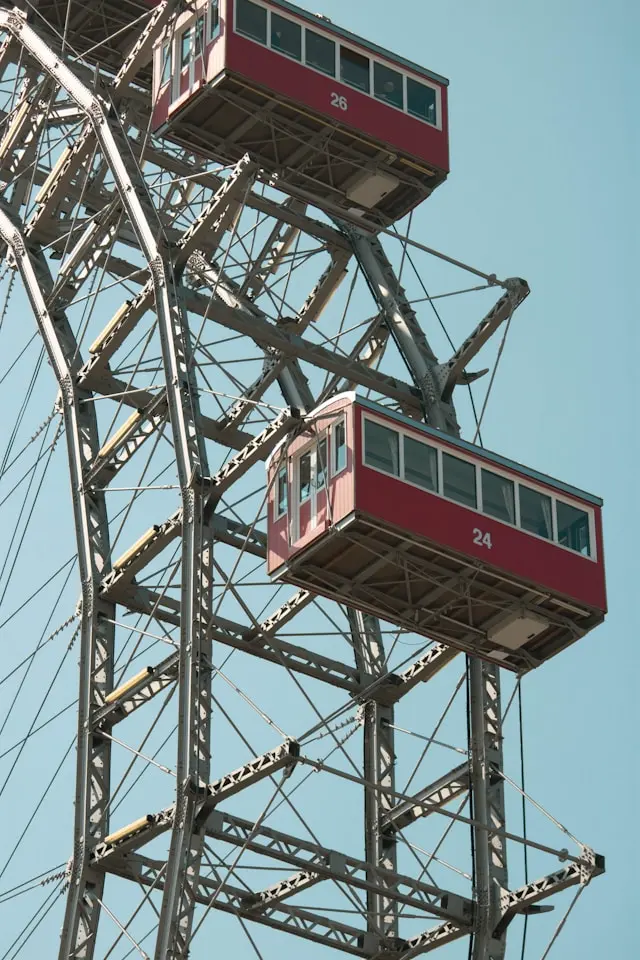
Standing at roughly 65 meters tall, the Riesenrad was the world's tallest surviving ferris wheel for much of the 20th century, a title it held from 1920 until 1985. Its bright red, enclosed gondolas move at a gentle pace, with a full ride typically lasting somewhere around 15 minutes as passengers board and disembark along the way.
A small museum near the base uses one of the wheel's original cabins to walk visitors through its history and the broader story of the surrounding area, giving context to a structure that has spent well over a century turning above the same patch of Vienna.
Notable Features & Highlights
Several details make the Riesenrad and its surroundings more than just a ride:
- The wheel appeared in the classic 1949 film "The Third Man," in a scene now closely associated with both the movie and the landmark itself.
- Special luxury gondolas can be booked for private dinners or celebrations, offering a more exclusive way to experience the ride.
- The Panorama Museum at the wheel's base displays historic cabins and artifacts tracing its 19th-century origins.
- A raised, harnessed viewing platform near the wheel gives more adventurous visitors an open-air perspective over the park.
Ways to Experience It
There's more to do here than simply ride the wheel, whether visiting for an afternoon or a full day out.
- Ride the Riesenrad itself for panoramic views over Vienna's rooftops and the Danube.
- Wander the Wurstelprater's rides and games, from vintage attractions to modern roller coasters.
- Walk or cycle the Hauptallee for a longer, quieter stretch through the park's tree-lined stretches.
- Visit the Panorama Museum at the wheel's base to learn about its construction and survival through two world wars.
- Stop by seasonal events, such as the winter market held near the wheel during the colder months.
Best Time to Visit
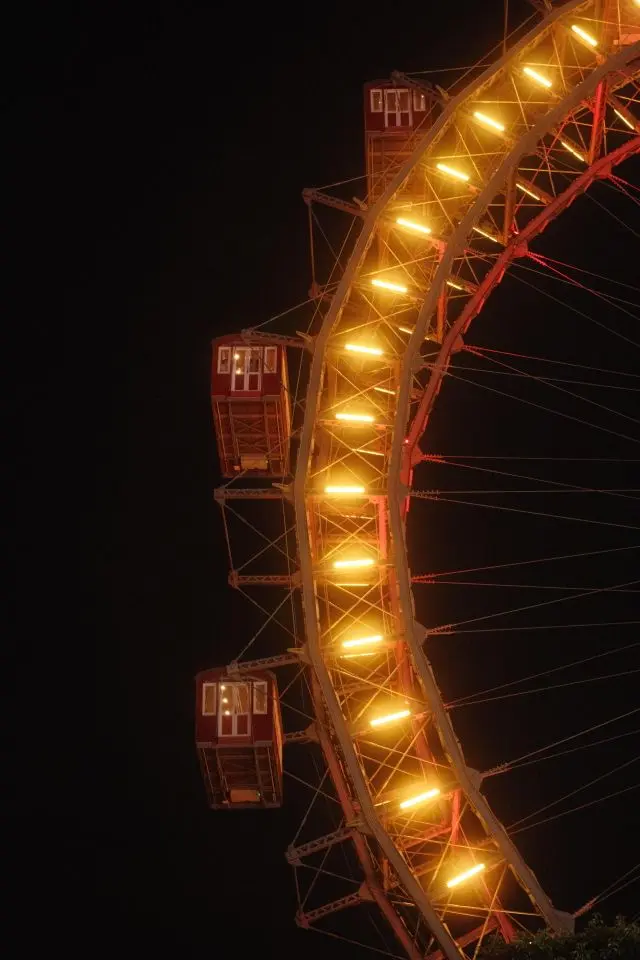
Late afternoon into early evening is a popular time to ride the wheel, when the light softens over the city and the views from the top take on a golden or twilight quality. Weekday visits tend to mean shorter lines than weekends, especially during the busy summer season.
The Wurstelprater operates for most of the year, with a lively winter market adding a seasonal atmosphere near the wheel in the colder months, while warm summer evenings draw the biggest crowds to both the rides and the park's open green spaces.
Visitor Tips
A little planning goes a long way at the Prater, particularly around the wheel and funfair area.
- Buy Riesenrad tickets online in advance during peak season to skip some of the queue at the entrance.
- Rides in the Wurstelprater are paid individually or through ride passes, so budget accordingly if visiting with kids.
- Wheelchair users and those with mobility needs can typically board the Riesenrad's wider cabins, but it's worth checking current accessibility details before arriving.
- The broader park is large, so wear comfortable shoes if planning to explore beyond the funfair itself.
- Keep an eye on belongings in the busier funfair areas, as with any crowded attraction.
Nearby Attractions
The Prater sits close to Vienna's Danube-side neighborhoods, making it easy to combine with other sights in the area.
- Praterstern station connects directly to the park and offers quick access back to the city center.
- The Danube Canal and riverside paths are within walking distance for those wanting a scenic stroll.
- Museum attractions near the Riesenrad's entrance plaza, including a wax museum, make for an easy add-on to a park visit.
- Vienna's inner city landmarks, including St. Stephen's Cathedral, are a short public transit ride away.
FAQs about visiting the Prater & Giant Ferris Wheel
Is the Prater free to enter? +
Yes, the park itself is free and open to the public; individual rides in the Wurstelprater funfair, including the Riesenrad, are paid separately.
How long does a ride on the Giant Ferris Wheel take? +
A full ride typically takes around 15 minutes, since the wheel makes stops along the way to let passengers board and disembark.
Is the Riesenrad suitable for people afraid of heights? +
The wheel moves slowly and its enclosed cabins feel fairly stable, which many visitors with mild height concerns find manageable, though anyone with a strong fear of heights may still want to think it over before boarding.
What's the best time of day to ride the wheel? +
Late afternoon and early evening are popular for softer light and views over the city as the sun starts to set, though this also tends to be a busier window.
How do I get to the Prater? +
Praterstern station, served by U1 and U2 subway lines as well as several tram and bus routes, sits right next to the park entrance.
Is the Prater good for families with kids? +
Yes, the Wurstelprater funfair has rides suited to a range of ages, and the wider park's open green spaces work well for younger children who need room to run around.
What else is there to do besides the ferris wheel? +
Beyond the wheel, visitors can explore dozens of funfair rides, walk or cycle the long Hauptallee avenue, or visit the small museum dedicated to the wheel's history at its base.
