Table of Contents
Overview
The Norwegian Museum of Cultural History, known in Norwegian as Norsk Folkemuseum, sits on the Bygdøy peninsula and stands as the country's largest museum of its kind. It combines indoor galleries covering folk art, clothing, and everyday life with an extensive open-air section of more than 150 historic buildings gathered from across Norway and rebuilt on the museum grounds.
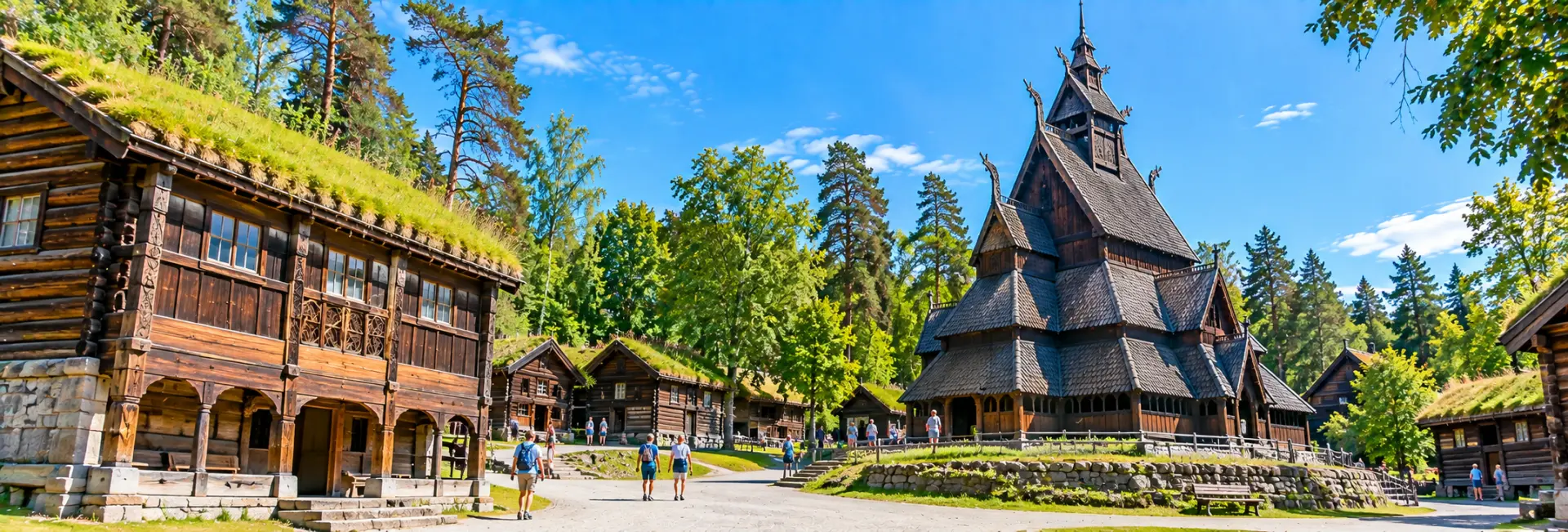
Rather than presenting Norwegian history through objects behind glass alone, the museum lets visitors walk through entire relocated farmsteads, town streets, and a medieval stave church, giving a physical sense of how ordinary Norwegians lived from the 1500s through the 20th century. It remains a popular stop for families, thanks to farm animals, craft demonstrations, and activities that run throughout the year.
History
Founding and early growth
The museum was established in 1894 by librarian and historian Hans Aall, who acquired the core area of the present property in 1898. After building temporary exhibition spaces and re-erecting a number of rural buildings, the museum opened to the public in 1901, beginning a period of rapid growth under Aall's direction that continued until his death in 1946.
Incorporating the world's first open-air museum
In 1907, the museum absorbed a neighboring collection assembled by King Oscar II, consisting of five relocated historic buildings centered on the Gol Stave Church. That collection, founded in 1881, is recognized as the world's first open-air museum, predating similar institutions elsewhere in Europe and giving the Norwegian museum a founding claim to the format it is now known for.
Later expansion
Subsequent directors, including Reidar Kjellberg from 1947 to 1974, continued expanding the museum's buildings, collections, and reach. In 1951, Sami collections from the University of Oslo's Ethnographic Museum were transferred to the Folkemuseum, and in 2004 the museum took over administration of the adjacent Bygdøy Royal Estate, further linking the site to Norway's royal history.
The Open-Air Museum
The open-air section spans more than 150 buildings relocated from towns and rural districts across Norway, arranged roughly by region of origin so that farmhouses, storehouses, and town buildings sit alongside others from similar areas and eras.
The Gol Stave Church
Built around the 13th century in the village of Gol and moved to Bygdøy in 1885, the stave church is one of five medieval buildings at the museum and its most striking single structure, representing a wooden building tradition unique to Norway.
The Old Town
A reconstructed early 20th-century town section, known as Gamlebyen, recreates an urban Norwegian streetscape complete with a village shop and a vintage petrol station. A relocated 1865 tenement building here shows furnished apartments from different periods, including one furnished as a Pakistani immigrant family's home as it appeared in 2002, extending the museum's story of Norwegian life into more recent, multicultural history.
Collections & Exhibits
Alongside the open-air buildings, the museum's indoor galleries hold an extensive collection of folk art, traditional clothing, tools, and everyday objects representing all regions and social groups in Norway.
- Exhibitions on national costume, or bunad, and clothing traditions cover garments used for weddings, christenings, and other life events across different regions.
- Sami culture is presented through collections transferred from the University of Oslo, addressing both historical persecution and the Sami people's adaptation to modern Norwegian society.
- A large photographic archive includes a significant portion of the work of noted Norwegian photographer Anders Beer Wilse.
- Rotating temporary exhibitions cover topics ranging from historical church art to more recent Norwegian popular culture.
Must-See Highlights
- The Gol Stave Church remains the museum's single most recognized structure and a highlight for most visitors.
- The Old Town section offers a rare chance to walk through a reconstructed early 20th-century Norwegian streetscape rather than viewing it in photographs.
- Craft demonstrations, including weaving and pottery-making, run through the summer season in the Old Town area.
- The museum's farm animals and open grounds make it one of the more engaging stops on Bygdøy for visiting children.
Ways to Experience It
- Walk the open-air grounds independently, following paths past farmsteads, storehouses, and the Old Town section at your own pace.
- Join a guided tour for a more structured overview of the stave church, historic buildings, and museum history.
- Visit during summer weekends or festival periods, when craft demonstrations, historical guided tours, and activities for children run throughout the day.
- Explore the indoor galleries on folk art, national costume, and Sami culture for context that complements the outdoor buildings.
Best Time to Visit
Summer, particularly August and September, is when the museum is at its liveliest, with daily activities, craft demonstrations, and the widest range of things for children to do outdoors. The open-air nature of much of the museum makes warmer, drier months the most comfortable time to explore the full grounds.
Weekdays tend to be less crowded than weekends, when the museum runs the most activities and draws the largest number of visitors, particularly families. Visiting outside peak summer can mean a quieter walk through the historic buildings, though some seasonal demonstrations and outdoor activities may not be running.
Visitor Tips
- The museum is reached by bus, seasonal ferry, car, or bike from central Oslo, all reasonably convenient given its location about five kilometers from downtown.
- Municipal parking is available outside the main entrance, with a fee charged during the day.
- Traditional snacks like lefse and old-fashioned candies are sold in the open-air section, with cash, mobile payment, or vouchers accepted.
- Comfortable walking shoes are worth wearing, since the open-air grounds are extensive and include uneven, unpaved paths between buildings.
- Allow at least two to three hours to see both the open-air buildings and the main indoor exhibitions in reasonable depth.
Nearby Attractions
- The Viking Ship Museum, part of the same broader museum network, is a short walk away on Bygdøy, though it has been temporarily closed for renovation.
- The Fram Museum and Kon-Tiki Museum are both within walking distance, covering Norwegian polar and ocean exploration.
- The Norwegian Maritime Museum, focused on Norway's seafaring history, sits nearby on the same peninsula.
- Bygdøy Royal Estate and the Oscarshall villa, both connected to the museum's own history, are also close by.
FAQs about visiting the Norwegian Museum of Cultural History
What is Norsk Folkemuseum known for? +
It is Norway's largest cultural history museum, known for its open-air collection of more than 150 relocated historic buildings, including the medieval Gol Stave Church, alongside indoor exhibits on folk art and Sami culture.
How old is the Gol Stave Church? +
It was built around the 13th century in the village of Gol and moved to its current location on Bygdøy in 1885, making it one of the museum's oldest structures.
How long should I spend at the museum? +
Most visitors spend two to three hours to see both the open-air buildings and the main indoor exhibitions, longer during summer when more activities are running.
Is the museum good for children? +
Yes, farm animals, craft demonstrations, playgrounds, and open grounds make it a popular family destination, with extra activities typically offered on weekends and during the summer season.
How do I get to Norsk Folkemuseum from central Oslo? +
The museum is reachable by bus, a seasonal ferry to Dronningen followed by a short walk, car, or bicycle, and is about five kilometers from downtown Oslo.
Is the Norwegian Museum of Cultural History the same as the Norwegian Folk Museum? +
Yes, Norsk Folkemuseum is the Norwegian name for the same institution known in English as the Norwegian Museum of Cultural History.
Can I combine a visit with other Bygdøy museums? +
Yes, the museum sits within walking distance of the Fram Museum, Kon-Tiki Museum, and Norwegian Maritime Museum, making it easy to combine several Bygdøy attractions in one day.