Table of Contents
Overview
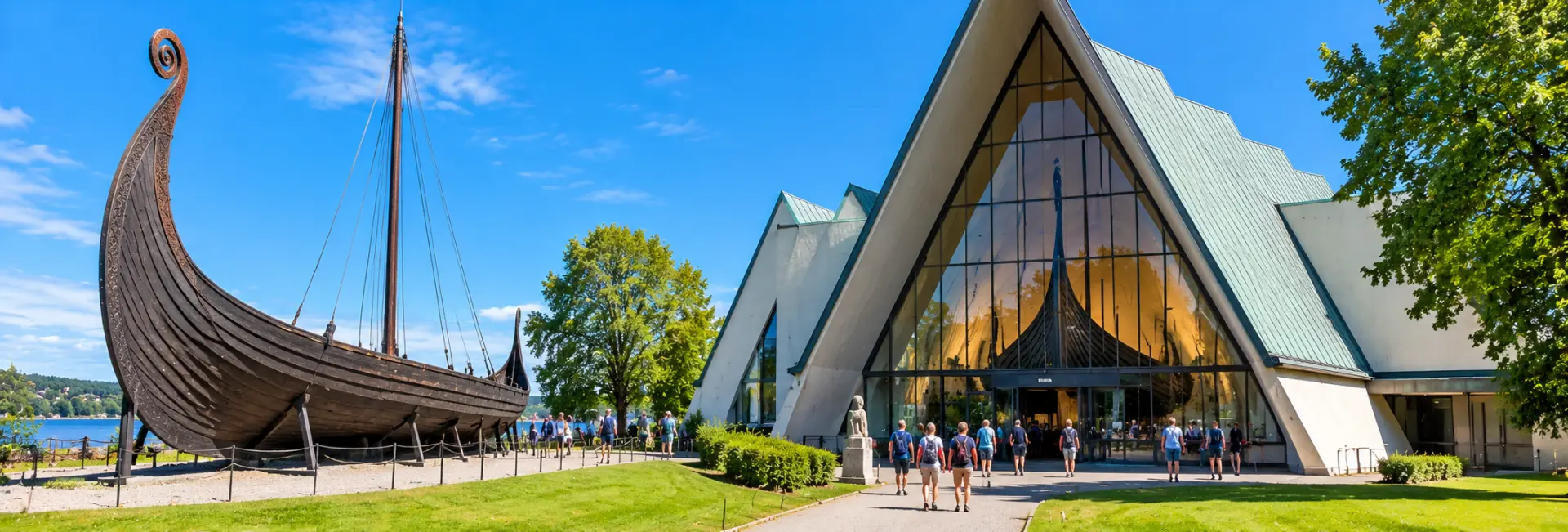
The Viking Ship Museum on Oslo's Bygdøy peninsula was for decades one of Oslo's most visited attractions, and it holds the best-preserved Viking ships in the world. Three vessels, the Oseberg, the Gokstad and the Tune, were dug out of burial mounds around the Oslofjord and now form the heart of the collection, together with rich finds from the graves in which they were buried.
What makes the museum so special is the chance to stand next to ships that were built more than a thousand years ago and that carried the dead of powerful people into their graves. The dark oak hulls, the carved prows and the delicate everyday objects buried with the ships offer a rare, tangible link to the Viking Age.
The museum is now being rebuilt and expanded into the Museum of the Viking Age, a much larger institution with a broader story to tell. This guide covers what the museum was, what it is becoming and how to plan around the reopening.
Current Status & Reopening
As of September 2026, the Viking Ship Museum is closed to visitors. It shut its doors in 2021 for a major renovation and expansion, and it is due to reopen as the Museum of the Viking Age in 2027. The museum has indicated a target of November 2027, but it has also said that the date can still change, so travellers should treat any date as provisional.
While the works continue, the ships and other objects are being conserved and prepared for their new displays. The new building will be a purpose-built extension of the original hall, and the ships will once again be the main attraction.
Tickets, opening hours and any booking rules have not been announced. The museum recommends following its newsletter for updates, and it is wise to check the official website before planning a trip around a visit.
History of the Museum
Three ships, three discoveries
Viking ships were long known only from the sagas until the Tune ship was found in 1867 at a farm near Fredrikstad. The Gokstad ship followed in 1880 near Sandefjord, and the richly decorated Oseberg ship was excavated in 1904 from a large mound near Tønsberg. The finds caused a sensation in Norway and abroad.
A home for the ships
For years the ships were kept in temporary sheds in the University of Oslo's garden, where conditions were poor. In 1913 Professor Gabriel Gustafson, who had led the Oseberg excavation, proposed a proper museum on Bygdøy. An architectural competition followed, and Arnstein Arneberg won in 1914 with his design.
Built in stages
The hall for the Oseberg ship opened in 1926, and the wings for the Gokstad and Tune ships were completed in 1932. The Second World War delayed the last stage, which was finished in 1957 and holds most of the grave finds from Oseberg. For decades the finished building was a national symbol and a must-see stop for visitors.
The decision to rebuild
The old building was designed for a few hundred objects and could no longer give the fragile ships and finds the protection they need, so Norway's government funded a new museum in 2019. The Viking Ship Museum closed in 2021 to make way for the works.
Architecture & the New Building
Arneberg's original design
Arnstein Arneberg, one of Norway's most respected twentieth-century architects, planned the museum as a series of halls arranged around a central axis. Visitors entered facing the Oseberg ship, with the Gokstad ship on one side and the Tune ship on the other, and balconies allowed views down onto the vessels. The design won its competition under the working title of the Queen of Oseberg.
The expansion
The new Museum of the Viking Age grows out of the old building as an extension and will be more than three times the size of its predecessor. It will be owned and operated by the University of Oslo as part of the Museum of Cultural History. The old halls are being fully renovated as part of the works.
Bigger stories, better protection
The former museum showed three ships and about 350 objects. The new one will exhibit more than 5,500 objects and cover a much broader part of Viking Age history, from trade and travel to religion and everyday life. Just as importantly, the new design is meant to protect the fragile oak of the ships and to make visiting more comfortable.
The Three Ships
The Oseberg ship
The Oseberg ship is the most famous of the trio. It was built around AD 820 and buried in 834 with two women, and it is about 22 metres long with space for around 30 rowers. Its stem is covered in fine carvings, which surprised the archaeologists who found them. The clay that surrounded the ship in its mound sealed out oxygen and helped preserve roughly 90 per cent of the vessel.
The Gokstad ship
The Gokstad ship, built around 890, is larger and more robust, with room for 32 oarsmen. It shows how capable Viking ships were at sea, with a design suited to long voyages. Its burial mound near Sandefjord was excavated in 1880.
The Tune ship
The Tune ship is less complete than the other two but still historically important. Dating from around AD 900, it was the first of the three to be found, excavated in 1867 at Rolvsøy in Østfold. Its remains show the fast, clinker-built construction typical of the period.
Grave Finds & Collections
The ships are only part of the story. The graves that contained them held a wealth of objects that reveal how the Vikings lived and how they treated their dead. The collection also includes finds from the ship burial at Borre, another important site.
The finds include:
- Ornately carved wooden sledges and a horse cart
- Beds, textiles and tent parts from the Oseberg burial
- Decorative wood carvings with animal and mythical designs
- Buckets and other everyday objects
Together these objects show a society with a sophisticated sense of art and a strong belief in life after death. The new museum will display far more of them than the old one could, in a setting designed to bring the archaeology to life through storytelling and interactive elements.
Ways to Experience It
Once the museum reopens
When the doors open in 2027, visitors can expect to see the ships up close and to explore a far larger collection than before. The old museum let visitors view the ships from ground level and from upper balconies, and the new building is expected to build on that experience. Details of the new displays, tours and services will be announced closer to opening.
Viking Age objects in the city centre
In the meantime, the Historical Museum in central Oslo shows Viking Age objects in an exhibition called VÍKINGR, designed by the architecture firm Snøhetta. It features some of the artefacts that will go on display in the new museum and is a good way to get a taste of the collection.
Viking-inspired stops around Oslo
Oslo's Botanical Garden also has a grounded Viking ship about 33 metres long, filled with plants and materials the Vikings used. It is a fun and unusual complement to the museum visits.
Best Time to Visit
Because the museum has not yet reopened, there are no confirmed seasons or opening hours to plan around. Once it reopens, the peninsula is likely to be busiest in summer, when the weather is best and a ferry service to Bygdøy typically runs from the city centre.
If you want a quieter experience, aim for weekday mornings outside the summer peak and outside school holidays. Winter visits are usually calmer, and Bygdøy makes a pleasant outing in any season, but you should confirm opening times and any seasonal changes on the official website before you go.
Visitor Tips
- Check the status: The museum is closed until the Museum of the Viking Age opens, so check the official website for the latest reopening date before you plan a trip.
- Tickets and hours: Prices, opening times and booking rules for the new museum have not been announced.
- Getting there: Bygdøy is about five kilometres from the city centre. Bus 30 from central Oslo serves the peninsula, and a ferry from the city centre typically runs in summer.
- Walking: Walking from the city centre to the museum is not recommended because of the distance and the layout of the peninsula's roads.
- Stay informed: The museum recommends signing up for its newsletter to get news about the opening date.
- Make a day of it: Pair the museum with the other Bygdøy attractions to fill a full day out.
- Meanwhile: Visit the Viking Age exhibition at the Historical Museum in central Oslo if you want to see Viking artefacts before the reopening.
Nearby Attractions
Norwegian Museum of Cultural History
This large open-air museum on Bygdøy has historic buildings from across Norway, including a wooden stave church with the dragon-like carvings that echo Viking-era design. It was established in 1881 and is often described as the first open-air museum in the world.
Norwegian Maritime Museum
Founded in 1914, this museum explores Norway's seafaring past with a collection of traditional boats in its central hall and temporary exhibitions.
Fram Museum and Kon-Tiki Museum
These two neighbouring museums celebrate modern explorers whose daring voyages continue the spirit of the Vikings, and they are an easy addition to a Bygdøy day.
Historical Museum
Back in the city centre, the Historical Museum on Karl Johans gate hosts a Viking Age exhibition and is a natural stop while the Bygdøy museum is closed.
FAQs about visiting the Viking Ship Museum
Is the Viking Ship Museum open? +
No. As of September 2026 it is closed for rebuilding and expansion. It is due to reopen in 2027 as the Museum of the Viking Age.
When will the new museum open? +
The museum has said it plans to reopen in 2027, with a target of November 2027, but the date is not final and could change. Check the official website for updates.
Will the ships still be there? +
Yes. The new museum will again show the Oseberg, Gokstad and Tune ships, which are being conserved and protected during the works. It will exhibit more than 5,500 objects in total.
Why was the museum closed? +
The old building was designed for a few hundred objects and needed a major upgrade to protect the fragile ships and to make room for a bigger collection. The new museum is more than three times the size of the old one.
What can I see in the meantime? +
The Historical Museum in central Oslo has a Viking Age exhibition with artefacts that will also feature in the new museum. Other Bygdøy museums and Oslo's Botanical Garden, with its Viking ship planting, are also worth a visit.
How do I get to Bygdøy? +
Take bus 30 from central Oslo, or use the seasonal ferry that typically runs in summer from the city centre. The peninsula is about five kilometres from downtown.
What are the three Viking ships? +
They are the Oseberg ship from around AD 820, the Gokstad ship from around AD 890 and the Tune ship from around AD 900. All were found in burial mounds around the Oslofjord.
Are tickets available for the new museum? +
Ticket prices and booking details have not been announced. It is best to follow the museum's newsletter and website for news closer to the opening.