Table of Contents
Overview
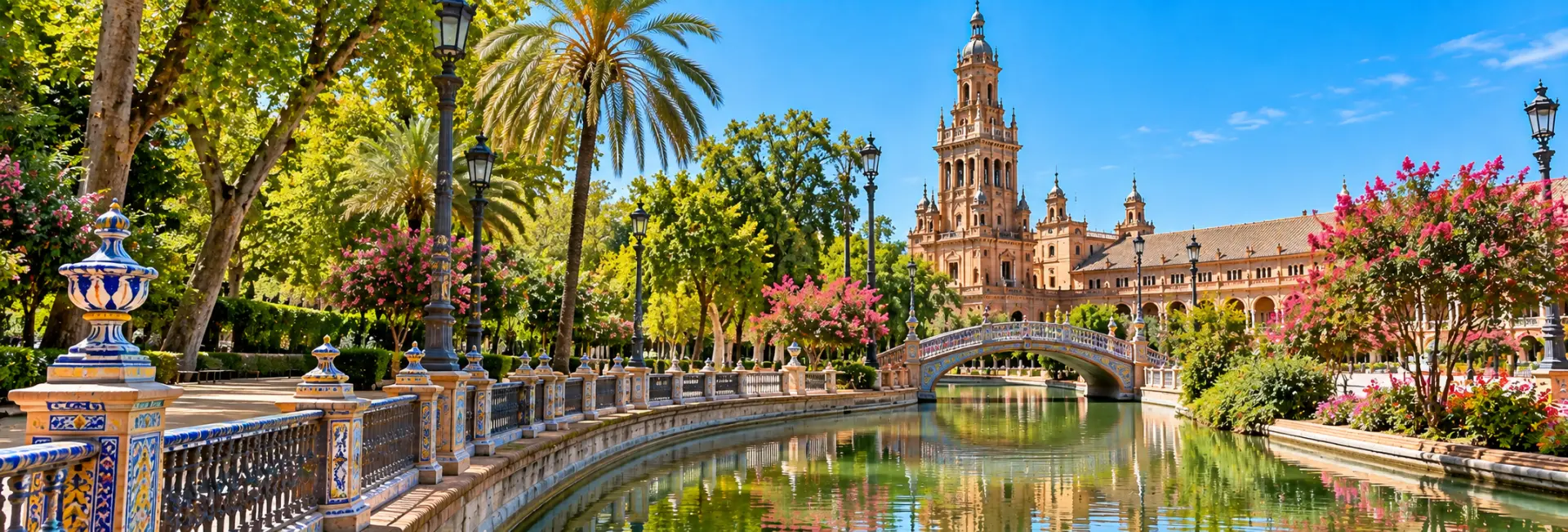
Stretching along the Guadalquivir River at the southern edge of Seville's historic centre, Parque de María Luisa is the city's largest and most celebrated public park. Shaded avenues, tiled fountains, and quiet ponds sit alongside grand monumental buildings left over from a world's fair, giving the park a character that shifts between romantic garden and open-air museum.
At its edges, the park opens onto two of Seville's most photographed spaces, the Plaza de España and the Plaza de América, both built for the 1929 Ibero-American Exposition. Inside its shaded interior, though, the pace slows considerably, making it a favourite spot for locals as much as visitors.
History
A Royal Gift
Much of the park's land originally formed the private gardens of the Palace of San Telmo. In 1893, Infanta Luisa Fernanda, Duchess of Montpensier, donated a large portion of these grounds to the city of Seville for use as a public park, and the space was named in her honour.
Redesigned for a World's Fair
In 1911, the city commissioned the French landscape architect Jean-Claude Nicolas Forestier, formerly chief gardener of Paris's Bois de Boulogne, to redesign the grounds ahead of Seville's planned Ibero-American Exposition. Rather than imposing a formal French style, Forestier adapted his design to Seville's climate and history, drawing inspiration from the Alhambra and Generalife gardens in Granada and giving the park a romantic, Moorish-influenced character. Work continued through the 1910s and 1920s, with the first phase opening to the public in 1914.
The 1929 Exposition
The Ibero-American Exposition of 1929 used the park and its surroundings as its central stage, with the architect Aníbal González designing major new structures, including the Plaza de España, on land adjoining the gardens. Other exhibition buildings, including the Mudéjar Pavilion and the Royal Pavilion, were built facing the Plaza de América at the park's southern end, several of which still serve as museums today.
Design & Landscape
A Neo-Sevillian Garden Style
Forestier's work at María Luisa Park helped define what became known as the neo-Sevillian or neo-Moorish gardening style, later influential across Spanish public parks of the early 20th century. Its hallmarks include the extensive decorative use of brick and glazed ceramic tile in fountains, benches, and low walls, combined with shaded pathways designed to offer relief from Seville's heat.
A Sequence of Glorietas
Rather than one continuous open lawn, the park is organised as a series of smaller glorietas, or garden clusters, many dedicated to figures from Spanish literature. Several of the park's oldest surviving features, including the Lotus Pond, the Lion Garden, and the Frogs' Fountain, date from this original Forestier-era design.
Recognition & Status
Parque de María Luisa was declared a historic garden of cultural interest (Bien de Interés Cultural) by Spanish heritage authorities in 1983, recognising both its landscape design and its role in the city's early 20th-century architectural history. It sits immediately alongside, though separate from, the UNESCO World Heritage-listed monuments of Seville's historic centre.
Key Areas & Landmarks
- Plaza de España - the park's best-known adjoining landmark, a vast semi-circular building with a central canal, built for the 1929 Exposition
- Plaza de América - a smaller plaza at the park's southern end, framed by exhibition-era pavilions now used as museums
- Glorieta de Bécquer - a monument to the Sevillian poet Gustavo Adolfo Bécquer, unveiled in 1911 in white marble and bronze
- Estanque de los Lotos - the Lotus Pond, one of the park's oldest and most tranquil corners
- Fuente de las Ranas - the Frogs' Fountain, a small tiled fountain typical of the park's decorative style
Flora & Fauna
The park's plantings mix Mediterranean and subtropical species, including tall palms, mature orange trees, and Mediterranean pines, alongside flowering shrubs and vine-covered bowers that shade many of its paths. Much of the layout was designed with Seville's long, hot summers in mind, prioritising shade and the cooling effect of water over open, sun-exposed lawns.
Ducks and other waterfowl are a common sight around the park's ponds, and the wider grounds support a variety of resident and visiting birds, making it a popular spot for a quiet walk even outside the more monumental sections near Plaza de España and Plaza de América.
Ways to Experience It
- Walk the shaded paths at your own pace, moving between the park's various glorietas and ponds
- Rent a bicycle or a pedal-powered rickshaw-style cart, both commonly available near the park's main entrances
- Take a horse-drawn carriage tour, a traditional way to see the park alongside Plaza de España
- Combine a visit with the museums facing Plaza de América, including Seville's archaeology and popular arts museums
Best Time to Visit
Spring is widely considered the most rewarding season, when orange blossom and flowering plants are at their peak and temperatures are comfortable for extended walking. Given Seville's intense summer heat, visiting in the early morning or the couple of hours before sunset makes the most of the park's shade during warmer months.
Visitor Tips
- Bring water and sun protection, especially outside the shadier interior paths
- Consider renting a bicycle if you plan to cover the park's full 40 hectares along with neighbouring Plaza de España
- Keep an eye on children near the ponds and fountains, some of which have limited barriers
- Visit early or late in the day during summer to avoid the strongest midday heat
- Allow time to walk into Plaza de España and Plaza de América, both of which border the park directly
FAQs about visiting Parque de María Luisa
Is Parque de María Luisa free to visit? +
Yes, the park is open to the public free of charge, though some individual museums bordering Plaza de América charge separate admission.
How big is the park? +
It covers around 40 hectares, making it Seville's largest public green space.
Is Plaza de España part of the park? +
Plaza de España sits immediately alongside the park and was built for the same 1929 Ibero-American Exposition, though it's technically a separate plaza rather than part of the park's gardens.
How long does it take to see the park? +
A relaxed walk through the main areas takes around one to two hours, longer if you plan to also visit Plaza de España, Plaza de América, and nearby museums.
Can you cycle in the park? +
Yes, cycling is common and bicycles can be rented near several of the park's entrances.
Is the park suitable for families? +
Yes, its ponds, wide paths, and open spaces make it a popular spot for families, particularly in the cooler morning and evening hours.
What's nearby? +
Plaza de España, Plaza de América's museums, and the Prado de San Sebastián area are all directly adjacent to the park.