Table of Contents
Overview
Planten un Blomen is a 47-hectare park that wraps around the historic center of Hamburg, Germany, filling the green belt left behind after the city's old fortifications were torn down in the early 1800s. Its Low German name simply means "plants and flowers," and the park lives up to it with themed gardens, open lawns, ponds, and one of the largest Japanese gardens in Europe. The park forms part of a wider green ring that traces the outline of Hamburg's former city walls, though Planten un Blomen itself is the best known and most visited stretch of that ring.
Unlike a single monument or building, Planten un Blomen is a connected chain of green spaces stitched together across the inner city, running from the area near Dammtor station down toward the Alter Elbpark and St. Pauli. It's free to enter, open every day of the year, and used equally by tourists, office workers on lunch breaks, and families with young kids, which gives it a lived-in feel that's rare for a park this central.
History
From City Walls to Green Belt
The land now occupied by Planten un Blomen once formed part of Hamburg's defensive fortifications. When the city demolished its walls and ramparts in the early 19th century, the cleared land was turned into a green ring around the center rather than being built over. The first tree planted in this new green space was a plane tree, put in the ground by botanist Johann Georg Christian Lehmann in November 1821, and it still stands today near the Dammtor entrance.
A Park Shaped by Exhibitions
For much of the 19th and early 20th centuries, part of the site was home to a zoo, which operated from 1863 until 1930, and to a cemetery that had to be cleared to make way for the park's construction. The modern park as visitors know it today took shape in 1933, though under the ideology of the time only German plant species were permitted in its beds, a restriction that was dropped after the war. In the years that followed, the park hosted major horticultural shows, including the International Horticultural Exhibitions of 1953 and 1973, which left a lasting mark on its layout and plantings, and the Alter Botanischer Garten, Hamburg's old botanical garden, was folded into the park in the 1980s. The park's name comes from Low German, the regional dialect still spoken by some older Hamburgers, and locals often still use it in place of the standard High German "Pflanzen und Blumen."
Traces of Wartime History
Wartime bunkers built beneath parts of the park remain in place, and construction or renovation work occasionally turns up unexploded ordnance nearby, which has led to short precautionary closures of sections of the park in recent years while specialists check the area. These closures are typically brief and don't affect the park's overall standing as one of Hamburg's most reliably open, year-round green spaces.
Key Areas and Gardens
Planten un Blomen isn't one continuous stretch of lawn but a set of distinct zones that flow into each other, each with its own character.
- Kleine Wallanlagen and Große Wallanlagen, the small and large rampart gardens, following the line of the old city fortifications
- Alter Botanischer Garten, Hamburg's historic botanical garden, integrated into the park and home to a set of show greenhouses with Mediterranean and tropical plant collections
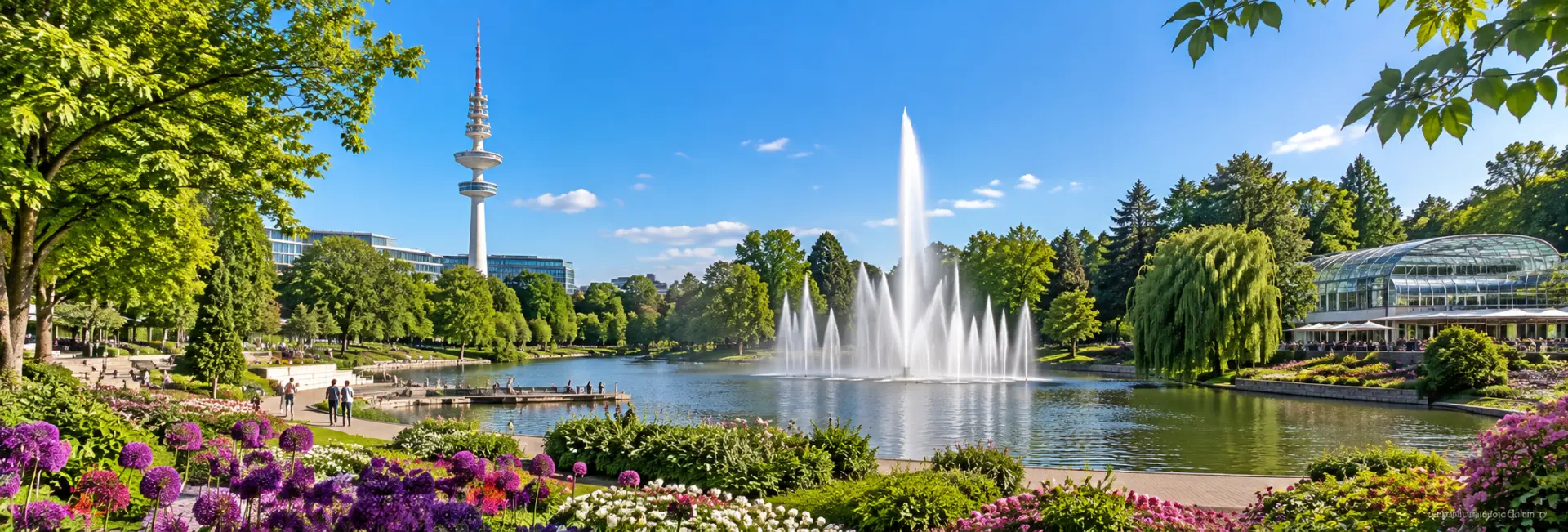
- Japanese Garden, a landscaped garden with a pond, stone lanterns, and a teahouse, often cited as one of the largest of its kind in Europe
- Rose garden and themed plant beds, with seasonal displays that change through the year, from spring bulbs to summer roses
The park also sits alongside some of Hamburg's best-known landmarks, including the Congress Centrum Hamburg and the Heinrich-Hertz-Turm television tower, which rises above the treeline and serves as a handy landmark for orientation while walking between the different sections.
Attractions and Activities
For Families
Two adventure playgrounds, including one built around a set of climbing mounds known locally as the Buller Mountains, keep younger visitors busy with slides, balance courses, and climbing structures. There's also a children's theater, a pottery workshop, and a combined mini-golf and trampoline area, so a family visit can easily stretch across a full afternoon without needing to leave the park.
For Everyone Else
A roller skating rink operates through the warmer months and converts into an outdoor ice rink in winter, drawing skaters of all ages. Chess gardens with oversized boards and pieces let visitors play a game outdoors, and a music pavilion in the northern part of the park hosts live performances through the summer season, ranging from brass bands to smaller local acts. The park also sits within walking distance of the Heiligengeistfeld, the fairground that hosts Hamburg's Dom funfair three times a year, making it easy to combine a park visit with a trip to the fair.
Scattered kiosks, cafes, and a handful of sit-down restaurants keep the park well supplied with food and drink, so it's entirely possible to spend a full day inside without needing to step outside its paths.
Water-Light Concerts
One of the park's best-known draws is its water-light concert, a free outdoor show staged on the park's central lake where fountains are choreographed to music, with colored lighting added after dark. The display runs multiple times a day in the warmer months, with a shorter daytime version and a longer evening show once the sky has darkened enough for the lighting to stand out.
The shows are unticketed and open to anyone in the park, and the grassy slopes around the lake fill up with a mix of locals and visitors well before showtime on clear evenings. It's one of the few free, large-scale spectacles of its kind in Hamburg, running only in the warmer months, and is worth timing a visit around if the season allows it.
Ways to Experience It
Most visitors simply walk the park's paths, moving between the different garden areas at their own pace, but there are a few ways to get more out of a visit.
- Follow a self-guided route through the themed gardens, starting at the Japanese Garden and working toward the Alter Botanischer Garten and its greenhouses
- Join a guided walk run by local park associations, which occasionally cover the park's planning history and plant collections in more depth than a casual stroll would
- Bring a picnic and settle on the lawns near the lake ahead of a water-light concert
- Rent skates or bring your own for the rink, depending on the season, or bring a bike for the wider paths through the Wallanlagen
Because the park connects several parts of the inner city, it also works well as a green shortcut on foot or by bike between the main shopping streets, the Congress Centrum, and the harbor-facing districts to the south.
Best Time to Visit
Late spring through early autumn is the park at its fullest, with flower beds in bloom, the water-light concerts running on their extended evening schedule, and outdoor activities like mini-golf and the roller rink open. May and June bring roses and a wide range of spring plantings, while July and August are the busiest months, with both tourists and locals filling the lawns on warm evenings.
Winter has its own appeal, largely centered on the outdoor ice rink and the quieter, near-empty paths through the Alter Botanischer Garten's greenhouses, which stay open year-round and offer a warm break from the cold. Early mornings, in any season, are the best time to see the park without crowds, before the lunchtime rush from nearby offices fills the lawns.
Visitor Tips
- Entry to the park is free and it's open every day of the year, though individual attractions like the ice rink, mini-golf, or the pottery workshop may have separate hours or small fees
- The park is flat and paved throughout most of its main paths, making it accessible for strollers and wheelchairs, though some of the more naturalistic garden sections have narrower or uneven paths
- Check the current water-light concert schedule locally before planning a visit around one, since show times shift with the season and the display doesn't run in winter
- Dogs are welcome throughout most of the park but must be kept on a leash
- Combine a visit with the nearby Congress Centrum or a walk down toward the Fernsehturm for a longer route through the city center
Nearby Attractions
Planten un Blomen sits close enough to several other Hamburg landmarks that it's easy to fold into a longer day out in the city center.
- Heinrich-Hertz-Turm, Hamburg's television tower, visible from much of the park and a short walk from the Große Wallanlagen
- Congress Centrum Hamburg, the city's main conference venue, bordering the park's eastern edge
- Binnenalster, the inner Alster lake and its waterside promenades, a short walk to the east
- Hamburg Dammtor station, a historic railway station at the park's northern edge, useful for onward travel around the city
- Gänsemarkt and the surrounding shopping streets, a short walk south, for cafes and stores between garden visits
FAQs about visiting Planten un Blomen
Is Planten un Blomen free to visit? +
Yes. There is no entrance fee, and the park is open to the public every day of the year. Some attractions inside the park, like the ice rink or mini-golf course, charge their own separate fee.
How much time should I plan for a visit? +
An hour or two is enough to walk through the main gardens, but many visitors spend half a day or more if they plan around a water-light concert, a playground stop with kids, or a longer walk through the Japanese Garden and Alter Botanischer Garten.
When do the water-light concerts run? +
The concerts run daily through the warmer months, typically from spring into early autumn, with shorter daytime shows and a longer evening show once it's dark enough for the lighting effects. They don't run during the colder months, so it's worth checking current times before planning a visit around one.
Is the park suitable for kids? +
Yes. There are two adventure playgrounds, a children's theater, mini-golf, and a roller skating rink that turns into an ice rink in winter, making it one of the more family-friendly green spaces in central Hamburg.
How do I get to Planten un Blomen? +
The park is reachable on foot from central Hamburg and sits right next to Dammtor station, with the U1 subway line stopping at Stephansplatz on its southern edge as well.
Is the park wheelchair and stroller accessible? +
Most of the main paths are flat, paved, and wide enough for strollers and wheelchairs, though some of the more naturalistic garden areas have narrower or uneven paths.
What's the best time of year to visit? +
Late spring through summer shows off the park at its best, with flowers in bloom and the water-light concerts running on their full schedule, while winter is quieter and centered around the ice rink and the year-round greenhouses.