Table of Contents
Overview
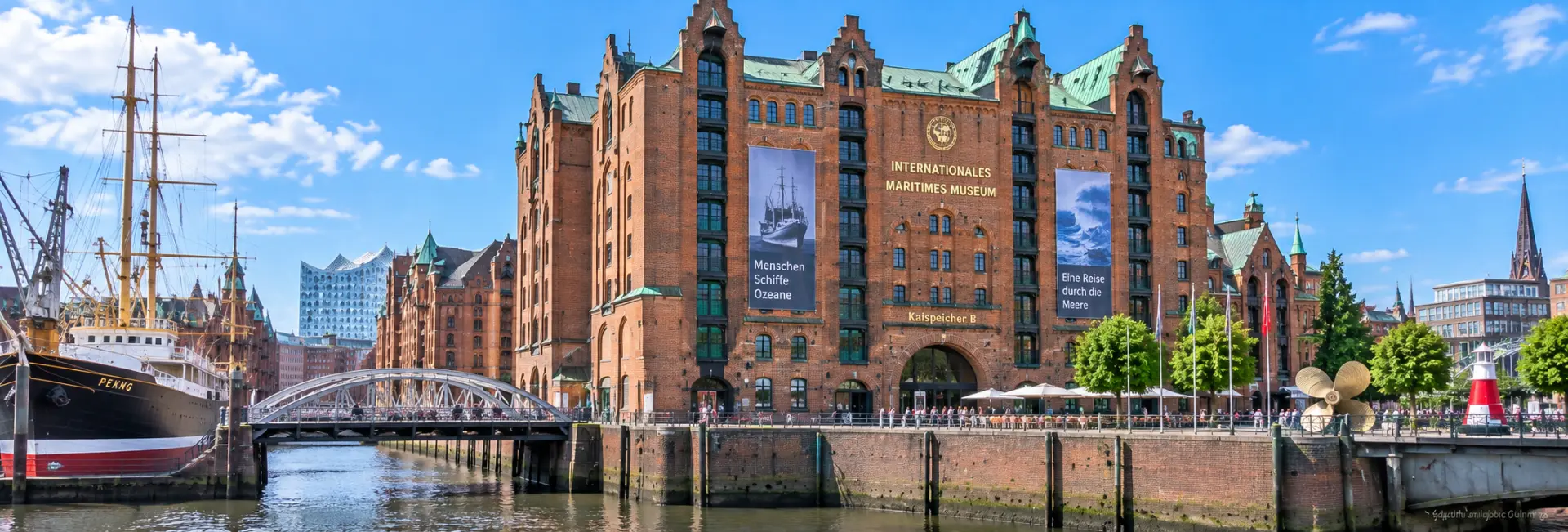
Rising from the water's edge in Hamburg's HafenCity district, the International Maritime Museum Hamburg occupies a converted 19th-century warehouse and holds one of the largest privately assembled maritime collections on earth. Spread across nine exhibition decks inside a ten-story building, it traces roughly 3,000 years of seafaring, from simple dugout canoes to the container giants that now define global trade.
The museum grew out of a single collector's lifelong obsession with ships, and that personal, almost obsessive character still shows in every gallery. Rather than a dry chronological survey, the space feels like walking through one enormous, meticulously organized cabinet of curiosities, packed with ship models, uniforms, instruments, paintings, and photographs collected over more than seven decades.
History of the Museum
A Collector's Beginnings
The museum's roots trace back to 1934, when a six-year-old named Peter Tamm received a model ship as a gift while recovering from an illness. That small present sparked a passion that never faded. Tamm went on to build a career as a journalist covering naval affairs for a Hamburg newspaper and later rose to chair the board of a major German media company, but throughout his working life he kept adding to his private collection of maritime objects.
For decades the growing hoard of ship models, documents, and artifacts was housed privately in a mansion along Hamburg's Elbchaussee, under the name of an academic institute for shipping and naval history, and it could only be viewed by appointment. By the time Tamm considered a public home for the collection, it had swelled into what is widely regarded as the world's largest private assemblage of maritime material.
Building a Public Museum
In 2002, Tamm established a charitable foundation to take ownership of the collection and pursue a permanent public museum. Hamburg's parliament approved public funding toward the project in 2004, and the city granted the foundation a long-term, rent-free lease on a historic warehouse in the developing HafenCity quarter the following year. After extensive restoration work, the museum opened its doors on 25 June 2008, with Germany's federal president presiding over the ceremony.
A Collection Under Scrutiny
Because the museum draws so heavily on one individual's personal holdings, its early galleries dealing with submarine warfare, the naval conflict of the Second World War, and Germany's colonial-era maritime activity have drawn criticism from historians and commentators for treating this material without enough critical distance. The museum has continued to develop and reframe parts of its historical narrative in response, a reminder that even a museum built around artifacts is still shaped by the perspective of its collector.
Architecture & the Building
The museum is housed inside Kaispeicher B, the oldest surviving quay warehouse in Hamburg. Built between 1878 and 1879 in a neo-Gothic style, the red-brick structure originally stored goods moving through the port and predates the surrounding Speicherstadt warehouse district that grew up around it. Unlike many of Hamburg's older harbor buildings, it survived redevelopment and now anchors the transition between the historic Speicherstadt and the newer HafenCity quarter.
Inside, the building's thick brick walls and heavy timber ceiling beams remain largely intact, giving the exhibition halls a weight and atmosphere that a purpose-built gallery could never replicate. A striking, boomerang-shaped steel footbridge spanning the adjacent harbor basin was added as part of the museum project and won architectural recognition in its own right the year the museum opened.
- Original construction: 1878–1879, in neo-Gothic style
- Architects: Bernhard Georg Hanssen and Wilhelm Emil Meerwein
- Nine exhibition decks across a ten-story former warehouse
- More than 11,000 square metres of total exhibition space
Collections & Exhibits
At the heart of the museum sits the private collection assembled over a lifetime by its founder: tens of thousands of ship models, more than a million historical photographs, and huge holdings of maritime books, uniforms, weapons, instruments, charts, and marine paintings. Curators arranged this material into themed decks rather than a single continuous timeline, so each floor of the warehouse functions almost like its own self-contained museum.
The decks move through different chapters of maritime life: early navigation and the age of sail, the evolution of shipbuilding techniques from hand tools to computer-aided design, the daily routines and ranks of life aboard ship, and the buildup of naval fleets since the early 19th century. Later decks shift toward the present day, covering modern navigation technology and the scientific exploration of the deep sea, before closing with a gallery devoted to marine art.
Scale of the Collection
- Over 40,000 catalogued objects on permanent display
- More than one million maritime photographs in the archive
- Tens of thousands of hand-built ship models, from ancient vessels to modern container ships
- Extensive holdings of naval uniforms, medals, weapons, and navigational instruments
Because the founder insisted on keeping related objects together rather than scattering them by era, each deck tends to combine large-scale artifacts, like full uniforms or ship fittings, with smaller supporting material such as photographs, personal letters, and printed charts from the same period. The result is a collection that rewards slow browsing: visitors who linger over the display cases often find small, unexpected details, from handwritten captain's logs to intricately painted figureheads, that a quick walkthrough would miss entirely.
Must-See Highlights
A few exhibits consistently stand out to first-time visitors and are worth prioritizing if time is limited. Near the top of the building, a ship-handling simulator lets visitors take the wheel of a virtual 300-metre container vessel and attempt to guide it into busy ports such as Rotterdam or Singapore, giving a hands-on sense of how demanding modern navigation really is.
Elsewhere in the museum, a detailed model of the ocean liner Queen Mary 2, built entirely from more than a million LEGO bricks, draws crowds of all ages. Fans of the unusual should also seek out the museum's collection of "bone ships," delicate model vessels historically carved from bone by prisoners of war, said to be the largest such collection anywhere. A skull popularly linked to the pirate Klaus Störtebeker adds a touch of legend to the maritime history on display.
- The ship-handling bridge simulator
- The million-brick LEGO model of the Queen Mary 2
- The world's largest known collection of bone ship models
- Artifacts tied to the legend of pirate Klaus Störtebeker
Ways to Experience It
Most visitors explore the museum independently, following the numbered decks at their own pace with the help of an audio guide. The museum's founder used to recommend starting at the top floor and working downward, which lets the visit build toward the more accessible, interactive exhibits near ground level rather than saving the densest historical material for when attention starts to fade.
Guided tours in English are available and can be booked in advance for groups, while a free public tour in English typically runs once a month for individual visitors. Families are well catered for too, with interactive stations throughout the building and themed activity tours built around a fictional ship's captain aimed at younger children.
- Self-guided visits with an audio guide
- Bookable guided tours in English for groups
- A free public English-language tour offered once a month
- Family-oriented activity tours and hands-on stations for children
Best Time to Visit
The museum is a fully indoor attraction, so it makes an especially good choice on days when Hamburg's weather turns wet or cold. Weekday mornings tend to be the quietest time to visit, since school groups and tour parties are more common in the early afternoon, and weekends draw the heaviest foot traffic year-round.
Because the collection is dense and spread across nine decks, allowing at least two to three hours makes for a far more comfortable visit than trying to rush through in under an hour. Many visitors pair a morning at the museum with an afternoon exploring the surrounding Speicherstadt district, since both are within easy walking distance of each other.
Visitor Tips
The museum is wheelchair accessible, with elevators serving every floor, though visitors with mobility considerations may still want to plan extra time given how much ground the nine decks cover. Ticket prices and current opening hours are best checked on the museum's official website before visiting, since these details can change and are not always reflected on third-party listings.
Lockers are available near the entrance for bags and coats, which is useful given how much walking the visit involves. The nearest public transport stop is the Überseequartier U-Bahn station on line U4, just a short walk away, and several bus routes also stop nearby. The walk from Hamburg's main train station takes roughly twenty minutes through the Speicherstadt.
- Elevators serve all nine exhibition decks
- Confirm current ticket prices and hours on the official museum website
- Lockers are available for bags and coats near the entrance
- Nearest transit stop: Überseequartier station on U-Bahn line U4
Nearby Attractions
The museum sits inside Hamburg's UNESCO-listed Speicherstadt, the largest warehouse district of its kind in the world, which is worth wandering through on foot both by day and after dark, when many of the buildings are illuminated. A short walk away, the Elbphilharmonie concert hall offers a free public viewing platform with sweeping views over the harbor and city.
Families visiting with children often combine a museum trip with nearby attractions such as Miniatur Wunderland, an elaborate model railway exhibit, or a boat tour along the harbor departing from the historic Landungsbrücken piers, both within easy reach by public transport or on foot from HafenCity.
- Speicherstadt warehouse district (UNESCO World Heritage Site)
- Elbphilharmonie concert hall and public viewing platform
- Miniatur Wunderland model railway exhibit
- Harbor boat tours from the Landungsbrücken piers
FAQs about visiting the International Maritime Museum Hamburg
What is the International Maritime Museum Hamburg known for? +
It houses one of the world's largest private maritime collections, built up over decades by a single collector, spanning ship models, uniforms, instruments, and marine art across nine themed decks.
How much time should I plan for a visit? +
Most visitors need at least two to three hours to see the nine decks properly, and history enthusiasts often stay longer given the size of the collection.
Is the museum suitable for children? +
Yes, several decks include interactive stations, a ship-handling simulator, and family activity tours built around a fictional captain, making it engaging for younger visitors as well as adults.
Is the museum wheelchair accessible? +
Yes, elevators connect all nine exhibition decks, though the sheer size of the building means visitors with mobility needs may want to allow extra time.
How do I get to the museum by public transport? +
The closest stop is Überseequartier station on U-Bahn line U4, with several bus routes also stopping nearby; it's roughly a twenty-minute walk from Hamburg's main train station.
Where should I start exploring the museum? +
The founder recommended beginning at the top deck and working downward, ending the visit with the more interactive, accessible exhibits near the ground floor.
What else is nearby that I can combine with a visit? +
The museum sits inside the Speicherstadt warehouse district, within walking distance of the Elbphilharmonie concert hall, Miniatur Wunderland, and harbor boat tours from Landungsbrücken.
Do I need to book tickets in advance? +
It isn't usually required for individual visitors, but checking the official website beforehand is worthwhile for current prices, hours, and any temporary closures.