
Table of Contents
Overview
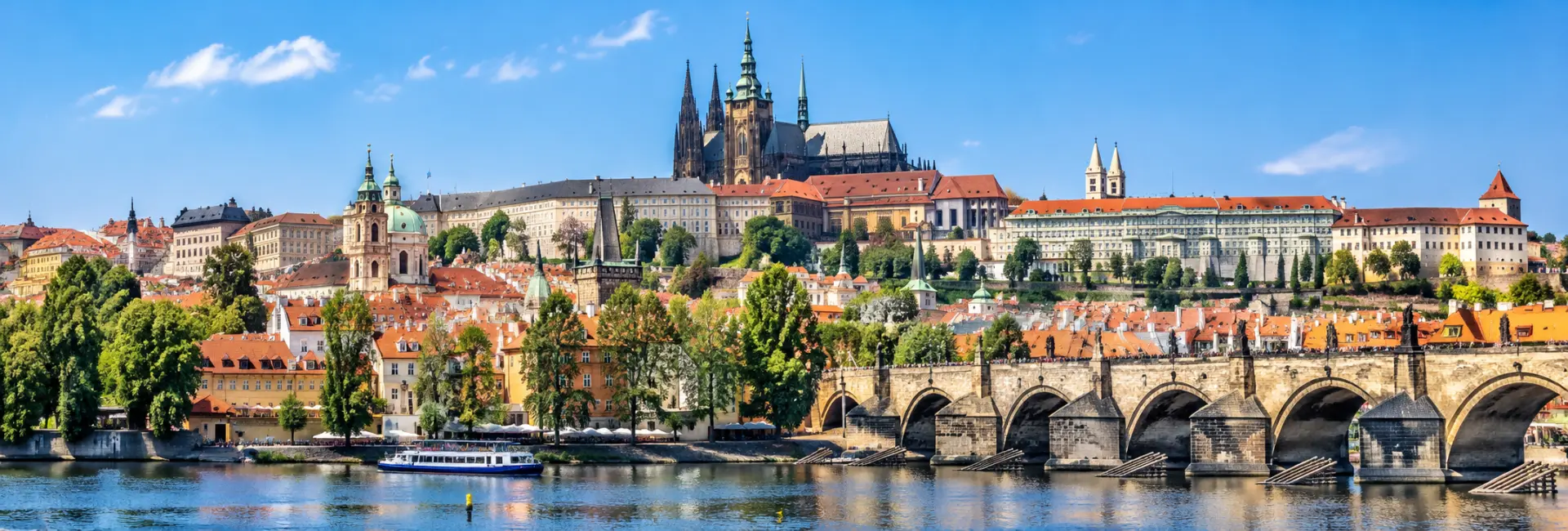
Prague Castle sits on a ridge above the Vltava River and dominates the city's skyline, an enormous complex of palaces, churches, courtyards and gardens that has served as the seat of Czech power for well over a thousand years. According to Guinness World Records, it's the largest ancient castle complex on earth, stretching about 570 meters in length and covering roughly 70,000 square meters, so calling it a single "castle" undersells what's really a walled town built up over eleven centuries.
Today it's still a working seat of government, serving as the official residence and office of the President of the Czech Republic, while also functioning as the country's most visited attraction. Inside its walls you'll find the soaring Gothic spires of St. Vitus Cathedral, the halls of the Old Royal Palace, the tiny colorful houses of Golden Lane and several gardens, all connected by cobbled courtyards that have hosted coronations, uprisings and centuries of everyday royal life.
History
Early Foundations
The site's story is usually traced to around 870, when Prince Bořivoj of the Přemyslid dynasty had the first walled structure built here, a small church dedicated to the Virgin Mary. Over the following centuries the Přemyslid rulers expanded the site with palaces and churches, and by the 12th century the Old Royal Palace already stood as the residence of Bohemia's rulers.
Gothic Ambition and Golden Age
The castle's most dramatic transformation began under Charles IV in the mid-14th century, who rebuilt the Royal Palace in the Gothic style, strengthened its fortifications and, in 1344, began construction of St. Vitus Cathedral, a project that would not be finished until 1929, nearly six centuries later. The castle reached what's often called its golden age under Rudolf II, the last Habsburg emperor to make it his primary residence, who filled it with art, scientists and alchemists during the late 16th century.
Turmoil and the Modern Era
The complex has weathered fires, sieges and political upheaval, including the Hussite wars of the 15th century and the 1618 Defenestration of Prague, in which Protestant nobles threw two Catholic officials and a secretary from a castle window, an act that helped trigger the Thirty Years' War. When the Habsburgs took the Bohemian throne in 1526, they rebuilt several sections in the Renaissance style and filled the halls with art and treasures, a habit that continued for generations even after the court's political center of gravity shifted elsewhere in the empire.
Since 1918, the castle has served as the official seat of the Czech head of state, first for the presidents of Czechoslovakia and now for the President of the Czech Republic, a role it continues to hold today. The long restoration and completion of St. Vitus Cathedral in 1929, after nearly six centuries of on-and-off construction, roughly coincided with this new chapter, tying the castle's medieval past directly to its modern identity as a symbol of the Czech state.
Architecture & Key Buildings
Because it was built and rebuilt over so many centuries, Prague Castle isn't one architectural style but a layered record of several, running from Romanesque foundations through Gothic cathedrals to Renaissance and Baroque palaces, with a 20th century overhaul by the Slovenian architect Josip Plečnik tying much of it together. St. Vitus Cathedral is the obvious centerpiece, its twin spires visible across the city, holding the tombs of Bohemian kings and the hidden chamber where the Czech Crown Jewels are kept.
- St. Vitus Cathedral: a Gothic masterpiece begun in 1344, home to royal tombs, stained glass and the Crown Jewels vault
- Old Royal Palace: the former residence of Bohemia's rulers, including the vast Vladislav Hall where every Czech president has been sworn in
- St. George's Basilica: one of the oldest surviving churches in the country, with a striking Romanesque interior beneath a Baroque facade
- Golden Lane: a row of small, brightly painted 16th century houses originally built for castle guards and goldsmiths
- Lobkowicz Palace: the only privately owned building inside the complex, holding one of Central Europe's largest private art collections
Much of the complex's cohesive look today, particularly its granite paving, gates and staircases, comes from a 20th century redesign by Josip Plečnik, who was tasked with adapting a medieval royal seat into a functioning presidential residence without erasing its history. His work is easy to overlook next to the cathedral's spires, but it shapes how visitors actually move through the courtyards, from the granite patterns underfoot to the understated modern gates linking one courtyard to the next.
Grounds & Gardens
Beyond its buildings, Prague Castle includes several distinct green spaces that are worth setting time aside for. The Royal Garden, on the north side of the complex, is a formal Renaissance park centered on Queen Anne's Summer Palace, while the South Gardens, made up of the Paradise Garden and Hartig's Garden, run along the castle's southern wall and open onto sweeping views over Prague's red rooftops.
On the northern edge lies the Deer Moat, a deep, wooded ravine once used by Emperor Rudolf II to keep game for hunting, which today offers a quiet, almost wild walking route in the middle of the complex. Together, the gardens and moat give visitors a way to slow down after the crowded courtyards, and several of them are free to enter during the warmer months when they're open to the public.
Each garden has its own character worth knowing before you go. The Royal Garden is the most formally landscaped, built around Renaissance flower beds and Queen Anne's Summer Palace, while Hartig's Garden and the Paradise Garden were reworked in the 20th century into simpler, more open lawns that suit a quiet break better than a detailed stroll. The Deer Moat, meanwhile, feels almost like leaving the castle altogether, dropping visitors into a shaded, overgrown gorge that's easy to forget sits in the middle of one of Europe's busiest tourist sites.
Cultural Significance
Prague Castle has been a symbol of Czech statehood for so long that locals often refer to it simply as "the Castle," using the name as shorthand for the presidency itself, much the way people refer to the White House. It's recognized by UNESCO as part of the Historic Centre of Prague, and its buildings have witnessed the coronations of Bohemian kings, the reign of Holy Roman Emperors and the birth of modern Czechoslovakia in 1918.
The Bohemian Crown Jewels, kept locked away inside St. Vitus Cathedral, are shown to the public only rarely, which only adds to the sense of continuity between the castle's medieval past and its role today. Even as an active government site, it remains deeply woven into daily Czech life and identity, standing in for the country's history in a way few other buildings can.
Ways to Experience It
Entry to the castle's courtyards and grounds is free, so many visitors simply wander in to see the architecture, watch the changing of the guard and enjoy the views before deciding whether to pay for the interiors. As of 2024, ticketed access to the main historic buildings runs through a single Main Circuit ticket, which typically includes St. Vitus Cathedral, the Old Royal Palace, St. George's Basilica and Golden Lane with the Daliborka Tower, while the permanent exhibitions and the Great South Tower are sold separately.
- Changing of the Guard: a ceremonial version takes place daily at noon in the First Courtyard, with a quieter, non-ceremonial changeover happening every hour
- Main Circuit ticket: covers the cathedral, Old Royal Palace, St. George's Basilica and Golden Lane in one pass
- Permanent exhibitions: sold as a separate ticket, including the Story of Prague Castle exhibition and the Picture Gallery
- Guided and audio tours: available for visitors who want more context on the buildings and their history as they walk through
Best Time to Visit
Arriving right at opening, before 9:30am, is the most reliable way to beat both the crowds and the security queues that form at every entrance. The Third Courtyard tends to be quietest in the early morning, when the cathedral's south facade catches the first light, while Golden Lane is easiest to photograph in the first twenty minutes after it opens, since the narrow passage fills up quickly later in the day.
Spring and autumn generally offer the most comfortable weather for walking the grounds and gardens, though the South Gardens and Royal Garden are only open during the warmer months, so visitors hoping to see them should plan a visit between roughly April and October. Late afternoon light is best for photographing the castle from outside its walls, particularly from across the river or from the South Gardens terraces looking back over the city's rooftops.
Visitor Tips
- The castle grounds are open daily, generally from early morning until around 10pm, though the interiors and exhibitions keep shorter hours, typically closing by 4pm or 5pm depending on the season
- Every visitor passes through a security check at the entrances, so build in a little extra time even with a pre-purchased ticket
- Comfortable shoes are worth it, since the complex involves plenty of walking on cobblestones and some uneven, sloped ground
- Entering through the Royal Garden checkpoint, reached by tram to Královský letohrádek, is often a quieter alternative to the main Hradčanské náměstí entrance
- A thorough visit to the main highlights takes about two to four hours, while seeing the gardens and towers as well can fill half a day
Nearby Attractions
The castle sits at the top of Prague's historic Hradčany district, within easy walking distance of several other major sights, making it simple to combine with a longer day on foot through the city's old center.
- Charles Bridge and the Old Town, reached by walking down through Malá Strana, roughly twenty to thirty minutes away
- St. Nicholas Church in Malá Strana, a short walk downhill from the castle gates
- Strahov Monastery and its historic library, about a fifteen minute walk west of the castle
- Petřín Hill, with its lookout tower and gardens, an easy extension of a walk from Strahov Monastery
FAQs about visiting Prague Castle
Is Prague Castle actually one building? +
No, it's a large complex of palaces, churches, courtyards and gardens built up over more than a thousand years, and according to Guinness World Records it's the largest ancient castle complex in the world.
Do I need a ticket to enter Prague Castle? +
No, the courtyards and grounds are free to enter, and you only need a ticket to go inside specific buildings like St. Vitus Cathedral, the Old Royal Palace, St. George's Basilica and Golden Lane.
How long should I plan for a visit? +
Around two to four hours covers the main highlights comfortably, while visitors who also want to see the gardens, towers and exhibitions should budget closer to half a day.
When is the changing of the guard? +
The ceremonial changing of the guard happens daily at noon in the First Courtyard, with a simpler, non-ceremonial changeover taking place every hour throughout the day.
Is Prague Castle still in use today? +
Yes, it has served as the official residence and workplace of the Czech head of state since 1918 and remains the seat of the President of the Czech Republic.
What's the best way to avoid the crowds? +
Arriving right at opening, before 9:30am, and entering through the Royal Garden checkpoint instead of the main gate are both effective ways to skip the worst of the queues.
Are the castle gardens open all year? +
No, the Royal Garden and South Gardens are generally only open during the warmer months, roughly April through October, so plan accordingly if seeing them matters to you.
What else is nearby worth visiting? +
Charles Bridge, the Old Town, Malá Strana's St. Nicholas Church, Strahov Monastery and Petřín Hill are all within a comfortable walk of the castle grounds.
