

Table of Contents
- Introduction
- How Many Days Do You Really Need in Prague
- Day 1: Prague Castle, Hradčany and Malá Strana
- Day 2: Old Town, Charles Bridge and the Jewish Quarter
- Day 3: New Town, Vyšehrad and the Streets Most Tourists Skip
- Where to Eat: Prague's Best Local Dishes and Spots
- Worthwhile Day Trips Beyond the City
- Getting Around and Planning Tips
- Conclusion
Introduction
Prague has a way of rewarding travelers who slow down. Yes, the postcard shots of the castle at sunset and the Charles Bridge at dawn are worth chasing, but the city's real charm tends to show up in the details: a courtyard you stumble into by accident, a beer hall that's been pouring the same lager since before your grandparents were born, a bakery smell drifting out of a side street with no name you can pronounce.
This itinerary is built for someone with about three days in the city, which is enough time to hit the major landmarks without sprinting through them. If you have more or less time, the days can be split up, combined, or reordered. What matters most is pacing yourself, because Prague's Old Town is compact enough to see a lot in a short window, but cobblestones and hills add up faster than they look on a map.
How Many Days Do You Really Need in Prague
Three full days is the sweet spot for most first-time visitors. It's enough to cover the castle complex, the Old Town, Malá Strana, and at least one day trip or off-the-beaten-path afternoon, all without feeling rushed. Two days is workable if you're tight on time, but you'll likely have to cut either the Jewish Quarter or a day trip.
If you have four or five days, don't just pad the itinerary with more churches. Use the extra time for a proper day trip to somewhere like Kutná Hora or Český Krumlov, or simply slow down and spend a lazy afternoon in a beer garden watching the city go by. Prague rewards unhurried visits more than checklist tourism.
- 1-2 days: Old Town, Charles Bridge, and a condensed visit to the castle grounds
- 3 days: The full itinerary below, including Vyšehrad and local food stops
- 4+ days: Add a day trip and time for neighborhoods like Vinohrady or Žižkov

Day 1: Prague Castle, Hradčany and Malá Strana
Start Early at Prague Castle
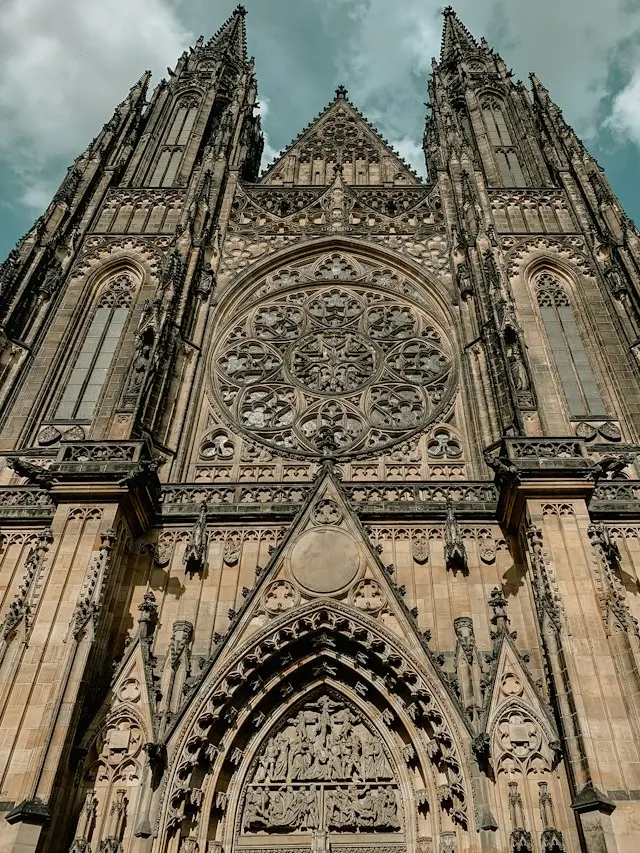
Prague Castle is the largest ancient castle complex in the world by area, and it's still an active government building, so give yourself a full morning. The complex itself is open daily and free to walk through, but the interiors, including St. Vitus Cathedral's main nave, the Old Royal Palace, and the Golden Lane, require a paid ticket. Arriving right at opening (9 a.m. most of the year) means you'll beat both the crowds and the tour buses.
Don't rush past St. Vitus Cathedral's stained glass, particularly the window designed by Alphonse Mucha in the early 20th century. It's one of the few spots in the cathedral where the Art Nouveau style breaks from the surrounding Gothic stonework, and it's easy to walk right by if you're not looking for it.
Wander Golden Lane and Hradčany Square
Golden Lane's tiny, colorful houses look almost like a film set, and in fact one of them was briefly home to writer Franz Kafka. After the castle, take your time crossing Hradčany Square, where the Archbishop's Palace and Sternberg Palace sit side by side, before heading downhill.
Cross Into Malá Strana
The Little Quarter beneath the castle is one of the best areas in Prague for aimless wandering. Petřín Hill, reachable by a funicular from the base of the neighborhood, has a mini Eiffel Tower lookalike and sweeping views over the red rooftops. In the evening, Malá Strana's quieter squares and wine bars make a good spot to end the day before the Old Town gets loud with nightlife.
Day 2: Old Town, Charles Bridge and the Jewish Quarter
Charles Bridge at First Light
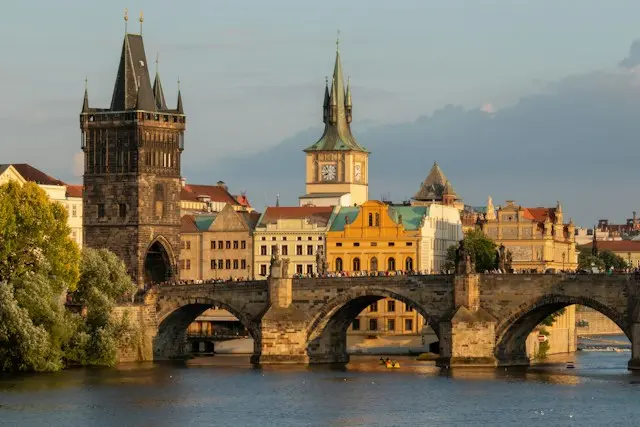
Charles Bridge connects Malá Strana to the Old Town and dates back to the 14th century, lined the whole way with 30 baroque statues. It's genuinely worth getting up early for, since by mid-morning it turns into a slow-moving river of tour groups, portrait artists, and street musicians. Crossing it before 8 a.m. is the closest you'll get to having it to yourself.
Old Town Square and the Astronomical Clock
Old Town Square is the obvious center of gravity, anchored by the Astronomical Clock on the Old Town Hall tower. The clock has been running in some form since 1410, and every hour on the hour it puts on a short mechanical show with moving figures representing Death, Vanity, and other allegorical characters. It's brief and, if you've read a lot of hype, can feel a little underwhelming in person, so keep expectations modest and enjoy it as a piece of medieval engineering rather than a spectacle.
The square is also ringed by Týn Church, with its distinctive twin spires, and a scattering of pastel townhouses that make it one of the most photographed spots in the city.
Josefov, the Jewish Quarter
A short walk from Old Town Square, Josefov holds one of the best-preserved Jewish historical sites in Europe. The Old Jewish Cemetery, with its densely stacked headstones dating back to the 15th century, and the Old-New Synagogue, one of Europe's oldest active synagogues, are both worth the entry ticket. The Pinkas Synagogue's walls are inscribed with the names of tens of thousands of Czech Jewish victims of the Holocaust, and it's a genuinely moving stop rather than a quick photo opportunity.
Day 3: New Town, Vyšehrad and the Streets Most Tourists Skip
Wenceslas Square and New Town
Despite its name, New Town dates back to the 14th century too, just a bit later than Old Town. Wenceslas Square is less about medieval charm and more about modern Czech history; it's where major protests during the fall of communism in 1989 played out. The National Museum sits at the top of the square and is worth a stop if you want a break from walking.
Vyšehrad's Quiet Views
Most first-time visitors skip Vyšehrad entirely, which is exactly why it's worth the detour. This hilltop fort south of the city center has its own castle ruins, the twin-spired Basilica of St. Peter and St. Paul, and a cemetery where composer Antonín Dvořák and other notable Czechs are buried. The views over the Vltava River rival anything from the main castle, minus the crowds.
Neighborhoods Worth a Detour
If you have energy left, Vinohrady and Žižkov are residential neighborhoods with a completely different pace than the tourist center: leafy streets, local cafes, and some of the city's best casual restaurants. Žižkov is also home to the Žižkov Television Tower, a Brutalist landmark with giant crawling baby sculptures climbing up its side, which is either unsettling or delightful depending on your taste.

Where to Eat: Prague's Best Local Dishes and Spots
Dishes to Order
Czech food leans hearty and meat-forward, built for cold winters and long meals. Svíčková, a slow-braised beef sirloin in a creamy vegetable sauce served with bread dumplings and a dollop of cranberry compote, is the dish most locals point to as a national favorite. Vepřo knedlo zelo, roast pork with bread dumplings and braised cabbage, is the other classic worth ordering at least once.
- Svíčková - braised beef in root vegetable sauce with bread dumplings
- Guláš - a thicker, paprika-forward take on the dish, usually served with dumplings rather than rice
- Smažený sýr - fried cheese, a popular pub food that's exactly as indulgent as it sounds
- Trdelník - the spiral pastry sold on nearly every corner; fun to try once, though it's more of a tourist treat than a traditional Czech staple
- Czech beer - the country has one of the highest beer consumption rates per capita in the world, and Pilsner-style lager was invented here in the 19th century
Where Locals Actually Eat
Restaurants directly on Old Town Square tend to charge tourist prices for average food. Walking ten minutes into Vinohrady or Žižkov usually gets you better quality for less money. Look for "hospoda" (pub) style restaurants with handwritten daily menus, which is often a sign the kitchen is cooking for regulars rather than tour groups.
For something more contemporary, Prague's food scene has grown well beyond traditional pub fare in the last decade, with a strong wave of modern Czech restaurants, craft coffee shops, and natural wine bars, particularly clustered around Vinohrady and Karlín.
Worthwhile Day Trips Beyond the City
Kutná Hora
About an hour from Prague by train, Kutná Hora is best known for the Sedlec Ossuary, a small chapel decorated with the bones of an estimated 40,000 people, arranged into chandeliers, garlands, and a coat of arms. It sounds macabre on paper and is genuinely striking in person. The town itself also has St. Barbara's Cathedral, a Gothic church that once rivaled Prague's own cathedral in ambition, funded by the region's silver mining wealth.
Český Krumlov
This is the day trip that tends to convince people to add an extra night to their trip. Around three hours south of Prague by train or bus, Český Krumlov is a UNESCO-listed medieval town built into a bend of the Vltava River, with a castle complex second in size only to Prague's own. Because of the travel time, it works better as an overnight stop than a rushed day trip if your schedule allows it.
Karlštejn Castle
For something closer, Karlštejn Castle is around 40 minutes from Prague by train and makes an easy half-day trip. Built in the 14th century to house the Bohemian crown jewels, its dramatic silhouette on a forested hilltop is one of the most photographed castles in the country, even if the interior visit requires advance ticket booking during peak season.

Getting Around and Planning Tips
Public Transport
Prague's public transport system of trams, metro, and buses is efficient and covers nearly everywhere a visitor would want to go. A single ticket covers unlimited transfers within a set time window, and short-term tourist passes (24-hour or 72-hour) are usually the better deal if you're moving around a lot. Validate your ticket the moment you board; inspectors do check, and fines are steep.
Money and Currency
The Czech Republic uses the Czech koruna (CZK), not the euro, which catches some first-time visitors off guard. Cards are widely accepted, even for small purchases, but it's worth carrying some cash for smaller vendors, market stalls, and public restrooms. Avoid the currency exchange booths clustered around Old Town Square and Wenceslas Square, since they tend to offer worse rates than ATMs or exchanges a few streets away.
When to Visit
Spring (April to May) and early fall (September to early October) offer the best balance of mild weather and manageable crowds. Summer is peak season, with long lines at major sights and higher accommodation prices. Winter is quieter and atmospheric, especially with Christmas markets running through Old Town Square and Wenceslas Square, though several outdoor attractions and castle interiors run on shorter hours.
- Book Prague Castle interior tickets and popular restaurant tables in advance during summer
- Wear comfortable shoes; the historic center is almost entirely cobblestone
- Check current opening hours and prices before visiting, since these can shift seasonally or around public holidays
Conclusion
Prague works whether you're the type of traveler who wants a packed schedule of landmarks or someone who prefers to wander without much of a plan. The itinerary above gives you a solid backbone, hitting the castle, the bridges, the old squares, and the food worth traveling for, while leaving enough room to get pleasantly lost in a side street or two.
If there's one piece of advice worth taking away, it's to resist the urge to see everything. Prague's best moments tend to happen in the gaps between the must-see stops, not on the checklist itself.
Frequently Asked Questions
How many days should I spend in Prague? +
Three days is generally the right amount for a first visit, covering the castle, Old Town, and at least one day trip, though two days can work if your itinerary is tightly planned.
Is Prague expensive to visit? +
Prague is generally cheaper than Western European capitals, especially for food and beer, though prices in the main tourist areas around Old Town Square run noticeably higher than a few streets away.
Do I need to book Prague Castle tickets in advance? +
It's not strictly necessary outside of peak summer season, but booking ahead avoids ticket lines and guarantees entry to interior sights like St. Vitus Cathedral and the Old Royal Palace on your preferred day.
What's the best day trip from Prague? +
Kutná Hora is the easiest for a single day thanks to its short train ride, while Český Krumlov is more rewarding if you can stay overnight given the longer travel time.
Does Prague use the euro? +
No, the Czech Republic uses its own currency, the Czech koruna (CZK), so it's worth having some cash on hand even though cards are widely accepted.
What food should I try in Prague? +
Svíčková (braised beef with bread dumplings) and vepřo knedlo zelo (roast pork with cabbage) are the two classics most worth ordering, alongside a glass of Czech lager.
Is Charles Bridge worth visiting early in the morning? +
Yes, crossing before 8 a.m. avoids the heavy foot traffic and tour groups that build up through the day, and gives a much quieter, more photogenic experience.
Is Prague walkable? +
The historic center is very walkable and mostly flat, aside from the hill up to the castle, though the cobblestones make comfortable shoes essential.
What's the best time of year to visit Prague? +
Spring and early fall offer milder weather and smaller crowds than summer, while winter brings Christmas markets and a quieter, moodier version of the city.
Is the Jewish Quarter worth the entry fee? +
Yes, the Old Jewish Cemetery and the synagogues of Josefov, including the Pinkas Synagogue's Holocaust memorial, offer some of the most historically significant sights in the city.