
Table of Contents
Overview
The Museum Rietberg is a unique cultural treasure within Switzerland. While Zurich is home to many excellent museums focusing on European history and Western art, the Rietberg is the only major museum in the country dedicated exclusively to the arts and cultures of Asia, Africa, the Americas, and Oceania. Situated in the tranquil, beautifully landscaped Rieterpark in the Enge district, it offers a profoundly enriching escape from the typical European artistic narratives.
The museum is celebrated internationally not just for the vastness of its collection, but for its extraordinary quality. It houses masterful works of religious sculpture, intricate textiles, delicate paintings, and ceremonial objects, all curated with a deep respect for their cultural origins and aesthetic brilliance. The Rietberg does not present these artifacts merely as ethnographic curiosities, but rather as masterpieces of global art history.
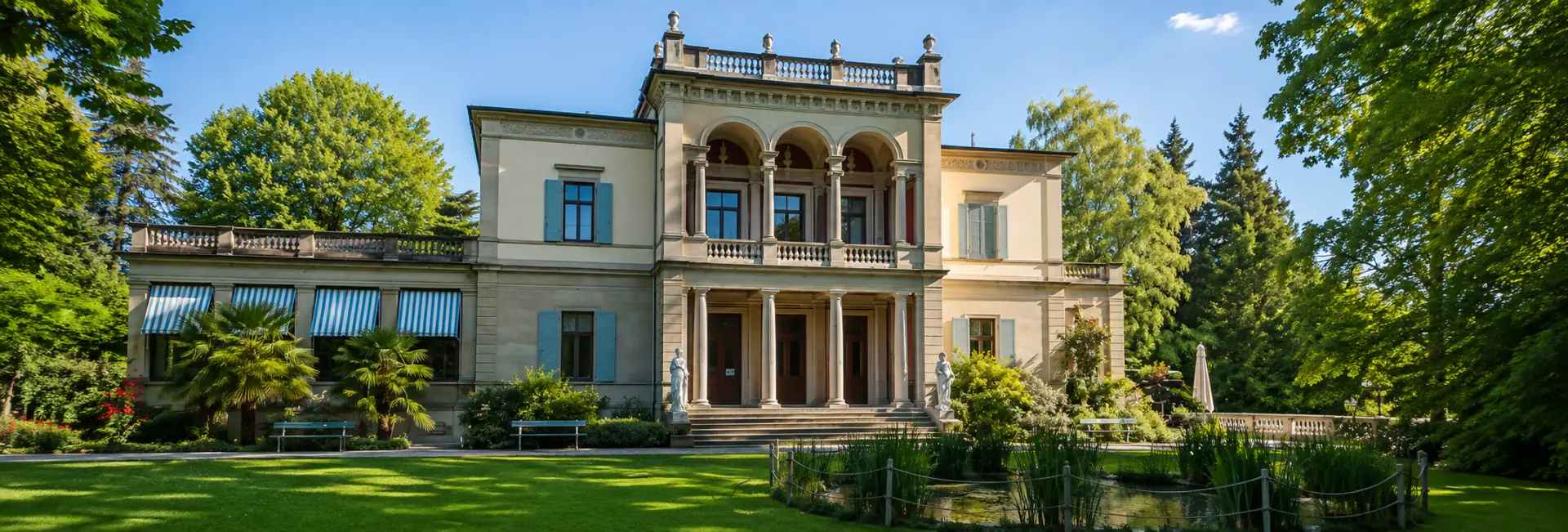
Visiting the museum provides a dual experience: the intellectual and aesthetic joy of exploring world cultures, paired with the physical beauty of wandering between historic 19th-century villas and a striking modern architectural extension, all set against the backdrop of one of Zurich's most beautiful public parks.
History and The Baron's Collection
The von der Heydt Donation
The genesis of the Museum Rietberg lies in the exceptional private collection of Baron Eduard von der Heydt, a German-Swiss banker and passionate art collector. In the early 20th century, von der Heydt amassed a staggering collection of non-European art. Unlike many collectors of his time, he possessed a remarkably modern eye, appreciating these works not just for their exoticism, but for their inherent artistic genius and spiritual power.
Founding the Museum
In the aftermath of World War II, Baron von der Heydt donated his magnificent collection to the city of Zurich. To house this treasure, the city purchased the Rieterpark and its historic villas. The Museum Rietberg officially opened to the public in 1952. Since its founding, the museum's holdings have expanded significantly through further generous donations and strategic acquisitions, firmly establishing it as a leading global institution for non-Western art.
Architecture: Villas and the Emerald
The Historic Wesendonck Villa
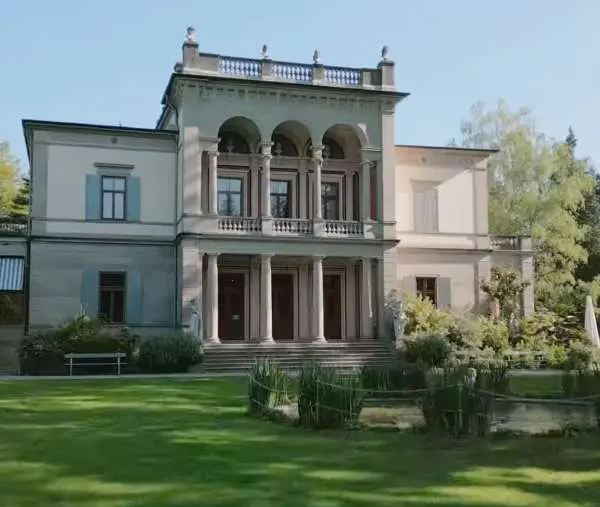
The museum complex is a fascinating blend of the old and the new. The original exhibition space is the Villa Wesendonck, a stunning 19th-century neoclassical mansion built for a wealthy German industrialist family. The villa itself has a rich cultural history; it was famously a sanctuary for the composer Richard Wagner during his exile, where he composed his renowned "Wesendonck Lieder." The elegant, classical rooms of the villa provide a formal, striking contrast to the ancient artifacts displayed within them.
The "Smaragd" (Emerald) Extension
In 2007, the museum underwent a major transformation with the addition of a spectacular modern extension known as the "Smaragd" (Emerald), designed by architects Alfred Grazioli and Adolf Krischanitz. The brilliant design features a relatively modest, glass-walled pavilion at ground level, which serves as the entrance. The vast majority of the new exhibition space-more than doubling the museum's capacity-is hidden underground. This subterranean design brilliantly preserved the historic landscape of the Rieterpark while providing massive, climate-controlled galleries perfectly suited for displaying sensitive artworks.
Asian Art Collections
Buddhist Sculpture and Indian Art
The Asian collections are arguably the strongest pillar of the museum. The Rietberg holds a breathtaking array of Buddhist sculptures originating from China, Japan, Tibet, and Southeast Asia. Visitors can admire serene stone Buddhas dating back to the Chinese Tang dynasty and incredibly intricate, gilded bronze deities from the Himalayas. The Indian art section is equally impressive, featuring dynamic Chola-period bronzes of Hindu gods and exquisite, jewel-toned miniature paintings from the Rajput courts.
Japanese Prints and Chinese Ceramics
The museum also boasts a superb collection of East Asian arts, including a vast archive of Japanese Ukiyo-e woodblock prints and delicate painted screens. The Chinese galleries feature centuries of masterful ceramic work, jade carvings, and classical landscape paintings, offering a comprehensive view of the aesthetic refinement of the imperial dynasties.
African and Pre-Columbian Art
Masterpieces from Africa
The African art collection at the Rietberg is renowned for its focus on the sculptural traditions of West and Central Africa. The galleries display powerful, emotionally charged wooden masks, royal brass plaques from the Kingdom of Benin, and striking fertility figures. The curation emphasizes the diverse aesthetic languages of different ethnic groups and the central role these objects played in religious rituals, social organization, and courtly life.
The Americas and Oceania
The pre-Columbian collections offer a fascinating glimpse into the civilizations of the Americas before European contact. Highlights include intricate gold jewelry, expressive terracotta figures, and complex textiles from Andean cultures such as the Nazca and Inca, as well as stone carvings from Mesoamerican societies. Though smaller in scale, the museum also features compelling artworks from the Pacific Islands, highlighting the incredible navigational and artistic skills of Oceanic peoples.
Ways to Experience It
Self-Guided Audio Tours
The museum provides excellent, in-depth audio guides (frequently available via a smartphone app) that are highly recommended. Because non-European art often features symbolic languages and religious contexts that may be unfamiliar to Western visitors, the audio commentary is invaluable for unlocking the deeper meanings and historical context of the masterpieces on display.
Special Exhibitions and Programs
The Rietberg is highly dynamic, regularly hosting major temporary exhibitions that draw on loans from other global institutions. These exhibitions often explore specific cultural themes, historical periods, or contemporary non-European artists. Additionally, the museum frequently hosts cultural events, traditional music concerts, and academic lectures that bring the cultures represented in the galleries to life.
Best Time to Visit
The Rietberg Museum is generally quieter and less crowded than the more central Zurich museums, making it a peaceful destination at almost any time. Visiting on a sunny afternoon is particularly rewarding, as it allows you to pair your museum visit with a long, leisurely stroll through the surrounding Rieterpark. The park offers expansive lawns, magnificent old beech trees, and beautiful views stretching down toward Lake Zurich and the Alps.
Visitor Tips and Etiquette
Tickets and Access
The museum is easy to reach via tram line 7, alighting at the "Museum Rietberg" stop, followed by a short walk into the park. If you possess a Zurich Card or a Swiss Travel Pass, standard admission is typically fully covered, though major temporary exhibitions in the underground "Smaragd" galleries may occasionally require a small supplementary fee.
Facilities
The museum complex is fully accessible, with elevators connecting the underground galleries and ramps providing access to the historic villas. Be sure to visit the museum café, located in a lovely glass pavilion adjacent to the Villa Wesendonck. In the summer, the café's outdoor terrace is one of the most idyllic spots in the city to enjoy a coffee and a slice of cake while overlooking the park.
Nearby Attractions
The Enge district is known for its beautiful parks and lakeside access, offering several excellent nearby activities.
- Rieterpark: The park immediately surrounding the museum is Zurich's largest and arguably most beautiful landscape park, perfect for walking and picnicking.
- FIFA Museum: Just a ten-minute walk down the hill brings you to the interactive FIFA Museum, offering a complete thematic shift from ancient art to modern sports history.
- Lake Zurich Promenade: Continue walking down from the park to reach the lakeshore, where you can stroll along the water, rent a boat, or visit the historic Enge swimming enclosures (Badi Enge).
FAQs about visiting the Rietberg Museum
Is the Rietberg Museum included in the Swiss Travel Pass? +
Yes, standard admission to the Rietberg Museum is generally fully covered for holders of a valid Swiss Travel Pass. Holders of the Zurich Card also usually receive free or heavily discounted entry.
How much time do I need to visit the museum? +
To properly appreciate the permanent collections across the different continents, and to view the temporary exhibitions in the underground extension, you should plan to spend at least two to three hours.
Are children welcome at the museum? +
Yes, the museum is very welcoming to families. While the art is delicate, the spacious underground galleries are easy to navigate with strollers. The museum also frequently offers specialized family tours, workshops, and educational materials designed to engage children with world cultures.
Can I take photographs inside the galleries? +
Photography without a flash and without a tripod is generally permitted in the permanent collection galleries for personal use. However, photography is often strictly prohibited in special temporary exhibitions due to loan agreements-always check the signage before taking photos.
Is there a place to eat at the museum? +
Yes, the museum has a fantastic café located in a glass pavilion next to the main historic villa. It offers light lunches, excellent coffee, and pastries, and features a beautiful outdoor terrace overlooking the park during the warmer months.
Is the museum entirely underground? +
No. While the massive, modern "Smaragd" extension (which houses the temporary exhibitions and some permanent collections) is built largely underground, the museum also utilizes the historic, above-ground Villa Wesendonck and Villa Schönberg to display significant portions of its collection.
Is the park free to enter? +
Yes, the Rieterpark surrounding the museum is a public city park and is completely free to enter and enjoy, regardless of whether you purchase a ticket for the museum itself.
