
Table of Contents
Overview
Riga Central Market, known in Latvian as Rīgas Centrāltirgus, is one of the largest and most atmospheric food markets in Europe, and it is still very much a working market that locals use every day. It stands on the bank of the Daugava River, a short walk from the Old Town, the railway station and the bus terminal.
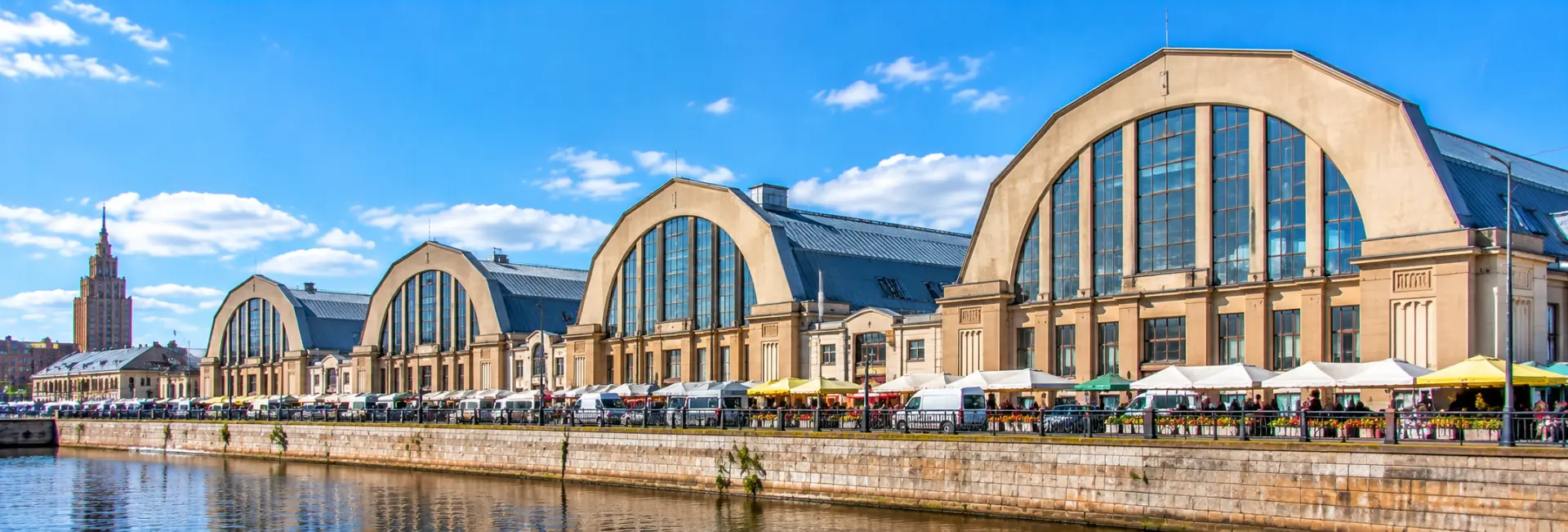
Its most striking feature is the building itself. Five huge pavilions with soaring, barrel-vaulted roofs were made from the steel frameworks of German airship hangars, a clever piece of reuse that gives the market a look found almost nowhere else. Inside, the halls are divided by product, with separate pavilions for dairy, meat, fish, vegetables and gastronomy, while outdoor stalls fill the space around them.
Come with an appetite and a little curiosity. You can taste smoked fish, pick up Latvian cheese and honey, watch regular shoppers go about their routines and admire an architectural landmark that forms part of the Historic Centre of Riga World Heritage Site.
History
A Plan Delayed by War
Riga City Council discussed the need for a central market as early as 1909, but the First World War delayed any action. On 18 December 1922 the council finally decided to build a central food market, because the old riverside Daugavmala Market had become too small and shabby for a growing city. The new market took eight years to build.
Airship Hangars Reborn
The market's unusual structure came from an offer the city could not resist. German army airship hangars at Vaiņode in the Kurzeme region were due to be dismantled and sold as scrap, and Riga saw their steel frames as the ideal basis for market halls.
The original hangars were enormous, about 37 metres high and 240 metres long. That was too tall to heat sensibly, so only the upper parts were reused, set on bases of brick and reinforced concrete. The finished pavilions are about 20 metres high and 35 metres wide. Building them took around six million bricks and 2,460 tonnes of steel, and they were fitted with central heating and electric lighting, which was advanced technology for the time.
Opening and Early Fame
Before the market opened, the pavilions were used for exhibitions, including an international automobile fair. Retail trading began in November 1930, the same day the Daugavmala Market closed. In the 1930s the new halls were counted among the leading tourist attractions in the city and were regarded as one of the most modern markets in Europe.
Wartime and Modern Times
The market continued through the turbulent decades that followed, including the Second World War and the Soviet period, when it was run under a different name. Today it is managed by a Riga municipal company, which also looks after the city's Vidzeme and Latgale markets, and a development concept is being prepared to guide its future while keeping its character.
Architecture and Design
The market blends practical engineering with the Neoclassical and Art Deco tastes of its era. The most eye-catching element is the set of long, arched steel roofs that rise above the brick bases. Standing under them, you can clearly see the origins of the structure, with large open spans that were designed to shelter airships and now shelter stalls of cheese and herring.
Above the Ground
The five pavilions are lined up side by side, each one a long, high hall. The brick and concrete bases carry the old steel roofs, and the combination feels both solid and spacious.
Below the Ground
Beneath the pavilions lies a huge basement of about two hectares, often described as an underground city. It has main passages and crossing lanes, with a traffic lane of 337 metres connecting them. It was built for storage, and it also housed refrigerated space and lifts for moving goods. Guided tours can include a visit to this underground world.
The Five Pavilions
Each of the five pavilions has its own focus, which makes the market easy to explore in a logical order.
- Dairy Pavilion: fresh Latvian cheeses, including caraway cheese that is especially popular around the Midsummer festival.
- Meat Pavilion: a place for smoked and dried meats, ham and sausages in a wide range of styles.
- Fish Pavilion: smoked fish, lightly salted herring and other seafood, with a tasting area where you can sample before you buy.
- Vegetable Pavilion: berries, fresh and lightly salted vegetables, honey and spices, including quick-pickled cucumbers.
- Gastronomy Pavilion: a food hall with caterers and street food stalls, where you can sit down to a meal, along with a tasting area.
Outside the halls you will find an open-air area of stalls and stands, and an evening farmers' market that runs overnight, making the market busy at times when most others are closed.
What to Eat and Buy
The market is a good place to try Latvian flavours without a formal restaurant meal, and it makes an excellent source of edible souvenirs.
Tastes to Try
- Smoked fish: sprats and eel are among the best-known local specialities, and they are often sold freshly smoked.
- Rye bread with fish: a classic Latvian combination of dark bread and sprats or lightly salted herring.
- Latvian cheeses: from fresh dairy cheeses to caraway-flavoured varieties.
- Pickled vegetables: quick-pickled cucumbers and other lightly salted vegetables.
- Berries and honey: seasonal Latvian berries and local honey are popular picks.
- Kvass: a traditional fermented bread drink that is widely sold in Latvia.
Buying Meat Products
Pork is very popular in Latvia, so if you eat a restricted diet, ask stallholders what a product is made from before you buy.
Cultural Significance and Recognition
For many Riga residents, the Central Market is less a tourist sight than a weekly habit. People come to buy food from farmers and small producers, meet neighbours and keep long-running family routines alive. That everyday use is a big part of its appeal, because you see a version of the city that has not been staged for visitors.
It is also a major draw in its own right. The market's management counts it among Riga's top five tourist destinations, with an estimated 40,000 to 50,000 visitors on an average day.
Its architecture is formally recognised as well. The market was included on the UNESCO World Heritage List in 1997 as part of the Historic Centre of Riga, and it stands as one of the most notable structures from the 20th century in Latvia. Visiting it is a way of seeing a different layer of the city's story, one shaped by trade, food and industrial ingenuity rather than churches and guildhalls.
Ways to Experience It
Wander at Your Own Pace
The simplest approach is to walk through the five pavilions in turn, then circle the outdoor stalls. There is no entry fee, so you can drop in for a quick look or spend several hours exploring.
Taste Your Way Through
The Fish and Gastronomy pavilions have tasting areas where you can try local products. Many stalls will also offer a small sample, which is a pleasant way to compare cheeses, smoked fish and honey.
Join a Guided Tour
Guided tours explain how the market became one of the largest and most modern in Europe, how the pavilions were used during the Second World War, and what lies in the underground city. Tours are booked through independent guides and companies listed by the market.
Visit in the Evening
A farmers' night market runs from the late afternoon into the early morning, offering a different atmosphere to the daytime market. Check the official website for current times.
Best Time to Visit
The market is open daily, and the best time depends on what you want from the visit.
By Time of Day
Mornings are usually the best time for the freshest produce and for browsing the halls before the crowds build. Later in the day it gets livelier, which suits those who want atmosphere and prepared food. If you plan to visit the pavilions, allow time before they close, since indoor and outdoor areas keep slightly different hours.
By Season
Summer and early autumn bring the widest choice of berries, vegetables and other seasonal produce, and the outdoor stalls are at their most inviting. Around the Midsummer festival in June, caraway cheese is particularly popular. In winter the indoor pavilions are a warm, practical place to shelter and taste local food.
Visitor Tips
- Check the current opening hours on the official website. The pavilions, outdoor area and night market keep different schedules.
- Allow one to two hours for a relaxed visit, or longer if you want to taste your way around or join a tour.
- Keep your valuables secure. Like any busy market, it can attract pickpockets, so keep your bag closed and in front of you.
- Bring a reusable bag if you plan to shop, and ask vendors before you take photographs of their stalls.
- Ask what meat products contain if you have dietary needs, since pork features widely.
- The market describes itself as accessible to everyone, with several public transport options nearby. Bicycle racks are available near the administration building, and paid parking is offered for drivers.
- Wear comfortable shoes, as the halls are large and the floors can be busy.
Nearby Attractions
The market sits just south of the Old Town, close to the main railway and bus stations, so it combines easily with other sights.
- Spīķeri Quarter: a cluster of old warehouses behind the market, now a creative and cultural district.
- Latvian Academy of Sciences observation deck: a Soviet-era high-rise with a 17th-floor viewing balcony about 65 metres up, roughly an eight-minute walk from the market.
- Riga Ghetto and Latvian Holocaust Museum: located in the Spīķeri area and commemorating the Riga ghetto and the victims of the Holocaust in Latvia.
- Riga Old Town: the medieval heart of the city, with Riga Cathedral and St. Peter's Church a short walk away.
- The Daugava riverbank: the market stands on the river, so a stroll along the water is easy to add after shopping.
FAQs about visiting Riga Central Market
Why is Riga Central Market in old Zeppelin hangars? +
In the 1920s the city bought the steel frames of German airship hangars from Vaiņode that were due to be scrapped and reused them for the market halls. The hangars were cut down and set on brick and concrete bases, and the market opened in 1930.
How many pavilions are there and what do they sell? +
There are five pavilions: dairy, meat, fish, vegetables and gastronomy. Outside, an open-air area of stalls and an evening farmers' market add to the choice.
Is there an entrance fee? +
No. The market is free to walk around, and you only pay for the food and goods you buy.
When is Riga Central Market open? +
The pavilions and outdoor area are generally open daily, with a night market running into the early morning. Hours vary by area and can change, so check the official website before you go.
What should I try at the market? +
Smoked fish such as sprats or eel, rye bread, Latvian cheese, pickled vegetables, berries and honey are good places to start. Kvass is a popular local drink to sample.
How long should I spend there? +
Plan on one to two hours for a relaxed visit. Allow longer if you want to taste several products, eat in the gastronomy pavilion or join a guided tour.
Can I visit the underground part of the market? +
Guided tours can include the market's underground area, which is a large basement originally built for storage. Tours are booked through independent guides listed by the market.
Is it safe to visit? +
Yes, it is a very popular and busy market, but as in any crowded place you should keep an eye on your belongings and watch for pickpockets.
How do I get to Riga Central Market? +
It stands next to the central railway and bus stations and is a short walk from the Old Town. Several public transport routes also serve the area.
