Table of Contents
Overview
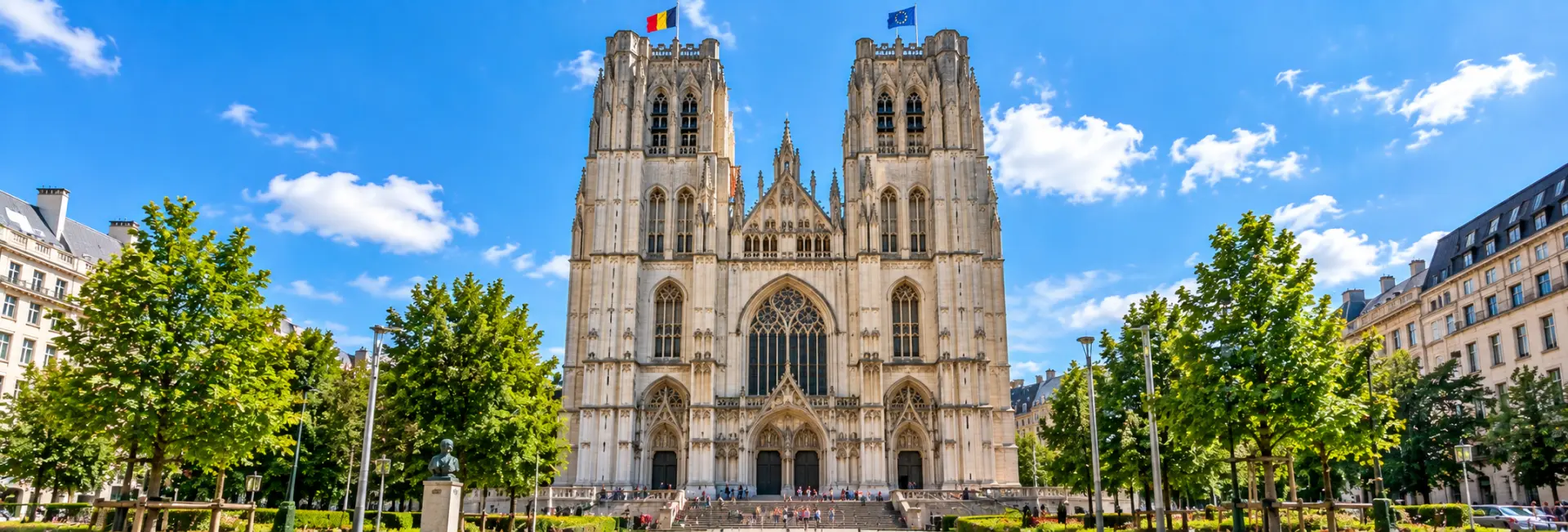
Perched on a low rise just east of central Brussels, the Cathedral of St. Michael and St. Gudula is the closest thing Belgium has to a national church. Its pale twin towers and rose window have overlooked the city for more than five centuries, and its interior still hosts the ceremonies that mark the country's biggest moments, from royal weddings to state funerals.
Named for the city's two patron saints, the cathedral blends a long Gothic building campaign with later Baroque and neo-Gothic additions, resulting in an interior that layers medieval stonework, 17th-century woodcarving, and centuries of stained glass into a single space.
History
Early Origins
A small shrine dedicated to Saint Michael is thought to have stood on this site as early as the 8th century. That early chapel gave way to a Romanesque collegiate church in the 11th century, as the settlement around it grew into what would become Brussels.
The Gothic Rebuilding
Work on the Gothic church seen today began in 1226 with the choir, and construction continued in stages for nearly three centuries. The building's western facade and twin towers were among the last elements completed, finished around the turn of the 16th century and bringing the exterior close to its current appearance by 1519.
Restoration and Elevation to Cathedral
The 19th century brought a significant restoration campaign under architect Tilman-François Suys, which repaired weathered stonework and introduced much of the neo-Gothic stained glass now seen in the side aisles. The church was formally designated a historic monument in 1936, and in 1962 it was elevated to cathedral status, becoming co-cathedral of the Archdiocese of Mechelen-Brussels alongside St. Rumbold's Cathedral in Mechelen.
Architecture & Design
Exterior
The cathedral's west front is dominated by two nearly identical towers rising 69 meters, flanking a large central rose window and a triple portal at ground level. Flying buttresses along the flanks support the tall Gothic nave, a structural signature of the Brabantine Gothic style shared with several of Brussels' other major medieval buildings.
Interior
Inside, a three-aisled nave leads toward the choir beneath a high vaulted ceiling carried on clustered columns. The overall plan reflects nearly three centuries of construction, so earlier and later Gothic sections sit side by side, along with chapels added in later Baroque phases.
Beneath the Cathedral
Archaeological work beneath the building has uncovered remains from earlier structures on the site, including foundations linked to the Romanesque church and traces of Roman-era activity, giving visitors a rare glimpse of the layers of history hidden under the current floor.
Cultural & Religious Significance
As the seat of the Archdiocese of Mechelen-Brussels and the official church of the Primate of Belgium, the cathedral functions as the country's de facto national church even though it shares formal cathedral status with Mechelen. It is the traditional venue for royal weddings and state funerals of the Belgian monarchy, as well as the annual Te Deum service held on Belgium's National Day.
The building has also witnessed moments of political history: during the Belgian Revolution of 1830, it served as a gathering point for revolutionaries pressing for independence, tying the cathedral to the birth of the modern Belgian state as much as to its religious life.
Notable Features
- A Baroque pulpit carved in 1699 by Hendrik Frans Verbruggen, showing Adam and Eve being driven from the Garden of Eden in dramatic, heavily worked wood
- Stained glass windows spanning the 16th to 20th centuries, including Renaissance-era panels attributed to Bernard van Orley depicting Emperor Charles V and Isabella of Portugal
- Two historic pipe organs and a set of large bells housed in the towers
- The tomb of Archduke Ernest of Austria, dating to 1595
- Archaeological remains visible beneath parts of the building, tracing the site's use back through earlier churches
Visiting Etiquette & Tips
The cathedral remains an active place of worship, so visitors should dress modestly, keep voices low, and avoid walking through the nave during Mass or other services. Photography is generally tolerated in the main body of the church but may be restricted during services or in specific chapels, so it's worth checking signage on arrival.
- Entry to the main body of the church is typically free, though some areas such as the treasury or crypt may charge a small fee
- Guided tours can add useful context on the stained glass, tombs, and building phases that aren't obvious from a casual walk-through
- Service times take priority over sightseeing, so plan a visit around the posted Mass schedule if the goal is a quiet look at the interior
- The cathedral sits on a slope with steps at the main entrance, so visitors with mobility needs should check current accessibility options in advance
Best Time to Visit
Weekday mornings tend to be the quietest time to see the interior, before tour groups and midday visitors arrive. Midday sun brings out the color of the stained glass particularly well, especially in the rose window above the main entrance.
Visitors interested in the cathedral's ceremonial role may want to check the calendar for major state or religious occasions, since these draw larger crowds and can affect access, while an ordinary weekday offers the most relaxed way to explore the building's history at a slower pace.
Nearby Attractions
The cathedral sits close to Brussels-Central train station, making it an easy add-on to a walk toward the Grand Place, which lies a short distance to the southwest along with its Town Hall and surrounding guildhalls.
The Mont des Arts area, home to several of Brussels' major museums, is also within easy walking distance, making it simple to combine a cathedral visit with an afternoon of art and history elsewhere in the city center.
FAQs about visiting the Cathedral of St. Michael and St. Gudula
How old is the Cathedral of St. Michael and St. Gudula? +
The current Gothic building was begun in 1226, though a chapel is believed to have stood on the site since as early as the 8th century, making the site itself well over a thousand years old.
Is the cathedral still an active church? +
Yes, it remains an active place of worship and holds regular Mass services, as well as major state and royal ceremonies such as the annual Te Deum on Belgium's National Day.
Is it free to visit the cathedral? +
Entry to the main nave is generally free, though certain areas, such as the treasury, may charge a small admission fee.
Why does Brussels have two cathedrals? +
St. Michael and St. Gudula shares cathedral status as a co-cathedral with St. Rumbold's Cathedral in Mechelen, both belonging to the Archdiocese of Mechelen-Brussels.
What are the towers' height? +
The twin west towers rise 69 meters and are one of the most recognizable features of the Brussels skyline near the city center.
What is the most famous artwork inside? +
The Baroque pulpit carved by Hendrik Frans Verbruggen in 1699, depicting Adam and Eve's expulsion from Eden, is one of the cathedral's best-known interior features, alongside its Renaissance stained glass.
How do you get to the cathedral? +
It sits a short walk from Brussels-Central train station, making it one of the easiest major landmarks in the city to reach on foot from the train network.
Can you combine a visit with the Grand Place? +
Yes, the cathedral is close enough to the Grand Place and Town Hall to comfortably visit both on the same walk through central Brussels.