Table of Contents
Overview
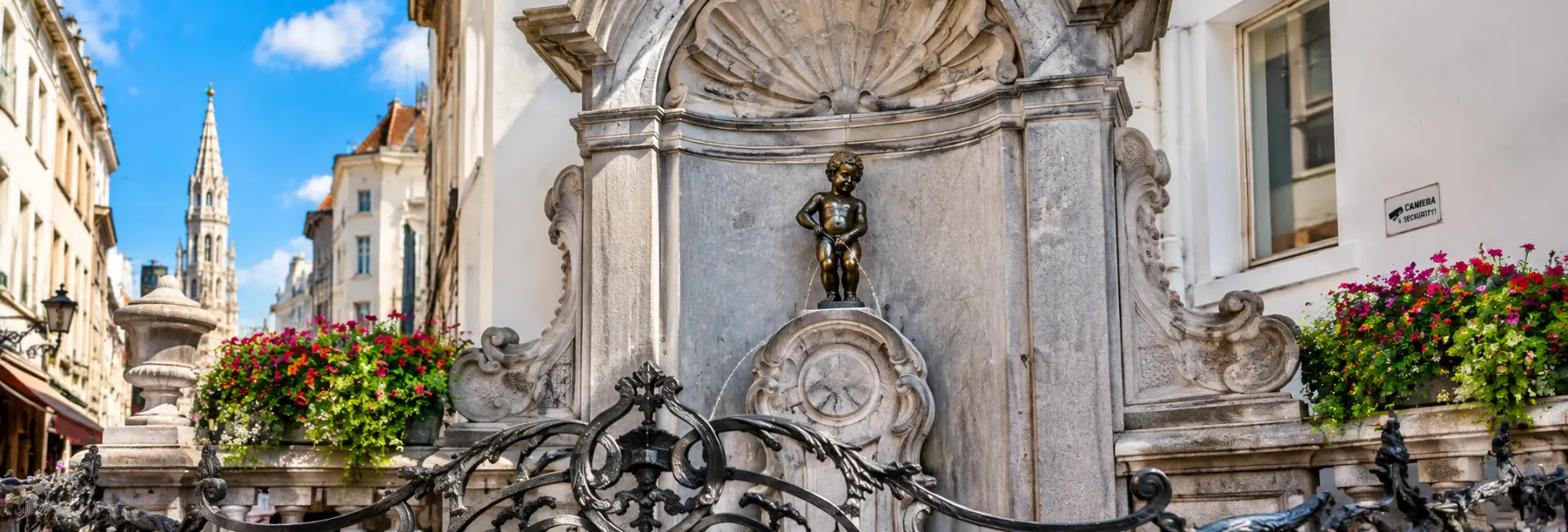
Manneken Pis is proof that a landmark doesn't need to be big to be beloved. Standing barely more than half a metre tall, this small bronze fountain of a naked boy relieving himself has become one of the most recognisable symbols of Brussels, rivaling the Grand Place itself in name recognition despite tucking into a quiet street corner a few minutes' walk away.
Part of the appeal is the gap between reputation and reality: first-time visitors are often surprised at just how small the statue is, and that surprise has become part of the ritual of seeing it. The rest of the appeal comes from what surrounds the statue - centuries of legend, an enormous wardrobe of miniature costumes, and a very Brussels sense of humour about taking a small, slightly rude joke and turning it into a beloved civic mascot.
History
An Older Fountain
Some form of a small fountain statue at this corner is documented as far back as the late 14th century, when city records mention a figure serving as a public water source, likely carved in stone rather than the bronze visitors see today. The corner sat at the junction of two minor streets rather than anywhere especially prominent, which only deepens the mystery of how a modest neighbourhood water fountain eventually became a citywide icon. Brussels has never definitively settled why a statue of a urinating boy was chosen for this spot in the first place, which has left the door wide open for the many legends that later grew up around it.
The Bronze Statue of 1619
The bronze version most visitors recognise was created by the Brabantine sculptor Jérôme Duquesnoy the Elder and installed at the site in 1619, replacing whatever earlier figure had stood there. Duquesnoy came from a family of sculptors active in the region, and his design established the pose and proportions that every later replica and imitation around the world has copied. A decorative blue-stone niche in a scrolling rocaille style was added around the statue in 1770, giving it the small framed alcove it still sits in today, a modest architectural upgrade compared to the statue's outsized reputation.
Theft, Damage, and a Protected Original
Manneken Pis has been stolen or damaged more than once over the centuries, prized as a trophy precisely because of its fame, with soldiers, students, and opportunists among those blamed for past disappearances over the years. Each time, the city recovered or recast the figure and returned it to its corner, treating its restoration almost as a point of civic pride. To protect the original from further harm and from the wear of constant public display, the city moved it into the Brussels City Museum in 1965 and installed a replica at the fountain, which is the version on view at the corner today.
Legends & Origin Stories
No one knows for certain why Brussels chose this particular image for its favourite public fountain, and that uncertainty has produced a whole folklore of competing explanations, each told with equal conviction by different guides and locals. Rather than settle on one account, the city seems to enjoy keeping all of them in circulation, letting visitors pick whichever version they find most charming.
- A tale involving the young Duke Godfrey III of Leuven, said to have been hoisted in a basket above a 12th-century battlefield as a two-year-old and to have urinated on the enemy troops below, an act credited with helping win the fight
- A story of a boy who spotted enemy soldiers preparing to blow up the city walls with gunpowder and put out the burning fuse just in time, saving Brussels from destruction
- A gentler account describing a wealthy merchant's young son who wandered off during a city festival and was eventually found by his worried father, doing exactly what the statue depicts
- A more practical theory tied to the leatherworkers once based on this street, who used urine in tanning hides, suggesting the statue may simply be a nod to a local trade rather than a heroic tale
None of these stories can be verified, and that's arguably part of the charm: Brussels has never felt the need to settle on a single official version, and tour guides today will often present two or three of them back to back, leaving the choice of favourite up to the listener.
The Costume Tradition
Manneken Pis owns a wardrobe that most humans would envy, with roughly a thousand different miniature costumes accumulated since the tradition of dressing the statue began, some donated by foreign dignitaries and visiting delegations as a gesture of goodwill toward the city. Outfits range from national dress sent by visiting heads of state to sports kits, military uniforms, and costumes tied to specific festivals or anniversaries, and the statue is redressed several times a week according to a published schedule posted near the fountain and online.
A dedicated society looks after the collection, reviewing suggestions from fans around the world and selecting only a handful each year to actually be produced and worn, a level of curation that keeps the wardrobe from becoming an unmanageable free-for-all. The full costume collection, far too extensive to keep at the fountain itself, is preserved and rotated through displays at the Brussels City Museum, alongside the original 1619 statue, giving visitors a chance to see garments that never make it back out onto the street.
Recognition & Status
Manneken Pis has grown from a neighbourhood curiosity into one of Belgium's most exported cultural images, reproduced on souvenirs, chocolate moulds, and countless replica statues in cities around the world, from garden ornaments to bar-top novelties. Locally, it's treated with genuine affection rather than embarrassment, seen as an emblem of the irreverent, self-deprecating humour Brussels is known for, and residents will happily point tourists toward it as a point of civic pride rather than something to be shy about.
That affection has only deepened over time as the statue has picked up a small extended family of imitators around the city itself. What began as a solitary joke has become an entire miniature tradition, with new companion figures added decades apart yet each embraced with the same warmth as the original.
- Widely regarded as one of the unofficial symbols of both Brussels and Belgium as a whole
- Companion statues have grown up around it over time, including a female counterpart, Jeanneke Pis, installed in 1987, and a dog version known as Zinneke Pis
- The original 1619 statue is preserved and displayed at the Brussels City Museum rather than left exposed at the fountain
- Frequently referenced in film, television, and travel writing as shorthand for Brussels' offbeat sense of humour
Ways to Experience It
- Walk the short distance from Grand Place, since the statue sits only a few minutes away down Rue Charles Buls and Rue de l'Étuve
- Check the posted costume schedule or the city's website in advance if you want to catch the statue dressed for a specific occasion
- Visit the Brussels City Museum inside the King's House on Grand Place to see the original statue and a rotating selection of its costumes up close
- Look for the two companion statues nearby, Jeanneke Pis and Zinneke Pis, for a quick added stop on the same walk
- Pick up a Manneken Pis souvenir or chocolate figure from one of the surrounding shops, a Brussels tradition in its own right
Best Time to Visit
Because Manneken Pis is a small, open-air street corner attraction, there's no real "closed" season, but timing still affects the experience considerably given how compact the viewing area is.
- Early morning is by far the best window for photos without a wall of tourists in front of the statue
- Midday and early afternoon bring the heaviest foot traffic, especially in summer when tour groups pass through in waves
- Special dressing ceremonies, held periodically throughout the year, draw larger crowds and are worth checking for if you want to see the tradition in action
- Evenings are quieter and let you appreciate the small floodlit niche without jostling for space
Visitor Tips
- Manage expectations on size: the statue is genuinely tiny, and knowing that in advance helps first-time visitors enjoy it rather than feel let down
- The site is free to view at any time, since it sits on an open street corner rather than behind any gate or ticket booth
- Keep visits brief and be mindful of the narrow street, which was not built to handle large tour groups comfortably
- Combine it with a Grand Place visit, since the two are close enough to see back-to-back in under ten minutes on foot
- Watch your belongings in the immediate area, as with any dense, camera-focused tourist crowd
Nearby Attractions
- Grand Place - Brussels' UNESCO-listed main square, a few minutes' walk away
- Brussels City Museum (King's House) - home to the original 1619 statue and its costume collection
- Galeries Royales Saint-Hubert - a historic glass-roofed shopping arcade a short walk north
- Jeanneke Pis and Zinneke Pis - the female and canine companion statues, both within easy walking distance
- Rue des Bouchers - a lively restaurant street known for its dense cluster of Belgian eateries, just around the corner
FAQs about visiting Manneken Pis
Why is there a statue of a peeing boy in Brussels? +
No one knows for certain. Several competing legends exist, from a heroic toddler duke to a boy who saved the city from a gunpowder attack, but none has ever been confirmed as the true origin.
How big is Manneken Pis? +
The statue is small, standing only about 55 centimetres tall, which surprises many first-time visitors expecting something more monumental.
Is Manneken Pis free to see? +
Yes, it sits on an open public street corner with no entry fee or gate, so it can be viewed at any time.
Why is the statue sometimes dressed in costumes? +
A long-running local tradition dresses the statue in miniature outfits several times a week, drawing from a wardrobe of roughly a thousand costumes cared for by a dedicated local society.
Is the statue at the fountain the original? +
No. The original 1619 bronze statue is preserved at the Brussels City Museum for protection, and a replica stands at the fountain itself.
How far is Manneken Pis from Grand Place? +
It's a short walk of about five minutes from Grand Place, making the two easy to combine in a single stop.
Are there similar statues nearby? +
Yes, a female counterpart called Jeanneke Pis and a dog version called Zinneke Pis are both within easy walking distance and make a quick add-on to a visit.
What's the best time to visit for photos? +
Early morning offers the clearest view and shortest crowds, since the viewing area is narrow and fills quickly once tour groups arrive later in the day.