
Table of Contents
Overview
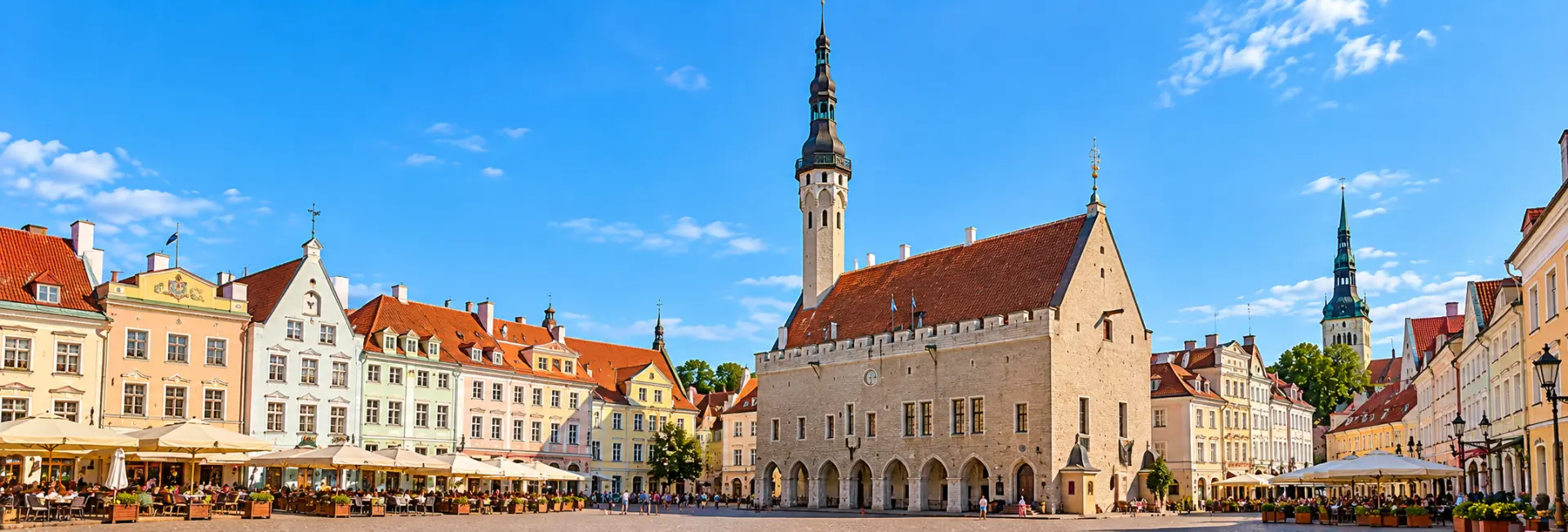
Tallinn Town Hall stands on the north side of Raekoja plats, the market square at the centre of the Old Town, and it has been the civic heart of the city for more than six centuries. Its pale limestone walls, pointed arches and slim octagonal tower make it one of the most recognisable buildings in Estonia, and it is widely regarded as the only surviving Gothic town hall in northern Europe.
The building was designed to show the confidence of a wealthy Hanseatic trading town. Council meetings, trials and official ceremonies took place here for centuries, and the interior still carries traces of that formal life in its carved wood, painted decoration and vaulted spaces.
It is also a good starting point for understanding the Old Town as a whole. From the square you can trace the routes that once led to the harbour, the guild houses and the hill of Toompea, and the town hall's tower works as a landmark for finding your way back through the maze of streets.
Today the town hall is both a museum-like historic site and a living venue for events. Visitors can look inside during the open season, climb the tower for views over the rooftops, or simply admire the façade from a café table on the square below.
History
From Early Mentions to the Present Building
A town hall is known to have stood on this spot by 1322, which is the first time it appears in written records. That early structure served a young trading town governed by a council of merchants. The building was later rebuilt, and the version seen today took shape between 1402 and 1404, giving the council a larger and more impressive seat in the fashionable Gothic style of the period.
A Centre of Law and Government
For many centuries the building did far more than host meetings. It was also a courthouse, and the artwork inside was meant to remind judges and councillors of the importance of fair decisions. Taxes, trade rules and disputes between merchants were all dealt with here, so the hall sat at the centre of everyday economic life as well as politics.
The Square as a Stage
The building has always shared its story with the square in front of it. Merchants set up stalls here, public announcements were made from its steps, and punishments and celebrations alike played out in front of the townspeople. The Christmas tree tradition associated with the square, which the city traces back to 1441, shows how long the space has been a setting for shared civic moments.
Old Thomas
The weather vane that crowns the tower, known as Old Thomas, was placed there in 1530. The figure of a medieval soldier became a symbol of the city's watchfulness and has remained a popular emblem ever since. The original figure watched over the town until 1944, and a replacement installed in 1996 now stands on the spire. The earlier vane is kept inside the town hall as a historic treasure.
Survival and Restoration
Through changes of ruler and the upheavals of the twentieth century, the building survived with remarkably few alterations. Careful conservation in recent decades has kept the masonry and interior in good order, and in 2022 the city marked 700 years since the building's first mention in the records.
Architecture & Design
A Gothic Façade
The most striking feature of the exterior is the open arcade at ground level, with a row of pointed arches supporting the upper storey. Above it, tall narrow windows and a steep roof give the building a calm, symmetrical look that suits its role as a civic centre. Stone dragon-shaped waterspouts project from the roofline, adding a touch of fantasy to an otherwise formal design.
The Tower
The slender tower rises about 64 metres and was built at the same time as the main hall. Its octagonal upper section tapers to a pointed spire, and a viewing balcony sits at around 34 metres. In earlier centuries watchmen stood guard here, ready to raise the alarm in the event of fire or danger.
Interior Spaces
Inside, the town hall contains vaulted rooms and halls with carved wooden benches, painted decoration and woven wall hangings that reflect the wealth of the Hanseatic period. The Citizens' Hall is among the best-known rooms, used today for ceremonies and civic events. The deep cellar spaces below also form part of the visit, and visitors often enter the museum through the lower level.
Recognition / Status
Tallinn Town Hall is part of the Historic Centre (Old Town) of Tallinn, inscribed on the UNESCO World Heritage List in 1997. It is considered one of the key buildings that illustrate how a medieval trading town organised its government and public life.
The town hall's significance rests on several points:
- It is regarded as the only surviving Gothic town hall in northern Europe, preserved with few major changes since the early 15th century.
- It sits at the centre of a square that has served as a marketplace and gathering place since the Middle Ages.
- Its tower and weather vane have become enduring symbols of Tallinn.
- It continues to host official events, exhibitions and concerts, so it remains part of civic life.
What to See There
The Tower Balcony
The climb up the tower is a highlight of any visit. The steps are narrow and become steeper toward the top, but the balcony rewards the effort with a view across red roofs, church spires and the harbour beyond. It is one of the best places to understand the layout of the Lower Town.
The Citizens' Hall and Council Rooms
The principal rooms show how the town governed itself. Look for the carved woodwork, the painted details and the heavy furniture that once belonged to councillors and magistrates. Information panels explain how the hall was used in different periods.
The Old Thomas Display
The original weather vane is displayed in the building, and seeing it up close gives a sense of the scale and craftsmanship of the figure that looks so small from the square below.
The Cellar and Museum Spaces
Stone-vaulted cellar rooms hold exhibits about the town's administration and history. They also show how the building was constructed from local limestone and supported by thick medieval foundations.
The Square Outside
Beyond the building itself, the square is part of the experience. Terraces, market stalls and seasonal events fill the space around the town hall, and the tower is lit in the evening, giving the stonework a warm glow.
Ways to Experience It
- Visit the interior during the open season to see the principal rooms and cellar exhibits at a relaxed pace.
- Climb the tower for panoramic views, ideally in clear weather and outside the busiest midday hours.
- Join a guided walking tour of the Old Town that begins or ends at Town Hall Square to hear the stories behind the building.
- Photograph the façade from the northwest corner of the square, where the tower can be framed without obstruction.
- Attend a concert or event if one is scheduled, since the building is used for civic and cultural occasions.
- Sit at a nearby café terrace and take in the square, which has hosted markets and festivals for centuries.
Best Time to Visit
Summer
Interior visits and tower climbs have generally been concentrated in the summer months, when opening hours are longest and the square is full of life. This is the best time if you want to see inside, though it is also the busiest, so arriving early is wise.
Early Autumn
Weekend openings have sometimes continued into early autumn, which can make for a quieter visit with softer light on the stone. It is worth checking the latest schedule before you travel.
Winter
Outside the open season, the building is mostly admired from the square. Even so, winter is a rewarding time to come, when the Christmas market fills the square and the tower rises above the festive stalls and the large decorated tree.
Time of Day
Mornings are usually calm, and early evening brings warm light to the façade. Night views of the illuminated tower are especially atmospheric.
Visitor Tips
- Opening hours, admission and tower access are seasonal and can change, so confirm details on the official website before your visit.
- Expect narrow, steep stairs on the tower climb, which may be tiring for young children or anyone with limited mobility.
- The tower can be busy at midday in summer, so go early or later in the afternoon to avoid queues.
- Photography rules can differ between rooms and exhibitions, so follow posted signs.
- Wear sturdy shoes, as the cobbles on the square are uneven and slippery in wet or icy weather.
- Combine the visit with a stop at the neighbouring Town Hall Pharmacy and the surrounding streets.
- Allow roughly one to two hours if you want to see the interior and climb the tower.
- Vehicle access to the square is restricted, so plan to arrive on foot from the edge of the Old Town.
Nearby Attractions
- The Town Hall Pharmacy (Raeapteek) stands beside the square and is one of the oldest continuously operating pharmacies in Europe.
- St. Nicholas' Church (Niguliste) is a short walk away and houses medieval art, including the famous Danse Macabre fragment.
- The Great Guild Hall and the House of the Blackheads, both on Pikk street, show the grandeur of the merchants' guilds.
- St. Olaf's Church offers another high viewpoint over the Old Town from its tall spire.
- Toompea hill, with Alexander Nevsky Cathedral and Toompea Castle, can be reached by a steep walk up from the Lower Town.
- Viru Gate and the surviving sections of the town wall mark the edge of the medieval centre.
FAQs about visiting Tallinn Town Hall
What is Tallinn Town Hall known for? +
It is known as the only surviving Gothic town hall in northern Europe, completed in its present form in 1404. Its slender tower and the Old Thomas weather vane are symbols of Tallinn.
Can you go inside Tallinn Town Hall? +
Yes, but the interior is generally open only during seasonal periods, mainly in summer, and sometimes on weekends in early autumn. Check the official website for current dates and hours before you go.
Can you climb the Town Hall tower? +
Yes, when the tower is open. A narrow staircase leads to a balcony at about 34 metres with views across the Old Town. Expect a steep climb that gets tighter near the top.
How much does it cost to visit? +
Prices vary by season and by whether you visit the museum, the tower or both. Check the official site for current tickets, since figures change over time.
How long should I spend there? +
Plan on one to two hours if you want to see the interior and climb the tower. A quick look at the exterior from the square takes only a few minutes.
What is Old Thomas? +
Old Thomas (Vana Toomas) is the weather vane in the shape of a soldier that has topped the tower since 1530. The current figure dates from 1996, and the earlier one is preserved inside the building.
Is Tallinn Town Hall accessible for people with limited mobility? +
The building and tower have steep stairs and historic floors, so access can be difficult. Contact the venue ahead of time to ask about arrangements for your needs.
What else is close to the Town Hall? +
The Town Hall Pharmacy is next door, St. Nicholas' Church and St. Olaf's Church are a few minutes away, and Toompea hill can be reached by a short but steep walk.
