
Table of Contents
Overview
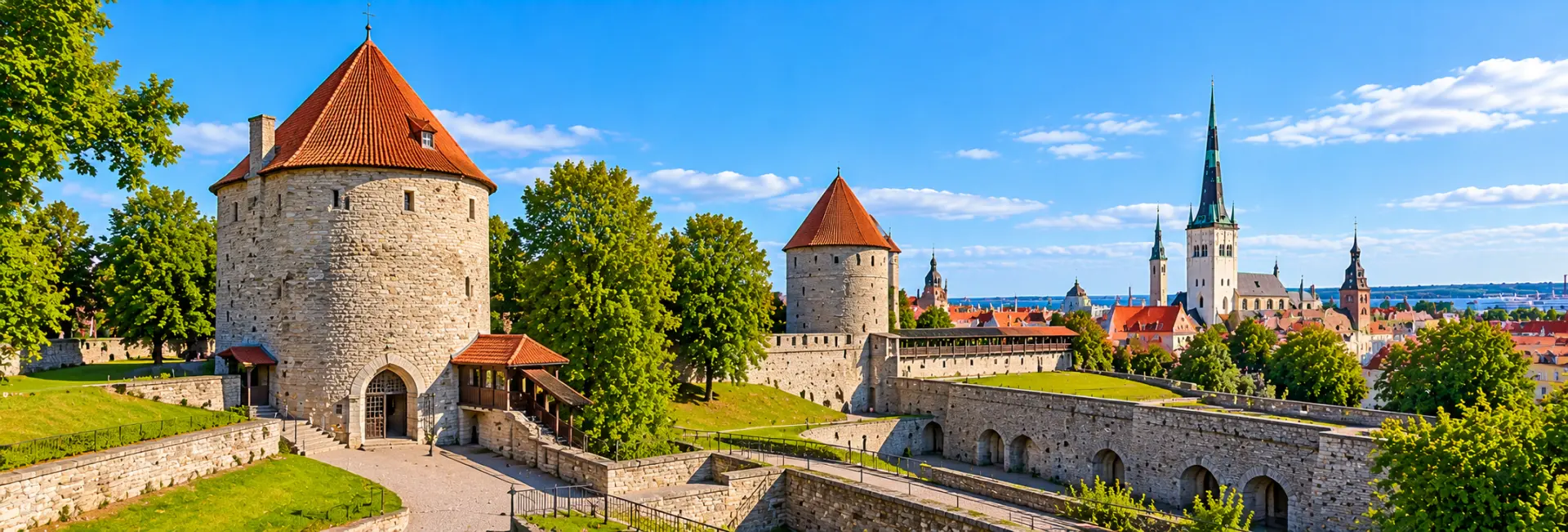
Kiek in de Kök is a squat, thick-walled artillery tower on the southwestern slope of Toompea hill, built in the 15th century to protect Tallinn from attack. Today it forms the heart of the Kiek in de Kök Fortifications Museum, a complex that links the tower to neighbouring medieval defences and a network of underground bastion passages.
The museum stretches for more than 500 metres along the old town wall and brings together four medieval towers, the tower exhibitions and the Bastion Tunnels. Together they tell the story of how Tallinn defended itself, from medieval sieges and early gunpowder weapons to the later age of earthen bastions and underground passages.
It is one of the most hands-on historical sites in the Old Town. Instead of simply admiring walls from the outside, visitors can climb inside the tower, follow exhibits floor by floor, and descend into cool stone passages that most travellers never see.
History
A Tower for the Guns
Work on the tower began in 1475, at a time when Tallinn was a prosperous member of the Hanseatic League and wanted stronger defences against the growing power of artillery. Its role was to house the main gun battery of Toompea, and its thick walls and many levels were designed to hold cannons and the people who operated them.
The Name
The name Kiek in de Kök comes from Low German and means roughly "peep into the kitchen". The story goes that guards in the tall tower could see down into the kitchens of the houses below. The name is first recorded in 1577, during the second siege of Tallinn, and it later came to be used for similar towers in other places.
Sieges and Cannonballs
The tower proved its strength during the siege of 1577, when attackers fired on the town. Cannonballs from that event are still embedded in its outer walls, and they give the tower a visible link with the violence of the period. The building continued to serve as a military site for centuries.
The Bastion Passages
In the late 17th and early 18th centuries, during the period of Swedish rule, Tallinn's defences were modernised with large earthen bastions. Passages were built inside these bastions so that soldiers and supplies could move safely under cover. When the age of the bastions ended, the tunnels were left behind and put to other uses.
From Shelter to Museum
Over time the tunnels served as storage, as shelter during wartime bombing and, in the early 1990s, as makeshift housing for people who lost their homes after the collapse of the Soviet Union. In the 2000s they were cleaned and restored, and they opened to visitors as a museum in 2004. The tower and passages are now part of the Tallinn City Museum network.
Architecture & Design
The Tower
Kiek in de Kök is a round tower about 38 metres high, with walls up to four metres thick. This extraordinary thickness allowed it to resist cannon fire and to carry heavy guns on its upper floors. From the outside it looks stocky and powerful, with narrow openings and a pointed roof that contrasts with the more graceful spires elsewhere in the Old Town.
Floors and Gun Positions
Inside, several levels are connected by stairs and heavy stone walls. The thick masonry and the gun openings reveal how the tower was used to cover the approaches to Toompea, and each level now holds exhibits that explain a different part of the story.
The Neighbouring Towers
The museum also includes the Maiden Tower, which is the only rectangular tower in Tallinn's walls, as well as the Marstal Tower and the Gate Tower. Walking between them gives a clear sense of how towers, walls and gates worked together as a defensive system.
The Tunnels
The Bastion Tunnels are built of stone and brick in narrow, low-ceilinged corridors that run beneath the earthen ramparts. The temperature stays cool all year round, and the passages have a quiet, enclosed atmosphere that is very different from the tower above.
Recognition / Status
Kiek in de Kök and the surrounding walls are part of the Historic Centre (Old Town) of Tallinn, inscribed on the UNESCO World Heritage List in 1997. The site is one of the best-preserved examples of the medieval town's military architecture.
It also serves as an important part of Tallinn's museum offer:
- The tower is one of the best-preserved medieval artillery towers in the region.
- The bastion passages give rare public access to an underground fortification system that was long closed off.
- The complex is a branch of the Tallinn City Museum and is included in the city's museum passes.
- The museum works with the wider heritage of the Old Town to present how the city survived sieges, plagues and political change.
What to See There
The Tower Exhibition
The exhibition in Kiek in de Kök gives an in-depth overview of Tallinn's defensive history. It covers the growth of the town, its fortifications and weapons, key military campaigns, plague years and even the crime and punishment of the medieval period. The display uses artefacts and information panels to bring the stories to life.
Cannons and Weapons
Medieval and early modern weapons help explain how defence changed once gunpowder arrived. Seeing the scale of the guns and the heavy walls built to resist them makes it easier to understand why towers like this were so thick.
The Carved Stone Museum
Within the underground passages sits the Carved Stone Museum, a collection of decorated portals, pillars, reliefs and other stone fragments from the 16th to the 19th centuries. These pieces come from buildings around the Old Town, and the cool tunnel setting suits their weathered surfaces well.
Stories of Shelter
Exhibits in the passages tell the stories of people who took refuge underground at different moments in history, from soldiers and townspeople to those who sought safety during air raids. These human stories add a memorable layer to the military history.
The Ground Beneath Toompea
Part of the appeal is simply understanding how the hill was shaped by its defences. Standing inside the tower and then walking into the tunnels shows how the same slope was fortified above ground and below it, with each era adding its own layer of stone, earth and engineering.
Views of the Surroundings
Windows and openings in the tower offer glimpses of the Old Town, the cathedral domes on Toompea and the surrounding walls, giving a sense of the defender's viewpoint.
Ways to Experience It
- Buy a general admission ticket to visit the whole complex, including the four towers and the bastion passages.
- Join a guided Bastion Tunnels tour, which is generally offered in several languages and lasts about an hour.
- Use the audio guide to explore the tower exhibitions at your own pace.
- Combine the visit with a walk along the nearby town wall and the Danish King's Garden for a fuller picture of the defences.
- Check the schedule for events and special programmes that take place in the tower and tunnels.
- Use a city museum card if you plan to visit several Tallinn museums, as it may include admission.
Best Time to Visit
All Year Round
Since much of the experience is indoors and underground, the museum is a good choice in any season. The tunnels stay at a steady cool temperature, so they can feel refreshing in summer and surprisingly sheltered in winter.
Summer
The warmer months bring longer opening hours and the best chance to enjoy the surrounding walls and gardens. They are also the busiest period, so book guided tours in advance or visit early in the day.
Rainy or Cold Days
This is an excellent rainy-day option. A visit to the tower and tunnels can easily fill a couple of hours, with plenty to see away from the weather.
Winter
Fewer tourists mean a calmer experience and easier access to tour places. Allow extra time to walk the slippery cobbles on Toompea.
Visitor Tips
- Dress warmly for the tunnels, since the temperature stays around 7 to 10 degrees Celsius throughout the year.
- Wear sturdy shoes, because the passages include steep stairs and uneven stone surfaces.
- Guided tour groups are small, so booking ahead is wise, especially in peak season.
- The tunnel tour is generally not recommended for children under seven.
- Check the official museum website for current opening days, as the museum is usually closed on Mondays and on public holidays.
- Confirm current ticket prices and combined-ticket options before you go, since these change over time.
- Allow between one and a half and two and a half hours if you want to see both the tower and the tunnels.
- The narrow stairs and low passages may be difficult for visitors with limited mobility or claustrophobia.
Nearby Attractions
- The Danish King's Garden lies just below the tower, with a quiet green space beside the medieval walls.
- Alexander Nevsky Cathedral and Toompea Castle are a short walk uphill and make a natural pairing.
- The Dome Church (St. Mary's Cathedral) is nearby on Toompea and holds centuries of coats of arms.
- Kohtuotsa and Patkuli viewing platforms offer panoramic views over the Lower Town.
- Town Hall Square and the Lower Town can be reached by walking down Lühike jalg or Pikk jalg.
- Further sections of the Tallinn town wall and towers extend along the edge of the Old Town.
FAQs about visiting Kiek in de Kök and the Bastion Tunnels
What is Kiek in de Kök? +
It is a 15th-century artillery tower on Toompea hill that now houses a museum about Tallinn's defences. The name is Low German for "peep into the kitchen", a reference to how guards could see into nearby houses.
What are the Bastion Tunnels? +
They are underground passages built inside the earthen bastions of the late 17th and early 18th centuries. Today they host a guided tour, exhibitions and the Carved Stone Museum.
Do I need to book the tunnel tour? +
Tours run in small groups, so booking ahead is a good idea, especially in summer. Check the museum's website for current tour times and languages.
How long does a visit take? +
Allow about one and a half to two and a half hours for the tower and tunnel tour together. The tunnel tour alone lasts around an hour.
Is it cold in the tunnels? +
Yes, the temperature stays between about 7 and 10 degrees Celsius all year, so bring a warm layer even in summer.
Is the museum suitable for children? +
The tower is generally fine for children, but the Bastion Tunnels tour is not recommended for children under seven because of the stairs and enclosed spaces.
Is Kiek in de Kök accessible for people with limited mobility? +
The tower and tunnels involve steep stairs and narrow passages, so access can be difficult. Contact the museum before visiting to ask about arrangements for your needs.
How much does it cost to visit? +
Prices vary by ticket type and may include combined options for the towers and tunnels. Check the official site for current fees and any museum card discounts.
