
Table of Contents
Overview
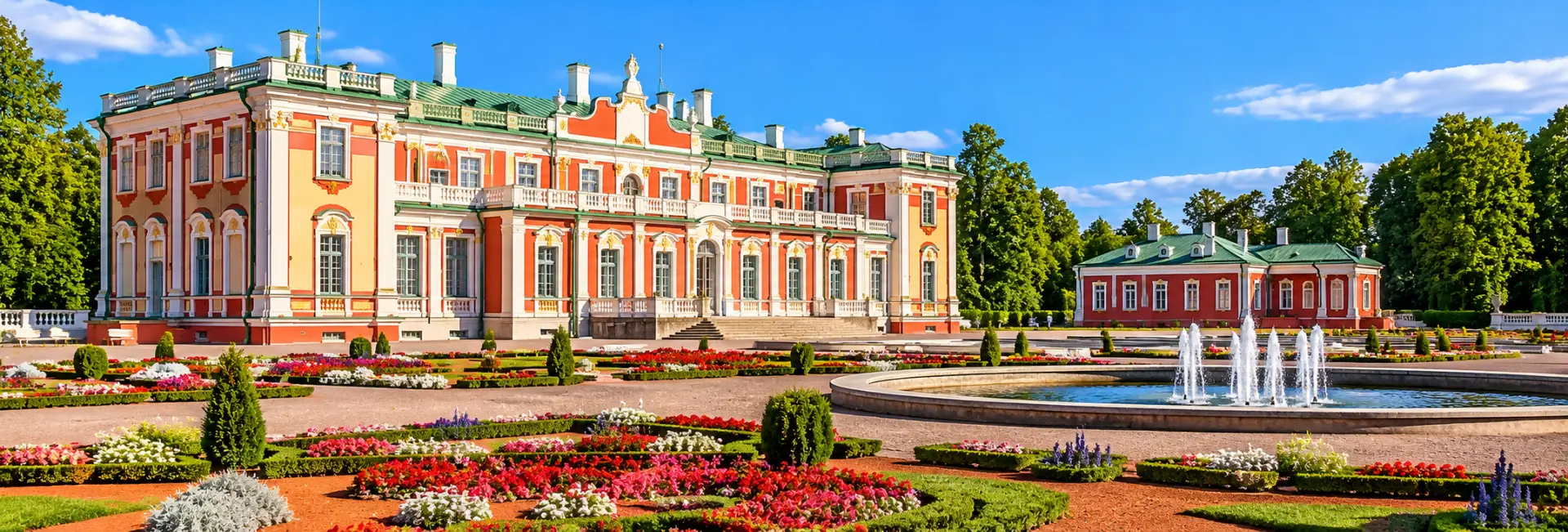
Kadriorg Palace is a pale-yellow Baroque palace in the park-filled district of Kadriorg, a short distance east of Tallinn's Old Town. It was commissioned by the Russian tsar Peter the Great in 1718 as a summer residence, and it remains one of the finest examples of Baroque architecture in Estonia and across northern Europe.
Today the palace serves a different purpose from the one its builder imagined. It houses the Kadriorg Art Museum, a branch of the Art Museum of Estonia, displaying Western European and Russian art from the 16th to the 20th centuries. Visitors can walk through restored rooms and the richly decorated main hall while seeing paintings, sculpture and decorative art in the settings they suit best.
The palace is only part of the attraction. Its formal garden, the surrounding park and a cluster of smaller museums and monuments turn a visit into a relaxed half-day outing rather than a quick stop, which makes Kadriorg a natural counterpart to the medieval streets of the Old Town.
History
A Tsar's Summer Palace
Work began in 1718, while the Great Northern War between Russia and Sweden was still unresolved. Peter the Great had taken Tallinn, then known as Reval, and wanted a grand residence nearby that would show Russia's ambitions as a European power. He named the estate Katharinenthal, or Catherine's valley, in honour of his wife, and the Estonian name Kadriorg is a direct translation.
Design and Construction
The Italian architect Nicola Michetti drew up the palace plans, working in a Roman Baroque idiom that was rare in the Baltic region. Building continued into the 1720s under Gaetano Chiaveri and Mikhail Zemtsov, who adapted and completed the design after Michetti left Russia. The palace was conceived as a modest imperial retreat rather than a vast court complex, which gives it an elegant, human scale.
Decline and Reuse
After Peter's death in 1725, the Russian court rarely used the palace, and over time it fell into poor condition. By 1827, when Emperor Nicholas I visited Tallinn, the building was too dilapidated to host him overnight. Later in the 19th century and into the early 20th, parts of the palace and grounds were adapted for other uses, including exhibitions and administrative purposes.
From Palace to Museum
In the independent Estonia of the 1920s, the palace became home to the collections that grew into the Art Museum of Estonia. It served as the museum's main building again from 1946 to 1991. After extensive restoration, it reopened in 2000 as the Kadriorg Art Museum, now dedicated to foreign art, while Estonian art moved to the modern Kumu building in the nearby park.
Architecture & Notable Rooms
The Façade and Plan
The palace is built on a compact, balanced plan, with a central block, projecting wings and a gently rising roofline that softens its outline. Its warm colour, classical details and tall windows give it a feel closer to Italy than to the medieval buildings of the Old Town. The scale is intimate, and the building looks welcoming from across its garden.
The Great Hall
The most celebrated space is the Great Hall, a double-height room with an ornate ceiling, sculpted stucco and elaborate decoration that showcases the Baroque taste of the period. It is considered one of the finest interiors of its era in the region, and it is also used for concerts and cultural events because of its excellent acoustics.
Restored Rooms and Stoves
Elsewhere, restoration has brought back the character of the smaller rooms, including period details such as decorative tiled stoves. These reflect the fact that the palace was meant as a summer retreat, with design and finishes chosen for comfort and elegance rather than heavy fortification.
The Museum Galleries
The art collections are arranged to suit the architecture. Paintings, prints, porcelain and sculpture from Western Europe and Russia fill the galleries, giving visitors a chance to study centuries of artistic change inside a Baroque building. Temporary exhibitions often bring in works from leading museums and private collections.
Grounds & Gardens
The Formal Garden
Behind the palace lies a symmetrical garden of clipped hedges, flowerbeds and fountains, laid out in the French manner associated with Versailles. In summer the beds are planted with seasonal flowers and the paths are lined with benches, making this one of the most photogenic corners of the city.
Kadriorg Park
The wider park grew from the same 1718 plan and now covers a large green area of tree-lined avenues, ponds and meadows. It is free to enter and popular with locals who jog, picnic or walk their dogs. Following the paths will lead you past several museums, monuments and quiet corners that are easy to miss on a quick visit.
Swan Pond and Japanese Garden
The Swan Pond is a calm, picturesque spot for a stroll, with a small island at its centre. A modern Japanese garden, created in the park in the early 2010s, adds a contemplative contrast to the Baroque geometry of the palace garden.
Cultural Significance & Royal Ties
Kadriorg Palace is a reminder of the era when Estonia sat at the edge of competing empires, and it shows how Russian rulers sought to impose their own image on a conquered Baltic port. At the same time, the building and park have become a treasured part of Estonian cultural life, hosting art, concerts and public events.
The nearby presidential residence, housed in a former administrative building in the park, adds another layer of meaning. The area that began as an imperial retreat is now closely tied to the modern Estonian state, with the park a favourite setting for official ceremonies and everyday outings alike.
For many Tallinn residents the palace and park are an everyday part of life rather than a monument to visit once. Families come for weekend walks, couples for photographs and art lovers for the changing exhibitions, which keeps the old imperial setting busy with ordinary activity throughout the year.
The palace's survival and restoration also reflect changing attitudes toward heritage. A building that was once neglected is now celebrated as a showcase of European art and architecture, drawing both international visitors and local families.
Ways to Experience It
- Tour the museum galleries and the Great Hall to enjoy the paintings, sculpture and Baroque interiors.
- Walk through the formal garden and photograph the palace from the central axis, where the symmetry is most striking.
- Take a longer stroll through Kadriorg Park, circling the Swan Pond and visiting the Japanese garden.
- Attend a concert or event in the Great Hall if one is scheduled, as the acoustics are excellent.
- Combine the palace with other park museums, including Kumu and the Mikkel Museum, for a full day of art.
- Pause at a café near the park for a coffee break before heading back to the city.
Best Time to Visit
Summer
From late May to August the gardens are at their best, with full flowerbeds, working fountains and long daylight hours. This is also when the park is busiest, so arrive early in the day for a calmer atmosphere.
Spring and Autumn
Spring brings blossom and fresh green leaves, while autumn gives the park's trees golden and red tones that suit the soft colour of the palace. Both seasons are comfortable for walking and tend to be quieter than midsummer.
Winter
The museum remains a good choice on cold or snowy days, since you can spend a couple of hours indoors. Snow on the garden and park paths has its own quiet beauty, though paths can be slippery.
Day of the Week
The museum usually stays open later one evening a week, which can be a pleasant time to visit. Opening days vary by season, so check the schedule before travelling.
Visitor Tips
- Entry to the park and gardens is free, but the museum charges admission, so check current prices and any combined tickets for the park museums.
- Opening days and hours change with the season and on public holidays, so confirm them on the official museum website.
- Allow about an hour for the palace itself and a further hour or more if you want to explore the park.
- The museum is described as wheelchair accessible, but historic floors and garden paths can be uneven, so ask staff about specific needs.
- Photography rules can vary between galleries and temporary exhibitions, so look for signs or ask at the desk.
- The palace can be reached by a pleasant walk from the Old Town, though trams and buses also stop close to the park entrance.
- Wear comfortable shoes, as gravel paths and cobbles are common around the gardens.
- Bring a light layer in spring and autumn, when evenings can be cool near the sea.
Nearby Attractions
- Kumu Art Museum, in the same park, shows Estonian art from the 18th century to the present in a striking modern building.
- The Mikkel Museum, also in the park, displays a private collection of Western European and Asian art.
- Peter the Great's House, a small timber residence close by, shows the tsar's more modest lodging during his visits.
- The Swan Pond and the Japanese Garden make pleasant stops for a break from the museums.
- The presidential residence stands at the far side of the park and can be viewed from the outside.
- Tallinn Song Festival Grounds, a short walk away, host large music events and are an important symbol of Estonian culture.
FAQs about visiting Kadriorg Palace
What is Kadriorg Palace? +
It is a Baroque palace built for Peter the Great from 1718 as a summer residence. Today it houses the Kadriorg Art Museum, which displays Western European and Russian art from the 16th to the 20th centuries.
Who designed Kadriorg Palace? +
The Italian architect Nicola Michetti created the design, and the building was completed with the involvement of Gaetano Chiaveri and Mikhail Zemtsov. The result is a Roman-influenced Baroque palace that is rare in the Baltic region.
Is Kadriorg Palace free to enter? +
The park and gardens are free, but the museum inside the palace charges admission. Prices and discounts change, so check the museum's website for current details.
What are the opening hours? +
The museum is generally open most days with a later closing on Wednesday, but days and hours vary by season and holiday. Confirm the schedule on the official website before you go.
How long should I spend at Kadriorg Palace? +
Around an hour is enough for the palace and its galleries. If you want to explore the gardens and a couple of the park museums, allow half a day.
How do I get to Kadriorg Palace from the Old Town? +
You can walk in roughly half an hour, or take a tram or bus to a stop near the park entrance. The palace stands at the end of the main avenue on Weizenbergi Street.
Is the palace suitable for children and wheelchair users? +
Children usually enjoy the gardens and ponds, and the museum is described as wheelchair accessible. Some historic areas and garden paths are uneven, so contact the museum if you have specific access needs.
What else can I see nearby? +
Kumu Art Museum, the Mikkel Museum, Peter the Great's House, the Swan Pond and the Japanese Garden are all within the park or a short walk away.
