
Table of Contents
Overview
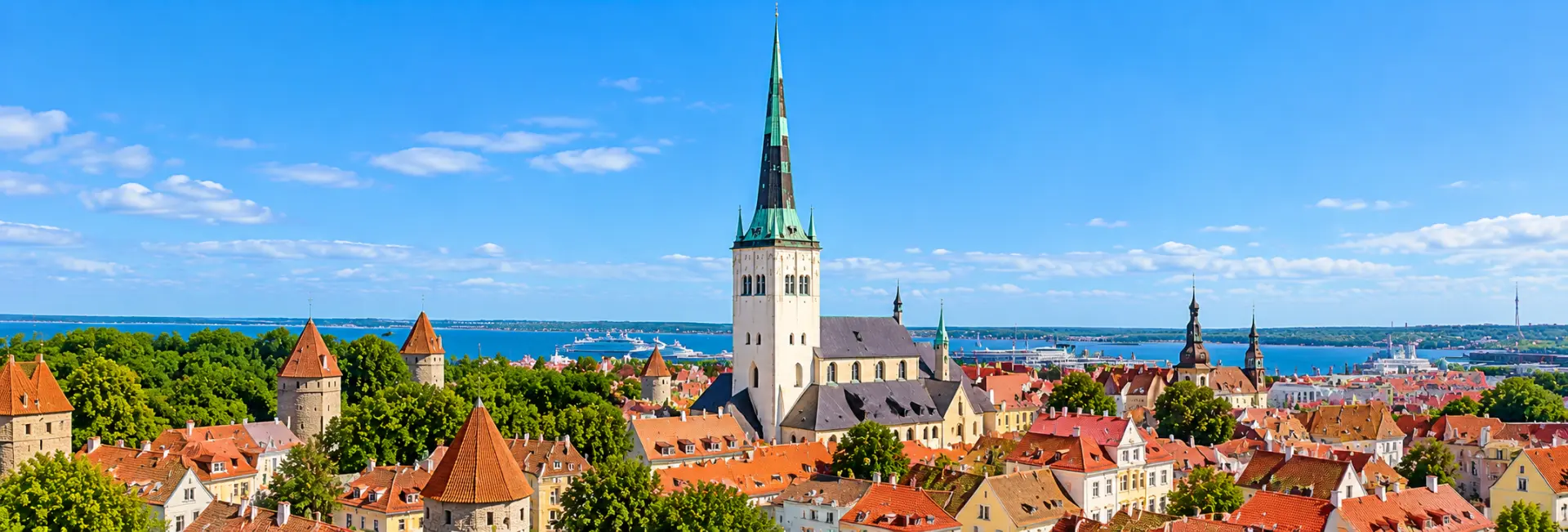
St. Olaf's Church, known in Estonian as Oleviste kirik, rises above the northern end of Tallinn's Old Town on Lai street, and its slender spire is one of the first things you notice on the city's skyline. It is the largest medieval building in Tallinn, a Gothic church that once drew sailors toward the harbour from far out at sea.
The church is dedicated to Olaf II Haraldsson, the Norwegian king later venerated as a saint and protector of seafarers. That connection to the sea is no accident, since for centuries Tallinn's wealth depended on ships, merchants and the trading routes of the Baltic.
Today St. Olaf's is both a living place of worship and one of the most rewarding viewpoints in the city. Visitors can step into the calm interior, then climb the tower to a platform that opens the whole of the Old Town beneath them, with its red roofs, spires and harbour beyond.
History
Early Origins
The church is believed to have begun as a place of worship for the Scandinavian community that lived in Tallinn before the Danes conquered the town in 1219. The first known written record dates from 1267, when the Danish queen handed the parish rights to the Cistercian convent of St. Michael. Little is known about the earliest building, but it was rebuilt and expanded several times over the following centuries.
The Medieval Giant
During the 14th and 15th centuries the church grew into the large Gothic structure seen today, with a tower that was extended as the town prospered. In the 16th century the spire is often said to have reached about 159 metres, which would have made it one of the tallest buildings in the world. Historians still debate the exact figures, and some argue the spire never reached such a height, but there is no doubt that it was a dominant landmark for seafarers.
Fire and Rebuilding
The tower proved vulnerable to lightning. It was struck many times over the centuries, and major fires broke out in 1625, 1820 and 1931. After each disaster the church was repaired, and the tower was rebuilt, though never again to its reputed medieval height. Its present height is about 124 metres. The interior was also extensively renovated in the early 19th century.
Reformation, Soviet Years and Today
Originally a Catholic church, St. Olaf's became Lutheran after the Reformation and passed to a Baptist congregation in 1950, which continues to use it today. From 1944 until 1991 the Soviet security services used the spire as a radio and observation point, so even in those years the height of the tower proved useful. Since independence the church has been maintained as an active place of worship and a visitor attraction.
Architecture & Design
A Gothic Hall Church
The church is built in the Gothic style, with a long, high nave, pointed arches and large windows that bring natural light into the interior. Its limestone walls and steep roof give the building an imposing, solid look that contrasts with the slim tower above.
The Spire
The spire is the church's defining feature. It rises in a sharp point above the tower, and the proportions are designed to draw the eye upward. Even now, at about 124 metres, it overshadows the other church towers in the Old Town and acts as a natural landmark for finding your way around.
The Interior
Inside, the atmosphere is restrained and quiet rather than ornate. Much of the original decoration was lost during the Reformation and later fires, so the interior reflects centuries of restoration, including a major renovation in the early 19th century. A few carved stones have survived, and the clear space around them makes it easy to appreciate the scale of the building.
Stonework Outside
On the outer wall at the back of the church sits the tombstone of Johann Ballivi, a 15th-century carving that shows a decaying figure surrounded by mourners. It is a striking example of the medieval fascination with mortality and is well worth walking around the building to find.
Cultural & Religious Significance
A Symbol of Tallinn
The silhouette of the spire appears on postcards, posters and the skyline view from the harbour, making St. Olaf's one of the best-known symbols of the city. Its height recalls the days when Tallinn was a rich Hanseatic port and a major crossing point between East and West.
A Living Congregation
The church continues to host regular services, a Sunday school and Bible courses, so it is part of ordinary religious life rather than a museum. Visitors are welcome, but the building belongs first to its community.
The Legend of the Builder
A popular local legend says that a mysterious stranger offered to build the church on the condition that the townspeople guess his name. In one version of the tale, he fell from the tower when his name was revealed, and a toad and a snake are said to have crawled from his body. The story is told by guides as a reminder of how medieval communities explained their grandest buildings.
Notable Features
The Viewing Platform
The observation platform sits about 60 metres above the ground and wraps around the spire. From here you can see the red tiled roofs of the Old Town, the green line of the town wall and the sweep of the harbour, which makes it one of the best places in Tallinn to understand the city's layout.
The Tower's Lightning History
The tower has been struck by lightning around a dozen times, and the repeated fires are part of the church's story. Stories of rebuilding and survival add a dramatic edge to the visit.
Quiet Interior
The interior is a calm place to sit for a few minutes away from the crowds of the Old Town. The lighting, the simple lines of the nave and the sense of height make it feel spacious even when other visitors are present.
Views of the Church Itself
The church is best seen from a distance as well. From the harbour, from Toompea and from the nearby streets of the Lower Town the spire stands out strongly, and in the evening it is lit so that it glows above the city.
The Tower Climb
The climb to the platform is the main reason many visitors come. It is a physical effort, but it is quite achievable for most people who are reasonably fit and take their time.
- The platform is reached by a narrow wooden spiral staircase of about 232 steps, which can feel tight and steep in places.
- The staircase is used by people going both up and down, so be ready to pause and let others pass.
- The platform is outside and exposed, so wind and weather affect the experience, especially in colder months.
- A separate ticket is needed for the tower, while entering the church itself has generally been free.
- Tower access is seasonal, and restoration work has at times closed the church and platform, so confirm the current status before you go.
- Plan on roughly one to two hours if you want to see both the interior and the view.
Visiting Etiquette & Tips
- Remember that this is an active church, so speak quietly and avoid walking through areas where a service or prayer is taking place.
- Dress sensibly, with shoulders and knees covered, as a sign of respect for the congregation.
- Check the opening hours and tower availability on the official website, since they change with the season and during restoration work.
- Bring a light jacket for the platform, which is often windier and cooler than the street below.
- Wear shoes with good grip, because the tower steps are narrow and the cobbles around the church can be slippery in wet weather.
- The climb is not suitable for people with limited mobility or a fear of heights, and the narrow stairs make it difficult with large bags or pushchairs.
- Go early or late in the day for the quietest experience and the best light for photographs.
- Keep your phone or camera secured with a strap or pocket on the platform, where wind and tight spaces make it easy to drop.
Best Time to Visit
Spring to Autumn
Because the observation platform is open only in the warmer part of the year, spring through early autumn is the best period for a full visit. Summer evenings in particular offer long daylight and soft light over the rooftops.
Clear Days
Choose a clear day if possible, since haze or low cloud can hide the harbour and the horizon. Mornings often have the best visibility, and sunset can be spectacular from above.
Winter
Outside the tower season the church can still be a calm stop, and its lit spire makes it a handsome sight against the winter sky. Even so, the main attraction of the climb is closed during this period.
Avoiding Crowds
Cruise ship days can bring crowds to the narrow stairs, so arriving at opening time is wise. Late afternoon is often quieter once the busiest tour groups have moved on.
Nearby Attractions
- The Great Coast Gate and Fat Margaret tower, a short walk away, form part of the medieval defences and house a maritime museum.
- Pikk street, the old merchants' thoroughfare, is lined with guild halls and merchant houses, including the House of the Blackheads.
- The Church of the Holy Spirit and Town Hall Square are within easy walking distance in the heart of the Lower Town.
- Kiek in de Kök and the bastion tunnels give a different view of the town's fortifications.
- Toompea hill, with Alexander Nevsky Cathedral and Toompea Castle, can be reached by a steep walk uphill.
- The harbour area offers a pleasant waterfront walk and the starting point for ferries to Helsinki.
FAQs about visiting St. Olaf's Church
What is St. Olaf's Church known for? +
It is known for its tall Gothic spire and its panoramic viewing platform. The church is the largest medieval building in Tallinn, and its tower was once claimed to be among the tallest structures in the world.
How tall is the spire? +
The spire is about 124 metres high today. In the Middle Ages it is said to have reached around 159 metres, although historians disagree about the exact figures.
Can you climb St. Olaf's Church tower? +
Yes, when the tower is open. A narrow spiral staircase of around 232 steps leads to a viewing platform about 60 metres above the ground. Access is seasonal and can be interrupted by restoration work, so check the current status.
Is it free to enter St. Olaf's Church? +
The church itself has generally been free to enter, but the tower requires a separate ticket. Prices and arrangements change, so confirm them on the official website.
When is the tower open? +
The tower is typically open daily during the warmer months, roughly from spring to autumn. Hours can be extended in high summer, so check ahead.
How long does a visit take? +
Allow about one to two hours if you want to see the interior and climb the tower. A quick look at the exterior takes only a few minutes.
Is St. Olaf's Church an active church? +
Yes, it is used by a Baptist congregation and hosts regular services. Visitors are welcome, but should be quiet and respectful, especially during worship.
Is the tower suitable for children or people with mobility problems? +
The staircase is steep, narrow and long, so it can be tiring for young children and is not suitable for visitors with limited mobility. You can still enjoy the church's interior and exterior without climbing.
