
Table of Contents
Overview
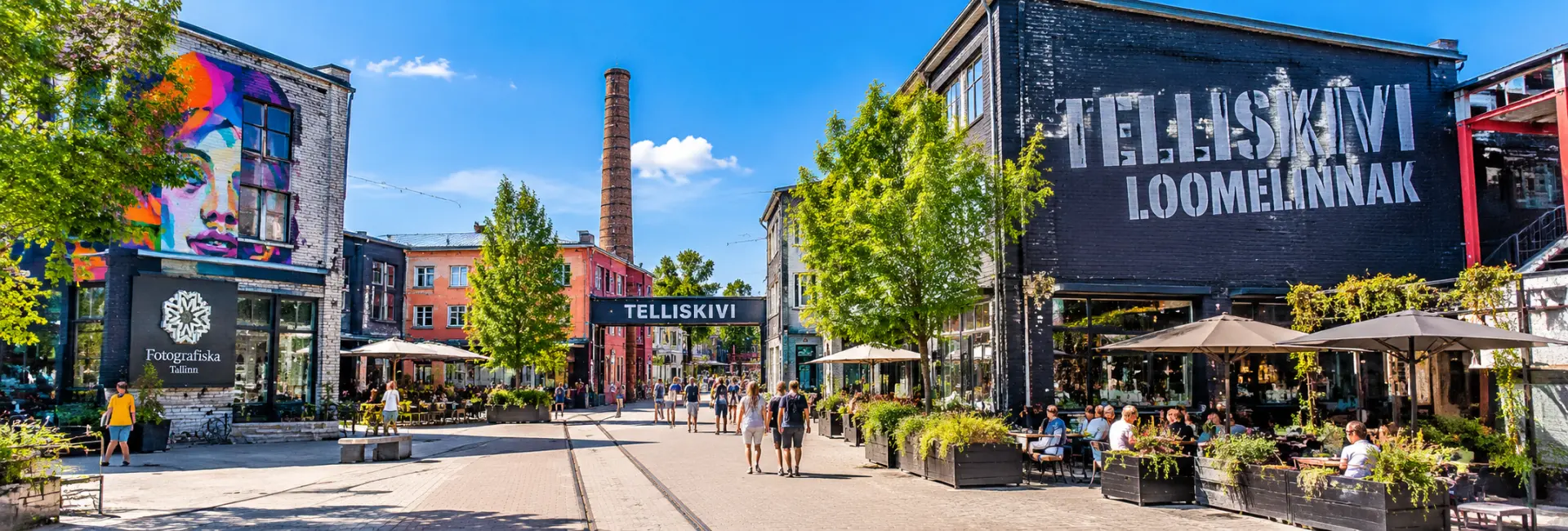
Telliskivi Creative City, known in Estonian as Telliskivi Loomelinnak, is a cluster of former factory buildings in northern Tallinn that now serves as the city's liveliest creative district. It sits where the Kalamaja and Pelgulinn neighbourhoods meet, only a short walk from the Baltic Station, and it has become a favourite stop for coffee, design shopping, live culture and street art.
The complex is made up of 10 buildings with more than 25,000 square metres of space, shared by hundreds of small companies, studios, shops, galleries, theatres and restaurants. The look is deliberately unpolished. Each tenant decorates its own corner as it sees fit, so brick walls, murals, mismatched furniture and industrial leftovers all sit side by side.
It is the largest creative centre in Estonia, yet it still feels like a neighbourhood rather than a sight to be ticked off. Many people arrive for a single exhibition or a Saturday market and end up staying for hours, drifting between courtyards, cafes and workshops.
History
Railway Roots
Heavy industry reached this part of Tallinn in the late 1860s, when the main workshops of the Baltic Railway were established on Telliskivi street during the Russian Empire. The factory grew into a major employer, and the surrounding streets, followed by much of the Pelgulinn district, were built up to house the people who worked there.
Through the Soviet period the site remained an industrial compound, associated with locomotives and electrical equipment such as transformers. After Estonia regained independence the property was privatised, and the old plant gradually fell out of use. By the start of the 21st century it was a walled-off block of aging buildings that ordinary Tallinn residents had little reason to enter.
From Factory Yard to Creative Hub
Modest renovation of the former factory began in 2007. The first long-term tenant arrived in 2009, when the headquarters of the Tallinn Black Nights Film Festival moved in. A weekly flea market and a skate park known as Haigla, meaning "hospital", followed soon afterwards, and bands started rehearsing in what became known as the Band Building.
The restaurant F-hoone opened in 2010 and gave the growing community a place to eat, which helped turn the yard into somewhere people wanted to linger. In 2019 the international photography museum Fotografiska Tallinn opened its doors on the premises, adding a major cultural anchor to the mix.
A Self-Funded Creative Community
Telliskivi is run as a privately owned and privately financed project. According to its operators, it has never depended on state, city or European Union subsidies, and profits are put back into the community rather than paid out. Young or fragile projects are offered shelter and reduced rent, which is a large part of why so many small creative businesses have taken root here.
Today the complex hosts more than 300 creative companies and non-profit organisations, with around 2,000 people working on site. The mix includes designers, architects, artists, start-ups, film and music professionals, and many independent shops.
The model has attracted attention beyond Estonia. Andres Sevtsuk, an associate professor of urban studies at MIT, has described it as one of the most interesting examples of commercial clustering he has seen, sitting somewhere between a planned shopping centre and a scattering of independent high-street businesses.
Industrial Architecture and Street Art
A Factory Aesthetic, Kept On Purpose
The buildings were never meant to be pretty, and the creative city has chosen to salvage them rather than start over. Old brick facades, high windows, loading yards and cobbled lanes remain, while tenants have added glass, colour and clever interiors. The result is a patchwork of styles, with sleek studios next to rough workshops.
Street Art Everywhere
More than twenty street art works can be found around the complex, covering gable ends, courtyards and service buildings in bold colour. The Telliskivi Outdoor Gallery is accessible around the clock, so you can browse the murals at any hour without a ticket.
Smaller outdoor exhibition spaces, including a gallery focused on socially important themes, add changing displays to the permanent murals. Guided street art walks that explore who painted what, and why, can also be booked in advance for those who want the stories behind the walls.
Key Venues and Areas
The Indie Shopping Streets
The lanes between the main buildings hold small boutiques selling Estonian fashion, homeware, ceramics, jewellery, plants and gifts. Many of the makers are local, so it is a good place to find something that is not a standard souvenir.
Food and Drink
Restaurants, bakeries, cafes and bars are spread across the complex, from relaxed brunch spots to craft beer venues and the LaMuu ice cream factory. F-hoone, the original restaurant of the district, remains a well-known address, and many places have terraces that fill up in good weather.
Photography and Galleries
Fotografiska Tallinn presents rotating exhibitions by leading photographers and has a cafe and restaurant that can be visited without a museum ticket. The Juhan Kuus Documentary Photo Centre and several smaller galleries, including Vaal Gallery, add to the visual art on offer.
Theatre, Dance and Live Music
Performance has been part of the identity of the place for years. Von Krahl Theater, the contemporary dance platform Sõltumatu Tantsu Lava and the venue Erinevate Tubade Klubi all stage events, and the Haigla skate park keeps a more active crowd busy.
Events and Markets
More than 800 cultural events take place here every year, ranging from concerts, stand-up and experimental theatre to exhibitions and community gatherings. The calendar includes the Ma ei saa aru art festival and appearances by well-known Estonian festivals such as Jazzkaar and Tallinn Music Week.
The Saturday Flea Market
The weekly Saturday flea market is one of the best known features of the district and has been part of it since the earliest days. Stalls offer vintage clothing, books, vinyl, antiques, design pieces, handmade goods and food from small producers, and the courtyards fill quickly once it gets going.
Seasonal Highlights
In the run-up to Christmas, the shops and the Green Hall host a festive market where independent businesses invite guest makers to join them. Summer brings terrace life, outdoor events and long evenings in the courtyards.
Ways to Experience It
The simplest way to enjoy Telliskivi is to wander without a plan. Enter through one of the gateways from Telliskivi street, follow the lanes between buildings, and let the murals, shop windows and open doors pull you along.
- Browse the indie shops and pick up locally made design and gifts.
- Visit Fotografiska Tallinn for a photography exhibition, then stay for coffee or a meal.
- Take a guided street art walk to learn about the artists and the factory history.
- Catch a performance, concert or dance show in one of the on-site venues.
- Spend a Saturday morning at the flea market, then have lunch in the courtyards.
- Hire or park a bike and explore the wider Kalamaja area, with a bike shop on site.
Most people allow between one and a half and three hours for a relaxed visit. Add time if you plan to eat, see an exhibition or attend an event.
Best Time to Visit
Telliskivi works all year, but the mood changes with the day and season. Saturday is the liveliest day because of the flea market, though it is also the busiest and noisiest. If you prefer a calmer wander and a better chance of a table at a popular restaurant, a weekday is the more relaxed choice.
Late spring through early autumn is ideal for the terraces, courtyard events and murals in daylight. Summer is the peak season for outdoor life. In winter the atmosphere moves indoors, with cosy cafes and galleries, and the December market adds a festive reason to go.
Evenings suit visitors who want music, theatre or a drink. The outdoor areas stay open at all hours, but individual venues keep their own schedules, so check opening times if you have a particular place in mind.
Visitor Tips
- Entering the complex and the outdoor gallery is free. You only pay for specific things such as museum tickets, performances, food and shopping.
- There are no single opening hours. Each shop, restaurant and gallery sets its own, and the shopping streets are often quieter on weekday mornings, so confirm times for the places you want to see.
- Driving is possible, but parking is paid. There is some street parking in the central zone and three paid parking areas behind the complex. Public transport is usually easier.
- Wheelchair ramps are available at both entrances to the Indie Shopping Street, and the restaurants and two main theatres are wheelchair friendly. Accessible parking is next to Von Krahl Theater and in front of the shopping street.
- If you cycle, lock your bike securely.
- Check the official event calendar before you go, as concerts, festivals and markets can change what is open and how crowded the courtyards will be.
- Prices, exhibitions and opening hours change often, so confirm current details with the venues themselves.
Nearby Attractions
Telliskivi is easy to combine with the rest of central Tallinn. The Baltic Station, Balti Jaam, is only about three minutes away on foot, and beside it is the Balti Jaama Turg market, a large traditional market with produce, street food and vintage finds. It makes an interesting contrast with the more designed atmosphere of the creative city.
The wooden houses and relaxed streets of Kalamaja are right next door and are well suited to a slow stroll after your visit. Tallinn Old Town is roughly a 10 to 15 minute walk away, so the creative district fits neatly into a day that also takes in the medieval centre.
FAQs about visiting Telliskivi Creative City
What is Telliskivi Creative City? +
It is Estonia's largest creative centre, set in the former Baltic Railway factory complex in northern Tallinn. Ten buildings hold shops, galleries, theatres, restaurants, studios and offices, along with plenty of street art.
Is Telliskivi Creative City free to visit? +
Yes, walking around the complex and seeing the outdoor gallery costs nothing. You pay only for museum entry, performances, food and shopping.
How long should I spend there? +
Plan on about one and a half to three hours for a relaxed visit. Allow longer if you want a meal, a visit to Fotografiska or a show.
When is the flea market? +
It runs every Saturday during the day. Exact hours and seasonal changes are best confirmed through the official Telliskivi website before you go.
How do I get to Telliskivi Creative City? +
It is about a three-minute walk from the Baltic Station, and the Telliskivi tram stop on lines 1 and 2 is around 200 metres away. Walking from Old Town takes roughly 10 to 15 minutes, and paid parking is available if you drive.
When is the best time to visit? +
Saturdays are the liveliest thanks to the flea market, while weekdays are calmer. Summer is great for terraces and outdoor events, and December adds a Christmas market.
Is it suitable for families and wheelchair users? +
Yes for most visitors. Families will find kid-friendly cafes, open courtyards and the Saturday market, and there are ramps at the Indie Shopping Street entrances, accessible parking and wheelchair-friendly restaurants and theatres.
What is there to do in the evening? +
Many bars and restaurants stay open into the evening, and the theatres and music venues host concerts, dance and stage shows. The outdoor gallery and murals are accessible at any time.
What else can I combine with a visit? +
Pair it with the Balti Jaama Turg market, the Kalamaja neighbourhood and Tallinn Old Town, all within a short walk.
