
Table of Contents
Overview
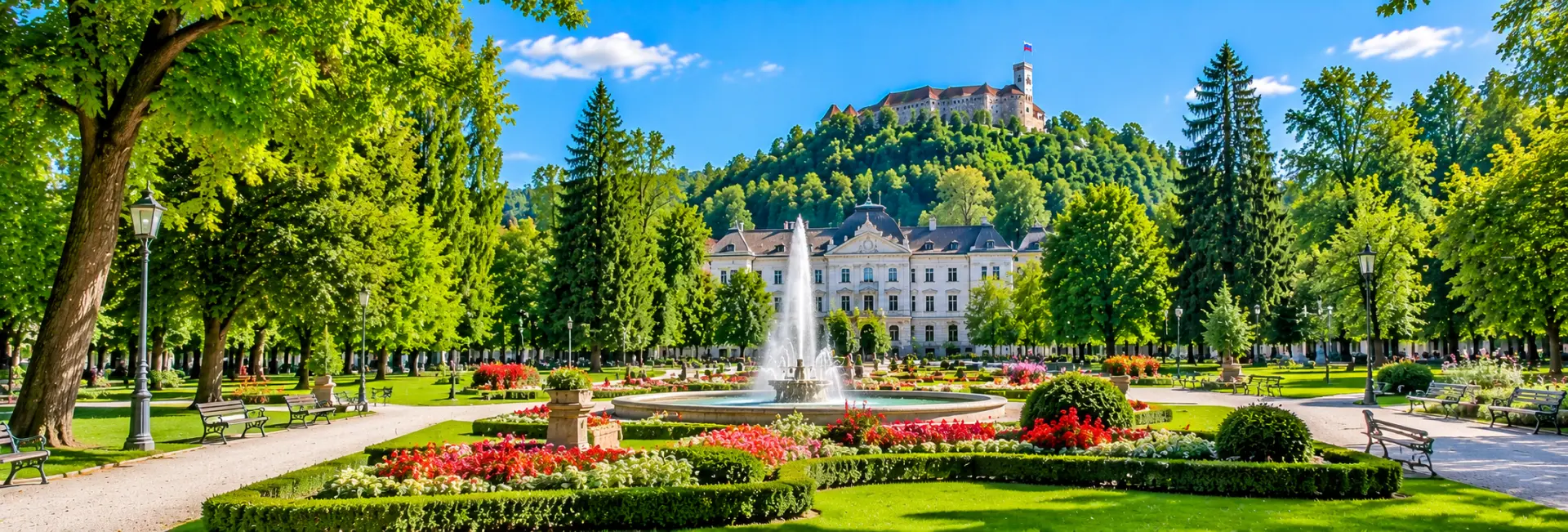
Tivoli Park is the largest park in Ljubljana and the place where much of the city goes to breathe. It begins just beyond the busy centre and reaches toward the wooded slopes of Rožnik hill, so a ten-minute walk from the old town can swap traffic and shop windows for avenues of tall trees, sculptures, fountains and open lawns.
The park is more than a stretch of grass. It holds two historic mansions, a pond with a rose garden and a tropical greenhouse beside it, art installations, play areas, sports venues and a network of paths that lead into forest. Joggers, cyclists, families, students with books and visitors with a camera all share the same walkways, which gives Tivoli the relaxed, lived-in feel of a true city park.
Its character comes from layers of history. French planners laid the foundations in the early nineteenth century, the architect Jože Plečnik shaped its grandest axis in the twentieth, and generations of Ljubljana residents have added their own touches since. The result is a green space that rewards both a quick stroll and a full day of exploring.
History
A French Plan for a Capital
Tivoli took shape in 1813, when Ljubljana was the capital of the Illyrian Provinces under French rule. The engineer Jean Blanchard joined together the grounds of two existing estates, the one around today's Tivoli Mansion and the one around Cekin Mansion, and connected them to the town with tree-lined paths. It was an early example of setting land aside as a public promenade for ordinary residents.
How Tivoli Got Its Name
The name arrived later, in the nineteenth century. In 1835 a local society opened a summer pleasure ground with a pub and cafe beside the old manor, and it was then that the manor acquired the name Tivoli. The label later spread to the whole park.
The mansion itself has a much older story. A fortified residence stood on the site in the Middle Ages, the Jesuits built the present house in the early seventeenth century, and later it served as a summer retreat for the bishop of Ljubljana. In 1852 the emperor gave it to Field Marshal Radetzky, who renovated the surroundings and opened the park to the public.
Plečnik Reshapes the Park
Between 1921 and 1939 Plečnik reworked large parts of Tivoli. His most lasting contribution was the wide central promenade that links the park to the heart of the city. The pond, dug in 1880, and a municipal tree nursery established in 1894 had already given the park practical roots, and Plečnik's design added the formal backbone that visitors walk along today.
Recognition / Status
Tivoli is protected on several levels, which reflects how much it matters to Ljubljana's identity and to the wider landscape around the city.
- Since 1984 the park has been protected as part of the Tivoli, Rožnik and Šiška Hill landscape park, a protected area of roughly 459 hectares that links the manicured city park with forested hills.
- Several features inside the park are recognized as cultural monuments of national importance, including the Plečnik promenade, Cekin Mansion, the Triangular Park and the site of the summer theatre.
- Tivoli Mansion and its grounds are protected as a historic monument and sit at the heart of the park's cultural life.
- The wider protected area is valued for its biodiversity, with forest making up about three quarters of the landscape and grassland covering most of the rest.
This combination of designed landscape and wild green space is rare in a European capital, and it explains why the park is often described as the green lungs of the city.
Design and the Jakopič Promenade
A Straight Line Through the City
The Jakopič Promenade, named after the Slovenian painter Rihard Jakopič, is the park's defining feature. It runs through Tivoli as a broad, straight avenue and forms part of a long visual axis that stretches from Tivoli Mansion down Cankar and Čop streets to Prešeren Square, across the Triple Bridge and up to Ljubljana Castle. Standing at either end gives a sense of how carefully the city was composed.
Trees, Lamps and Light
Plečnik lined the promenade with rows of trees and gave it a measured, classical rhythm. Elegant lampposts of his design add to the formal mood, while the sheer width of the path invites slow walking rather than hurried commuting. The promenade is shaded in summer and golden in autumn, so it changes character with the seasons.
An Open-Air Gallery
The promenade doubles as one of the city's most popular outdoor exhibition spaces. Large-format photographs are displayed along its length throughout the year, and themes change regularly, so a repeat visit often brings something new. The free exhibitions turn an ordinary walk into a visual journey, and they draw people who might not otherwise visit a gallery.
At the promenade's far end, a fountain and a stairway lead up to the mansion, completing the ceremonial feel of the route.
Key Areas and Highlights
Tivoli Mansion and the Tongueless Dogs
Tivoli Mansion stands at the end of the promenade and is the oldest building in the park. Today it houses the International Centre of Graphic Arts, which runs exhibitions, a printmaking studio and workshops, and hosts the long-running Biennial of Graphic Arts, first held in 1955. In front of the building, four cast-iron dogs guard the staircase. They have no tongues, which has inspired a dramatic legend about their sculptor's regret. The story is false, but locals still enjoy telling it.
Cekin Mansion
On the northern edge of the park, Cekin Mansion is an elegant Baroque house built in 1720. Since 1951 it has been home to the Museum of Contemporary History of Slovenia, which explores the country's twentieth-century story through exhibitions and collections. The building is a useful stop for anyone who wants to pair a green escape with some history.
Tivoli Pond, Greenhouse and Rose Garden
At the south-eastern end of the park, the rectangular Tivoli Pond is a calm spot for sitting and watching the light on the water. A sculpture of two upright fish by France Kralj rises from it. Nearby, a greenhouse run by the Ljubljana Botanical Garden shelters tropical plants, and the rose garden beside it holds more than 160 varieties, including the first Slovenian cultivar and a rose named for Ljubljana.
Sculptures and Quiet Corners
Art is scattered throughout the park. A bronze boy with a whistle stands at the top of a staircase near the pond, a large oak-and-bronze sculpture called Coexistence rises from a fallen ancient tree, and a seated statue of the poet Edvard Kocbek keeps watch near the water. A monument to the reformer Primož Trubar stands near an entrance. Tucked behind the mansion, the alpine-style Švicarija building has been restored as a cultural centre.
Nature and Wildlife
Chestnut Alleys and Mature Trees
The park is organized around three main alleys lined with chestnut trees, which turn into long green tunnels in summer. Beyond the formal avenues, older trees stand singly or in groups on the lawns, and the edges of the park merge gradually into woodland on the slopes of Rožnik.
Birds and Squirrels
Tivoli is a good place to watch birds, and the variety of habitats, from open lawn and pond to forest edge, supports many species. A small area known as Tičistan, or Bird Land, is set aside for feeding and observing birds, and squirrels are a familiar sight on the lower branches. Quiet early mornings are the best time for wildlife.
Forest Trails
For a change of pace, the Jesenko forest educational trail leads away from the manicured paths and past the Švicarija toward the mansion, introducing visitors to the woodland around the park. It makes an easy detour and helps explain why the park belongs to a much larger protected landscape.
Ways to Experience It
Walk the Grand Axis
The classic way to meet Tivoli is to arrive on foot from the old town. Cross the Triple Bridge, follow Čop and Cankar streets, pass through the underpass and step onto the promenade. Walking the whole axis in one go gives the clearest sense of Plečnik's vision.
Take in Art and History
Plan time inside Tivoli Mansion for exhibitions of contemporary graphic art and a coffee on the terrace, or visit Cekin Mansion for a deeper look at Slovenian history. Combined with the open-air photo exhibitions on the promenade, these stops can fill a relaxed half-day.
Move Actively
Tivoli is one of the city's favourite places to run, skate and cycle, and bicycles can be rented at points in or near the park. Wide paths suit casual cyclists, and the trails toward Rožnik offer a tougher workout. Outdoor exercise stations dot the park for anyone who wants a quick strength session.
Sit Back by the Water
A cafe-restaurant beside the pond is a popular place to stop for a drink, and a small open-air library operates on the lawn beside the pond in warm weather. The grass around the water is a natural picnic spot.
Join a Guided Walk
Local guides regularly lead walking tours that follow the old route from the city into the park, taking in the bird area, the mansions, the promenade and the rose garden. Check current schedules in advance, as dates and formats change.
Best Time to Visit
Time of Day
Early morning is quiet and ideal for birdwatching, jogging and photography, with soft light along the promenade. Late afternoon is lively, when families, students and runners fill the paths. Evening strolls are pleasant in summer, though the park is best enjoyed in daylight.
Season
- Spring brings fresh leaves, flowering trees and the first outdoor exhibitions of the new season.
- Summer offers deep shade under the chestnut alleys, picnics by the pond and the best conditions for the rose garden.
- Autumn is arguably the most photogenic season, with the promenade glowing in golden and copper tones.
- Winter is quieter and more reflective. The bare trees open up views, and the greenhouse and mansion cafe offer places to warm up.
Weekdays and Weekends
Weekends are the busiest, with plenty of local families, runners and cyclists. Weekdays are calmer and better suited to a slow stroll, especially if you want the promenade almost to yourself.
Visitor Tips
- Entry to the park and its promenade is free, and daylight is the best time to explore the paths.
- Check opening days and hours for the mansions and museums before you go. Many cultural venues close on certain days, and schedules vary through the year.
- Wear comfortable shoes. The park is large, and a loop that includes the pond, the mansions and the promenade covers a fair distance.
- Bring a picnic or buy snacks beforehand if you plan to stay by the pond, and take your rubbish with you.
- Look at the free photography exhibitions on the promenade. The themes change, and they are easy to enjoy at a leisurely pace.
- Allow at least one to two hours for a relaxed visit, and half a day if you want to include a museum, the rose garden and a woodland trail.
- Reaching the park is easy: it is about a ten-minute walk from the city centre, several city bus lines serve a stop named Tivoli, and car parks lie near the park's edge.
Nearby Attractions
- Prešeren Square and the Triple Bridge sit at the opposite end of the promenade axis and are the natural starting point for a walk into the park.
- The National Gallery, the National Museum of Slovenia and the Opera House stand along the route between the old town and Tivoli.
- Rožnik hill rises directly behind the park, with forest paths leading up to its viewpoints and trails.
- Tivoli Hall, the large indoor sports complex beside Cekin Mansion, hosts ice hockey, basketball and other events throughout the year.
- Ljubljana Castle crowns the hill on the far side of the old town and completes the visual axis that begins at Tivoli Mansion.
- The Central Market, designed by Plečnik, is a short walk from the Triple Bridge and a fitting complement to a day in the park.
FAQs about visiting Tivoli Park
What is Tivoli Park known for? +
It is Ljubljana's largest city park, known for its chestnut-lined alleys, the Jakopič Promenade designed by Jože Plečnik, two historic mansions, a pond with a rose garden and the free photography exhibitions along the main path.
Is there an entrance fee? +
No. The park and its promenade are free to enter. You only pay if you visit a museum or exhibition inside one of the mansions.
How do I get to Tivoli Park from the city centre? +
Most visitors walk from Prešeren Square along Čop and Cankar streets, which takes about ten minutes. Several city bus lines also stop near the park, and car parks are available at its edge.
How much time should I spend in the park? +
One to two hours is enough for the promenade, the pond and a look at Tivoli Mansion. Add more time if you plan to visit a museum, walk a forest trail or have a long break by the water.
What is the best time of year to visit? +
Late spring through early autumn offers the greenest scenery, the rose garden in bloom and the most comfortable weather. Autumn colour along the promenade is especially striking, though the park is pleasant all year.
Is Tivoli Park good for children? +
Yes. There are playgrounds, open lawns, a pond, birds and squirrels to watch, and wide paths for scooters and bicycles. A stroll through the rose garden and greenhouse can also keep younger visitors interested.
Can I see art and history in the park? +
Yes. Tivoli Mansion houses the International Centre of Graphic Arts, Cekin Mansion holds the Museum of Contemporary History of Slovenia, and sculptures and outdoor photo exhibitions are scattered along the paths.
What should I know about the dogs in front of Tivoli Mansion? +
Four cast-iron dogs guard the staircase, and visitors often notice that they have no tongues. A popular legend about the sculptor's reaction to this supposed mistake circulates among visitors, but it is not true.
