
Table of Contents
- Overview
- The Museum and the Carmen Thyssen Collection
- Villalón Palace and the Restored Architectural Setting
- The Collection’s Main Themes
- Artists and Highlights to Seek Out
- Looking at Andalusia Through Painting
- Visiting Styles, Families and Temporary Exhibitions
- Tickets, Accessibility and Nearby Attractions
Overview
Museo Carmen Thyssen Málaga offers a focused introduction to Spanish painting, with particular strength in nineteenth-century Andalusian subjects. Landscapes, scenes of social life and changing approaches to representation give the collection a character distinct from Málaga’s museums devoted to Picasso or international contemporary art.
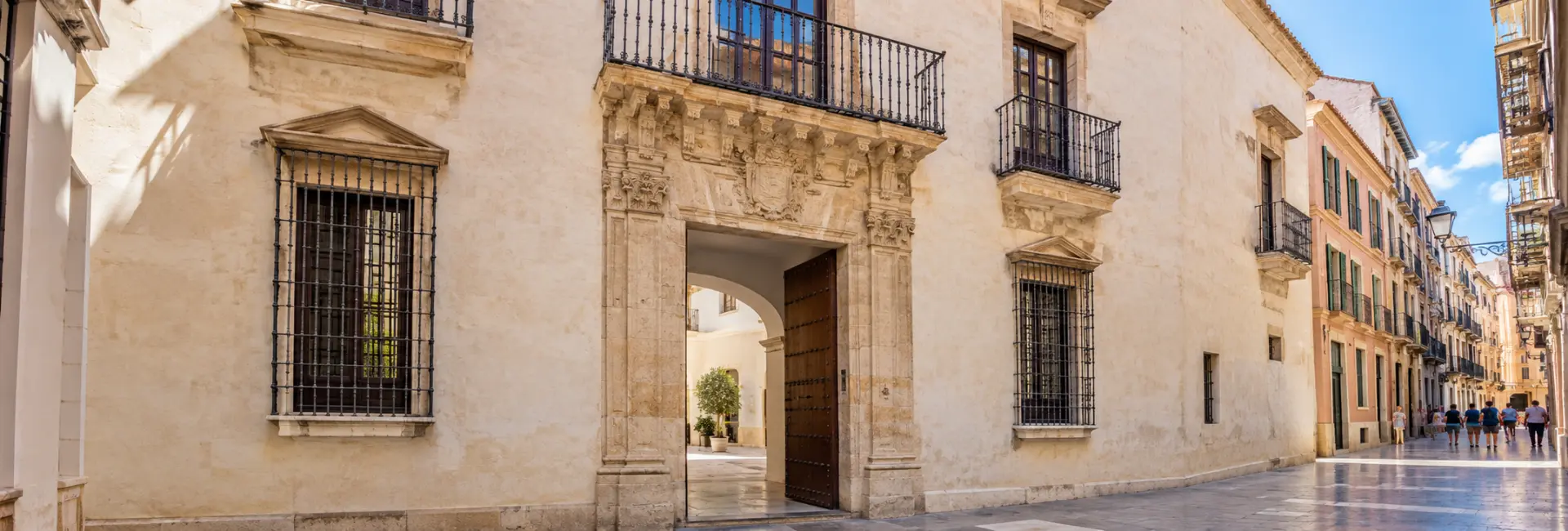
The setting adds another reason to visit. The museum occupies a complex centred on the Palacio de Villalón, where restored historic architecture meets modern exhibition spaces. Art and building can therefore be explored together rather than treated as unrelated parts of the day.
This is a useful choice for visitors interested in how artists imagined and represented southern Spain. The paintings should not be read simply as documentary photographs: they also reflect taste, convention and the choices of their makers. That tension is one of the collection’s most interesting qualities.
Allow around one and a half to two hours for a first visit, with longer if a temporary exhibition is especially relevant to you. The central address makes the museum easy to combine with a walk through the old town.
The Museum and the Carmen Thyssen Collection
The museum opened in 2011 and developed around the Carmen Thyssen collection. Its focus gives Málaga a substantial setting for exploring Spanish art of the nineteenth and early twentieth centuries, alongside a smaller group of earlier works.
A collection shaped through collecting has its own emphasis. It does not need to cover every artist or movement equally to be valuable. Instead, it offers a particular set of connections between landscapes, figures, customs and the changing visual language of painting.
Keep that perspective in mind when moving through the galleries. Rather than asking whether the museum provides a complete history of Spanish art, consider which subjects recur and how different painters approach them. Repetition can become a useful thread rather than a sign that works are interchangeable.
The institution also presents temporary exhibitions and educational activity. These can broaden the visit beyond the collection’s main focus, but they require a current programme check. A display described in an older guide should not be assumed to remain in place.
Villalón Palace and the Restored Architectural Setting
The Palacio de Villalón is the historic core of the museum complex, with origins around the end of the fifteenth and beginning of the sixteenth century and later alterations. Its restoration recovered important architectural features while allowing the building to serve a contemporary public role.
The courtyard, arcades and historic details provide a useful pause between gallery sections. Look at how the palace organises space around an internal focus, then compare that with the more neutral exhibition rooms. The contrast helps explain how a museum can preserve a building without forcing every function into its original rooms.
Modern additions supply the space and facilities needed for exhibitions. Their presence should not be regarded as an interruption to the historic visit; they are part of the practical solution that makes the palace accessible as a museum rather than leaving it as an isolated architectural shell.
Archaeological remains were identified beneath the complex, adding another historical layer. Do not assume that this automatically means a public underground route is open. Confirm the current access arrangements if archaeology is an important reason for your visit.
The Collection’s Main Themes
The collection is commonly described through several broad groupings: old masters, Romantic landscape and costumbrismo, preciosista painting and naturalist landscape, and art around the turn of the century. These terms can sound specialised, but the underlying questions are accessible.
Costumbrismo concerns depictions of customs and everyday social types. Romantic landscapes may emphasise atmosphere, historical associations or a sense of the picturesque. More detailed or naturalist approaches ask viewers to look closely at surfaces, light and the observed world.
Use these categories as starting points rather than rigid boxes. A painting can be visually beautiful and also reveal assumptions about the people or places it depicts. Ask who appears, what activity is being shown and whether the scene feels observed, staged or idealised.
The later works allow comparison with changing approaches to colour, brushwork and mood. Rather than trying to remember every movement name, select two paintings from different sections and describe the differences in ordinary language. That exercise often makes the historical transition clearer.
The word preciosismo points towards a taste for highly refined detail and finish. When you encounter this kind of painting, first look closely at the handling of fabrics, surfaces or small objects, then step back to see how those details support the whole scene. Technical precision and overall composition are related, but they are not the same thing.
A comparison with a more openly brushed landscape can make the distinction vivid. In one work, the eye may move through carefully described particulars; in another, it may register light or atmosphere before identifying objects. Neither approach is automatically more truthful. Each selects a different visual priority, and recognising that choice helps visitors move beyond judging a painting only by how closely it resembles a photograph of its subject.
Artists and Highlights to Seek Out
Artists represented in the collection include Francisco de Zurbarán, Marià Fortuny, Joaquín Sorolla, Ignacio Zuloaga and Julio Romero de Torres, alongside painters closely connected with Andalusia. The exact works on view should be confirmed through the current museum information.
Zurbarán’s Saint Marina is a useful example of the earlier material within a collection better known for later Spanish painting. Its presence provides a point of comparison for the treatment of figures, costume and religious subject matter across periods.
When looking at landscapes, pay attention to the role of architecture and human activity. A view is not only a record of terrain; it can be organised to convey identity, atmosphere or a particular idea of a region. The placement of a small figure may be as deliberate as the treatment of a large mountain or building.
Avoid turning the visit into a search for famous names alone. A less familiar painter may provide the most memorable encounter, especially when a subject connects with something you have noticed while walking around Málaga. Let recognition start the visit, but allow discovery to shape it.
Looking at Andalusia Through Painting
The museum is particularly rewarding when visited with an awareness that painted images helped shape expectations of Andalusia. Scenes of dress, festivities, streets or landscapes may feel familiar, but familiarity can come from repeated artistic conventions as much as from direct experience.
Ask what a painting chooses to emphasise and what it leaves outside the frame. A lively public scene may focus on spectacle rather than ordinary work, while a landscape can make a place seem timeless by excluding signs of change. These are interpretive choices, not necessarily errors.
Compare the paintings with the city you encounter outside, without demanding that the two match exactly. The museum can deepen a visit precisely because it shows how places are imagined as well as observed. This is a more productive approach than using art only as an illustrated travel guide.
If visiting with companions, choose one work and discuss the kind of story it appears to tell. Different responses can reveal details one person missed, making the collection a starting point for conversation rather than a sequence of labels to absorb silently.
Visiting Styles, Families and Temporary Exhibitions
A self-guided route works well if you want to move selectively through the collection. Begin with the introductory material, choose a few works in each section and leave time to revisit a favourite. It is not necessary to give every painting equal attention.
Guided visits or educational programmes can add context, particularly for visitors unfamiliar with the period. Check the language, duration and booking conditions of any activity before including it in the day. A museum admission ticket does not automatically establish access to every programme.
Families may find the figurative subjects useful for conversation. Ask children to identify what people are doing, what the weather seems like or which details suggest a story. Keep the visit short enough that looking remains enjoyable rather than becoming a test of patience.
Temporary exhibitions can alter the best route through the museum. If one is your main reason for coming, establish where it sits within the building and how much time to reserve. Leave the permanent collection as a flexible addition rather than rushing both to satisfy an arbitrary checklist.
Tickets, Accessibility and Nearby Attractions
Confirm current opening days, prices and exhibition coverage on the museum’s website. Reduced admission and free-entry periods may have conditions, and special dates can change the usual schedule. Bring the evidence required for any concession you intend to use.
Contact the museum about specific accessibility needs, including lifts, seating, sensory considerations or assistance. The restored palace and modern galleries form one visitor complex, but the exact route matters more than a general statement that a building is accessible.
The location on Calle Compañía makes Plaza de la Constitución and Calle Larios easy companions. Their nineteenth-century commercial character can provide an interesting outdoor contrast after paintings concerned with social life and regional imagery. Atarazanas Market is another useful stop if its trading hours fit.
For a varied half-day, combine the museum with one public-space walk and a meal or market visit. Adding several major museums back to back can reduce the attention available for each. A slower route gives the collection’s images time to remain with you after leaving the galleries.
FAQs about visiting Museo Carmen Thyssen Málaga
What kind of art does the museum show? +
Its main strength is Spanish painting, particularly nineteenth-century Andalusian subjects, with earlier and early twentieth-century material too.
Is it the same as the Thyssen museum in Madrid? +
No. This is a separate museum in Málaga with its own location, collection focus and visitor arrangements.
How long should I allow? +
Around one and a half to two hours is a practical estimate, with more time for temporary exhibitions.
What is the historic building? +
The museum complex is centred on the Palacio de Villalón on Calle Compañía.
Can I visit the archaeological remains? +
Do not assume public access. Check the museum’s current arrangements if this is a priority.
What is a good nearby pairing? +
Plaza de la Constitución, Calle Larios or Atarazanas Market can provide a varied continuation.
