
Table of Contents
Overview
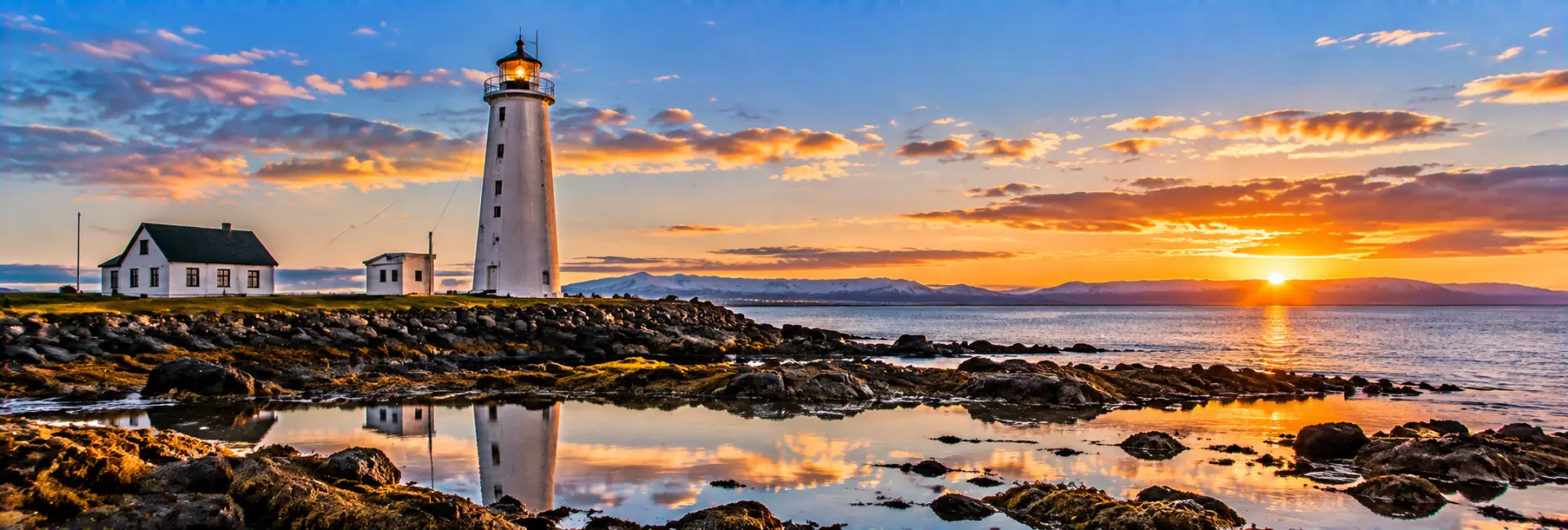
Grótta Lighthouse stands on a small island at the very western tip of the Seltjarnarnes peninsula, around 7 kilometres from central Reykjavik. The slim white tower sits against open ocean and big skies, and on a clear day it is one of the most photographed spots in the Reykjavik capital area.
What makes Grótta special is that it is only an island some of the time. A narrow strip of sand and rock links it to the mainland, and the sea covers that strip at high tide, so a visit is partly dictated by the tide table. The surrounding land is also a protected nature reserve, which adds birdlife, quiet shoreline walks and seasonal rules to the experience.
Grótta works equally well as a short escape from the city, a sunset viewpoint or a winter aurora spot. The lighthouse is free to see, and the walk around it can take as little as 30 minutes or fill most of an afternoon.
History of the Lighthouse
The First Lighthouse
The first lighthouse at Grótta was built in 1897 to help ships find their way into Faxaflói Bay, where rocky coastline and shallow water made approaches to Reykjavik tricky. A lighthouse keeper lived on the island, and one long-serving resident, Albert Þorvarðarson (1910-1973), is remembered locally: the Seltjarnarnes search and rescue team is named after him.
The Present Tower
The tower you see today dates from 1947 and was built close to its predecessor. It was connected to the electricity grid in 1956 and has changed little since. The lighthouse still works as a navigation aid, guiding vessels through the bay, although its interior is not open to visitors.
From Working Island to Local Landmark
For much of its modern history Grótta was valued mainly for its role in safe navigation and its seabirds. Over the past few decades it has become one of the best-known outdoor destinations in the capital region, drawing walkers, cyclists, photographers and bird enthusiasts throughout the year.
The Tidal Island & Causeway
A Tied Island
Geographers call Grótta a tied island, meaning it is connected to the mainland by a low strip of land rather than being fully separated. At low tide this strip is exposed and you can walk across on sand, pebbles and seaweed. At high tide it floods completely and the lighthouse becomes a true island.
Why the Tide Matters
The crossing is only possible for a window of a few hours around low tide, and the length of that window varies from day to day. People are caught out most years, so checking a tide table before you set out is essential. The route is uneven and there is no lit path, so sturdy footwear and daylight make it much more comfortable.
The Landscape
The island is low and green, with a shallow, bowl-like shape created partly by gradual land subsidence over time. Beyond it lie black sand and pebble shores, rock pools and long views toward the mountains across the bay. In bad weather the sea can crash against the breakwater boulders, which is dramatic to watch from the car park side.
Nature Reserve & Birdlife
A Protected Area
Grótta was declared a nature reserve in 1974 because of its rich birdlife. In 2026 the reserve was expanded to include the nearby shallow coastal lagoon called Seltjörn, an important feeding and resting area, and the protected area now covers roughly 1.5 square kilometres. The expansion recognises the coastline as one of the most valuable bird and shore habitats in the capital region.
Birds to Look For
Hundreds of pairs of Arctic terns nest in and around the island each summer, and the species receives special protection in Iceland. Other regular residents and visitors include eider ducks, oystercatchers, redshanks, ringed plovers and greylag geese. In spring and autumn migrating waders such as red knots and sanderlings stop to feed, and some hardy species remain through the winter. Around 106 bird species have been recorded across Seltjarnarnes as a whole.
Summer Closure
To protect nesting birds, access to the island and shoreline is closed from 1 May for the breeding season. Local notices have recently given the end date as 31 July, although older guidance mentions mid-July, so always check the latest information. During the closure you can still admire the lighthouse from the mainland side, and dogs are prohibited in the western areas at this time.
What to See There
The lighthouse is the obvious focus, but the area around it offers plenty to take in.
- The lighthouse itself: a small white tower, best photographed from the causeway or from the shoreline with the sea behind it.
- The causeway and tidal flats: a changing landscape of wet sand, seaweed and rock pools that looks different at every tide.
- Bay and mountain views: on a clear day you can look out across Faxaflói Bay, with open ocean stretching toward the horizon.
- The shoreline path: a coastal walking and jogging route that follows the northern shore of the peninsula, with plenty of spots to stop and photograph the sea.
- Seltjörn and the bird hide area: reed-fringed water that attracts many birds, best enjoyed quietly and from the paths.
- Black sand beach: a stretch of dark sand close to the car park, handy for a short stroll.
Ways to Experience It
A Short Coastal Walk
The simplest visit is a stroll from the car park along the shore to the causeway, then out to the island if the tide allows. Allow 30 to 90 minutes, depending on how much time you spend photographing and watching birds.
Sunset and Golden Hour
The west-facing position makes Grótta a fine place to watch the sun go down over the bay, especially in the long light of spring and autumn. The low light picks out the lighthouse beautifully against the water.
Northern Lights
Grótta is a popular spot for hunting the aurora because it is darker than central Reykjavik and has an open view north over the sea. The northern lights season runs from around September to the end of March, and you need clear skies and good solar activity to see them. The car park can fill up on promising evenings, so arrive early.
Walking or Cycling from the City
You can reach Grótta on foot or by bike along the coast from central Reykjavik. The walk is mostly level and takes a little over an hour at an easy pace, making it a rewarding way to see the shoreline.
Best Time to Visit
By Season
Outside the nesting closure, Grótta can be visited year-round. Late summer and autumn bring migrating birds, calm light and the start of the aurora season. Winter has short days but dramatic seas, frost on the shore and the best chance of northern lights, though paths can be icy. Spring is a pleasant time for walks before the breeding season begins on 1 May.
By Tide
The tide matters more than the season. Aim to arrive an hour or so before low tide so that you have time to cross, explore and return comfortably before the water comes back.
By Time of Day
Morning and early afternoon are usually quiet and good for photography and birdwatching. Evenings are popular for sunsets and, in season, aurora watching, so expect more people and busier parking.
Visitor Tips
A little preparation makes the visit safer and more enjoyable.
- Check the tide table first: never cross without knowing when the water will return, and leave generous time to get back.
- Confirm the nesting closure: the island is off limits from 1 May until the end of the breeding season, so check current dates with the Seltjarnarnes municipality before planning a summer visit.
- Respect the birds: stay on paths, keep distance from nests and follow any signs, particularly where terns are active.
- Dress for the weather: the peninsula is exposed and windy, and the ground can be wet or slippery, so wear waterproof layers and good shoes.
- Do not rely on the dark: there is no lighting on the island, so avoid crossing in the dark, particularly when the tide is turning.
- Entry is free: there is no charge to visit, although the lighthouse interior is closed to the public.
- Parking: a free car park is available near the shore, and it can fill up on clear evenings.
- By bus: take route 11 from the city centre to the northernmost stop in Seltjarnarnes near Lindarbraut, then walk about 20 minutes to the lighthouse area.
Nearby Attractions
Seltjarnarnes is a small, easy-going peninsula with several sights close to the lighthouse, and the centre of Reykjavik is only a short drive or bus ride away.
What to Pair with Your Visit
- Seltjörn and the coastal paths: rich bird habitat and pleasant walking just beside the lighthouse area.
- Medical history museum: a museum on Icelandic medical history is located on the peninsula.
- Kvika Footbath: a geothermal footbath on the Seltjarnarnes shore for warming up after a windy walk.
- Ráðagerði restaurant: a local place to eat close to the lighthouse area.
- Central Reykjavik: the Old Harbour, Hallgrímskirkja and the main shopping streets are within easy reach for the rest of the day.
FAQs about visiting Grótta Lighthouse
Where is Grótta Lighthouse? +
It stands on a small tidal island at the western tip of the Seltjarnarnes peninsula, about 7 kilometres from central Reykjavik. Seltjarnarnes is a separate municipality within the capital region, with the postal code 170.
Can I walk to the lighthouse? +
Yes, at low tide you can cross the exposed causeway to the island, but the sea covers it at high tide. Check a tide table before you go and allow extra time to return safely.
Can I go inside the lighthouse? +
No, the interior is not open to visitors, but you can walk right up to the building and photograph it from outside.
When is Grótta closed? +
The island and shoreline are closed from 1 May during the bird nesting season. Recent local notices give 31 July as the end date, though older guidance says mid-July, so check the latest dates with the municipality.
Is it free to visit? +
Yes, there is no entry fee for the island or the lighthouse, and free parking is available near the shore.
Is Grótta a good place to see the northern lights? +
Yes, it is a popular aurora spot thanks to its open view over the sea and lower light pollution than central Reykjavik. You will need clear skies, strong solar activity and the dark months from about September to March.
How do I get to Grótta without a car? +
Take bus route 11 from the city centre to the northernmost stop in Seltjarnarnes, then walk roughly 20 minutes to the lighthouse. You can also walk or cycle along the coast from central Reykjavik.
How long should I allow for a visit? +
Most people spend between 30 and 90 minutes, depending on tides, photography and birdwatching. If you plan an evening aurora wait, allow longer.
