
Table of Contents
Overview
The Icelandic Phallological Museum, known in Icelandic as Hið Íslenzka Reðasafn, is a museum in central Reykjavik devoted entirely to real phalluses and the study of them. Its displays hold well over 300 specimens from more than 100 species of mammal, running from a tiny mouse to a sperm whale, and it presents itself as the biggest collection of its kind anywhere in the world.
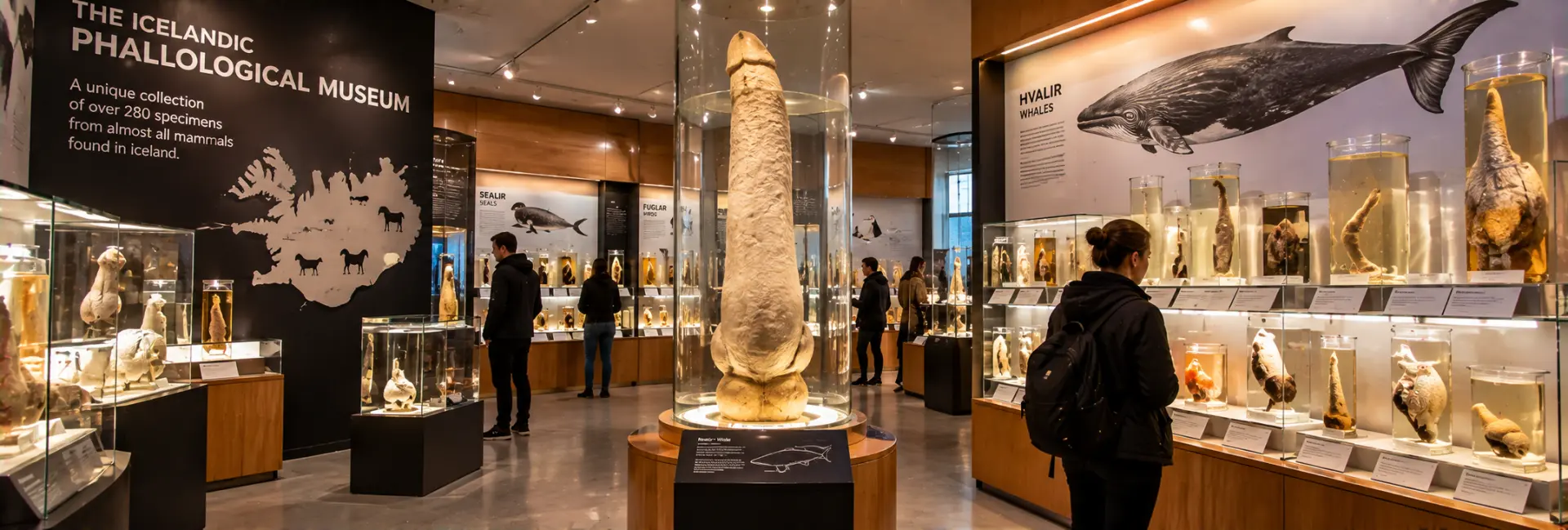
Despite the headline-grabbing subject, the atmosphere is closer to an old-fashioned natural history cabinet with a good sense of humour than to anything risque. Specimens are labelled with their species and origin, the science is explained in plain language, and the museum welcomes families. Many visitors arrive for a laugh and leave surprised by how much they have learned.
The museum is independent and family-owned. It now occupies a bright, modern space at Hafnartorg beside the harbour, with a gift shop and a themed café and bistro on site, which makes it an easy and entertaining stop on any Reykjavik city itinerary.
History of the Museum
A Joke That Became a Collection
The story begins in 1974, when Sigurður Hjartarson, then a headmaster in the town of Akranes, was handed a dried bull's pizzle as a joke by members of his teaching staff. The gag caught on, and because some of those teachers had summer jobs at a whaling station, further gifts arrived in the form of whale specimens. By 1980 he owned 13 specimens and had decided to try to gather examples from every mammal found in Iceland.
Opening Its Doors
The museum opened in 1997 in a small downtown Reykjavik space, showing 62 specimens alongside artworks and novelties. Locals were slow to visit at first, with many assuming the exhibition would be explicit rather than scientific. In 2004 it moved to Húsavík in the north, a town known for whale watching, where it grew steadily and began to attract international media attention.
Completing the Collection and Coming Back
In 2011 Sigurður achieved his long-held goal of representing the full range of Icelandic mammals when he acquired a human specimen. He then retired and handed the museum to his son, Hjörtur, who brought it back to Reykjavik, doubled the space and modernised the presentation. Visitor numbers rose sharply in the years that followed.
The Move to Hafnartorg
In 2020 the museum relocated to its present home at Hafnartorg, almost tripling the exhibition space and adding a phallic-themed bistro. Donors who contribute to the collection are recognised as honorary members, a tradition that goes back to the early whale specimens that started it all.
Collections & Exhibits
The collection is organised around a single idea: that the variety found in nature is worth looking at closely. Together the displays cover almost all of the land and sea mammals found in Iceland, along with a growing number of foreign species donated from around the world.
Whales and Marine Mammals
The largest specimens belong to whales, and they are the displays that most often leave visitors speechless. Several whale species are represented, and the scale of the biggest examples is a striking contrast with everything else in the room. Seals, walruses and a polar bear also feature, reflecting Iceland's connection to the Arctic and the North Atlantic.
Land Mammals
Alongside the marine giants sits a wide range of land animals, from the Icelandic horse and other farm animals to small creatures such as mice and hamsters. Seeing them side by side makes the differences in size, shape and structure easy to compare, which is exactly what the founder hoped to show.
The Human Specimen
The museum's collection of Icelandic mammals was completed in 2011 with the addition of a human specimen. It remains one of the most talked-about pieces in the exhibition, and it is presented in a straightforward, informative way rather than as a shock exhibit.
Each display comes with notes in English, so you can follow the species, size and background of what you are looking at without needing a guide.
Folklore, Art & Curiosities
Phalluses of Icelandic Folklore
One of the museum's best-loved sections is its set of 22 imagined specimens from creatures of Icelandic folklore. Elves and trolls are traditionally described as invisible, so the exhibits play with that idea in a deadpan way, and they are a good example of how the museum blends real science with local storytelling.
Art and Objects
Beyond the biological specimens, the museum shows a large number of artworks, casts and everyday objects with a phallic theme. Some are decorative, some are practical, and many are simply funny. They give the exhibition a lighter, more cultural side and show how the subject has appeared in art, design and popular culture.
Honorary Members
Donors who add specimens to the collection are recognised as honorary members. The tradition fits the museum's origins, since the whole project grew from gifts made to its founder, and it is a reminder that the collection is still growing as new donations arrive.
Must-See Highlights
The exhibition is compact enough to see in a single pass, but a few displays are worth slowing down for.
- The whale specimens: the largest items on show, and a vivid way to appreciate the size of the animals that swim around Iceland.
- The smallest specimens: the mouse and hamster displays make an entertaining contrast with the whales and show the full range of the collection.
- The folklore section: the invisible elf and troll exhibits are among the most original and photographed displays.
- The human specimen: the piece that completed the founder's goal of representing every Icelandic mammal.
- The honorary members display: a lighthearted tribute to the people who helped build the collection.
- The art and novelty pieces: a collection of quirky objects that shows how far the subject reaches into design and humour.
Ways to Experience It
A Self-Guided Visit
The museum is designed to be explored at your own pace. Displays are labelled in English and laid out in a way that makes it easy to move from the small to the enormous, and then on to the folklore and art. Tickets can be bought in advance through the official website, which is a sensible idea in busy periods.
The Phallic Café and Bistro
The on-site café is as much a part of the experience as the exhibits. It serves coffee from small independent growers, roasted by Icelandic micro-roasters, along with craft beer from RVK Brewing Company, cocktails and waffles shaped in keeping with the museum's theme. It is a relaxed place to sit down and talk about what you have just seen.
The Gift Shop
The shop stocks hundreds of themed items, including board games, books, designer pieces and playful souvenirs. It is one of the more unusual places in Reykjavik to pick up a gift for friends back home.
Best Time to Visit
Because everything is indoors, the museum works in any season and is a dependable choice when Reykjavik's weather turns wet or windy. It is open every day of the week, so you do not need to plan around a quiet weekday.
By Season
Summer is the busiest period, and queues can build when cruise passengers and tour groups arrive. Buying tickets ahead helps in these months. In the colder, darker part of the year the museum is a warm, entertaining place to spend an hour, and it tends to be calmer.
By Time of Day
The middle of the day is typically the busiest. If you prefer room to read the labels and take photos, aim for shortly after opening or for the last couple of hours before closing.
Visitor Tips
A few practical points will help you make the most of the visit.
- Plan for 30 to 60 minutes: the exhibition is compact, though you may want longer if you stop at the café.
- Check the current details: opening hours, ticket prices, discounts and holiday closures can change, so confirm them on the official website before you go.
- Book ahead in summer: pre-booking online saves time at the entrance during peak months.
- Bring the family: the museum describes itself as family-friendly, and children under a set age are admitted free, so check the current age limit when booking.
- Accessibility: the museum provides accessibility information on its website, and it is reported to be wheelchair accessible.
- Find the entrance: the museum is inside the Hafnartorg development, with its entrance at the corner of Geirsgata and Reykjastræti.
- Keep the right mindset: the museum is playful but not explicit, so go with curiosity and a sense of humour.
- Getting there: it is a short walk from the central shopping and dining streets, and the Lækjartorg bus stop is close by.
Nearby Attractions
The museum sits at Hafnartorg on the waterfront, right in the middle of the city's most visited area. Most of the main sights are within an easy stroll, so it fits neatly into a day of walking around central Reykjavik.
What to Pair with Your Visit
- Harpa Concert Hall: the glass-fronted waterfront landmark is right next door and worth a look for its architecture alone.
- Sun Voyager sculpture: a short walk along the shoreline, with views across the bay.
- Old Harbour: the departure point for many whale-watching and puffin tours, with restaurants and shops nearby.
- Laugavegur and Lækjartorg: the main shopping street and the central square, close enough for coffee, souvenirs or a meal.
- Hallgrímskirkja: Reykjavik's best-known church, a walk uphill from the harbour with a viewing tower over the city.
FAQs about visiting the Icelandic Phallological Museum
What is the Icelandic Phallological Museum? +
It is a Reykjavik museum dedicated to collecting and displaying real phalluses from mammals, along with art, folklore and novelty objects. It holds well over 300 specimens from more than 100 species and presents itself as the largest collection of its kind in the world.
Where is the museum located? +
It is at Hafnartorg, Reykjastræti 4, in central Reykjavik, close to the harbour and Harpa Concert Hall. The entrance is at the corner of Geirsgata and Reykjastræti.
Is the museum suitable for children? +
Yes, the museum describes itself as family-friendly, and the displays are educational and humorous rather than explicit. Children under a certain age enter free, so check the current age limit before booking.
How long does a visit take? +
Most people spend about 30 to 60 minutes in the exhibition, and a little longer if they stop for coffee or a waffle in the café.
How much does it cost and do I need to book? +
Prices change from time to time, so check the official website for the current adult and discounted rates. Booking ahead is not essential, but it is a good idea in summer when the museum is at its busiest.
Is the exhibition explicit? +
No, the displays are real specimens presented in a scientific and lighthearted way, with informative labels, art and folklore. Visitors of all ages generally find it more funny and educational than shocking.
Are there real specimens from humans and folklore creatures? +
The museum holds a human specimen, added in 2011, and 22 imagined specimens from creatures of Icelandic folklore. The folklore items are a humorous nod to elves and trolls, who are traditionally described as invisible.
Is there a café or shop? +
Yes, the museum has a themed café and bistro serving coffee, craft beer, cocktails and waffles, plus a gift shop with hundreds of playful items.
What else is nearby? +
Harpa Concert Hall, the Sun Voyager sculpture and the Old Harbour are all a short walk away, and Laugavegur shopping street and Hallgrímskirkja are within comfortable walking distance.
