Table of Contents
Overview
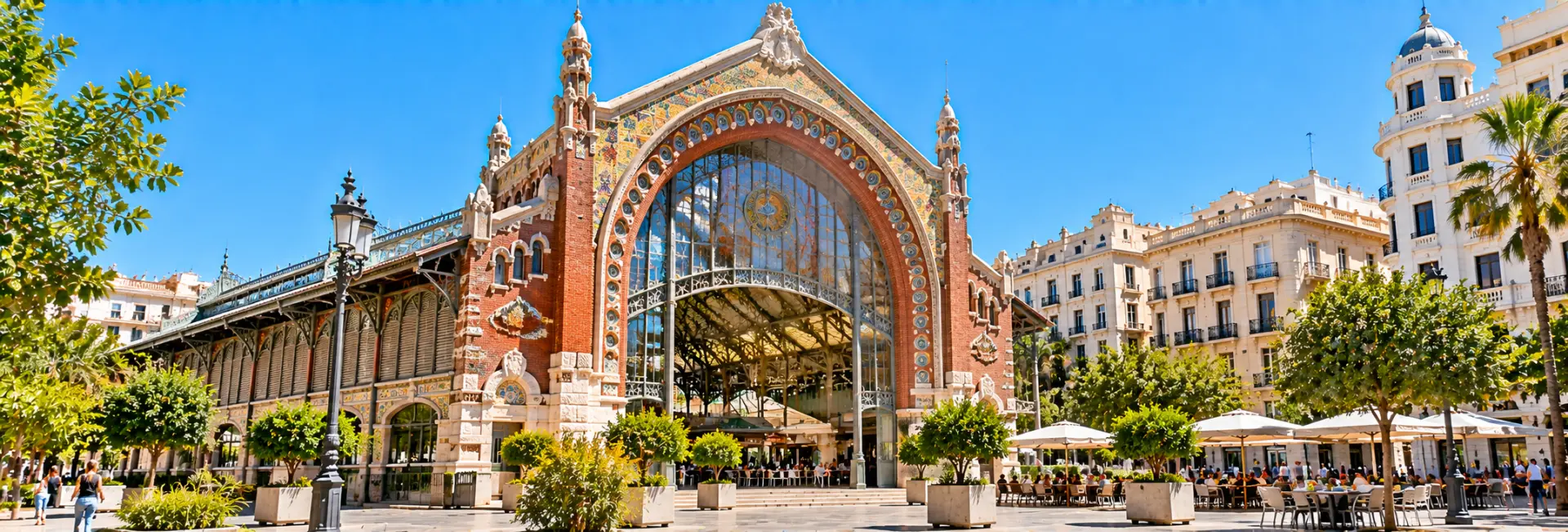
Mercado de Colon is one of Valencia's most striking pieces of early 20th-century architecture, a long, light-filled market hall built to serve the fashionable new Ensanche district as it expanded beyond the old city walls. Its ornate brick facades, colourful ceramic details and soaring iron-and-glass roof make it one of the finest surviving examples of Valencian Art Nouveau.
Today the building has a very different rhythm from its original life as a working food market. Restored and reopened as a gastronomic and leisure space, it now houses restaurants, cafes and boutique shops beneath the same historic structure, drawing both Valencians and visitors for a coffee, a meal or simply a look at the architecture.
History
Building for a Growing District
In the early 20th century, Valencia's Ensanche neighbourhood was expanding rapidly to house the city's growing middle class, and local authorities wanted a proper covered market to supply the new district with fresh food. The site chosen had previously been home to a gas works built for the Marqués de Campo, cleared to make way for the new building.
Construction and Opening
City architect Francisco Mora Berenguer designed the market, drawing heavily on the Catalan Modernisme he had studied in Barcelona, with input from fellow architect Demetrio Ribes during construction. Work began in the mid-1910s and the market opened to the public on 24 December 1916, quickly becoming one of the defining buildings of the new Ensanche district.
Decline and Restoration
As shopping habits changed over the following decades, the market's role as a working food hall gradually declined. A major restoration at the start of the 21st century preserved the historic structure while reshaping the interior into a modern gastronomic and leisure space, the form the building takes today.
Recognition & Status
Mercado de Colon has long been regarded as one of the finest examples of Valencian Art Nouveau architecture and was recognised early on as a National Monument. In 2007, it was formally declared a Bien de Interes Cultural, Spain's highest level of heritage protection, with the status of a monument.
- Declared a Bien de Interes Cultural with the category of Monument in 2007
- Long recognised as one of the key works of Valencian Art Nouveau
- One of the defining buildings of Valencia's early 20th-century Ensanche district
Architecture & Design
The building takes the form of a long rectangular hall, roughly 100 by 47 metres, enclosed by an ornamental wrought-iron fence with bevelled corners. Its interior is divided into three parallel naves supported by finely detailed metal trusses, creating a bright, open space beneath a glass and iron roof.
At each end, tall brick facades rise like triumphal arches, richly decorated with ceramic mosaics and Art Nouveau ornament. The combination of exposed structural ironwork with decorative masonry reflects the same fusion of engineering and craftsmanship found in other Modernisme buildings of the period.
Key Areas
The Central Naves
The three long naves that run the length of the building form its main public space, now filled with market stalls, restaurant counters and seating rather than the produce stands of a century ago.
The Facades
The two monumental brick facades at either end of the building are among its most photographed features, their arched forms and colourful tilework framing the entrances on Calle Jorge Juan and Calle Cirilo Amoros.
The Perimeter Ironwork
A decorative wrought-iron fence traces the building's rectangular footprint, a detail that survives from the market's original construction and adds to its overall sense of craftsmanship.
Cultural Significance
Mercado de Colon stands as a symbol of Valencia's Ensanche district and the confidence of the city's early 20th-century expansion, built at a time when Valencian architects were closely engaging with the wider Modernisme movement associated with Barcelona. Its survival and restoration reflect the value the city has placed on preserving that architectural legacy rather than replacing it.
The market is also tied to specifically Valencian food traditions, most notably horchata, the local drink made from tiger nuts, which is served here alongside fartons at a long-established stall inside the building, one of the city's classic spots to try it.
Ways to Experience It
Most visitors combine a look at the architecture with something to eat or drink, since the building now functions primarily as a food and leisure destination rather than a conventional sightseeing stop.
- Walking through the naves to admire the ironwork, tiling and facades
- Eating at one of the restaurants inside, including options from well-known local chefs
- Trying traditional horchata and fartons at the market's dedicated stall
- Browsing gourmet food shops or occasional craft and artisan markets held inside
Best Time to Visit
Mornings and early afternoons suit a quieter visit focused on the architecture and a coffee or light meal, while evenings bring a livelier atmosphere as the market's bars and terraces fill up, particularly on weekends.
Because most of the market is indoors, it also works well as a break from the heat during Valencia's hottest summer months, or as a dry option on a rainy day in the city.
Visitor Tips
- Individual restaurants and stalls inside the market keep their own hours, so check specific opening times if you have somewhere particular in mind
- Weekend evenings can get busy, so arrive early if you want a table without a wait
- The building is fully accessible, with level entrances and open interior spaces
- Keep an eye out for temporary craft markets or gastronomic events, which are held here regularly
Nearby Attractions
Mercado de Colon sits in Valencia's elegant Ensanche district, within easy reach of the city's main civic square and several other central landmarks.
- Plaza del Ayuntamiento: Valencia's main square, a short walk away
- Ruzafa neighbourhood: a lively district known for its independent shops and dining
- Gran Via Marques del Turia: a broad boulevard connecting the market to the wider Ensanche
FAQs about visiting Mercado de Colon
Is Mercado de Colon still a working food market? +
Not in the traditional sense; it was restored in the early 2000s and now functions mainly as a gastronomic and leisure space with restaurants, cafes and shops rather than fresh produce stalls.
What architectural style is Mercado de Colon built in? +
It's a landmark example of Valencian Art Nouveau, closely related to the wider Catalan Modernisme movement, with ornate brickwork, ceramic mosaics and exposed ironwork.
Is it free to visit Mercado de Colon? +
Yes, entry to the building itself is free; you only pay for food, drinks or anything you buy from the shops and restaurants inside.
What should I eat or drink there? +
Horchata with fartons at the market's traditional stall is a classic choice, alongside a range of restaurants covering everything from Valencian cuisine to international options.
How much time should I spend there? +
Around thirty minutes to an hour covers the architecture and a quick stop, though a meal or drinks with friends can easily extend a visit to two hours or more.
Is Mercado de Colon accessible for visitors with mobility needs? +
Yes, the building has level entrances and open interior spaces, making it easy to navigate.
What's nearby worth visiting after Mercado de Colon? +
Plaza del Ayuntamiento and the Ruzafa neighbourhood are both within easy walking distance, along with the wider Ensanche district's boulevards and shops.