
Table of Contents
Overview
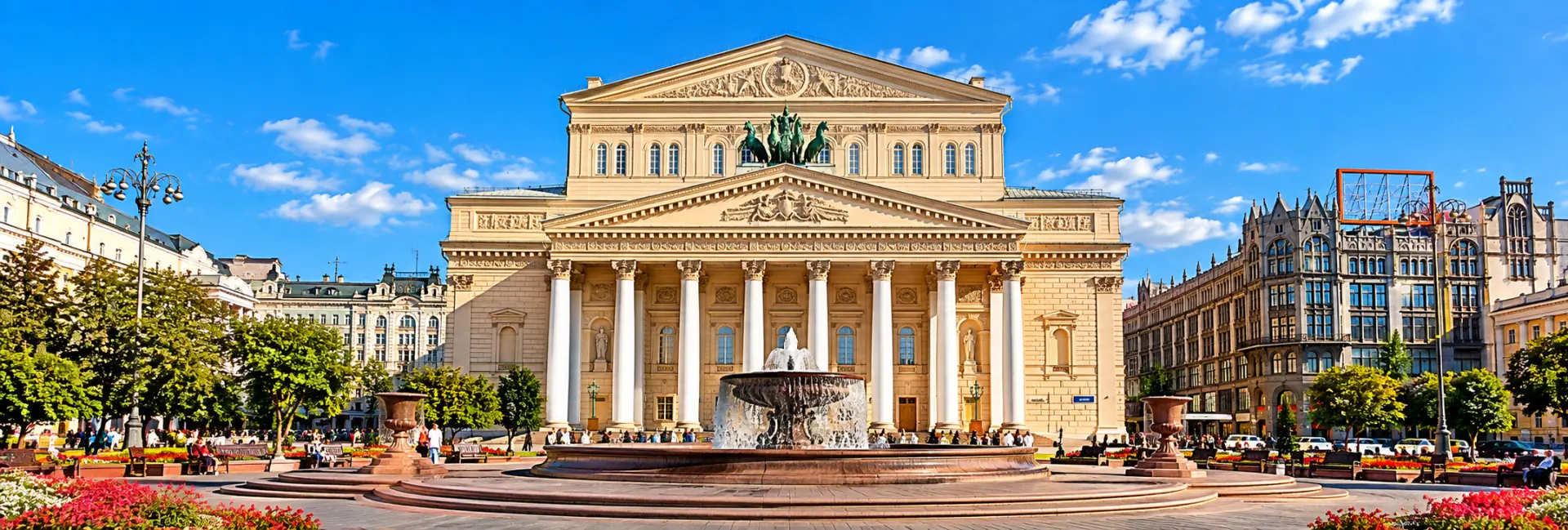
The Bolshoi Theatre is the best-known performing arts venue in Russia and one of the great opera and ballet houses of the world. Its name simply means "Grand" or "Big" Theatre, and the building on Teatralnaya Square lives up to it, with a monumental columned portico crowned by a bronze chariot drawn by four horses.
For visitors, the Bolshoi offers two kinds of experience. The first is an evening performance in the historic auditorium, a glittering horseshoe of gilded balconies and crimson velvet. The second is a daytime visit, whether a guided tour, a look at the museum or simply a stop in front of the facade, which is among the most photographed in the city.
The theatre is also the home of the Bolshoi Ballet, one of the largest ballet companies in the world, and of the Bolshoi Opera, which together have shaped Russian musical life for well over two centuries.
History
Founding in the 18th Century
The Bolshoi traces its origins to 1776, when Prince Pyotr Urusov received an imperial privilege to run theatrical performances in Moscow and joined forces with the English entrepreneur Michael Maddox. Their company performed in the Petrovsky Theatre, which opened in 1780, and that building burned down in 1805.
Fires and Rebuilding
A new theatre, designed by Joseph Bové, opened in 1825 and was celebrated for its scale and its classical colonnade. Fire struck again in 1853, destroying most of the interior and leaving only the outer walls. The architect Albert Cavos oversaw the rebuilding, and the new theatre reopened in 1856 with a taller, more ornate look, which is largely the building seen today.
Premieres and Reputation
Over the decades the stage hosted important works of Russian music and dance. Tchaikovsky's Swan Lake premiered at the Bolshoi in 1877, though the first production was not a success and the ballet only later became a worldwide favorite. In the 20th century, dancers such as Galina Ulanova and Maya Plisetskaya made the company a symbol of Russian ballet around the world.
Political Stage and Survival
After the Revolution, the theatre became a state institution and also a venue for major political gatherings, including the 1922 congress at which the formation of the Soviet Union was proclaimed. It remained open through the Second World War, despite war damage to the building. In the 1990s and 2000s its aging structure caused growing concern.
Restoration
The historic building closed in 2005 for a long and complex restoration, during which the company performed on its newer stage and elsewhere. The renovated theatre reopened in October 2011, with its decorative details restored and its stage technology modernized.
Architecture & Auditorium
The Facade
The theatre's neoclassical front is dominated by a portico of eight tall columns, topped by a sculpture of the god Apollo driving a four-horse chariot, created by the sculptor Pyotr Klodt. The quadriga is the theatre's emblem and appears on its tickets and publications. Seen across Teatralnaya Square, especially at night when it is lit, the facade is among the most imposing in central Moscow.
The Horseshoe Auditorium
Inside, the main hall is organized in the traditional horseshoe shape, with six tiers of balconies rising above the stalls. Gold ornament, red and gold fabrics, and painted ceiling decoration give the room its signature look, and a vast crystal chandelier hangs from the ceiling. The hall seats roughly 1,700 people and is admired for the clarity of its acoustics.
Behind the Curtain
The stage is deep and technically sophisticated, with machinery that allows large sets to be changed quickly between scenes. The 2011 restoration paid close attention to both the historic decoration and the working systems backstage, so that the theatre could keep its 19th-century character while meeting the demands of modern productions.
The Imperial Box and Foyers
The large central box, once reserved for the imperial family, faces the stage and remains one of the hall's most striking features. Behind the auditorium, wide foyers and staircases give audiences space to promenade during intervals, a custom that remains part of the theatre-going ritual.
Ballet, Opera & Stages
The Bolshoi Ballet
With more than 200 dancers, the Bolshoi Ballet is among the largest companies of its kind. Its repertoire blends the great 19th-century classics, such as Swan Lake, The Nutcracker, Giselle and Sleeping Beauty, with 20th-century works like Spartacus and newer choreography. The company is closely linked with the Bolshoi Ballet Academy, a leading school that feeds talent into its ranks.
The Bolshoi Opera
The opera company performs a wide repertoire, with a particular strength in Russian works such as Boris Godunov and Eugene Onegin, alongside Italian, French and German classics. Orchestra and chorus performances are part of the regular schedule, and the theatre also hosts concerts.
A Living Tradition
The Bolshoi is not only a museum of its own past. Each season brings new productions and guest conductors, choreographers and singers, and the company continues to balance respect for its heritage with fresh work. This mix is part of why the theatre remains a draw for both lifelong ballet fans and first-time visitors.
Historic Stage, New Stage and Chamber Venues
The Historic Stage is the main hall, but the Bolshoi has more than one performance space. A New Stage, which opened in 2002 beside the historic building, hosts a wide range of productions, and smaller halls are used for chamber concerts and experimental work. Always check which stage your performance is on when you book.
Recognition / Status
The Bolshoi Theatre building, its museum and the historic stage are recognized as a cultural heritage site of federal significance in Russia. This status reflects both the architectural value of the building and its importance in the history of Russian performing arts.
Beyond formal listings, the theatre is regarded as a national cultural institution. Before the Revolution it was part of the Imperial Theatres of the Russian Empire, and today it is a state academic theatre, a title that reflects its role in preserving and developing the traditions of Russian opera and ballet.
Ways to Experience It
Attend a Performance
Seeing a ballet or opera in the historic auditorium is the highlight for most visitors. Performances range from full-length classical productions to concerts and gala evenings. Popular dates sell out well ahead, so plan early if you have a specific production in mind.
Take a Guided Tour
The theatre offers guided tours that show parts of the building usually reserved for audiences and staff. Tours are typically available in Russian and English on selected days and give insight into the building's history, architecture and working life. Availability depends on rehearsals and performances, so check the official site.
Make an Evening of It
Many visitors turn a performance into a full evening, with a meal on nearby Tverskaya Street or Kuznetsky Most beforehand and a walk through the illuminated center afterward. The short distance to Red Square makes this especially easy.
Visit the Museum and Explore the Square
The Bolshoi has its own museum devoted to the theatre's long history. Even without entering, a stroll around Teatralnaya Square, with its fountain, nearby buildings and views of the facade, makes for a rewarding short visit, especially in the evening.
Best Time to Visit
By Season
- Autumn through spring: the main performing season, with the fullest program of ballet, opera and concerts, and the most atmospheric evenings, particularly in winter when the facade is lit against the snow.
- Early summer: the season usually winds down, so check the schedule if you want to catch a particular production.
- Midsummer: the theatre often has a break or reduced schedule, so a visit may be limited to the exterior or a tour.
By Time of Day
Daytime is best for tours and photographing the facade in natural light. Evening is when the building truly comes alive, with arriving audiences, glowing windows and the illuminated portico.
Visitor Tips
- Book through official channels: use the theatre's official website or box office, since third-party resellers can be overpriced or unreliable.
- Arrive early: security checks and the cloakroom take time, and arriving 30 to 45 minutes before curtain lets you soak up the foyers.
- Dress up a little: there is no strict rule, but smart clothing is customary for performances, and many guests dress formally for evenings.
- Choose your seat carefully: the historic hall has tiers and boxes with varying views, so read the seating plan and any notes about restricted sightlines.
- Check which stage: make sure your tickets are for the stage you expect, since there is more than one venue in the complex.
- Photography: expect restrictions during performances, and follow the staff's guidance in the auditorium.
- Getting there: the nearest metro stations are Teatralnaya, Okhotny Ryad and Ploshchad Revolyutsii, all within a few minutes' walk.
- Before you travel: check current entry requirements and your government's latest travel advice for Russia well ahead of time.
Nearby Attractions
Red Square and the Kremlin
Just a short walk away, Red Square and the Kremlin make a natural pairing with the theatre, whether in the same day or as a combined day and evening plan.
Maly Theatre and Teatralnaya Square
The square itself is surrounded by theatrical and historic buildings, including the Maly Theatre, and its fountain is a pleasant place to pause.
Tverskaya Street
One of Moscow's main avenues begins nearby and offers shops, cafes and a lively promenade for a pre-show meal or post-show walk.
Kuznetsky Most and Petrovka
These streets just to the north are known for their shops, boutiques and restaurants, and are a good choice for a relaxed meal near the theatre.
FAQs about visiting the Bolshoi Theatre
What does "Bolshoi" mean? +
It means "big" or "grand" in Russian, and the name has been used for the theatre since its early days.
Can I visit the Bolshoi without seeing a show? +
Yes, guided tours are offered on selected days and show parts of the building not normally open to audiences. Availability depends on the theatre's schedule, so check the official site.
How do I buy tickets? +
Use the theatre's official website or box office. Popular productions sell out, so book as early as you can, and be cautious about unofficial resellers.
What is the dress code? +
There is no strict rule, but smart or semi-formal clothing is customary for performances, and many guests dress up for evening events.
How long is a typical performance? +
Full-length ballets and operas generally run around two to three hours including intervals, but durations vary by production, so check the listing for your date.
Is the theatre open all year? +
The main season runs from autumn to early summer, with a break in midsummer. Check the schedule for the dates you plan to visit.
Which stage will my performance be on? +
The theatre has a Historic Stage, a New Stage and smaller venues. Your ticket will specify the stage, so confirm it when booking.
How do I get there? +
Take the metro to Teatralnaya, Okhotny Ryad or Ploshchad Revolyutsii. All are within a few minutes' walk of the entrance.
