
Table of Contents
Overview
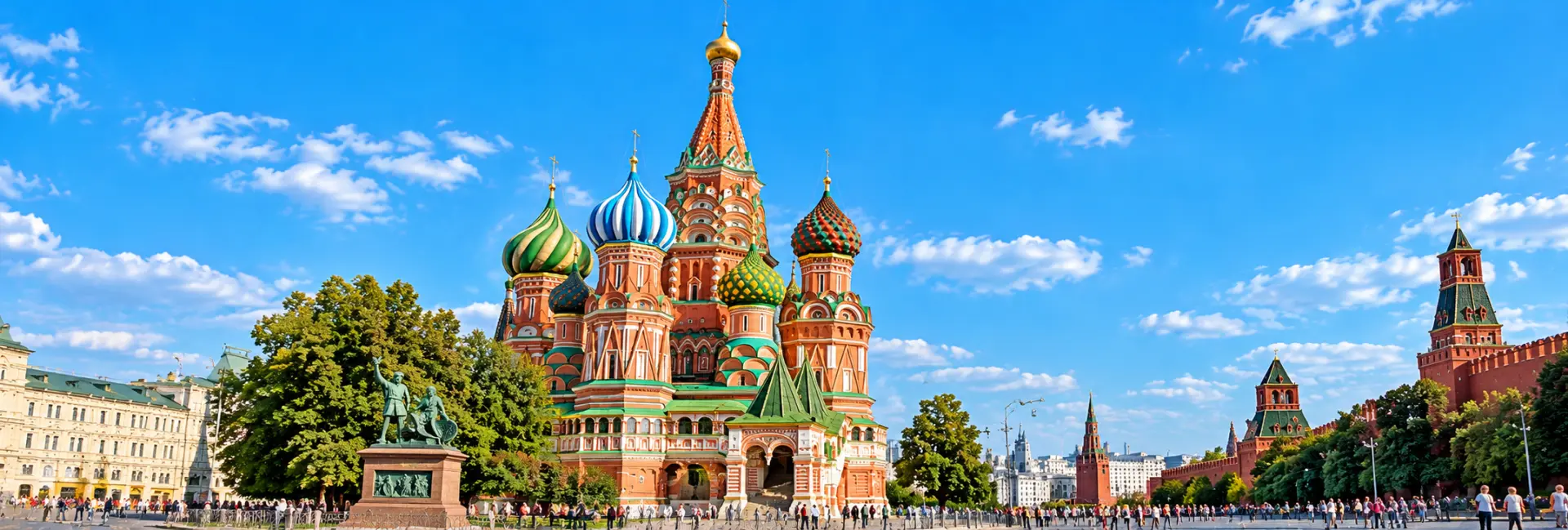
Saint Basil's Cathedral is the building most people picture when they think of Moscow. Standing at the southern end of Red Square, it is a cluster of tightly packed towers topped with domes of different shapes, colors and patterns, none of which repeat. The effect is closer to a fairy-tale city in miniature than to a conventional church.
Its official name is the Cathedral of the Intercession of the Most Holy Theotokos on the Moat, and it is also known as Pokrovsky Cathedral. The popular name comes from Basil the Blessed, a revered Moscow holy man whose grave lies within the complex. Today the building is run as a museum, with the occasional church service held on special days.
Despite its fame as a single landmark, the cathedral is really a group of separate churches joined together, which is the key to understanding both its unusual outline and its maze-like interior.
History
A Monument to Victory
The cathedral was built between 1555 and 1561 on the orders of Tsar Ivan IV, known as Ivan the Terrible. It commemorates the Russian capture of Kazan in 1552, a campaign that expanded Moscow's power eastward along the Volga. Several of the individual churches were dedicated to saints whose feast days fell on key days of that campaign, tying the architecture directly to the military story.
Who designed it remains uncertain. Tradition credits two architects, Barma and Postnik, though many historians believe these names may refer to a single master builder. A popular legend says the tsar had the architect or architects blinded so they could never build anything as beautiful again, but there is no historical evidence for this story.
Additions and Changes
The original design had eight churches grouped around a central ninth. In 1588 another chapel was added on the northeast side over the grave of Basil the Blessed, who had died in the 1550s and was buried at the site. Over time the cathedral took his name in popular use. A bell tower and covered galleries were added later, and in the 17th century the exterior was painted with the bright patterns familiar today.
Survival Through the Centuries
The cathedral stood through fires, wars and shifting regimes. The moat beside it, which gave the building its formal name, was filled in during the early 19th century. After the Revolution it was converted into a museum, becoming a branch of the State Historical Museum in 1928, and restorers worked to preserve it through an unpredictable era. It has since been repaired and repainted many times, and it remains one of Russia's best-protected landmarks.
Architecture & Design
A Cluster of Churches
The cathedral's plan is built around a tall central church topped with a tent-shaped roof, surrounded by smaller chapels arranged like petals. Each chapel has its own dome, and every dome is different, with spirals, ribs, diamonds or scales in contrasting colors. The central tower rises to roughly 65 meters, giving the whole group a strong vertical focus.
Brick and the Russian Tent Roof
The cathedral was built mostly of brick, which was a modern and prestigious material in 16th-century Moscow, instead of the timber or white limestone more common in older churches. The tall tent-roof shape draws on Russian wooden church traditions, translated into brick and stone, while the onion domes add a sense of fantasy that later became a symbol of Russian architecture itself.
Painted Surfaces
The original building was much plainer in color. The vivid red, green, yellow and blue patterns on the domes and walls developed in later centuries, so what looks like a single design is actually a layered result of repeated renovations. Inside, the narrow stone passages and vaulted galleries are covered in decorative painting, much of it floral, which contrasts with the grand open spaces of larger cathedrals.
Cultural & Religious Significance
A Symbol of Moscow and Russia
Few buildings carry as much symbolic weight. The cathedral appears on postcards, in films and in countless pieces of art as shorthand for Moscow and for Russia as a whole. Its image is so closely tied to national identity that it often stands in for the country in global media.
Basil the Blessed
Basil, or Vasily, was a "holy fool", a type of ascetic who lived in public poverty and was believed to speak uncomfortable truths to the powerful. His reputation in Moscow was so strong that he was venerated after his death, and the chapel built over his grave became a place of pilgrimage that eventually lent its name to the whole cathedral.
Recognition and Protection
The cathedral is part of the UNESCO World Heritage listing "Kremlin and Red Square, Moscow", inscribed in 1990. Its position beside the Kremlin and the open expanse of Red Square makes it a central piece of Moscow's historic ensemble, and it is protected as a major cultural monument.
Inside the Cathedral
A Labyrinth of Chapels
Visitors often expect a single grand interior, but the cathedral is closer to a series of small rooms linked by narrow, curving corridors and steep stairs. Each chapel has its own character, with painted walls, carved details and, in many cases, an icon screen of its own. Moving through them feels like exploring several tiny churches in a row.
The Central Church
The tall central church is the heart of the complex, and looking up into its tent-shaped interior gives a sense of the building's vertical scale. The icons and decoration here reflect the cathedral's identity as the Church of the Intercession.
The Chapel of Basil the Blessed
This chapel holds the shrine linked to Basil himself and is the spiritual focal point of the cathedral. Visitors may find it a quieter, more reflective space than the busy passages leading to it.
Icons and Exhibitions
As a museum, the cathedral displays works of Russian icon painting and applied art, and it sometimes hosts temporary exhibitions in its galleries. These add context to the building's religious history and show the craftsmanship of the period.
Ways to Experience It
Admire It from the Square
The cathedral is spectacular from the outside, and many visitors take most of their time walking around it, noticing how its silhouette changes from each angle. Standing near the statue of Minin and Pozharsky or looking back from the center of Red Square gives the classic view.
Go Inside
A ticketed visit lets you walk through the chapels and galleries at your own pace. Allow roughly an hour to see the interior comfortably, longer if you want to read the displays or wait out queues.
Guided Visits and Views from Above
Guided visits can help decode the symbolism of each chapel, though rules apply to who may lead groups inside. For a bird's-eye perspective, nearby Zaryadye Park offers elevated views of the cathedral against the Kremlin skyline, which pair well with a visit.
Evening Atmosphere
After dark, the domes are lit and the crowd thins, making the square outside a good place for photography and a quieter walk around the building.
Best Time to Visit
By Season
- Late spring and early autumn: mild weather and softer light make for comfortable queuing and good photography.
- Summer: the busiest period, with long days but the biggest crowds, so arriving early is especially helpful.
- Winter: cold but often atmospheric, with snow on the domes and smaller crowds, though you will need warm clothing for time spent outdoors.
By Time of Day
The first hours after opening are generally the calmest inside, which matters because the narrow passages get congested quickly. Late afternoon light is lovely on the colored domes, and the evening illumination is a highlight for photographers.
Visitor Tips
- Check the schedule: the museum has regular closures, including a monthly cleaning day, and reduced hours around certain church feast days, so confirm opening times on the State Historical Museum's official site before you go.
- Expect an extra entry charge: the interior may require a separate ticket from other Red Square attractions, so check what your ticket includes.
- Allow for queues: ticket offices close shortly before the museum itself, so do not leave your visit until the last moment.
- Be ready for stairs and narrow passages: the interior has steep steps and tight corridors, which can be difficult for visitors with limited mobility, so ask the museum about access in advance.
- Know the photography rules: photography without flash or tripod is generally limited to the permanent exhibition halls.
- Dress respectfully: it is a historic church, so modest clothing is appropriate, and visitors should keep voices low.
- Watch your children: the museum asks that young children not be left unattended in the halls.
- Getting there: the metro stations Okhotny Ryad, Teatralnaya, Ploshchad Revolyutsii and Kitay-gorod are all within walking distance.
- Before you travel: check current entry requirements and your government's latest travel advice for Russia well ahead of time.
Nearby Attractions
Red Square
The cathedral sits at the end of Red Square, where you can also see Lenin's Mausoleum, the State Historical Museum and GUM within a few minutes' walk.
The Kremlin
Just beyond the wall, the Kremlin offers cathedrals, the bell tower and the Armoury Chamber, all of which pair naturally with a visit to Saint Basil's.
Zaryadye Park
This modern park, opened in 2017, lies right behind the cathedral and has a viewing bridge over the Moskva River with views of the Kremlin and the cathedral's domes.
Kitay-gorod
One of Moscow's oldest quarters, the area east of the square has historic churches, narrow streets and cafes, making it a pleasant place for a post-visit walk.
FAQs about visiting Saint Basil's Cathedral
Why is it called Saint Basil's Cathedral? +
The popular name comes from Basil the Blessed, a holy man buried at the site, whose chapel was added in 1588. The cathedral's formal name is the Cathedral of the Intercession of the Most Holy Theotokos on the Moat.
When was Saint Basil's Cathedral built, and why? +
It was built between 1555 and 1561 on the orders of Ivan the Terrible to mark the capture of Kazan in 1552.
Is Saint Basil's Cathedral a working church? +
It operates mainly as a museum, with church services held only on certain days, such as feast days connected to Saint Basil.
Can you go inside? +
Yes, visitors can enter with a ticket and explore the chapels and galleries. Check the official museum site for current hours and ticket details.
How long does a visit take? +
Most visitors spend about an hour inside, plus extra time to walk around the exterior and take photographs.
Is the cathedral suitable for people with limited mobility? +
The interior has narrow passages and steep stairs, which can be challenging. It is best to contact the museum before your visit to ask about access.
Can I take photos inside? +
Photography without a flash or tripod is generally allowed only in the permanent exhibition halls. Follow the rules posted at the entrance.
What is the best time to see it? +
Early in the day for fewer crowds inside, and after dark for illuminated domes on the square outside.
Is it true that the architect was blinded? +
That is a popular legend, but there is no historical evidence for it, and the architect's identity remains uncertain.
