
Table of Contents
Overview
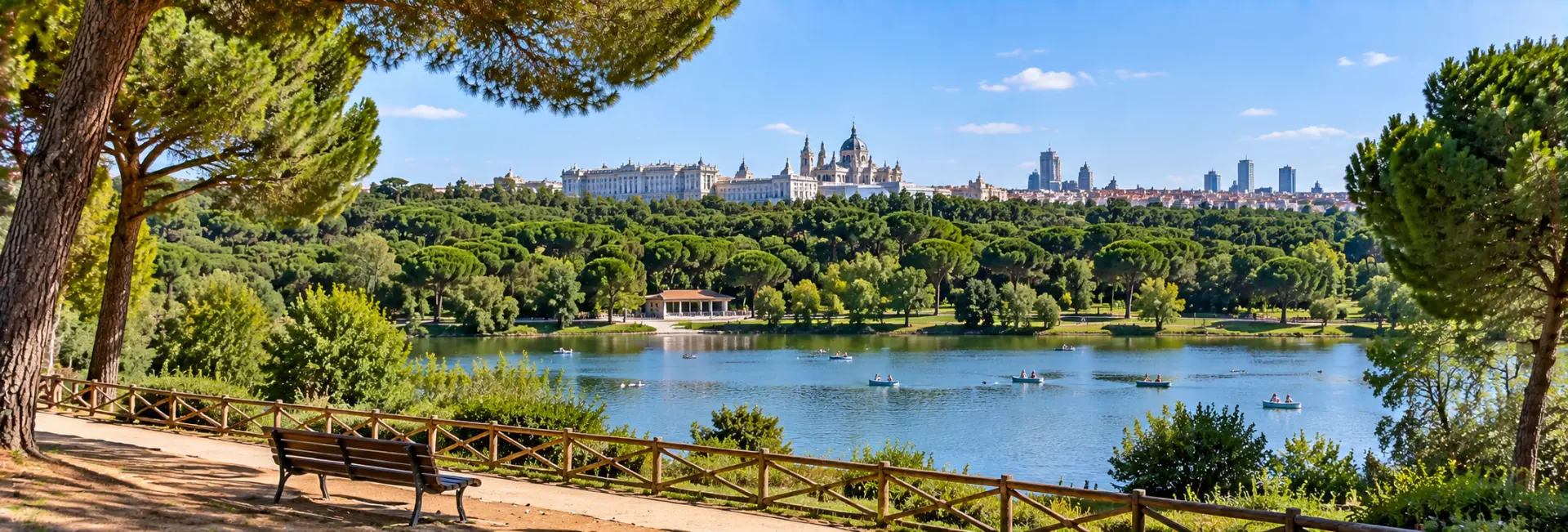
Casa de Campo is less a park in the usual sense and more a small piece of countryside that happens to sit right at Madrid's edge. At over 1,700 hectares, it dwarfs every other green space in the city, stretching out across pine forest, open meadow, and a sizable lake on the far side of the Manzanares River from the historic center.
What started centuries ago as a private royal hunting ground is now where a huge share of Madrid goes to jog, cycle, row a boat, or just get some distance from the noise of downtown. It also happens to hold a zoo, a full amusement park, and a cable car ride with some of the best skyline views in the city, so there's plenty to do here beyond simply walking among the trees.
History
A King's Hunting Ground
The story starts in 1561, when King Philip II moved the royal court to Madrid and wanted a hunting ground close to his new palace. He bought up land that had belonged to the Vargas family, on the far side of the Manzanares River, and gradually connected it to the royal grounds at El Pardo. For the next few centuries, this huge stretch of land was reserved almost entirely for the monarchy and nobility.
Royal Forest, Royal Farmland
Later kings kept reshaping the estate to suit their own interests. Ferdinand VI declared it a Royal Forest in the 18th century, while Charles III, remembered fondly by Madrileños for his public works around the city, pushed to develop parts of it for farming and livestock instead of leaving it purely as a hunting reserve.
From Crown Property to City Park
Everything changed with the arrival of the Second Spanish Republic. On the first of May, 1931, the property passed from the Crown to Madrid's city council, and it's remained public land ever since. A few years later, during the Spanish Civil War, the park found itself on the front line of the siege of Madrid, and traces of that period, including old bunkers, can still be spotted here and there if you know where to look.
Layout & Landscape
Given its size, Casa de Campo doesn't really have a single "layout" the way a formal garden would. It's more a patchwork of terrain: holm oak and pine woodland typical of the Castilian plateau, open meadows, paved paths for cycling, and dirt trails better suited to walking or running.
The centerpiece for most visitors is the artificial lake, originally designed back in Philip II's day by Juan Bautista de Toledo, the same architect behind the monastery at El Escorial. These days it's ringed with restaurants and cafes rather than royal courtiers, and it's where a lot of people head first for a boat ride or a meal with a view.
- Covers roughly 1,700 hectares, about five times the size of New York's Central Park
- Located west of central Madrid, along the right bank of the Manzanares River
- Mix of pine and holm oak woodland, open meadow, and an artificial lake
- Home to the Madrid Zoo Aquarium and the Parque de Atracciones amusement park
- Connected to Parque del Oeste by the Teleférico de Madrid cable car
Cultural Significance & Traditions
From Royal Privilege to Public Life
For centuries, ordinary Madrileños had no access to this land at all. Its transformation into public property in 1931 marked a real shift, turning what had been an exclusive royal privilege into one of the most democratic spaces in the city, open to absolutely anyone who wants to walk through it.
A Scar From the Civil War
The park's role during the Spanish Civil War adds a heavier layer to its history. For over two years, the front lines of the siege of Madrid ran directly through this land, and the remnants left behind, mostly old bunkers scattered through the woods, are a quiet reminder that this peaceful park was once a battlefield at the edge of the city.
Madrid's Weekend Escape
Today the park functions as something close to Madrid's shared backyard. Weekends bring joggers, cyclists, families with picnics, and couples renting rowboats on the lake, a tradition that stretches back generations and shows no sign of fading.
What to See There
With so much ground to cover, most visitors pick a handful of highlights rather than try to see everything in one trip.
- The lake, with rowboat rentals and lakeside restaurants
- Madrid Zoo Aquarium, home to more than 2,000 animals across roughly 500 species
- Parque de Atracciones, an amusement park with more than 30 rides, including a 63-meter freefall drop and a roller coaster reaching speeds of 100 kilometers per hour
- The Teleférico de Madrid cable car, linking the park to Parque del Oeste with sweeping views over the city along the way
- Remnants of Civil War-era bunkers scattered through the wooded areas
Because the park is so spread out, it's worth picking one or two of these as the anchor for a visit rather than trying to string all of them together in a single day.
Ways to Experience It
How you experience Casa de Campo really depends on what kind of day you're after.
- Rent a rowboat on the lake for a slow, low-effort way to enjoy the park's most scenic corner
- Ride the cable car from Parque del Oeste for panoramic views without much walking involved
- Bring a bike or running shoes and use the park's extensive paths for a proper workout, away from city traffic
- Spend a full day at the Zoo Aquarium or Parque de Atracciones if traveling with kids
- Pack a picnic and find a quiet spot in the woods for something slower-paced
None of these approaches really overlap, which is part of what makes the park worth returning to more than once, since a family day at the amusement park looks nothing like a quiet weekday jog through the trees.
Best Time to Visit
Spring and autumn weekday mornings are hard to beat here, with mild temperatures and far fewer crowds than the park sees on weekends, when it fills up with local families and sports groups. Summer days can get hot fast, since much of the open meadow offers little shade, though the lake area and wooded paths stay noticeably cooler.
Weekends bring the most energy, especially around the lake, but also the biggest crowds at the zoo and amusement park. If your priority is a peaceful walk rather than people-watching, aim for a weekday, ideally in the cooler months.
Visitor Tips
- The park itself has no entry fee, though the zoo, amusement park, and cable car each charge separately
- Metro stations Casa de Campo, Lago, and Batán all sit along the park's edge and are the easiest way in without a car
- Given the park's size, it helps to decide on a specific area or attraction ahead of time rather than wandering in without a plan
- Bring water and sun protection if visiting in summer, since large sections of the park have little tree cover
- Wooded paths can be quiet after dark, so stick to well-traveled areas near the lake or main entrances if visiting in the evening
Nearby Attractions
Casa de Campo sits across the river from central Madrid, close to several other well-known sights.
- Madrid Río, the riverside park along the Manzanares, just across the water
- Temple of Debod, near the Parque del Oeste side of the cable car route
- Royal Palace of Madrid, a short trip east across the river
- Príncipe Pío, a transport and shopping hub near the park's eastern edge
FAQs about visiting Casa de Campo
How big is Casa de Campo? +
It covers roughly 1,700 hectares, making it the largest public park in Madrid and about five times the size of New York's Central Park.
Is Casa de Campo free to visit? +
Yes, entering the park itself is free. The zoo, amusement park, and cable car each require a separate paid ticket.
How do I get to Casa de Campo? +
Metro stations Casa de Campo, Lago, and Batán, all served by Lines 5 and 10, sit along the park's edges and are the easiest way to reach it.
What is there to do besides walking? +
You can rent a rowboat on the lake, ride the cable car from Parque del Oeste, visit the Madrid Zoo Aquarium, or spend a day at the Parque de Atracciones amusement park.
Was Casa de Campo always open to the public? +
No, it was a private royal hunting ground for centuries before being handed over to Madrid's city council in 1931.
Is the park connected to Madrid's history beyond the monarchy? +
Yes, during the Spanish Civil War the front lines of the siege of Madrid ran through the park, and remnants like old bunkers can still be found in wooded areas today.
How long should I plan for a visit? +
That depends on what you're after. A lake visit or short walk might take an hour or two, while a day at the zoo or amusement park could easily fill an entire day.
Is Casa de Campo good for families with kids? +
Very much so, especially around the Zoo Aquarium and Parque de Atracciones, both of which are designed with families in mind.
What's the best time of year to visit? +
Spring and autumn offer the most comfortable weather for walking or cycling, while summer can get quite hot in the more open, less shaded parts of the park.
Is it safe to visit in the evening? +
It's best to stick to well-traveled areas near the lake or main entrances after dark, since the more wooded, remote paths are quieter and less populated once the sun goes down.
